Source Shapewear for Daily Wear, Sports, and Postpartum Support
Explore 30 Shapewear options including bodysuits and waist cinchers with features like quick-dry fabric, breathable design, and firm control levels. Compare specifications for plus-size fits, custom branding, and various material blends to find the right solution for your inventory needs.
Key considerations
Products List




Comprehensive Sourcing Guide
Shapewear Sourcing Guide
Shapewear occupies a competitive segment of the intimates market where fit accuracy, fabric performance, and repeat-purchase quality determine commercial success. Buyers sourcing from manufacturing hubs such as Guangdong, China encounter a product range spanning bodysuits, waist cinchers, and slimming belts, each with distinct construction requirements. The category rewards procurement teams that verify compression claims, size inclusivity, and material composition before committing to volume orders.
This guide organizes the sourcing decision into six practical areas: product scope, technical verification, compliance, commercial terms, supplier qualification, and long-term procurement discipline. Each section reflects attributes commonly observed on product listings in this category — including free-size and graded sizing structures, MOQ thresholds around 1000 pieces per color, and customization availability — while flagging where buyers must independently confirm details rather than relying on listing claims.
Product Scope and Observed Listing Signals
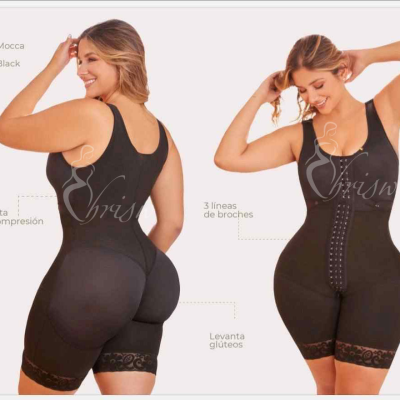
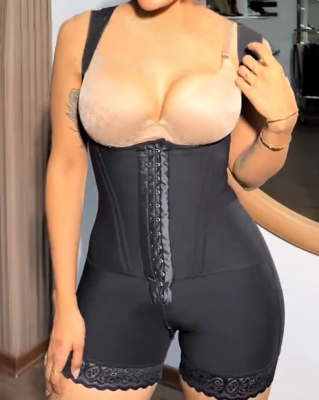
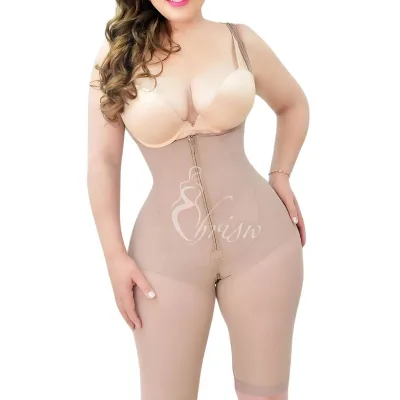
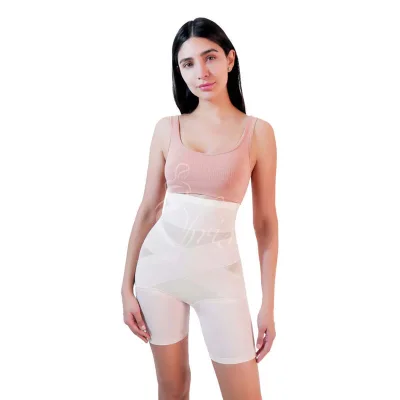
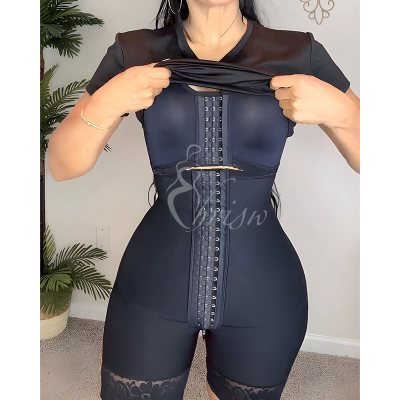
The observed listings concentrate on three product families: one-piece bodysuits designed for pull-in abdomen and buttock-lifting effects, waist cinchers positioned as slimming belts with back-support features, and band-style trainers built from latex-polyester blends. Gender targeting is explicitly female, with adult age grouping, and feature sets emphasize breathable, quick-dry fabrics plus plus-size accommodation. Some listings advertise a free-size construction while others grade from XS through 6XL, so buyers should first decide whether their channel demands a single stretch-to-fit SKU or a full graded range, since this choice drives MOQ structure, inventory risk, and returns exposure.
Several commercial signals recur across the listings and deserve attention. Customization is marked available, in-stock supply appears alongside made-to-order MOQ structures, and sample-order lead times as short as seven days are supported. Colorways cluster around black, skin/beige tones, materials alternate between spandex/nylon and spandex/polyester, and one belt-style item specifies 35% latex with 65% polyester. Treat these as observations about representative products, not guarantees: confirm which attributes apply to the exact SKU you intend to order, and request physical samples to validate that advertised effects — firm control, tummy pull-in, non-rolling design — are actually achieved in production fabric.
Technical Specifications to Verify
Material composition is the first specification to lock down. Listings reference spandex/nylon and spandex/polyester blends for bodysuits, and a latex/polyester ratio for waist belts; the buyer should obtain the precise percentage breakdown for each SKU, confirm whether latex content triggers allergy considerations for their market, and verify fabric weight and thickness (one listing flags "thick" construction) against the intended season and control level. Compression garments live or die on elastane recovery, so request wash-test samples to check whether the fabric retains elasticity after repeated laundering rather than loosening within weeks.
Fit and construction specifications follow. Graded ranges such as XS–S–M–L–XL–2XL–3XL (extending to 6XL on some listings) require a validated size chart with garment measurements per size, not merely letter labels, because Shapewear sizing varies dramatically between factories. Confirm the control level (one listing states "Firm"), the anti-rolling fabric craft claim, seam placement, and closure hardware durability. For the belt-style items, verify strap length against torso coverage — one listing notes the band is "long enough to cover long torsos" — plus hook-and-loop attachment integrity, since these are the most common failure points reported in the category.
Compliance and Safety Documentation
Do not assume certification from a listing. Buyers should request current, product-specific test reports from accredited third-party laboratories covering fiber composition verification, restricted substances, and skin-contact safety for intimate apparel. Where suppliers reference quality-management or textile-safety standards, ask for certificate numbers and validity dates and verify them independently with the issuing body, because background indications such as ISO 9001 or OEKO-TEX type claims must be tied to the specific factory and product rather than accepted at face value.
Additional documentation matters for this product type. Needle detection is noted on at least one listing — a relevant safeguard for garments with metal hooks or boning — so confirm whether broken-needle detection procedures are in place and documented. For latex-containing products, request allergen labeling guidance for destination markets, and ensure care-label content, fiber-content labeling, and country-of-origin marking comply with the importing jurisdiction's textile regulations. Build a documentation checklist into your purchase agreement so compliance artifacts are a condition of shipment acceptance, not an afterthought.
Cost Drivers and Commercial Terms
Observed listing prices in this category span roughly USD 0.5 to 20, a wide band that reflects differences in construction complexity, material content, control level, and order scale. The primary cost drivers to model are fabric composition (higher elastane and latex ratios raise unit cost), graded sizing versus free-size production, customization such as silk-screen logo printing at the waist, front, back, or leg positions, and packaging format — polybag versus bulk packing at 1000 pieces per 70kg bag. Compression garments with firm control and multi-panel construction will sit at the upper end; simple belt-style trainers trend lower.
Commercial terms should be negotiated explicitly rather than inferred. Observed MOQ structures include 1000 pieces per color, while the broader category shows MOQs from as low as 1 unit (sample or in-stock items) up to 3000, so clarify whether quoted MOQs apply per color, per size, or per SKU. Payment methods listed include L/C, T/T, Wechat, and Alipay — weigh buyer protection accordingly, with letters of credit or escrow-style terms preferred for first orders. Confirm what the quoted price includes: packaging, labeling, printing plates, and freight, since shipment options (DHL, TNT, UPS, FedEx, EMS, air, sea) carry materially different costs and lead times that must be built into landed-cost calculations.
Supplier Qualification and Quality Control
Qualify suppliers through a structured sequence rather than price comparison alone. Start with a sample order — the seven-day sample lead time noted in listings makes this feasible — and evaluate the physical sample against your specification for compression feel, stitching quality, closure durability, and size accuracy across at least the smallest and largest grades you plan to stock. Verify business credentials, years of Shapewear-specific production, and whether the factory actually manufactures or trades, since garment traders add margin and reduce your control over quality corrections.
For production orders, implement inline and pre-shipment inspections with a defined AQL sampling plan and a checklist covering dimensions per size, fabric composition verification, colorfastness, logo print adhesion for silk-screen branding, and packaging compliance (polybag suffocation warnings where required, carton dimensions such as the noted 73×73×44 cm export carton). Insist on golden samples signed and retained by both parties, and require the supplier to notify you of any material substitution before production. For belt-style products, functionally test hook-and-loop closure cycles and back-support stitching, since these are the highest-returns defect areas.
Long-Term Procurement Checks
Sustain quality over repeat orders by tracking defect and return rates by SKU and size, and feeding that data back into annual specification reviews. Shapewear fit complaints cluster at size extremes, so monitor whether the graded range (XS through 6XL where offered) continues to meet real-world body measurements, and pressure the factory to update patterns if returns indicate grade-rule drift. Re-verify material lots periodically — elastane blends are sometimes quietly reformulated — by commissioning composition tests on production samples each season rather than relying on the original approval.
Relationship and continuity checks complete the discipline. Confirm the supplier maintains raw-material stock for your core SKUs or can re-source equivalent fabrics without approval gaps, especially for in-stock item programs where availability may fluctuate. Keep customization assets (logo screens, packaging dielines, label artwork) documented in your own records so a supplier transition does not forfeit your branding investment. Finally, review commercial terms annually: volume tiers, payment conditions, and freight consolidation (noted sea-freight packing at 1000 pieces, 70kg per bag) can all be renegotiated as your order history grows, and a supplier who resists transparency at renewal deserves a parallel sourcing option.
FAQs
What materials are used in this Shapewear bodysuit?
The Shapewear bodysuit is constructed from a blend of Spandex and Nylon or Spandex and Polyester. This fabric combination ensures durability and elasticity. The knit fabric type provides a comfortable fit against the skin. These materials are selected to support the garment's shaping capabilities while maintaining breathability for daily wear.
Can this Shapewear be customized for bulk orders?
Yes, customization is available for bulk orders. Buyers can request specific modifications to meet their brand requirements. The supplier supports various payment methods including L/C, T/T, Wechat, and Alipay. This flexibility allows businesses to tailor the product to their specific market needs while ensuring secure transaction processes.
What are the shipping options for international orders?
Multiple shipping methods are available including DHL, TNT, UPS, EMS, FedEx, air freight, and sea freight. The choice depends on order volume and urgency. Sample orders support a seven-day lead time. For larger quantities, sea freight may be more cost-effective. Buyers should select the method that best fits their logistics timeline and budget constraints.
What sizes are available for this Shapewear product?
Sizes range from XS to 6XL, including plus size options. Some listings indicate a free size option. The product is designed to accommodate various body types. Buyers should check specific size charts for accurate fitting. The availability of extended sizes ensures that the Shapewear can serve a diverse customer base effectively.
What is the minimum order quantity for this Shapewear?
The minimum order quantity is typically 1000 pieces per color. Some listings indicate an MOQ range of 1 to 3000 pieces. This threshold is standard for wholesale transactions. Buyers planning large-scale procurement should account for this volume. The MOQ ensures efficient production runs and consistent quality control for bulk orders.
What features does this waist cincher provide?
The waist cincher offers firm control level support. It features a design that stops material rolling. The band is long enough to cover long torsos. It includes an attached loop for convenience. These features work together to provide back support and a slimming effect, making it suitable for daily use and sports activities.