Source Silicone Rubber Bulb Trim Seals for Vehicles and Machinery
Find and compare 30 listings for Silicone Rubber Bulb Trim Seals designed for vehicle, household appliance, and electronic product applications. These seals offer fixture and sealing effects with customizable sizes, colors, and cross-section shapes to meet specific industrial component requirements.
Key considerations
Products List




Comprehensive Sourcing Guide
Silicone Rubber Bulb Trim Seals Sourcing Guide
Sourcing Silicone Rubber Bulb Trim Seals requires a nuanced understanding of material properties, manufacturing processes, and supply chain logistics. These components are critical for providing weatherproofing, dust exclusion, and acoustic dampening in a wide array of industrial and consumer applications. Buyers must navigate a market where customization is the norm rather than the exception, as off-the-shelf solutions rarely meet specific dimensional or environmental requirements. The following guide outlines the essential considerations for procurement professionals seeking reliable suppliers and high-quality seals.
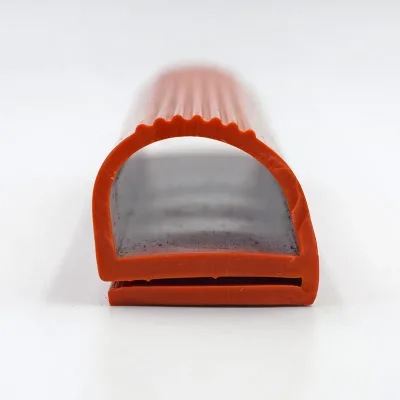
The procurement process begins with defining the exact performance criteria and physical constraints of the seal. Silicone rubber is chosen for its exceptional thermal stability, UV resistance, and flexibility across a wide temperature range. However, the specific formulation—whether it is platinum-cured or peroxide-cured—can significantly impact cost and performance. Buyers must also consider the cross-sectional shape, such as bulb, mushroom, or D-shape, which dictates the sealing pressure and compression set characteristics. Understanding these variables upfront ensures that the sourcing strategy aligns with the technical demands of the final product.
Product Scope and Observed Listing Signals
The market for silicone rubber seals is diverse, with suppliers offering a wide range of profiles and materials. Observed listings indicate that products often include not only pure silicone but also blends or alternative elastomers like nitrile rubber, depending on the application's chemical resistance needs. For instance, some listings highlight nitrile rubber seals with cross-sections such as O-rings or rectangle rings, which may be suitable for applications requiring higher oil resistance than silicone provides. Buyers should carefully distinguish between pure silicone and composite materials to ensure compatibility with their specific operating environment.
Customization is a dominant feature in this category, with many suppliers offering OEM and ODM services. Listings frequently mention the ability to produce seals in various colors, including black, red, green, and transparent options, often referenced by Pantone codes for precise matching. The size and shape can be customized to fit specific machinery, vehicle, or household appliance requirements. This flexibility allows buyers to tailor seals to exact specifications, but it also necessitates clear communication of design files and tolerance requirements to avoid mismatches in the final product.
Technical Specifications to Verify
When evaluating technical specifications, the cross-sectional shape and material composition are paramount. Silicone Rubber Bulb Trim Seals are typically designed to provide a tight seal against irregular surfaces, making the bulb profile essential for effective compression. Buyers should verify the durometer hardness, which affects the seal's ability to maintain pressure over time. Additionally, the presence of a metal or plastic core within the bulb can enhance structural integrity and ease of installation, a detail that must be confirmed with the supplier.
The manufacturing process also plays a crucial role in the quality of the final product. Seals can be produced through molding or extrusion, each with its own advantages in terms of precision and cost. Molding is often preferred for complex shapes or short runs, while extrusion is more cost-effective for long, continuous profiles. Buyers should inquire about the specific process used and request samples to evaluate the surface finish, dimensional accuracy, and consistency of the bulb shape. These factors directly impact the seal's performance and longevity in the field.
Compliance and Safety Documentation
Regulatory compliance is a critical aspect of sourcing silicone rubber seals, particularly for applications in food, medical, or automotive industries. Suppliers often provide certifications such as RoHS and REACH, which indicate that the materials used are free from hazardous substances. Buyers should request these certifications to ensure that the seals meet international environmental and safety standards. Additionally, for food-contact applications, compliance with FDA regulations may be necessary, a detail that should be explicitly confirmed with the supplier.
Documentation should also include material test reports that verify the physical and chemical properties of the silicone rubber. These reports typically cover parameters such as tensile strength, elongation at break, and compression set. Buyers should review these documents to ensure that the material meets the specified performance criteria. Furthermore, understanding the storage life of the seals, which is often cited as ten years for silicone rubber, is important for inventory management and long-term project planning.
Cost Drivers and Commercial Terms
The cost of Silicone Rubber Bulb Trim Seals is influenced by several factors, including material quality, customization complexity, and order volume. High-grade silicone, such as platinum-cured variants, commands a higher price due to its superior purity and performance characteristics. Customization, including unique shapes, colors, or core materials, adds to the cost due to the need for specialized tooling and production processes. Buyers should be prepared for higher unit costs when ordering small quantities or highly customized seals.
Commercial terms, such as minimum order quantity (MOQ) and lead times, also impact the overall procurement cost. Listings indicate that MOQs can range from 1000 pieces to higher volumes, depending on the supplier and the level of customization. Lead times typically range from 15 days for production to 3 days for sample delivery, with shipping options including sea, air, and express delivery. Buyers should factor in these logistical considerations when planning their supply chain, as delays or high shipping costs can affect the total cost of ownership.
Supplier Qualification and Quality Control
Selecting a reliable supplier is essential for ensuring the consistent quality of silicone rubber seals. Buyers should verify the supplier's manufacturing capabilities, including their experience with silicone rubber processing and their ability to handle custom orders. Quality control processes, such as in-process inspections and final product testing, should be clearly defined and communicated. Suppliers that provide detailed quality assurance protocols are more likely to deliver products that meet the buyer's specifications.
Additionally, buyers should assess the supplier's ability to provide samples and prototypes before committing to large orders. This allows for a thorough evaluation of the seal's fit, function, and material quality. Suppliers that are willing to provide samples and work closely with buyers to refine designs demonstrate a commitment to customer satisfaction and product excellence. Establishing a strong relationship with a qualified supplier can lead to better pricing, faster lead times, and improved support throughout the procurement process.
Long-Term Procurement Checks
Long-term procurement success depends on continuous monitoring of supplier performance and product quality. Buyers should establish key performance indicators (KPIs) to track metrics such as on-time delivery, defect rates, and responsiveness to issues. Regular audits of the supplier's quality control processes can help identify potential problems before they impact production. Maintaining open communication with the supplier ensures that any changes in material formulations or manufacturing processes are promptly communicated and evaluated.
Furthermore, buyers should periodically review the market for new materials and technologies that may offer improved performance or cost savings. Staying informed about industry trends and advancements in silicone rubber technology can provide opportunities for optimization and innovation. By maintaining a proactive approach to supplier management and market analysis, buyers can ensure that their Silicone Rubber Bulb Trim Seals continue to meet the evolving needs of their products and customers.
FAQs
What materials are used for Silicone Rubber Bulb Trim Seals?
Silicone rubber and nitrile rubber are the primary materials used for these seals. The products are available in various colors including black, brown, orange, and custom panton codes to match specific design requirements.
Can I request custom sizes for these rubber seals?
Yes, customization is available for size and cross-section shapes like circle, rectangle ring, or O-rings. The standard size is customizable to fit specific vehicle, household appliance, or industrial component applications.
How long does it take to receive samples of these seals?
Sample lead time is typically 3 days for production. The main delivery lead time is 15 days after order confirmation, with shipping options including sea, air, or express delivery from Ningbo or Shanghai.
Which certifications do these rubber parts hold?
The products are certified under RoHS and Reach standards. These certifications ensure the materials meet safety and environmental requirements for use in electronic products, machinery, and industrial components.
What is the minimum order quantity for these seals?
The minimum order quantity can range from 1 to 1000 pieces depending on the specific supplier and product model. Some items like Protech-S2599 may have specific MOQs of 1000 pieces for bulk orders.
How are these rubber parts packaged for shipping?
Packaging options include inner PP bags, carton boxes, and pallets if needed. Some items are packed in bags, while others use export packing to ensure safety during transit to global destinations.
Where are these silicone rubber seals manufactured?
These products originate from China, specifically from locations like Qingdao, Ningbo, and Shanghai. The manufacturing process involves molding and extrusion to create durable rubber parts for various industrial applications.