Source Single Stage Submersible Slurry Pump for River Dredging, Mining, Power Plants
Compare 30 Single Stage Submersible Slurry Pump options from verified Chinese suppliers. These units feature vertical mounting, high-pressure capabilities, and are designed for river dredging, sand pumping, and power plant applications with customizable flow rates and materials.
Key considerations
Products List


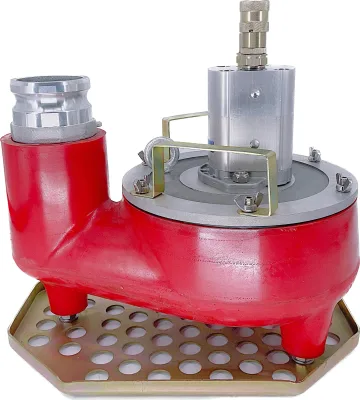
Factory Price Oem Light Weight 3" Hydraulic Stainless Submersible Multistage Slurry Pump
$1150.00 - $1200.00
MOQ: 2 pieces

Factory Direct Sale Centrifugal Submersible Slurry Pump for River Water
$70.00 - $1399.00
MOQ: 1 Pieces


Comprehensive Sourcing Guide
Strategic Sourcing Guide for Single Stage Submersible Slurry Pumps
Procuring a Single Stage Submersible Slurry Pump requires a rigorous understanding of the specific operational demands of slurry transport, the technical constraints of the equipment, and the verification of supplier capabilities. In the global market, these pumps are critical assets for industries ranging from river dredging to mining operations. The following guide outlines the essential factors buyers must evaluate to ensure the selection of equipment that meets performance requirements while adhering to safety and quality standards. This analysis relies on verified product attributes and established industry practices to provide a clear path for procurement decision-making.
Technical Specifications and Performance Parameters
The core of any successful procurement process lies in matching the pump's technical specifications to the specific application environment. For single stage submersible slurry pumps, the driving type is consistently observed as electric drive, typically utilizing a motor configuration. The mounting height and shaft position are critical design features; observed data indicates a vertical pump configuration with a suction centrifugal mounting style. This design is particularly effective for handling media with suspended solids, such as in dredging or sand pumping applications.
The impeller design is a primary determinant of the pump's ability to handle abrasive materials. The supplied facts confirm the use of a single-suction impeller with a closed design, which is standard for maintaining efficiency while managing solid particles. The maximum passing gravel diameter is a vital specification to verify, with observed ranges reaching up to 56mm. This capability ensures the pump can handle the specific particle size distribution of the slurry without clogging or excessive wear.
Flow and pressure capabilities must be aligned with the system requirements. The maximum discharge distance can extend up to 1100 meters, indicating the potential for long-distance transport applications. The working pressure is categorized as high pressure, with some models capable of achieving a maximum head exceeding 150 meters, while others in the 80-110 meter range are also available. The maximum flow rate is observed between 2.5 and 3 meters per second, which dictates the volume of material that can be moved per unit of time.
Power requirements are equally significant. The horsepower range spans from 4 to 428 HP, covering a vast spectrum of operational scales. In kilowatts, the pump power typically ranges from 11 to 132 kW, though standards reference a broader range up to 315 kW. The voltage supply must be compatible with the local grid, with options observed for 220V and 380V-480V systems, operating at frequencies of 50Hz or 60Hz. The cable length is another customizable specification, often ranging from 10 meters to fully customizable lengths to suit installation depth.
Material Composition and Construction Standards
The longevity of a submersible slurry pump is heavily dependent on the materials used in its construction, particularly the impeller and casing. The observed material for the impeller is high chromium alloy, a choice made specifically for its resistance to abrasion and erosion caused by hard particles in the slurry. This material selection is crucial for maintaining performance in mining and dredging applications where the slurry contains sharp or dense solids.
The pump casing and other structural components are available in various standard materials to suit different corrosion and wear requirements. Observed standards include cast iron, stainless steel grades such as SS304, SS316, and SS316L. The selection of the appropriate material grade depends on the chemical composition of the slurry and the environmental conditions of the installation site. For instance, SS316L offers superior corrosion resistance compared to standard cast iron, making it suitable for more aggressive chemical environments.
Motor insulation is another critical material attribute. The motor insulation grade is observed as Class F, which indicates the thermal resistance of the winding insulation. This grade allows the motor to operate at higher temperatures without degrading, ensuring reliability in continuous duty cycles common in industrial applications. The condition of the pump is listed as new, and the drive type is confirmed as electric, ensuring a direct and efficient power transfer mechanism.
Compliance, Certification, and Regulatory Verification
Navigating the compliance landscape is essential for international procurement. The supplied facts explicitly mention Soncap certification, which is a mandatory requirement for importing certain goods into Nigeria. Buyers targeting this market must ensure that the supplier provides valid Soncap certificates for each unit or batch. However, the provided data does not confirm the presence of other common international certifications such as ISO 9001, CE, or ASTM A532. Therefore, buyers should not assume these certifications are present unless explicitly verified with the supplier.
When evaluating a supplier, it is imperative to request documentation for any specific certifications required by the destination country or the specific industry sector. While the background knowledge suggests ISO 9001 and CE are common in the industry, the actual product facts do not list them as confirmed attributes. Consequently, the procurement strategy must include a verification step where the buyer requests proof of compliance for any standard beyond the explicitly mentioned Soncap.
The origin of the products is a key factor in supply chain logistics and regulatory compliance. The observed product origins include China generally, with specific mentions of Hebei, China. Buyers should be aware that origin affects shipping costs, lead times, and potential trade tariffs. Additionally, the product standard is noted as "customization" or specific flow and head configurations, indicating that the equipment is often built to order rather than being a purely off-the-shelf commodity. This customization capability requires clear communication of technical requirements to the supplier to ensure the final product meets the intended standards.
Cost Drivers and Pricing Dynamics
The pricing of single stage submersible slurry pumps is influenced by a complex interplay of factors, including material costs, power rating, and customization levels. The observed listed price range is extremely broad, spanning from 20 USD to 159,000 USD. This wide variance reflects the difference between small, low-power units and large, high-horsepower industrial pumps. The minimum order quantity (MOQ) is observed to be low, ranging from 1 to 5 units, which allows for flexibility in procurement for both small projects and larger industrial deployments.
Material selection is a primary cost driver. Pumps constructed with high chromium alloy impellers and stainless steel casings (SS316L) will command a higher price than those made with cast iron. Similarly, the horsepower rating directly impacts the cost; a 428 HP pump will be significantly more expensive than a 4 HP unit due to the size of the motor and the robustness of the internal components. Customization is another significant factor. While the product attributes indicate that customization is available for color, inlet size, and packing, these bespoke requirements often incur additional engineering and manufacturing costs.
The packing method also influences the final delivered cost. Options range from standard export wooden boxes to wooden cases, or packing according to customer requests. Specialized packing for hazardous or oversized components may add to the logistics expense. Buyers should note that the "standard" price points are not fixed and should be treated as observations rather than guaranteed market rates. The actual cost will depend on the specific configuration, the volume of the order, and the current market price of raw materials like steel and copper.
Typical Applications and Operational Context
Single stage submersible slurry pumps are designed for a diverse range of heavy-duty applications. The observed usage categories include general pumping, slurry pumping, and specific industrial sectors such as river dredging, sand pumping, power plants, and mining. In river dredging, the pump's ability to handle high concentrations of solids and its vertical mounting configuration make it ideal for extracting sediment from water bodies. The maximum passing gravel diameter of 56mm ensures that these pumps can handle the coarse materials often found in dredging operations.
In the mining sector, these pumps are utilized for transporting tailings and ore slurries. The high chromium alloy construction provides the necessary wear resistance to withstand the abrasive nature of mined materials. Power plants also utilize these pumps for ash handling and cooling water systems where slurry is present. The high-pressure capability, with heads exceeding 150 meters, allows these pumps to overcome significant elevation changes and friction losses in long piping systems.
The media type is identified as sewage pumps in some contexts, suggesting versatility in handling wastewater with suspended solids. However, the primary design focus remains on slurry and abrasive media. The maximum capacity is observed to be greater than 400 L/min, which provides a baseline for flow requirements in various applications. Buyers must ensure that the specific application's media characteristics, such as particle size, density, and chemical composition, align with the pump's material and design specifications to prevent premature failure.
Supplier Evaluation and Quality Assurance
Evaluating a supplier for submersible slurry pumps requires a focus on their ability to meet technical specifications and provide reliable after-sales support. The observed product attributes indicate that suppliers offer customization for color, inlet size, and packing, which suggests a level of flexibility in manufacturing. However, the lack of confirmed international certifications like ISO 9001 or CE in the product facts means that buyers must conduct their own due diligence regarding the supplier's quality management systems.
Quality control should be a central part of the procurement process. Buyers should request detailed inspection reports, including material test certificates for the high chromium alloy and stainless steel components. The motor insulation grade of F should be verified through testing to ensure it meets the thermal requirements of the application. Additionally, the cable length and voltage specifications must be confirmed to ensure compatibility with the site's power infrastructure.
The origin of the product, specifically Hebei, China, is a known manufacturing hub for pumps. Buyers should verify the specific factory's capabilities and reputation. While the product count observed is 30, this represents a snapshot of available listings and does not guarantee the total production capacity of a specific supplier. Buyers should inquire about the supplier's track record in similar applications, such as mining or dredging, and request references from previous clients. The condition of the pump is listed as new, but buyers should verify the warranty terms and the availability of spare parts to ensure long-term operational continuity.
Long-Term Procurement and Lifecycle Management
Long-term procurement considerations extend beyond the initial purchase price to include maintenance, spare parts availability, and total cost of ownership. The customizable nature of the pump, including the ability to specify the motor insulation and material grades, allows for tailoring the equipment to specific lifecycle needs. However, this customization also means that spare parts must be ordered specifically for the configuration purchased, rather than relying on generic stock.
The working pressure and head specifications are critical for long-term performance. A pump operating at high pressure with a head exceeding 150 meters will experience significant stress on its components. Buyers should ensure that the supplier provides a comprehensive maintenance schedule and that the pump design allows for easy access to the impeller and motor for inspection and repair. The maximum discharge distance of 1100 meters implies that the piping system must be designed to minimize friction losses, which can affect the pump's efficiency over time.
Finally, the environmental and safety regulations of the destination country must be considered. While Soncap is explicitly mentioned, other regions may have different requirements for noise, vibration, and emissions. Buyers should verify that the pump's electrical specifications, such as voltage and frequency, match the local grid standards to avoid the need for expensive transformers or converters. By focusing on these long-term factors, buyers can ensure that their investment in single stage submersible slurry pumps delivers reliable performance throughout the equipment's operational life.
FAQs
What is the maximum passing gravel diameter for this pump?
The maximum passing gravel diameter is 56mm, allowing the pump to handle coarse solids without clogging. This specification ensures reliable operation in dredging and mining applications where particle sizes vary significantly.
Which certifications are confirmed for these pumps?
Soncap certification is explicitly confirmed for these products, which is mandatory for importing into Nigeria. Other common certifications like ISO 9001 or CE are not listed in the product facts and require separate verification.
How is the motor insulation grade defined?
The motor insulation grade is Class F, indicating high thermal resistance for the winding insulation. This allows the electric drive motor to operate reliably at elevated temperatures during continuous industrial duty cycles.
Can the pump handle high pressure applications?
Yes, the pump is categorized as a high-pressure pump with some models achieving a maximum head exceeding 150 meters. Other variants offer heads between 80 and 110 meters to suit different system requirements.
What materials are used for the impeller construction?
The impeller is constructed from high chromium alloy to provide superior resistance against abrasion and erosion. This material choice is essential for maintaining performance when handling abrasive slurries in mining and dredging operations.
What is the range of available horsepower?
The horsepower range spans from 4 to 428 HP, covering small to large industrial scales. In kilowatts, the power typically ranges from 11 to 132 kW, with standards referencing up to 315 kW.
Where are these pumps manufactured?
The products originate from China, with specific mentions of Hebei as a manufacturing location. Buyers should consider this origin when calculating shipping costs and potential trade tariffs for international procurement.