Source Smart Automatic Litter Pan with Odor Control for Indoor Use, Outdoor Use, and Inside Pet Cage
Find 30 Smart Automatic Litter Pan with Odor Control units featuring Tuya app integration and recyclable polypropylene construction. Buyers can compare models like PH-LB07 and PT108 for varying sizes, weights, and power options suitable for cats weighing 1.5kg to 20kg.
Key considerations
Products List


Smart Automatic Cat Litter Box Toilet for Cats with APP Control & Odor Purification
$99.00 - $125.00
MOQ: 10 Pieces

Automatic Smart Self-Cleaning Cat Litter Box with 70L Big Space Odor Removal
$90.00 - $110.00
MOQ: 20 Pieces

Automatic Cat Litter Box: Self-Clean, Smart Functions No Internet Needed
$87.36 - $88.63
MOQ: 4 Pieces
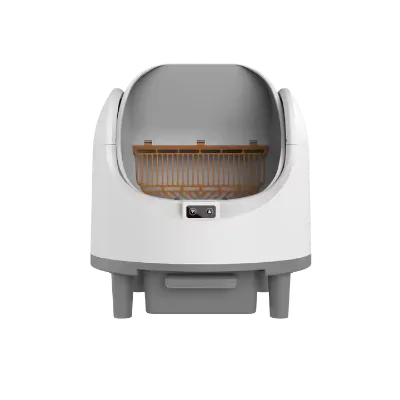
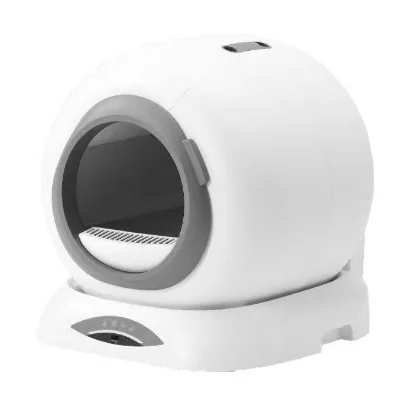
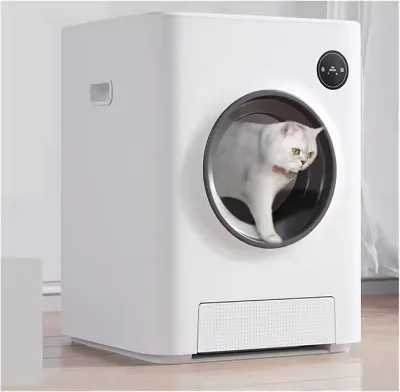
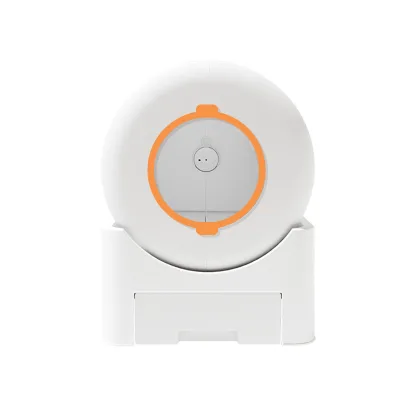
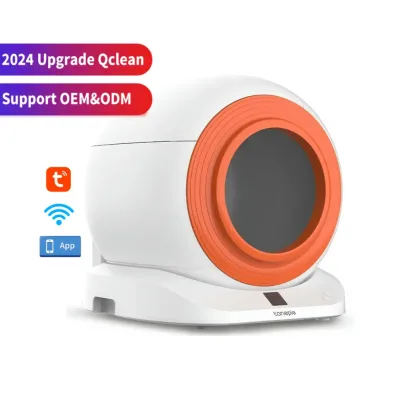
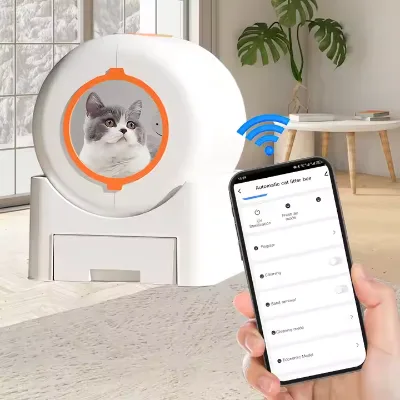
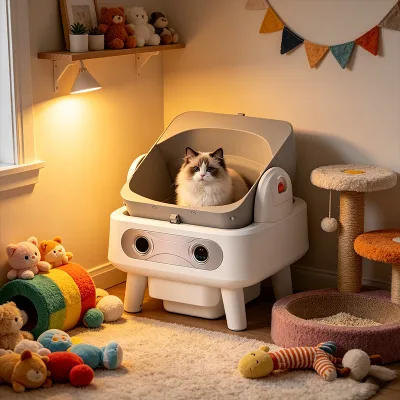


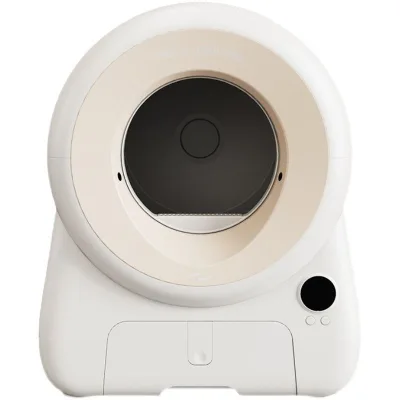

Automatic Cat Litter Box with Odor Control and APP Management Pet Products
$154.19 - $166.19
MOQ: 500 Pieces


Pet Products Eco-Friendly Smart Cat Litter Box with Automated Sensors
$154.22 - $166.22
MOQ: 500 Pieces


Smart Automatic Cat Litter Box with WiFi Connectivity and Safety Features
$154.30 - $166.30
MOQ: 500 Pieces

Comprehensive Sourcing Guide
Strategic Sourcing Guide for Smart Automatic Litter Pans with Odor Control
Understanding Technical Specifications and Functional Variations
When sourcing a Smart Automatic Litter Pan with Odor Control, buyers must first distinguish between the varying technical architectures observed in the current market. The core functionality relies on a combination of mechanical automation, sensor technology, and waste containment systems. Based on available product data, the market presents distinct models with specific dimensional and operational profiles. For instance, one observed configuration features a product size of 555153.6cm with a weight of 1.23kg, suggesting a compact, potentially portable unit designed for lighter loads. In contrast, other models exhibit significantly larger footprints, such as dimensions of 485350.5cm or 535855 Cm, accompanied by heavier net weights ranging from 7.3kg to 7.6kg. These discrepancies indicate that "smart" litter pans are not a monolithic category but rather a spectrum of devices tailored to different litter volumes and cat sizes.
The internal capacity is a critical specification for odor control efficacy. High-capacity models often feature a dual-chamber design, separating the active litter area from the waste collection zone. Specific observations note an inner space of 65L paired with a 9L poop collector space, while other configurations list a waste bin capacity of 10L and a litter chamber of 68L. The separation of these volumes is essential for maintaining hygiene and preventing odor crossover. Furthermore, the material composition plays a pivotal role in durability and cleaning. The primary materials identified include Polypropylene (PP) and composite structures utilizing PP+ABS+POM. These materials are selected for their resistance to moisture, chemical cleaning agents, and the mechanical stress of automated sifting mechanisms.
Power requirements also vary significantly across the product range. Some units operate on a fixed rated voltage of DC12V with a power consumption of 24W, indicating a plug-in or adapter-based system. Others are described with a "Charging" attribute, suggesting battery-operated or hybrid capabilities, though the specific battery capacity is not universally defined in the provided data. Connectivity is a defining feature of the "smart" aspect, with the majority of advanced units supporting 2.4GHz Wi-Fi for integration with the Tuya Smart ecosystem. This allows for remote monitoring and control via a dedicated mobile application, enabling users to schedule cleaning cycles or monitor waste bin fullness remotely.
Compliance, Certification, and Safety Standards Verification
In the realm of automated pet care devices, compliance and safety are paramount, particularly given the electrical components and mechanical moving parts involved. While specific certification marks are not explicitly listed in the general product attributes, buyers must verify that suppliers adhere to relevant international safety standards for electrical appliances and pet products. The origin of these products is frequently cited as Anhui, China, or generally China, which necessitates a rigorous verification of the supplier's quality management systems.
Buyers should specifically request documentation regarding electrical safety, such as compliance with IEC standards for low-voltage devices, given the common DC12V rating observed. Additionally, the materials used, specifically Polypropylene and ABS, must be verified for non-toxicity, ensuring they do not release harmful volatiles when heated or in contact with pet waste. The working temperature range of 0~+50℃ and storage temperature of -10~+50℃ (noted as -10~+60℃ in some records) must be clearly defined to ensure the device functions safely in various environmental conditions.
Waterproofing is another critical compliance factor. Attributes explicitly mention "Waterproof" capabilities, which is essential for devices that may be exposed to moisture from litter tracking or cleaning processes. However, the degree of waterproofing (e.g., IP rating) should be confirmed through technical datasheets rather than assumed. Furthermore, the product standard dimensions, such as 48 × 53 × 63cm or 550510536mm, serve as reference points for physical safety and spatial planning, but buyers must ensure these dimensions align with local building codes or housing regulations if the product is intended for commercial or multi-unit residential use.
Cost Drivers and Pricing Structure Analysis
The pricing landscape for smart automatic litter pans is influenced by a complex interplay of factors, including material costs, electronic component complexity, and the level of automation. The observed price range spans from 10.5 USD to 226 USD, a variance that reflects the difference between basic mechanical units and fully integrated smart systems. The lower end of the spectrum likely corresponds to manual or semi-automatic models with simpler construction, such as those with a weight of 1.23kg and smaller dimensions. Conversely, the higher price points are associated with units featuring advanced odor purification technologies, such as "Tight-Sealed Waste Bin Sterilizing Ions," and full app integration.
Material composition is a primary cost driver. Models utilizing a composite of PP+ABS+POM generally command higher prices than those made from single-material Polypropylene due to the enhanced durability and precision molding required for the POM (Polyoxymethylene) gears and moving parts. The inclusion of electronic components, such as Wi-Fi modules, sensors, and motors, further elevates the cost. The power system also impacts pricing; units with charging capabilities or higher wattage motors (e.g., 24W) may incur additional manufacturing costs compared to simpler, low-power designs.
Minimum Order Quantity (MOQ) is another significant factor affecting the total cost of ownership. The observed MOQ range is broad, spanning from 1 unit to 1000 units. This flexibility allows buyers to scale their procurement based on demand. Small MOQs of 1 unit are suitable for sampling or testing market viability, while bulk orders of 1000 units can leverage economies of scale to reduce the per-unit cost. Buyers must also consider packaging costs, as products are shipped in cartons or boxes, and the loading quantity per container (e.g., 540 units in a 40hq container) affects the landed cost calculation.
Typical Applications and Usage Scenarios
The application scope of smart automatic litter pans is diverse, catering to both residential and commercial environments. The product attributes explicitly list "Indoor Use" and "Outdoor Use" as potential applications, though the electrical nature of most smart models suggests indoor use is the primary design intent. The "Inside Pet Cage" attribute indicates suitability for kennel environments or specific housing setups where the litter pan is integrated into a larger enclosure.
The target demographic for these devices includes cat owners seeking convenience and hygiene. The specified cat weight range of 1.5kg to 20kg covers the vast majority of domestic feline breeds, from kittens to large breeds like Maine Coons. The suitability for various litter types, including Tofu Litter, Mineral Litter, and Mixed Litter, enhances the product's versatility. This adaptability is crucial for buyers targeting a broad consumer base, as different regions and owners have strong preferences for specific litter materials.
In commercial settings, such as veterinary clinics, pet boarding facilities, or high-end catteries, the reliability and odor control features become even more critical. The "Triple Odor Purification" system, which includes sterilizing ions and tight-sealed waste bins, is particularly valuable in these environments where multiple animals are housed in close proximity. The ability to operate via a remote app allows facility managers to monitor multiple units simultaneously, ensuring consistent hygiene standards without constant physical intervention. The waterproof design further supports applications in areas where cleaning and sanitation are frequent, reducing the risk of water damage to the electronic components.
Supplier Evaluation and Quality Control Protocols
Selecting a reliable supplier for smart automatic litter pans requires a multi-faceted evaluation process. Buyers should prioritize suppliers who can provide transparent data on their manufacturing capabilities and quality assurance protocols. The origin of the products, often cited as Anhui, China, suggests a concentration of manufacturing expertise in this region, but buyers must verify the specific factory's capacity and reputation.
Quality control should begin with the verification of raw materials. Suppliers must provide certificates of analysis for the Polypropylene and composite materials used, ensuring they meet food-grade or pet-safe standards. The mechanical integrity of the sifting mechanism is another critical area of inspection. Buyers should request sample units to test the durability of the gears and the smoothness of the operation cycle. The "Operation Type" being manual for some models and automatic for others requires distinct quality checks; automatic units must be tested for sensor accuracy and motor reliability over extended periods.
Electrical safety is non-negotiable. Buyers should demand evidence of electrical testing, including insulation resistance and dielectric strength tests, to ensure the DC12V systems are safe for long-term use. The waterproofing claims must be validated through water ingress testing protocols. Additionally, the software integration with the Tuya Smart app should be tested for stability, latency, and security. Suppliers should demonstrate a commitment to continuous improvement by providing data on failure rates and their procedures for handling warranty claims.
Long-Term Procurement Considerations and Supply Chain Resilience
Sourcing smart automatic litter pans involves looking beyond the initial purchase to long-term operational sustainability. The complexity of these devices means that spare parts availability is a critical consideration. Buyers should negotiate agreements with suppliers that guarantee the supply of replacement parts, such as motors, sensors, and sifting mechanisms, for a minimum of five years. This ensures that the product remains functional and reduces the need for complete unit replacements.
Packaging and logistics also play a significant role in long-term procurement. The standard packaging, described as "Carton" or "Box," must be robust enough to protect the electronic components during transit. The loading quantity per container, such as 540 units in a 40hq container, provides a baseline for logistics planning, but buyers should verify the actual packing efficiency and dimensional stability of the cartons to minimize damage during shipping.
Customization is another long-term factor. The availability of customization options allows buyers to brand the products or modify specific features to meet local market needs. However, customization often involves higher MOQs and longer lead times. Buyers must balance the desire for unique features with the need for supply chain agility. Finally, the environmental impact of the products should be considered. With the "Recyclable" attribute noted for some models, buyers can leverage this for sustainability reporting and appeal to eco-conscious consumers, provided the recycling process is verified and documented by the supplier.
Comparative Analysis of Key Product Attributes
To facilitate decision-making, the following table summarizes the key technical and operational attributes observed across the different product models. This comparison highlights the diversity in specifications that buyers must navigate when selecting the right product for their specific needs.
| Attribute | Model A (Compact) | Model B (Standard) | Model C (Large/Smart) |
|---|---|---|---|
| Product Size | 555153.6cm | 485350.5cm | 535855 Cm |
| Weight | 1.23kg | 7.3kg | 7.6kg |
| Material | Polypropylene | PP+ABS+POM | PP+ABS+POM |
| Power | 24W | Charging | DC12V |
| Capacity | Not specified | 10L Waste / 68L Litter | 9L Poop / 65L Inner |
| Connectivity | Not specified | Tuya Smart | Tuya APP / WiFi |
| Odor Control | Not specified | Tight-Sealed / Ions | Triple Odor Purification |
| Litter Type | Not specified | Tofu/Mineral/Mixed | Tofu/Mineral/Mixed |
| Application | Indoor/Outdoor | Cat / Indoor | Cat / Indoor Use |
This comparative view underscores the importance of aligning product specifications with the intended use case. Buyers must carefully evaluate whether the compact, lightweight design is sufficient for their needs or if the larger, feature-rich models with advanced odor control and app integration are necessary. By systematically analyzing these attributes, procurement professionals can make informed decisions that balance cost, functionality, and long-term value.
FAQs
What materials are used for smart automatic litter pans?
These units are primarily constructed from Polypropylene or composite materials including PP, ABS, and POM. These materials ensure durability against moisture and mechanical stress while maintaining non-toxic properties for pet safety.
How does the power system function for these devices?
Most models operate on a rated voltage of DC12V with a power consumption of 24W, while some feature charging capabilities. This allows for flexible installation using either a fixed adapter or battery power depending on the specific model.
Which smart features are available for remote control?
Advanced units support 2.4GHz Wi-Fi connectivity for integration with the Tuya Smart app. This enables users to monitor waste levels, schedule cleaning cycles, and control the device remotely from a mobile phone.
Can these litter pans accommodate different cat sizes?
Yes, the devices are designed to support cats weighing between 1.5kg and 20kg. This range covers most domestic breeds, ensuring the sifting mechanism functions correctly for both small kittens and large adult cats.
What is the typical capacity for waste and litter storage?
High-capacity models feature an inner space of 65L paired with a 9L poop collector, or a 68L litter chamber with a 10L waste bin. This dual-chamber design separates active litter from waste to maintain hygiene.
How are these products packaged for shipping?
Products are typically packed in cartons or boxes to protect electronic components during transit. Loading quantities vary, with approximately 540 units fitting in a 40hq container and 224 units in a 20gp container.
Where are these smart litter pans manufactured?
The products originate from manufacturing facilities located in Anhui, China, or generally within China. Buyers should verify specific factory certifications and quality management systems when sourcing from this region.