Source Stainless Steel Oil Separator Spoon for Kitchenware, Hotel, Restaurant
Compare 30 Stainless Steel Oil Separator Spoon options from verified suppliers in China. These non-disposable, eco-friendly utensils feature custom logos and certifications like CE/EU and FDA for use in kitchens, hotels, and restaurants.
Key considerations
Products List

304 Stainless Steel Creative Oil Soup Separation Long Handle Oil Separator Spoon
$1.75 - $2.08
MOQ: 100 Pieces


New Style Spoon Cheap Changed Color Stainless Steel Spoon and Fork Price
$1.00 - $2.00
MOQ: 1200 Pieces




Comprehensive Sourcing Guide
Strategic Sourcing Guide for Stainless Steel Oil Separator Spoons
Navigating the global market for specialized kitchenware requires a disciplined approach to verifying product attributes, supplier capabilities, and compliance standards. For buyers seeking stainless steel oil separator spoons, the procurement process hinges on distinguishing between generic cutlery and purpose-built tools designed for specific culinary applications. The following guide synthesizes observed market data and technical requirements to assist procurement teams in making informed decisions without relying on unverified claims or speculative market figures.
Technical Specifications and Material Composition
The foundation of a reliable oil separator spoon lies in its material composition and physical dimensions. Market observations indicate that stainless steel is the predominant material, with specific alloy types including Stainless Steel 410 (13-0) and 430 being frequently cited. These grades offer a balance of corrosion resistance and magnetic properties suitable for kitchen environments. Buyers must verify the exact alloy grade, as 410 and 430 possess different magnetic and corrosion characteristics compared to higher-grade austenitic steels like 304 or 316, which may not always be listed in standard product descriptions.
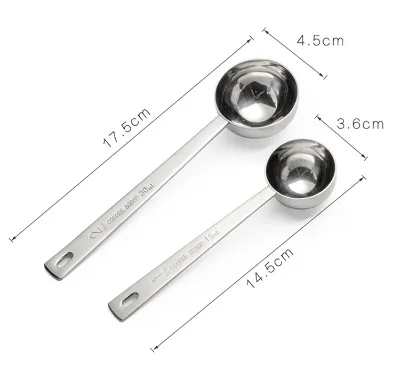
Physical specifications vary significantly across product lines. Observed data points to a wide range of dimensions, with some models specified at 15cm x 2.5cm, while others extend to 39.3cm x 20cm. This variance suggests that the "oil separator" function may be integrated into spoons of different sizes, ranging from standard tea spoons to larger dinner spoons. The weight of these items is another critical variable, with recorded weights including 139.5g, 100.5g, and 40.4g per unit or batch. The "Light Weight" attribute is also noted for certain models, indicating a design focus on user comfort during extended use.
Finishing techniques play a crucial role in both aesthetics and functionality. The majority of observed products undergo machine polishing to achieve a smooth surface, which is essential for preventing food adhesion and ensuring easy cleaning. Some suppliers offer customization options for logos via laser engraving, embossing, or other methods, allowing for brand integration. The color profile is typically unicolor, with silver being the standard finish, though multicolor options are occasionally available. Gold plating is listed as a customizable feature, though this requires specific verification of the plating thickness and durability.
Compliance and Certification Verification
In the food contact industry, regulatory compliance is non-negotiable. The supplied data highlights a robust set of certifications that buyers should prioritize when evaluating potential suppliers. The most frequently observed certifications include CE/EU, FDA, LFGB, CIQ, and EEC. These marks indicate that the product meets specific safety standards for materials used in food contact, particularly in European and North American markets.
It is important to note that certification status is not uniform across all listed products. While some entries explicitly list FDA, LFGB, and CE/EU together, others may only display FDA or CE/EU. Buyers must not assume that a single listing covers all required jurisdictions. For instance, a product certified for the EU market (CE/EU) may not automatically possess FDA clearance for the United States unless explicitly stated. The presence of CIQ (China Inspection and Quarantine) and EEC (European Economic Community) marks further validates the supply chain's adherence to international trade and safety protocols.
Buyers should request current, valid certificates for the specific model number they intend to purchase. The data shows that certification lists can vary even within the same supplier's catalog, depending on the product model (e.g., SZ004 vs. OT19125). Relying on general company certifications without verifying the specific product batch can lead to compliance failures during customs clearance or market audits.
Cost Drivers and Pricing Dynamics
Understanding the cost structure of stainless steel oil separator spoons requires an analysis of multiple variables. The observed price range in the market spans from $0.03 to $10.00 USD. This broad spectrum is driven by factors such as material grade, finishing complexity, customization requirements, and order volume. A unit priced at $0.03 likely represents a basic, non-customized item in a high-volume transaction, whereas a $10.00 unit may include specialized plating, complex branding, or lower volume pricing.
The Minimum Order Quantity (MOQ) is a significant cost driver. Data indicates an MOQ range from 1 unit to 120,000 units. However, a common threshold observed is 100 pieces. Orders falling below this threshold may incur higher per-unit costs or be subject to different shipping terms. Conversely, orders approaching the 120,000-unit mark often benefit from economies of scale, though the total capital outlay is substantial.
Packaging and logistics also influence the final landed cost. Products are typically packed in OPP bags or cartons, with carton dimensions recorded as 35cm x 25cm x 27cm. The packaging method affects shipping efficiency and potential damage rates. Furthermore, trade terms such as EXW (Ex Works), FOB (Free on Board), or Door to Door dictate who bears the shipping and insurance costs. Buyers must calculate the total cost of ownership, including freight, duties, and insurance, rather than focusing solely on the unit price.
Typical Applications and Usage Scenarios
The versatility of stainless steel oil separator spoons extends across various commercial and institutional settings. The primary use case is identified as "Kitchenware," specifically tailored for environments where oil separation is necessary during food preparation or service. Observed usage scenarios include hotels, restaurants, stores, and supermarkets. In these settings, the spoon serves a functional role in separating oil from sauces, soups, or frying liquids, enhancing the quality of the final dish.
The "All-Season" attribute suggests that these utensils are suitable for year-round use, regardless of the specific menu or climate. The "Stocked" availability indicates that some suppliers maintain inventory for immediate shipment, which is beneficial for buyers needing quick replenishment. However, the "Customized" attribute also highlights that many orders are made-to-order, allowing for specific design adaptations to meet the unique needs of a restaurant chain or hotel group.
The distinction between "Disposable" and "Non-Disposable" is critical. The observed data confirms that these products are generally non-disposable, implying a design for durability and repeated use. This aligns with the "Eco-Friendly" feature noted in several listings, suggesting that the long lifespan of the stainless steel product reduces waste compared to single-use alternatives.
Supplier Evaluation and Capacity Assessment
Selecting the right supplier involves a rigorous assessment of their production capacity and logistical reliability. The data reveals a wide disparity in supply capabilities. Some suppliers list a capacity of only 1 piece, which likely refers to sample availability or a specific low-volume listing, while others claim a monthly supply capacity of 10,000 pieces. This variance necessitates careful verification of whether the supplier can meet the buyer's projected annual demand.
Geographic location is another key factor. Most observed products originate from China, with specific mentions of Zhejiang and Jieyang, Guangdong. These regions are known hubs for stainless steel cutlery manufacturing. Buyers should verify the specific factory location to assess logistics lead times and potential supply chain risks. The "Place of Origin" and "Product Origin" fields must be consistent to avoid confusion regarding the manufacturing site.
Lead times are a critical component of supplier evaluation. Observed delivery times range from 10-30 days after deposit receipt to 15-60 days. This variation depends on order volume, customization requirements, and current production load. Buyers must align their procurement timelines with these lead times to prevent stockouts. Additionally, the availability of free samples (with the buyer covering shipping costs) allows for physical inspection of quality before committing to a large order.
Quality Control and Long-Term Procurement Considerations
Maintaining product quality over time requires a proactive quality control strategy. The "Machine Polish" finish and specific material grades (410, 430) must be verified against the buyer's internal quality standards. Visual inspection for uniformity in color, particularly for silver or multicolor finishes, is essential. For customized orders, the clarity and durability of laser-engraved or embossed logos must be tested to ensure they do not wear off during repeated washing cycles.
Long-term procurement considerations include the stability of the supply chain and the supplier's ability to maintain consistent quality. The "Customization" and "OEM" (Original Equipment Manufacturer) acceptability features suggest that suppliers are willing to adapt to buyer needs, but this flexibility must be managed through clear specifications and quality agreements. Buyers should establish a protocol for regular quality audits, especially for large orders exceeding 100,000 units.
The following table summarizes key comparison points for evaluating potential suppliers based on the observed data:
| Feature | Observation A | Observation B | Observation C |
|---|---|---|---|
| Material | Stainless Steel 410/430 | Stainless Steel | Stainless Steel |
| Certifications | CE/EU, FDA, LFGB, CIQ, EEC | CE/EU, FDA, LFGB | FDA |
| MOQ | 100 PCS | 100 PCS | 120,000 PCS |
| Lead Time | 10-30 Days | 15-60 Days | Not Specified |
| Packaging | OPP Bag | Carton | 12 PCS/Dozen, 100 Dozens/Carton |
| Origin | Zhejiang, China | China | Jieyang, Guangdong, China |
| Weight | 139.5g/100.5g/40.4g | Light Weight | Not Specified |
Buyers should use such comparative data to identify gaps in their current supplier base. For instance, if a supplier only offers FDA certification but the target market requires LFGB, a switch or additional verification is necessary. Similarly, if the lead time exceeds 60 days, it may not be suitable for just-in-time inventory models.
Final Procurement Recommendations
The procurement of stainless steel oil separator spoons demands a balance between technical specification, regulatory compliance, and logistical feasibility. Buyers must prioritize suppliers who provide transparent documentation of certifications, clearly defined material grades, and realistic lead times. The wide range of MOQs and prices observed in the market offers flexibility, but it also requires careful calculation of the total cost of ownership.
By focusing on verified attributes such as the specific stainless steel alloy, the presence of relevant food safety certifications, and the supplier's proven capacity, buyers can mitigate risks associated with quality inconsistencies and supply chain disruptions. The "Eco-Friendly" and "Non-Disposable" nature of these products further supports sustainable procurement goals, provided that the durability claims are substantiated through rigorous testing. Ultimately, a disciplined, evidence-based approach to sourcing will ensure the acquisition of high-quality oil separator spoons that meet the operational needs of commercial kitchens and retail environments.
FAQs
What certifications do stainless steel oil separator spoons typically have?
These spoons commonly carry CE/EU, FDA, LFGB, CIQ, and EEC certifications for food safety. Buyers must verify specific model numbers as certification lists vary between products like SZ004 and OT19125 rather than assuming all items hold every mark.
Which stainless steel grades are used for these kitchenware spoons?
Products are typically made from Stainless Steel 410 (13-0) or 430 alloys. These grades offer specific magnetic and corrosion properties suitable for kitchen environments, distinct from higher-grade austenitic steels like 304 or 316.
Can buyers customize the logo and finish on these spoons?
Yes, customization is available for logos via laser engraving, embossing, or other methods. Gold plating is also a customizable feature, though buyers should verify plating durability before placing large orders.
What is the typical minimum order quantity for these items?
The minimum order quantity ranges from 1 to 120,000 pieces, with 100 pieces being a common threshold. Orders below this threshold may incur higher per-unit costs or face different shipping terms.
How long does delivery take after the deposit is received?
Delivery times generally range from 10 to 60 days depending on order volume and customization. Some suppliers specify 10-30 days after deposit, while others may require up to 60 days for complex orders.
Where are these stainless steel spoons typically manufactured?
Most products originate from China, specifically from regions like Zhejiang and Jieyang, Guangdong. Buyers should verify the exact place of origin to assess logistics lead times and supply chain reliability.