Source Straight Flute HSS Threading Taps for Drilling Lathe Punch
Compare 30 Straight Flute HSS Threading Taps from Jiangsu suppliers. These tools support drilling, lathe, and punch operations with metric and inch standards available for manual or motorized use.
Key considerations
Products List


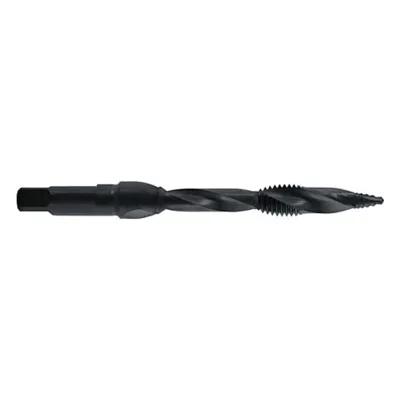


Factory Direct Wholesale Metric HSS Taps Straight Flute Taper for Thread Tapping
$0.49 - $18.00
MOQ: 100 Pieces


Comprehensive Sourcing Guide
Strategic Sourcing Guide for Straight Flute HSS Threading Taps
Understanding Core Technical Specifications and Material Integrity
When sourcing straight flute HSS (High-Speed Steel) threading taps, the primary objective is to align the tool's physical geometry with the specific demands of the machining operation. The straight flute design is distinct from spiral or spiral point variants, characterized by flutes that run parallel to the tap's axis. This geometry is particularly effective for through-holes where chip evacuation is not the primary constraint, as the chips are pushed forward rather than pulled back. Based on observed market data, these tools are frequently categorized under specific product models such as DIN 374 Straight Flute Taps, which serve as a baseline for dimensional consistency.
The material composition is the second critical pillar of specification. The supplied data indicates that the raw materials for these taps typically include HSS, HSS-V (High-Speed Steel with Vanadium), and CPM (Crucible Particle Metallurgy). These materials are selected for their ability to retain hardness at elevated temperatures generated during high-speed cutting. The standard product model often cited in this category ranges from M3 to M52 in metric sizes, with some listings also covering inch-based specifications like 3/8-16. Buyers must verify that the specific supplier's inventory matches the required thread standard, whether Metric, American, British, or a combination thereof. The "prod_model" field in supplier listings often defaults to "standard," but this should be cross-referenced against the specific thread pitch and diameter required for the application.
Furthermore, the surface treatment plays a significant role in tool life and performance. Observed surface finishes include Bright, Ti-Coated (Titanium Coated), and Tin coatings. These treatments reduce friction and heat buildup, extending the tap's operational life. The technology employed is consistently noted as "Straight Flute," reinforcing the geometric classification. When evaluating a potential supplier, the buyer should request detailed material certificates confirming the HSS grade and verify that the surface treatment aligns with the intended machining environment, such as dry cutting versus coolant-assisted operations.
Compliance Standards and Certification Verification
In the industrial procurement of threading tools, adherence to international standards is non-negotiable for ensuring interchangeability and safety. The market data reveals a diverse array of standards associated with these products, including ANSI, BS (British Standard), ISO, DIN, and GOST. Specifically, the "prod_standard" field often lists ranges such as M2-M68 or specific model numbers like DIN 374. However, it is crucial to note that not every listed product satisfies every standard; a single supplier may offer tools compliant with Metric standards while another focuses on American or British specifications.
Buyers must rigorously verify the standard compliance of the specific lot they intend to purchase. For instance, if the application requires a tool compliant with DIN 374, the supplier must explicitly confirm this in their documentation rather than relying on a general "Metric" label. The observed data also mentions standards like "3mm to 20mm" and "M3-M52," which likely refer to size ranges rather than the standard itself. A common pitfall in sourcing is assuming that a "Metric" tap is universally interchangeable without checking the pitch and tolerance class.
Certification status is another area where buyers must exercise caution. While the data mentions "OEM" branding and "Perfect" as a brand name, it does not provide specific third-party certification data such as ISO 9001 or specific material traceability reports. Therefore, the procurement strategy must include a direct inquiry to the supplier regarding their quality management systems. The buyer should request evidence of compliance with the relevant standard (e.g., ISO 296 for taps) before finalizing an order. Relying solely on the "prod_standard" label without verification can lead to compatibility issues in precision machining environments.
Cost Drivers and Pricing Structure Analysis
The pricing landscape for Straight Flute HSS Threading Taps is influenced by several variable factors, resulting in a wide observed range of 0.2 to 50 USD per unit. This significant variance is not arbitrary but is driven by the interplay of material grade, size, and customization requirements. The raw material is a primary cost driver; taps made from standard HSS will be priced lower than those manufactured from HSS-V or CPM, which offer superior wear resistance and heat tolerance.
Size is another critical determinant. The observed size range spans from M3 to M52, and potentially up to M68 in some listings. Larger diameter taps require more raw material and more complex manufacturing processes, naturally commanding a higher price. Additionally, the "prod_packing" method affects the final cost. Listings indicate packaging options ranging from simple "Plastic Box" to "Plastic Box + Inner Box + Carton." While the latter offers better protection during shipping, it adds to the unit cost.
Customization is a third major factor. The data shows that customization is "Available" for some products, while others are listed as "Non-Customized." Custom threads, special coatings, or specific brand markings will invariably increase the price and potentially the Minimum Order Quantity (MOQ). The observed MOQ range of 1 to 100 pieces suggests that buyers can source small quantities for prototyping, but larger orders may be required to access the lower end of the price spectrum. Buyers should analyze the total cost of ownership, considering that a slightly higher upfront cost for a premium material like CPM may yield significant savings in tool replacement frequency and downtime.
Typical Applications and Operational Context
The versatility of straight flute HSS taps is evident in their diverse application profiles. The data indicates usage in both "Motorize" and "Manual" operations, suggesting these tools are suitable for a wide range of shop floor environments, from automated CNC machining centers to manual bench tapping. The specific application for machine tools includes "Drilling," "Lathe," and "Punch" operations. This broad applicability makes them a staple in general manufacturing sectors.
The geometry of the straight flute is particularly advantageous for specific hole types. The observed attribute "Usage: Through Holes or Shallow Holes" highlights the tool's primary strength. In through-hole applications, the straight flute design allows for efficient chip evacuation when used with appropriate coolant, as the chips are pushed out of the hole. However, for blind holes, the straight flute design may be less effective than spiral point taps, as chips can accumulate at the bottom of the hole. Buyers must ensure their specific application matches the tool's design strengths.
Furthermore, the "Type of Die" is listed as "Round Die" in some contexts, which may refer to the tooling used to manufacture the tap or a related product line, but the primary focus remains on the tap itself. The "Pieces" attribute varies, with listings showing sets of 3 or 20 pieces, indicating that these tools are often sold in sets for specific jobs or as individual units for replacement. Understanding the operational context is vital; for high-volume production, the durability of the HSS material and the efficiency of the straight flute design are paramount, whereas for low-volume manual work, ease of use and cost-effectiveness may take precedence.
Supplier Evaluation and Geographic Considerations
When evaluating potential suppliers for Straight Flute HSS Threading Taps, geographic origin and production capabilities are key indicators of reliability. The data consistently points to "Jiangsu" and "Danyang, Jiangsu" as the primary places of origin, with some listings specifying "China (Mainland)." Jiangsu is a known manufacturing hub for cutting tools, offering a dense ecosystem of suppliers. However, the presence of a location does not guarantee quality; it merely indicates the source.
Buyers should evaluate suppliers based on their ability to provide detailed product attributes. The data shows variations in "prod_model" (e.g., "standard," "metric and inch," "DIN 374") and "prod_standard" (e.g., "According to Requirement," "M3-M52"). A reliable supplier will have clear, consistent data across their catalog and will be able to provide specific model numbers for requested specifications. The "Brand" attribute varies, with "OEM" and "Perfect" appearing in the data, suggesting that some suppliers offer private labeling while others sell under their own brand.
It is essential to avoid assuming that all suppliers in the region offer the same quality. The "Raw Material" field lists HSS, HSS-V, and CPM, but a supplier claiming to sell CPM taps must provide proof of material composition. Buyers should request samples to verify the physical properties of the tool, including hardness and surface finish. Additionally, the "prod_packing" options should be evaluated to ensure they meet the logistical needs of the buyer's supply chain. A supplier offering "Plastic Box + Inner Box + Carton" demonstrates a commitment to product protection, which is a positive indicator of overall operational maturity.
Quality Control and Long-Term Procurement Strategy
Ensuring consistent quality in the procurement of Straight Flute HSS Threading Taps requires a robust quality control (QC) strategy. The observed data includes attributes like "Surface Treatment: Tin, Ticn, Dlc" and "Technology: Straight Flute," which serve as baseline QC checkpoints. Buyers should implement incoming inspection protocols that verify these attributes against the purchase order. For example, confirming that the surface coating matches the specified type (e.g., Ti-Coated vs. Tin) is critical, as different coatings offer different levels of lubricity and wear resistance.
Long-term procurement considerations extend beyond the initial purchase. The "Customization" attribute being "Available" suggests that suppliers can adapt to specific needs, which is valuable for long-term partnerships. However, the "Customized: Non-Customized" flag in other listings indicates that some suppliers may have rigid product lines. Buyers seeking long-term stability should prioritize suppliers who offer flexible customization options and consistent material grades.
The "Pieces" attribute, showing counts like 3 or 20, implies that inventory management is a factor. Buyers should plan for inventory levels that account for tool wear and replacement cycles. Given the wide price range and the potential for material variations, establishing a preferred supplier list based on consistent performance and quality verification is advisable. Regular audits of the supplier's quality management system and material traceability will help mitigate the risk of receiving substandard tools. Ultimately, the goal is to build a supply chain that ensures the availability of high-performance straight flute HSS taps that meet the rigorous demands of modern manufacturing.
FAQs
What materials are used for Straight Flute HSS Threading Taps?
These taps are primarily made from High-speed Steel, Alloy Tool Steel, HSS-V, or CPM. The specific material grade determines heat resistance and tool life, with options ranging from standard HSS to premium CPM for demanding applications.
Which thread standards do these taps comply with?
The taps comply with Metric, American, British, DIN, ISO, ANSI, and GOST standards. Buyers must verify the specific standard like DIN 374 or M3-M52 ranges to ensure compatibility with their machinery and thread requirements.
Can these taps be used for manual and motorized operations?
Yes, these tools are designed for both manual and motorized applications including drilling, lathe, and punch operations. The straight flute geometry is particularly effective for through holes or shallow holes in various machining environments.
What surface treatments are available for these threading taps?
Available surface treatments include Bright, Ti-Coated, Tin, TiCN, and DLC coatings. These finishes reduce friction and heat buildup, extending the operational life of the tool during cutting processes.
Where are these Straight Flute HSS Threading Taps manufactured?
The primary places of origin are Jiangsu and Danyang in China. Buyers should verify the specific factory location and production capabilities when sourcing to ensure quality and logistical efficiency.
What is the typical price range for these threading taps?
The observed price range is between 0.2 and 50 USD per unit. Pricing varies based on material grade, size, customization options, and packaging requirements such as plastic boxes or cartons.