Source Super Absorbent Cotton Sanitary Pads for Daily, Night, and Sport Use
Compare 30 listings of Super Absorbent Cotton Sanitary Pads from verified Chinese manufacturers. Buyers can evaluate features like winged designs, absorbency levels, and customization options for adult female use; compare the available evidence and request quotations based on your requirements.
Key considerations
Products List


OEM Non Woven Sanitary Pad Super Absorbency Breathable Sanitary Towel Napkin
$0.02 - $0.03
MOQ: 100000 Pieces


Top Quality Perforated Cotton Sanitary Pads Disposable Thick Ladies Sanitary Pads
$0.02 - $0.10
MOQ: 100000 Pieces




Comprehensive Sourcing Guide
Super Absorbent Cotton Sanitary Pads Sourcing Guide
Buyers must first distinguish between products explicitly labeled as cotton and those using non-woven materials, as the supplied data reveals a mix of both material types in the current market. While some listings specify cotton as the primary material, others indicate non-woven topsheets, which affects the tactile experience and breathability claims. Procurement teams should verify the exact material composition of the top sheet and core, as the distinction between "cotton" and "non-woven" directly impacts the product's suitability for sensitive skin and its overall comfort profile.
The observed product range includes both disposable and non-disposable variants, creating a potential confusion point for buyers seeking single-use hygiene solutions. Listings indicate features like "washable" alongside "disposable," suggesting a need for rigorous clarification on the intended lifecycle of the item. Sourcing strategies must prioritize suppliers who clearly define the product's disposability status to ensure alignment with brand positioning and consumer expectations regarding hygiene and waste management.
Product Scope and Observed Listing Signals
The market data indicates a wide variance in minimum order quantities, ranging from 1,000 units to 500,000 units, which significantly influences the feasibility of entry for small to medium-sized enterprises. Buyers should align their initial order volume with the specific supplier's capacity, noting that some vendors require bulk commitments like a 20ft container, while others offer lower thresholds for sampling. Understanding these thresholds is critical for managing cash flow and inventory risk before committing to a long-term supply agreement.
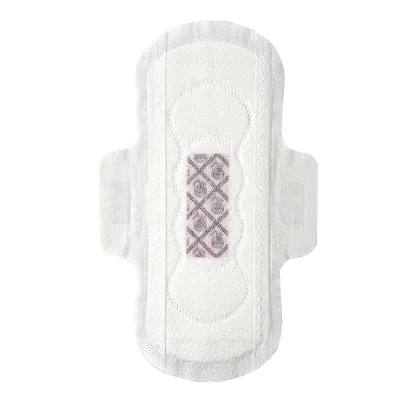
Product specifications vary widely in dimensions and features, with observed sizes around 245mm by 150mm and wings included in many models. Buyers must carefully review the listed features such as "super absorbent," "breathable," and "side-gather" to ensure they match the specific needs of their target demographic, which is identified as adult females. The presence of patterns and multicolor options suggests a market segment focused on aesthetic differentiation, requiring buyers to verify if these visual elements are standard or custom-only.
Technical Specifications to Verify
Verification of the core absorption materials is essential, as the data highlights the use of specific inputs like Japan Sumitomo SAP and USA Domta fluff pulp. Buyers should request batch-specific documentation to confirm the origin and quality of these absorbent components, as they directly determine the product's capacity to handle fluid volume. The listed absorption capacity of 40ml serves as a baseline reference, but actual performance can vary based on the ratio of pulp to SAP and the structural integrity of the core.
The physical construction of the pad, including the top sheet and backing, requires detailed scrutiny to ensure comfort and leak protection. Specifications mention perforated soft non-woven topsheets and winged designs, which are critical for fit and security during use. Procurement teams must validate that the "leakproof" and "absorbent" claims are backed by consistent manufacturing processes, particularly regarding the side-gather features that prevent lateral leakage during movement.
Compliance and Safety Documentation
While specific certifications like GOTS or ISO 13485 are mentioned in background contexts, buyers must not assume these are automatically included without explicit verification from the supplier. The absence of confirmed certification status in the primary data means that safety compliance must be treated as a conditional requirement rather than a standard feature. Sourcing strategies should include a mandatory request for current test reports and material safety data sheets to validate that the products meet the regulatory standards of the destination market.
Safety documentation must also address the "external use" designation and the absence of flavoring, which are critical for consumer trust and regulatory adherence. Buyers should ensure that the supplier provides evidence of hygiene controls during production, especially given the direct skin contact nature of the product. The warranty period of three years mentioned in some listings is unusual for consumables and requires clarification to understand what specific quality guarantees are being offered beyond standard defect coverage.
Cost Drivers and Commercial Terms
Pricing in this sector is highly sensitive to the volume of the order, with observed ranges spanning from $0.01 to $0.69 per unit depending on the configuration and material quality. Buyers should anticipate that lower price points often correlate with standard non-woven materials, while premium cotton blends or specialized SAP formulations will command higher costs. Understanding the cost structure requires a clear breakdown of material expenses, labor, and packaging, which can vary significantly between suppliers in different regions of China.
Packaging and logistics represent a significant portion of the total landed cost, with options ranging from simple polybags to complex carton configurations. The data shows packing variations such as 10 pieces per bag with 48 bags per carton, or alternative box and OPP bag options, each impacting shipping efficiency and storage requirements. Buyers must calculate the total cost per unit including freight, considering that some suppliers require full container loads, which affects the overall unit economics for smaller orders.
Supplier Qualification and Quality Control
Supplier qualification should focus on verifying the consistency of their production capabilities, particularly regarding the "OEM ODM" services offered by many vendors. Buyers need to assess whether the supplier can maintain the specific technical specifications, such as the 245mm size and winged design, across large production runs without compromising quality. The presence of sample offerings is a positive indicator, but these samples must be representative of the mass-produced items to ensure accurate quality assessment before full-scale ordering.
Quality control protocols must be established to monitor critical attributes like the "super absorbent" performance and the integrity of the "paper carton" or "box" packaging. Buyers should implement a rigorous inspection plan that checks for defects in the non-woven topsheet and ensures the SAP distribution is uniform throughout the core. Given the variation in origin locations like Fujian and Quanzhou, it is advisable to conduct on-site audits or hire third-party inspectors to verify that the production environment meets the required hygiene and safety standards.
Long-Term Procurement Checks
Sustaining a successful supply chain requires regular re-evaluation of the supplier's ability to maintain the specified material standards, such as the use of Domta fluff pulp and Sumitomo SAP. Buyers should establish a schedule for periodic quality audits to ensure that the "washable" or "non-disposable" claims, if applicable, remain consistent with the product's intended lifecycle. Continuous monitoring of the supply chain is necessary to prevent any drift in material quality that could affect the final product's performance and consumer satisfaction.
Long-term partnerships should also include a review of the supplier's adaptability to changing market demands, such as new patterns or eco-friendly features. The data indicates a trend toward "eco-friendly" and "ultra thin" designs, suggesting that suppliers must be agile enough to innovate and adjust their production lines accordingly. Buyers should negotiate flexible terms that allow for adjustments in order volume and specifications, ensuring that the procurement strategy remains responsive to evolving consumer preferences and regulatory landscapes.
FAQs
What materials are used in these Super Absorbent Cotton Sanitary Pads?
The pads utilize a cotton top sheet combined with non-woven backing layers. They incorporate Japan Sumitomo SAP for high absorption and USA Domta fluff pulp for structure. This material blend ensures comfort and effective liquid retention for adult female users during daily external use.
Can these sanitary pads be customized with a specific logo?
Yes, customization is available for bulk orders. Buyers can request specific logos, patterns, or packaging designs. The standard packing includes 10 pieces per polybag and 48 bags per carton. Minimum order quantities typically start at 1000 units, allowing for tailored branding solutions.
What is the absorption capacity of these super absorbent pads?
These pads feature super high absorbency with a capacity of 40ml. They are designed to be leakproof and absorbent for day use. The winged shape provides additional security, while the ultra-thin design ensures comfort. The Japan Sumitomo SAP enhances rapid liquid uptake.
Are these sanitary pads disposable or reusable?
The product listings indicate both disposable and non-disposable options. Most standard items are disposable, designed for single use with features like side-gather and breathability. Some variations may be washable. Buyers should verify the specific product model to confirm the intended usage type before ordering.
What are the standard specifications for these cotton sanitary pads?
Standard specifications include a size of 245mm by 150mm with a winged design. The top sheet is perforated soft non-woven material. Models like YJSN18PC and TY02 are available. The origin is primarily Fujian, China, with products meeting specific commercial use standards for external application.
How are these sanitary pads packaged for shipping?
Packing typically involves 10 pieces per polybag and 48 bags per carton. The carton dimensions are approximately 41cm by 31cm by 31cm. Some options include box or OPP bag packaging. The products are shipped in paper cartons from manufacturing locations in China.