Source Eco-Friendly Cotton Menstrual Pads for Daily Use
Source Eco-Friendly Cotton Menstrual Pads from 30 verified suppliers. Compare options featuring super absorbent, breathable, and leakproof designs for day and night use. Evaluate customization, packaging, and MOQs to find the right fit for your brand; compare the available evidence and request quotations based on your requirements.
Key considerations
Products List


Lightweight Breathable Cotton Non Woven Menstrual Women Sanitary Napkin Pad
$0.02 - $0.04
MOQ: 100000 PC


Premium Quality Menstrual Pads Organic Cotton Sanitary Napkin for Wholesale
$0.02 - $0.03
MOQ: 100000 Pieces

Menstrual Pads High Quality Sanitary Pads Negative Ion Sanitary Napkin
$0.02 - $0.03
MOQ: 150000 Pieces


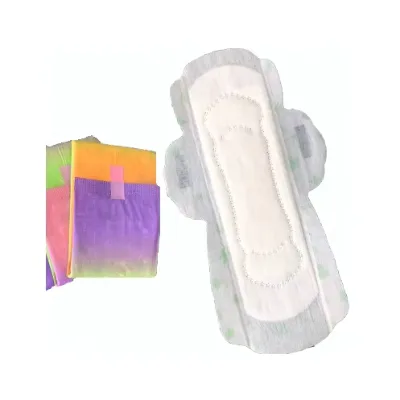

Reliable Quality Ultra-thin sanitary pad Sanitary napkin Menstrual pad
$0.02 - $0.03
MOQ: 160000 pieces


Comprehensive Sourcing Guide
Eco-Friendly Cotton Menstrual Pads Sourcing Guide
Buyers must first distinguish between disposable and reusable options, as the market presents conflicting signals on product longevity. While some listings explicitly describe items as disposable with super absorbent features, others highlight reusable characteristics such as washability and a three-year warranty. This divergence requires immediate clarification to ensure the procurement aligns with sustainability goals or specific usage patterns.
The observed product range includes both cotton and non-woven materials, with sizes varying from 245mm to 420mm in length. Buyers should verify whether the specific supplier offers the "Without Pattern" or "With Pattern" variants, as this affects branding potential. Understanding these material and design distinctions is critical before initiating any commercial dialogue to avoid mismatched expectations regarding product lifecycle and environmental impact.
Product Scope and Observed Listing Signals
The market data indicates a wide price range from 0.01 to 2.25 USD, suggesting significant variation in quality, material composition, and order volume. Buyers should treat these figures as indicative of different product tiers rather than a uniform market rate. The minimum order quantities span from 100 pieces to 400,000 units, meaning small businesses and large distributors face vastly different entry barriers and inventory requirements.
Listing attributes reveal a focus on adult female users with specific features like odor control, breathability, and leakproof designs. Some products are marketed for day use, while others target night use, necessitating a clear definition of the intended application window. The presence of customization options for logos and colors allows for brand differentiation, but buyers must confirm if these services are included in the base price or charged separately.
Technical Specifications to Verify
Verification of physical dimensions is paramount, as observed sizes range from 245x150mm to 420x155mm, with some listings citing customized cut options. Buyers must confirm the exact length and width required for their target demographic, noting that some specifications list 260mm to 400mm as a general range. Ensuring the winged shape and built-in usage design match the intended fit is essential for user comfort and product efficacy.
Material composition requires careful scrutiny, as listings cite both cotton and non-woven fabrics alongside fluff pulp standards. The absorption capabilities are described as super absorbent, yet the specific SAP source, such as Japan Brand, should be validated for quality assurance. Additionally, the distinction between disposable and non-disposable construction must be confirmed, as this fundamentally alters the product's functional lifespan and disposal requirements.
Compliance and Safety Documentation
Safety documentation should focus on verifying the absence of harmful chemicals and the presence of breathable, skin-friendly materials. While GOTS certification is mentioned in background notes, buyers must request specific test reports confirming the cotton is free from pesticides and synthetic dyes. The claim of being odor control and breathable should be backed by independent laboratory results rather than supplier assertions alone.
Warranty terms and functional guarantees provide a baseline for quality expectations, with some listings offering a three-year warranty for reusable items. Buyers should demand proof of the leakproof and washable claims through durability testing data. For disposable variants, the focus shifts to hygiene standards and the safety of the adhesive wings, ensuring they do not cause irritation during extended wear periods.
Cost Drivers and Commercial Terms
Pricing is heavily influenced by the choice between disposable and reusable models, as well as the complexity of customization. The observed MOQs range from 100 to 400,000 units, creating a direct correlation between unit cost and order volume. Buyers should negotiate based on the specific material mix, such as the inclusion of fluff pulp or specific SAP brands, which can significantly alter the final landed cost.
Packaging and logistics represent another major cost driver, with options ranging from paper cartons to customized packing bags. The availability of free design services for logos and colors may reduce initial marketing expenses but could increase production lead times. Buyers must clarify whether the single gross weight of 0.1kg per item applies to the product alone or includes the packaging, as this impacts shipping calculations and freight costs.
Supplier Qualification and Quality Control
Supplier qualification should prioritize those offering samples and demonstrating a clear distinction between their product models. The presence of multiple model numbers, such as 19001, 19013, and KSP0004, suggests a diverse catalog, but buyers must ensure the specific model matches the requested specifications. Verifying the origin, specifically Quanzhou or general China production, helps in assessing supply chain transparency and potential logistical advantages.
Quality control protocols must address the variability in features like fan-shape designs and side-gather mechanisms. Buyers should implement a sampling strategy to test the softness, breathability, and absorption rates before committing to large orders. It is crucial to confirm that the "Without Logo Printing" or "With Logo Printing" options are executed with precision to maintain brand integrity and avoid defects in the final product.
Long-Term Procurement Checks
Long-term success depends on the supplier's ability to maintain consistent quality across repeated orders, especially for reusable items with washability claims. Buyers should establish clear metrics for product durability, ensuring the three-year warranty remains valid over time. Regular audits of the production line can help verify that the cotton and non-woven materials remain consistent in texture and absorbency.
Supply chain resilience is another critical factor, given the wide range of MOQs and potential lead time variations. Buyers should develop contingency plans for restocking, particularly for high-volume orders where the 400,000 unit threshold might be required. Maintaining open communication regarding design changes and material sourcing ensures that the product continues to meet evolving market demands and sustainability standards.
FAQs
What materials are used in these Eco-Friendly Cotton Menstrual Pads?
These pads use cotton as the primary surface material, and some listings specify non-woven components for the top sheet or packaging layers. Cotton provides a soft, breathable contact surface for adult women during monthly periods. Because material composition can vary between the disposable and reusable listings on this page, buyers should confirm the exact layer structure and SAP brand with the supplier before ordering.
What sizes are available for Eco-Friendly Cotton Menstrual Pads?
The listed size standards are 245*150mm, 285*150mm, 360*155mm, and 420*155mm, covering shorter day pads and longer night pads. Some listings also state customized sizes, so dimensions can be adjusted to your specification. When requesting a quotation, tell the supplier which length and width you need and whether the pad should be winged or fan-shaped with side gathers.
Can I order Eco-Friendly Cotton Menstrual Pads with customized packaging and logo?
Customized packing is available, and suppliers offer free design service on some listings. One listing shows the pads without logo printing by default, so you should confirm whether logo printing can be added to your order. Customization availability generally depends on order quantity, so provide your artwork, preferred packaging bag or paper carton format, and MOQ expectations when requesting samples.
What is the minimum order quantity for these cotton menstrual pads?
One listing states an MOQ of 100 pieces, which suits buyers testing a new product line or market. Other listings on this page show MOQ requirements across a much wider range, so the minimum depends on the specific supplier and pad style. Always confirm MOQ alongside pricing, since trial quantities may carry a different unit cost than bulk orders.
How absorbent are the disposable cotton menstrual pads listed here?
The listed disposable pads are described as super absorbent, breathable, and odor controlling, with some models using Japan brand SAP and fluff pulp as absorbent cores. Absorbency usually differs between day and night sizes, where the longer 360mm and 420mm pads handle heavier flow. Ask suppliers for the absorbency specification of each size and request samples to verify performance before committing.
Which pads suit daytime use and which suit overnight protection?
Day-use pads are typically the shorter sizes such as 245*150mm and 285*150mm, offering comfortable, breathable protection for lighter flow. Night-use pads use the longer 360*155mm and 420*155mm sizes, often with winged or fan-shaped designs and side gathers to prevent leakage while sleeping. Some listings also include reusable washable pads with leakproof absorbent layers for sustainable daytime wear.