Source Surface Mount D-Type Latch IC for Smart Home, PCB, and Industrial Systems
Explore 30 available options for the surface mount d-type latch ic suitable for smart home devices, PCB assemblies, and industrial control applications. Buyers can compare specifications like package type, input voltage, and mounting style to find the right component for their designs.
Key considerations
Products List
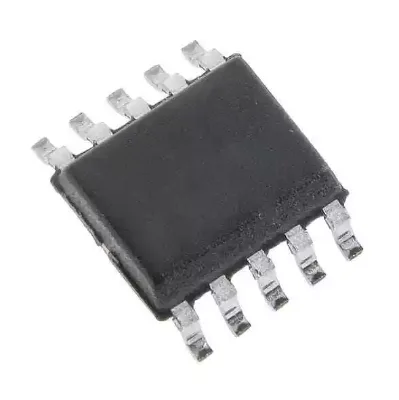


IRS21867STRPBF IRS21867S Series Dual Surface Mount High and Low Side Driver IC
$0.17 - $200.00
MOQ: 500 Pieces

MIC5504-3.3YM5-TR MIC5504 Series Surface Mount Fixed Single Output LDO IC
$0.22 - $200.00
MOQ: 500 Pieces

SPX5205M5-L-5-0/TR SPX5205 Series 5V 150mA Fixed Surface Mount Voltage Regulator IC
$0.18 - $200.00
MOQ: 500 Pieces

74HC32D 74HC Series Surface Mount High Speed Quad 2-Input OR Gate ic SN74HC32DR
$0.10 - $200.00
MOQ: 500 Pieces




Comprehensive Sourcing Guide
Strategic Sourcing Guide for Surface Mount D-Type Latch ICs
Navigating the procurement landscape for surface mount D-type latch integrated circuits requires a disciplined approach that balances technical precision with supply chain reliability. For buyers operating in the B2B sector, the selection of these components is not merely a transactional exercise but a critical step in ensuring the functional integrity of digital logic systems. The core keyword, surface mount d-type latch ic, points to a specific class of semiconductor devices designed to store a single bit of data, typically utilized in registers, buffers, and memory interfaces. This guide synthesizes available product attributes and industry-standard procurement practices to provide a comprehensive framework for sourcing these essential components without relying on unverified claims or speculative data.
Technical Specifications and Package Identification
The foundation of any successful procurement strategy lies in a rigorous understanding of the technical specifications required for the specific application. When searching for surface mount D-type latch ICs, buyers must first distinguish between the functional logic requirements and the physical packaging constraints. The market offers a variety of package types, ranging from standard Small Outline Integrated Circuits (SOIC) to more compact solutions like Quad Flat Pack (QFP) or even specialized thin profiles.
Based on observed market data, a common configuration for high-efficiency power management and logic applications involves an 8-pin Surface Mount Device (SMD) package, specifically the 8-SOIC form factor. This package type is characterized by its flat shape and is designed for automated assembly processes. The physical dimensions are critical; for instance, a single package size of approximately 1.1 x 1.1 x 1.1 cm has been noted in specific listings, though this varies significantly by manufacturer and logic family. Buyers must verify the exact pin count, as D-type latches can range from single-bit devices with 8 pins to multi-bit configurations with significantly higher pin counts, such as the 64-pin HQFP (High-Profile Quad Flat Pack) observed in certain semiconductor catalogs.
The electrical characteristics are equally vital. The conductive type of the integrated circuit dictates the internal architecture and power consumption profile. While some modern designs utilize Unipolar Integrated Circuits for lower power consumption, others may employ Bipolar Integrated Circuits for specific speed or drive requirements. The integration level, whether Monolithic (MSI) or more complex, influences the board space required. Furthermore, the operating temperature range is a non-negotiable specification for industrial and automotive applications. A standard operating range of -40°C to +125°C is frequently cited for robust industrial-grade components, ensuring reliability across extreme environmental conditions. Buyers must cross-reference these specifications against their system design to ensure thermal and electrical compatibility.
Compliance, Certification, and Quality Verification
In the global semiconductor market, verifying the authenticity and quality of components is paramount to avoiding counterfeit risks and ensuring long-term product reliability. The term "Genuine New Original" is often used in product descriptions, but buyers must treat such claims as observations requiring independent verification rather than absolute guarantees. The supply chain for integrated circuits is complex, and the presence of "New Original Packaging" or "Vacuum Packing" indicates specific handling protocols, but these do not inherently certify the component's origin or performance history.
Compliance checks should focus on the manufacturing origin and the condition of the goods. Many high-quality components originate from major semiconductor manufacturing hubs, such as Guangdong, China, where a significant portion of the global supply chain is concentrated. However, the "Place of Origin" listed on a product page does not equate to the location of the original fabrication facility, which is often a different jurisdiction. Buyers should request documentation that traces the component back to the Original Manufacturer (MFG.), such as Infineon or other established semiconductor houses, rather than accepting generic "Other" brand names without further due diligence.
Quality assurance protocols must include a review of the "Condition" of the product. Claims of "Brand New" or "New Original" should be supported by batch codes and date codes (D/C). For example, a date code of "22+" indicates a manufacturing year of 2022 or later, which is crucial for assessing the component's shelf life and compatibility with current production standards. The absence of a specific date code or the presence of vague terms like "New D/C" should trigger a deeper investigation into the supplier's inventory management practices. Additionally, the integration of GSI (Gate Scale Integration) or other specific technologies should be verified against the datasheet to ensure the component meets the intended logic density and performance metrics.
Cost Drivers and Pricing Dynamics
Understanding the cost drivers for surface mount D-type latch ICs is essential for budgeting and negotiating effective procurement strategies. The price of these components is influenced by a multitude of factors, including the complexity of the integrated circuit, the packaging type, the volume of the order, and the current market demand for specific logic families. The observed price range in the market can vary significantly, spanning from as low as $0.01 to as high as $200 per unit. This wide disparity reflects the difference between basic, high-volume commodity chips and specialized, low-volume, or high-performance variants.
The Minimum Order Quantity (MOQ) is another critical cost driver. Listings indicate an MOQ range of 1 to 1000 units, suggesting that buyers can source small quantities for prototyping or development, while larger volumes are required for mass production. High MOQs often correlate with lower unit costs, but they also increase the financial risk for buyers who may not have immediate demand. Conversely, low MOQs allow for flexibility but may come with a premium per unit.
Payment terms also play a role in the overall cost structure. Standard payment methods such as PayPal, Telegraphic Transfer (TT), Western Union, and Trade Assurance are commonly accepted. Trade Assurance, in particular, offers a layer of protection for the buyer, potentially influencing the supplier's pricing strategy to include risk mitigation costs. Buyers should analyze the total cost of ownership, which includes not just the unit price but also shipping, duties, and the potential cost of delays or quality failures. The "Single Item" selling unit format suggests that some suppliers cater to small-batch needs, while others may require bulk purchasing agreements to unlock competitive pricing tiers.
Typical Applications and System Integration
Surface mount D-type latch ICs are ubiquitous in modern electronics, serving as fundamental building blocks for digital logic systems. Their primary function is to store binary data, making them indispensable in applications requiring temporary data storage, signal synchronization, and data buffering. The "Smart Home Devices" application is a prominent use case, where these ICs manage data flow between sensors, microcontrollers, and communication modules. In smart home ecosystems, the reliability of data latching is critical for ensuring that control signals are processed correctly and that state information is maintained during power fluctuations or communication interruptions.
Beyond consumer electronics, these components are heavily utilized in PCB (Printed Circuit Board) designs for industrial automation, automotive control systems, and telecommunications equipment. The "AC-D/C Power Management IC" context, while distinct from pure logic latches, often co-exists in the same system architecture, managing the power delivery to the logic circuits. The integration of these components requires careful consideration of the mounting type, with Surface Mount Device (SMD) being the preferred method for high-density PCB layouts. The flat shape and compact dimensions of SMD packages allow for smaller form factors, which is a key requirement in portable and wearable devices.
The versatility of D-type latches extends to their use in shift registers, counters, and memory address buffers. In these applications, the ability to latch data on a specific clock edge ensures that the system operates in a synchronized manner. The "Constant Voltage and Constant Current" output capabilities of associated power management ICs often work in tandem with the logic latches to provide stable operating conditions. Buyers must ensure that the selected ICs are compatible with the system's voltage levels and clock speeds to prevent data corruption or system instability.
Supplier Evaluation and Selection Criteria
Selecting the right supplier is a critical decision that impacts the quality, reliability, and continuity of the supply chain. When evaluating potential suppliers for surface mount D-type latch ICs, buyers should prioritize transparency and proven track records. The "Brand Name" listed as "Other" in some contexts may indicate a distributor or a re-packager rather than the original manufacturer. Buyers should seek suppliers who can provide direct evidence of their relationship with the Original Manufacturer (MFG.), such as Infineon, to ensure the authenticity of the components.
The "Quality" attribute, often described as "High Quality" or "Genuine New Original," should be backed by tangible evidence. This includes the availability of test reports, traceability documentation, and adherence to specific manufacturing standards. Suppliers who offer a "1-year warranty" demonstrate confidence in their product quality and provide a safety net for the buyer in case of early failures. The "Customization" availability is another factor to consider; while standard D-type latches are widely available, some applications may require specific configurations or custom packaging, which only certain suppliers can provide.
Furthermore, the "Mounting Type" and "Package" specifications must align with the buyer's assembly capabilities. Suppliers who offer a wide range of package types, from 8-SOIC to 64-pin HQFP, provide greater flexibility for different project requirements. The "Single Gross Weight" of 0.500 kg per unit or per batch can influence shipping costs and logistics planning, particularly for international procurement. Buyers should also consider the "Lead Time" and "Production Capacity" of the supplier, although specific values should be verified directly with the vendor rather than assumed from general market observations.
Quality Control and Long-Term Procurement Considerations
Implementing a robust quality control (QC) process is essential for mitigating the risks associated with semiconductor procurement. The "Technics" used in manufacturing, such as "Thick Film IC" or "Semiconductor IC," dictate the fabrication process and the resulting performance characteristics. Buyers should verify that the components meet the specific technical standards required for their application, particularly regarding "Conductive Type" and "Integration" levels. The presence of "New Original Packaging" and "Vacuum Packing" suggests that the components have been stored in conditions that minimize moisture and static damage, but these claims should be validated upon receipt.
Long-term procurement considerations involve building a resilient supply chain that can withstand market fluctuations and supply disruptions. The "Place of Origin" being "China" or "Guangdong" indicates a concentration of manufacturing capacity, but buyers should diversify their supplier base to reduce dependency on a single region. The "Series" designation, such as "Chip Ics," helps in identifying compatible components for future upgrades or replacements. Buyers should also consider the "Warranty" terms and the supplier's policy on returns and replacements for defective goods.
Finally, the "Specification" details, including the model number (e.g., TEA19361T1J, SN74LVC373ADW, UC-0019), must be meticulously matched to the design requirements. The "Operating Temperature" range and "Input Voltage" specifications are critical for ensuring that the components function correctly in the intended environment. By adhering to a disciplined approach that combines technical verification, supplier evaluation, and quality control, buyers can successfully navigate the complexities of sourcing surface mount D-type latch ICs and ensure the reliability of their electronic systems.
FAQs
What is the operating temperature range for this IC?
The operating temperature range is -40°C to +125°C for industrial-grade reliability. This wide range ensures stable performance in extreme environmental conditions typical for smart home and PCB applications.
Which package type is used for this power management IC?
This component uses an 8-pin SMD package, specifically the 8-SOIC form factor. The flat shape and compact dimensions of 1.1x1.1x1.1 cm facilitate automated surface mount assembly on printed circuit boards.
Can I get a warranty for this new original product?
Yes, a 1-year warranty is provided for this brand new and genuine new original product. This warranty covers potential early failures and provides a safety net for buyers sourcing high-quality semiconductor ICs.
How does the input voltage range affect system design?
The device supports a wide input voltage range of 90V to 265V AC. This flexibility allows it to function reliably across different global power standards without requiring additional external conversion circuitry.
What is the minimum order quantity for these components?
The minimum order quantity ranges from 1 to 1000 units depending on the specific supplier. Buyers can source small quantities for prototyping or larger volumes for mass production to optimize unit costs.
Which integration level is specified for this integrated circuit?
The integration level is specified as GSI or MSI depending on the specific model variant. This indicates the complexity of the logic density and influences the board space required for the final electronic design.