Source Sustainable Wooden Phone Docking Station for Office, Home, and Gift
Compare 30 Sustainable Wooden Phone Docking Station options from verified suppliers. These units feature wood or bamboo materials, customizable logos, and are suitable for office supplies, home decoration, and commercial gifts with various charging functions.
Key considerations
Products List





Wireless Charge Hotel Multifunctional Digital Docking Station for Mobile Phone
$23.81 - $39.68
MOQ: 1 Pieces




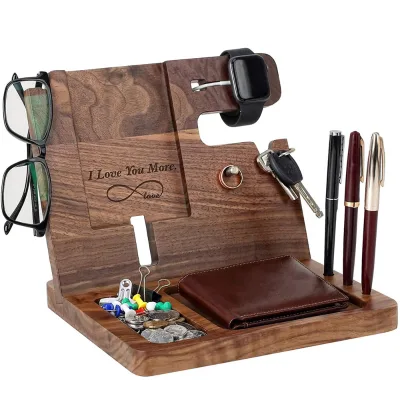
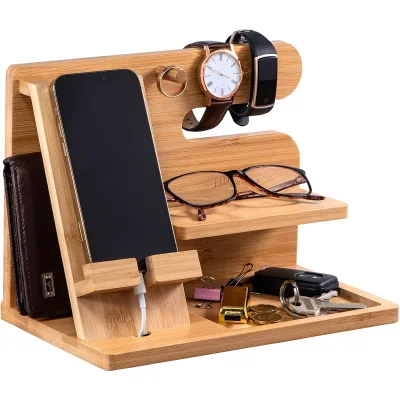

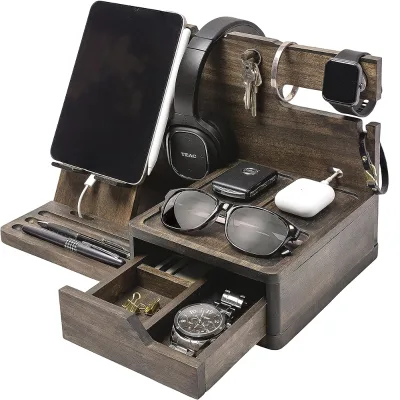
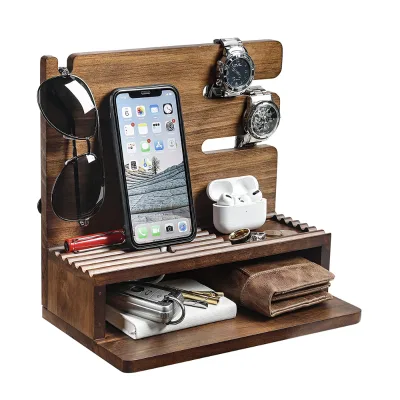

Comprehensive Sourcing Guide
Strategic Sourcing Guide for Sustainable Wooden Phone Docking Stations
Understanding Material Composition and Environmental Attributes
The foundation of sourcing a Sustainable Wooden Phone Docking Station lies in verifying the raw material composition. In the current market, the primary materials observed for these products are wood and bamboo. While both are renewable resources, they offer distinct aesthetic and structural characteristics. Wood-based units often present a "Natural Color" or "Wood Color" finish, providing a classic, warm aesthetic suitable for various interior designs. Bamboo, conversely, offers a faster-growing renewable profile and often features a distinct grain pattern that appeals to modern, eco-conscious buyers.
When evaluating material sustainability, buyers must look beyond the generic term "wood." The specific processing methods applied to the material significantly impact the final product's environmental footprint. Common finishing processes observed include polishing and the application of vegetable oils or lacquers. Vegetable oil finishes are generally preferred in sustainable procurement as they are non-toxic and enhance the natural grain without introducing harsh chemical solvents. Lacquered finishes, while offering a high-gloss protective layer, require verification regarding their volatile organic compound (VOC) content to ensure they meet low-emission standards.
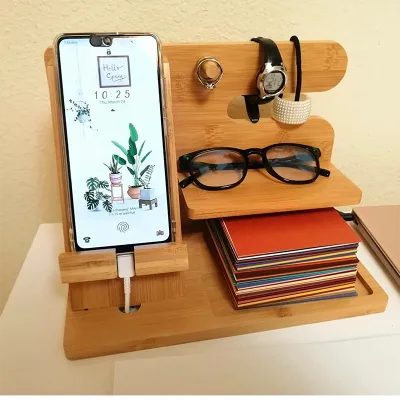
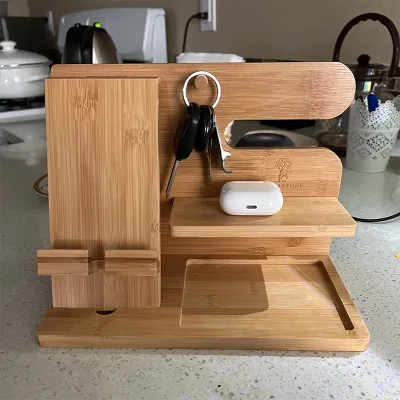
The physical dimensions of the docking stations vary significantly based on the model and intended function. Observed specifications include models with dimensions such as 22.1 x 18 x 20.5 cm, 25.5 x 15 x 18.5 cm, and 23 x 16 x 19.5 cm. Larger units may reach 30 x 20 x 20 cm. Buyers should verify that the chosen dimensions align with the specific phone models they intend to support. The "Compatible Brand" attribute typically lists "All Types of Mobile Phones" or "All," indicating a universal design. However, the physical "Holder Only" function implies that the unit is a passive stand unless it includes integrated charging capabilities, which some models describe as "with Charge."
Technical Specifications and Functional Design
Technical evaluation of wooden phone docking stations requires a clear distinction between passive stands and active charging docks. The functional attributes observed in the market include "Holder Only" configurations and units described as having "with Charge" capabilities. For buyers seeking a charging solution, it is critical to confirm the internal electronics. A wooden shell alone does not provide power; the presence of a charging function necessitates internal wiring, circuit boards, and power adapters.
The installation requirements for these units are generally minimal. Most observed products are designed with a "Do Not Need to Install" feature, meaning they are ready-to-use out of the box. This reduces labor costs and complexity for the end-user. The style of the product is a key differentiator, with "Fashion" and "Modern" styles being prevalent. These styles often feature clean lines and minimal hardware to emphasize the natural beauty of the wood or bamboo.
Customization is a significant technical and logistical factor. The market supports extensive customization options, including "Customize Logo Acceptable" and "Customize Package Acceptable." This allows brands to imprint their identity directly onto the product or the packaging. The "Folded" attribute is noted as "Unfolded" for most units, suggesting a rigid, non-collapsible structure. However, some variations may exist, and buyers should confirm the structural integrity of the stand to ensure it can support the weight of modern smartphones without tipping.
The following table summarizes the key technical attributes observed in the current market landscape:
| Attribute Category | Observed Values | Procurement Verification Point |
|---|---|---|
| Material | Wood, Bamboo | Verify species and source sustainability. |
| Function | Holder Only, With Charge | Confirm internal charging circuitry and safety. |
| Dimensions | 22.1-30cm range (varies by model) | Match dimensions to target device sizes. |
| Finish | Polishing, Vegetable Oiled, Lacquered | Check for VOC compliance and finish durability. |
| Customization | Logo, Package, Color | Confirm minimum order quantities for custom runs. |
| Installation | Do Not Need to Install | Verify packaging includes necessary cables/adapters. |
| Style | Fashion, Modern | Align with brand aesthetic guidelines. |
Compliance, Certification, and Regulatory Standards
Navigating the compliance landscape for wooden products requires careful attention to both material sourcing and chemical safety. While specific certification statuses like FSC (Forest Stewardship Council) are often discussed in the context of sustainable wood, buyers must not assume a specific product holds this certification without explicit documentation from the supplier. The presence of FSC certification is a high-value indicator of responsible forestry practices, but it must be verified on a per-shipment basis.
Chemical compliance is equally critical, particularly regarding the finishes applied to the wood. The "Vegetable Oiled" or "Lacquered" finishes must comply with international safety standards for consumer electronics and home goods. Buyers should request Material Safety Data Sheets (MSDS) for the finishes used to ensure they do not contain prohibited substances such as lead, cadmium, or excessive levels of formaldehyde. In the European Union, compliance with REACH regulations is mandatory, while the United States requires adherence to California Proposition 65 guidelines regarding toxic chemicals.
Electrical safety is a paramount concern for models that include charging functionality ("with Charge"). These units must comply with relevant electrical safety standards, such as UL (Underwriters Laboratories) in North America or CE (Conformité Européenne) in Europe. The internal components, including power adapters and charging modules, must be tested for short-circuit protection, overheat protection, and electromagnetic compatibility (EMC). Without these certifications, the product may face regulatory hurdles in major markets, leading to potential recalls or customs seizures.
Buyers should also verify the "Condition" of the product, which is typically listed as "New." This ensures that the units are not refurbished or second-hand goods, which is standard for B2B procurement. The "Special Feature" of being a "Mobile" holder implies a focus on portability and device compatibility, but the structural stability must be tested to ensure the device does not slip or fall during use.
Cost Drivers and Pricing Dynamics
The pricing of sustainable wooden phone docking stations is influenced by several variables, including material type, customization level, and order volume. The observed price range in the market spans from $0.40 to $39.68 USD. This wide disparity reflects the difference between simple, unbranded wooden holders and complex, branded charging stations with advanced electronics and premium finishes.
Material costs are a primary driver. Bamboo and high-grade hardwoods generally command a higher price point than lower-grade timber or composite wood products. The finishing process also impacts cost; vegetable oil finishes may be more labor-intensive and expensive than standard lacquers, but they offer a premium, eco-friendly appeal that can justify a higher retail price.
Customization is another significant cost factor. While the "Customize Logo Acceptable" and "Customize Package Acceptable" options are available, they often require a higher Minimum Order Quantity (MOQ) to be economically viable. The observed MOQ ranges from 1 to 1000 units. For standard, non-customized items, buyers may find lower MOQs, but for custom branding and packaging, the MOQ often sits at 1000 pieces or higher. Negotiable MOQs, such as "500 or Negotiable Upon Our Stocks," may be available for established buyers or specific stock items, but this is not guaranteed for all custom orders.
Lead times also influence the total cost of ownership. The "Sample Lead Time" is typically 5-7 days, allowing for quick prototyping and design validation. However, the "Production Lead Time" for bulk orders is significantly longer, ranging from 45 to 50 days. This extended timeline is necessary for the sourcing of sustainable materials, the application of eco-friendly finishes, and the assembly of electronic components. Buyers must factor this lead time into their inventory planning to avoid stockouts.
Payment terms are another consideration in the cost structure. The standard payment term observed is "T/T 30% Deposit, 70% Balance." This structure requires the buyer to commit 30% of the total value upfront, which can impact cash flow. Buyers should negotiate terms that align with their financial capabilities, though the 30/70 split is a common industry standard for custom manufacturing.
Typical Applications and Market Segmentation
Sustainable wooden phone docking stations serve a diverse range of applications, extending beyond simple utility to become decorative and branding tools. The primary application categories include "Office Supplies," "Home/Office," "Home Decoration," and "Gift."
In the corporate sector, these units are frequently used as office accessories or corporate gifts. The ability to customize the logo makes them ideal for brand promotion, employee onboarding kits, or client appreciation gifts. The "Commerce Gifts & Decoration" attribute highlights their suitability for retail environments where they can be sold as premium accessories or used as display items.
For the home market, the aesthetic appeal of the wood or bamboo finish makes these docking stations a popular choice for bedroom nightstands, living room entertainment centers, or home office desks. The "Modern" and "Fashion" styles align well with contemporary interior design trends. The "Holder Only" function is particularly useful for users who prefer to charge their devices wirelessly or via a separate cable, using the wooden stand to keep the device upright and visible.
The "Gift" application is particularly strong for the holiday season or special events. The customizable packaging allows for a premium unboxing experience, enhancing the perceived value of the gift. The "Natural Color" and "Wooden Holder" aesthetics resonate with consumers looking for eco-friendly, non-plastic alternatives.
Supplier Evaluation and Quality Control Protocols
Selecting the right supplier for wooden phone docking stations requires a rigorous evaluation process. Buyers should prioritize suppliers who demonstrate transparency in their material sourcing and manufacturing processes. The "prod_origin" is listed as "China," which is a major manufacturing hub for these products. However, the specific location within China can vary, and buyers should verify the factory's capacity and compliance history.
Quality control should begin at the material stage. Buyers must verify that the wood or bamboo is sourced from sustainable forests and that the finishing processes do not involve harmful chemicals. The "Polishing" and "Vegetable Oiled" finishes should be inspected for consistency and durability. A sample inspection should include checking for rough edges, uneven finishes, and structural stability.
For units with charging capabilities, electrical safety testing is non-negotiable. Buyers should request third-party test reports for the internal electronics to ensure compliance with safety standards. The "Sample Time" of 5-7 days allows for the creation of prototypes, which should be subjected to rigorous testing before full-scale production begins.
Communication is key in the supplier evaluation process. The "Customize Logo Acceptable" and "Customize Package Acceptable" options require clear specifications and approvals. Buyers should establish a clear communication channel to review design proofs and ensure that the final product matches the agreed-upon specifications. The "Payment Term" of T/T 30% Deposit, 70% Balance should be clearly defined in the contract to avoid disputes.
Long-Term Procurement Considerations
Sourcing sustainable wooden phone docking stations is not just a one-time transaction but a long-term strategic decision. Buyers should consider the scalability of the supplier's production capabilities. The "Production Lead Time" of 45-50 days indicates a substantial manufacturing cycle, which may require careful inventory management to meet demand fluctuations.
Sustainability is a long-term value proposition. As consumer awareness of environmental issues grows, the demand for sustainable products like wooden docking stations is likely to increase. Buyers who establish strong relationships with suppliers who prioritize sustainable materials and ethical manufacturing practices will be better positioned to meet future market demands.
The "MOQ" of 1000 pieces for custom orders may be a barrier for small businesses, but the "Negotiable Upon Our Stocks" option offers flexibility. Buyers should explore options for smaller initial orders to test the market before committing to larger volumes. The "Sample Lead Time" of 5-7 days is a valuable asset for rapid iteration and market testing.
Finally, buyers should consider the lifecycle of the product. Wooden products are durable and can be repaired or refinished, extending their useful life. This aligns with the principles of a circular economy, where products are designed to last and be reused. By choosing high-quality, sustainable materials and finishes, buyers can ensure that their docking stations remain relevant and valuable for years to come.
In conclusion, the Sustainable Wooden Phone Docking Station market offers a compelling opportunity for buyers to combine functionality with environmental responsibility. By carefully evaluating material composition, technical specifications, compliance standards, and supplier capabilities, buyers can make informed decisions that align with their business goals and sustainability objectives. The key to success lies in thorough due diligence, clear communication, and a commitment to quality and sustainability throughout the procurement process.
FAQs
What materials are used for sustainable wooden phone docking stations?
These units are primarily constructed from wood or bamboo, offering distinct aesthetic profiles. Wood provides a classic natural color finish, while bamboo offers a renewable alternative with unique grain patterns. Both materials are processed via polishing or vegetable oil application to ensure durability and safety.
Can these docking stations charge mobile phones directly?
Some models include charging capabilities, while others function as holder-only stands. Buyers must verify internal electronics for units labeled with charge functions. Passive stands require separate cables, whereas active docks integrate circuitry and power adapters for direct charging support.
What is the typical minimum order quantity for custom branding?
Standard minimum order quantities range from 1 to 1000 pieces depending on the specific model. Custom logo and package options often require an MOQ of 1000 pieces, though some stock items may allow negotiable orders of 500 units. Bulk pricing varies significantly based on these volume thresholds.
How long does production take for bulk orders?
Production lead times typically span 45 to 50 days for bulk manufacturing. Sample creation is faster, usually requiring 5 to 7 days for approval. Buyers should account for this extended timeline when planning inventory, especially for customized orders involving specific material sourcing and finishing processes.
Which dimensions are available for these wooden docking stations?
Available dimensions vary by model, ranging from approximately 22.1 cm to 30 cm in length. Specific models include sizes like 22.1 x 18 x 20.5 cm and 30 x 20 x 20 cm. Buyers should match these physical specifications to their target device sizes to ensure proper fit and stability.
What customization options are available for logos and packaging?
Customization is widely accepted for both logos and packaging designs. Suppliers offer customizable logo acceptance and flexible packaging options ranging from inner boxes to bulk cartons. These features allow brands to create unique unboxing experiences while maintaining the natural wood or bamboo aesthetic of the product.
What payment terms are standard for these orders?
The standard payment term is a 30% deposit followed by a 70% balance payment via T/T. This structure is common for custom manufacturing and helps secure production slots. Buyers should plan their cash flow accordingly, as the deposit is required before the production lead time begins.