Source Sweep and Suck Road Sweeper Truck for Municipal Cleaning
Compare 30 Sweep and Suck Road Sweeper Truck models with diesel engines, manual transmissions, and varying dimensions. These vehicles are designed for municipal cleaning, road maintenance, and industrial yard operations.
Key considerations
Products List


Road Cleaning Sweeper Truck for Construction Site and Factory Cleaning
$23000.00 - $25000.00
MOQ: 1 Pieces

China Road Cleaning and Sweeping Vehicle Street Sweeper Washing Sweep Cleaning Truck
$20000.00 - $80000.00
MOQ: 1 Pieces

Road Cleaning and Sweeping Vehicle 12t 18t Road Cleaning Truck Sweeper Truck
$20000.00 - $80000.00
MOQ: 1 Pieces

12t 18t Sweeper Truck Road Cleaning Truck Washing Sweep Cleaning Truck
$20000.00 - $80000.00
MOQ: 1 Pieces

High Pressure Road Washing Sweeping Truck Cleaning Road Sweeper Truck
$26500.00 - $26800.00
MOQ: 1 Pieces


Hot Selling Road Sweeper Truck for Outdoor Street Cleaning and Rubbish Removal
$9999.00 - $49999.00
MOQ: 1 UNIT


Comprehensive Sourcing Guide
Strategic Sourcing Guide for Sweep and Suck Road Sweeper Trucks
Understanding the Core Technology and Operational Scope
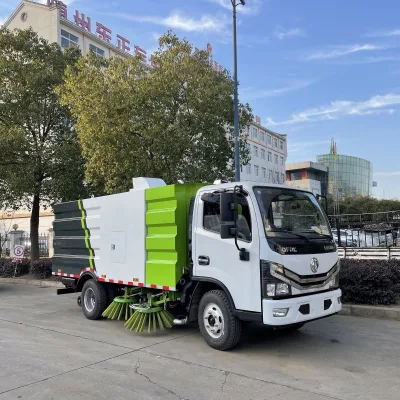
The Sweep and Suck Road Sweeper Truck represents a specialized class of municipal and industrial cleaning equipment designed to address the dual challenge of debris removal and particulate control. Unlike purely mechanical sweepers that rely solely on brushes, or vacuum trucks that only suction loose material, this hybrid configuration integrates a sweeping mechanism with a high-efficiency suction system. The primary operational objective is to capture fine dust, sand, and larger debris in a single pass, thereby minimizing secondary pollution and improving overall street hygiene.
When evaluating the technical architecture of these vehicles, buyers must recognize that the "sweep and suck" designation implies a specific workflow. The unit typically utilizes rotating brushes to agitate debris from the road surface and direct it toward a central intake. Simultaneously, a powerful suction fan creates negative pressure to lift the material into a sealed hopper. This dual-action approach is particularly effective in environments where dry, dusty conditions prevail, as it prevents the re-suspension of fine particles that often occurs with dry sweeping alone.
The product classification often includes variations such as "Pure Suck-type" or "Sweep and Suck Type," indicating the specific mechanical emphasis of the unit. For a procurement strategy focused on the core keyword, the "Sweep and Suck Type" is the most versatile, offering a balance between mechanical agitation and vacuum extraction. The chassis configuration is equally critical; observed data indicates that these units are frequently built upon light-duty truck platforms, such as the EQ1045 model, which provides a robust foundation for the cleaning apparatus while maintaining maneuverability in urban environments. The Gross Vehicle Weight (GVW) for these configurations often hovers around 4,495 kg, with a rated payload capacity that can vary between 165 kg and 265 kg depending on the specific model and hopper volume.
Technical Specifications and Performance Parameters
A rigorous analysis of technical specifications is essential to ensure the selected vehicle meets the operational demands of the intended route. The physical dimensions of the sweeper truck are a primary constraint in urban logistics. Observed specifications for these units indicate a length of approximately 5,650 mm, with widths ranging from 1,750 mm to 2,300 mm, and heights varying between 1,780 mm and 2,250 mm. These dimensions are critical for navigating narrow city streets, accessing parking structures, and complying with local height restrictions.
The wheelbase is another pivotal specification that influences the turning radius and stability of the vehicle. Data suggests a range of wheelbases from 2,800 mm to 3,400 mm, with some specialized models featuring a 3,800 mm wheelbase for enhanced stability during high-speed operation. The axle load distribution is typically rated at 1,650 kg for the front and 2,845 kg for the rear, ensuring that the vehicle remains within legal road weight limits while carrying the necessary water or debris load.
Performance metrics such as maximum speed are also vital for integration into traffic flow. Observed maximum speeds for these units range from 80 km/h to 110 km/h, allowing them to keep pace with general traffic when moving between cleaning zones. The approach and departure angles, typically recorded at 21° and 5° respectively, determine the vehicle's ability to traverse ramps and uneven surfaces without undercarriage damage. Furthermore, the transmission type is predominantly manual, which offers the operator direct control over gear selection during complex sweeping maneuvers.
The cleaning process itself is often categorized as "Cold Water Cleaning," indicating that the system relies on mechanical suction and brushing rather than heated water or steam for debris removal. This distinction is important for energy consumption and operational complexity. The hopper material is generally steel, selected for its durability and resistance to abrasion from sharp debris. The shape of the body is often flatbed or customized to accommodate the specific layout of the suction and sweeping mechanisms, with a self-dumping feature that facilitates efficient waste disposal at designated collection points.
Compliance, Certification, and Regulatory Standards
Navigating the regulatory landscape is a non-negotiable aspect of sourcing heavy-duty cleaning vehicles. Buyers must verify that the supplier can provide documentation confirming compliance with both international and local standards. The supply chain data indicates a variety of certifications that may be present, including ISOCCC, CCC, ISO/TSCCC, ISOCE, GCC, ECE, TSEPA, EEC, RoHS, and CE. The presence of these certifications suggests that the manufacturer adheres to rigorous quality management systems and safety protocols.
Specifically, the emission standard is a critical compliance factor. For diesel-powered units, the "Euro Fuel:Diesel" standard is observed, implying adherence to specific exhaust emission limits. However, buyers must confirm the exact Euro level (e.g., Euro IV, V, or VI) as this varies by region and local environmental regulations. The vehicle's origin, often traced to manufacturing hubs in Suizhou, Hubei, or Shandong, China, provides context for the supply chain but does not automatically guarantee compliance with the buyer's local laws.
The product standard itself is often defined by the vehicle's capacity or dimensions. For instance, a "7cbm" standard or a specific dimension set of 7,100 × 2,300 × 2,690 mm may be referenced in the product model specifications. It is imperative to distinguish between the chassis standard and the body standard. The chassis, such as the EQ1045, must meet the automotive safety standards of the destination country, while the body must meet the industrial safety and environmental standards for waste handling.
Buyers should also verify the presence of safety systems like the ABS Anti-lock Braking System, which is a standard feature in these models to ensure safe stopping distances under load. The suspension system, often an air suspension in heavier variants, contributes to ride quality and road protection, but its specific configuration must be validated against the road conditions of the operating area.
Cost Drivers and Pricing Dynamics
The pricing structure for sweep and suck road sweeper trucks is influenced by a complex interplay of factors, including chassis cost, body customization, and certification levels. The observed price range for these units spans from approximately $9,999 to $104,000 USD. This wide variance reflects differences in vehicle size, engine power, hopper capacity, and the level of technological integration.
The minimum order quantity (MOQ) for these specialized vehicles is typically low, often ranging from 1 to 1 unit, which allows municipalities and private contractors to purchase single units without needing to commit to large fleet orders. However, the unit price is highly sensitive to the specific configuration. A basic model with a standard chassis and minimal customization will sit at the lower end of the price spectrum, while a fully customized unit with advanced emission controls, specialized suspension, and high-capacity hoppers will command a premium.
Additional cost drivers include the material grade of the body, with "Medium Duty" steel being a common specification. The complexity of the cleaning process, such as the integration of advanced filtration systems or the choice of a self-dumping mechanism, also impacts the final cost. Buyers should be aware that the "Naked Packing" or "Tarpaulin Packaging" options may affect shipping costs and insurance premiums, particularly for international procurement.
Typical Applications and Operational Use Cases
The versatility of the Sweep and Suck Road Sweeper Truck makes it suitable for a wide array of applications. The primary use case is "Burnishing," a term often associated with the polishing or final cleaning of road surfaces to remove fine dust and restore a clean appearance. This makes the vehicle ideal for municipal street cleaning, park maintenance, and industrial campus management.
The specific design of the "Sweep and Suck Type" allows it to handle mixed debris, including leaves, litter, sand, and dust, which are common in urban and suburban environments. The "High Pressure Road Washing" variant, often associated with similar chassis and specifications, can be used for wet cleaning applications where dust suppression is a priority. The 2-person occupancy capacity suggests that these units are designed for efficient operation by a small crew, reducing labor costs while maintaining high productivity.
In industrial settings, these trucks are used for cleaning loading docks, warehouse perimeters, and heavy traffic areas where debris accumulation is rapid. The ability to self-dump the collected waste allows for continuous operation without the need for frequent stops, making them highly effective for large-scale cleaning projects. The "Medium Duty" classification indicates that while they are robust, they are not intended for extreme off-road conditions or heavy industrial mining sites, but rather for paved or semi-paved surfaces.
Supplier Evaluation and Quality Assurance
When evaluating potential suppliers, buyers must look beyond the basic product listing and assess the manufacturer's ability to deliver consistent quality. The origin of the product, whether from Suizhou, Hubei, or Shandong, provides a geographical context, but the specific factory's track record is more important. Buyers should request detailed documentation regarding the production process, including the "Cold Water Cleaning" method and the assembly standards for the steel body.
Quality control measures should be verified through the supplier's adherence to the listed certifications. The presence of ISO/TSCCC, ECE, and other standards suggests a commitment to international quality benchmarks. However, buyers should not assume that every listed product satisfies every certification; instead, they should request specific test reports or certificates of conformity for the exact model being purchased.
The "Customization" attribute is a key indicator of supplier flexibility. A supplier that offers customization can tailor the vehicle to specific operational needs, such as adjusting the wheelbase or modifying the hopper capacity. This flexibility is crucial for buyers with unique requirements. Additionally, the "New" condition of the products listed ensures that buyers are receiving brand-new equipment with full warranty coverage, rather than refurbished units.
Long-Term Procurement and Maintenance Considerations
Long-term procurement strategies for sweep and suck road sweeper trucks must account for the total cost of ownership, including maintenance, parts availability, and lifecycle management. The "Manual" transmission type, while offering direct control, may require more skilled operators and potentially higher maintenance costs compared to automated systems. Buyers should evaluate the availability of spare parts for the specific chassis model, such as the EQ1045, to ensure minimal downtime.
The "Steel" material of the body offers durability but requires regular inspection for corrosion, especially in coastal or high-humidity environments. The "Self-dumping" feature adds mechanical complexity, and the supplier should provide a clear maintenance schedule for the hydraulic systems involved. The "Naked Packing" or "Tarpaulin Packaging" options should be considered in the context of storage and transport logistics to prevent damage during delivery.
Finally, buyers should consider the environmental impact of the vehicle over its lifecycle. The "Euro Fuel:Diesel" standard and the specific emission certifications will determine the vehicle's compliance with future environmental regulations. Investing in a unit with higher emission standards may incur a higher upfront cost but can prevent future regulatory penalties and ensure the vehicle remains operational in increasingly strict environmental zones. By focusing on these long-term factors, buyers can secure a reliable asset that delivers value over its entire service life.
FAQs
What is the typical Gross Vehicle Weight for these trucks?
The Gross Vehicle Weight is typically 4495 kg for the observed models. This weight includes the chassis and body, with rated payloads varying between 165 kg and 265 kg depending on the specific configuration and hopper volume.
Which certifications are commonly available for these vehicles?
Common certifications include ISOCCC, CCC, ISO/TSCCC, ISOCE, GCC, ECE, TSEPA, EEC, RoHS, and CE. Buyers should verify specific documentation for the exact model, as not every listed product satisfies every certification.
How is the cleaning process performed on these trucks?
The cleaning process is categorized as Cold Water Cleaning, relying on mechanical suction and brushing rather than heated water. This method uses rotating brushes to agitate debris and a suction fan to lift material into a sealed hopper.
What is the standard wheelbase range for these units?
The wheelbase ranges from 2800 mm to 3400 mm, with some specialized models featuring a 3800 mm wheelbase. This dimension influences the turning radius and stability, with axle loads rated at 1650 kg front and 2845 kg rear.
Can buyers request customization for these road sweeper trucks?
Yes, customization is available for these units to tailor them to specific operational needs. Suppliers can adjust features such as wheelbase, hopper capacity, or body shape to meet unique requirements for municipal or industrial use.
What is the maximum speed range for these vehicles?
The maximum speed ranges from 80 km/h to 110 km/h, allowing them to keep pace with general traffic. This speed capability is essential for efficient movement between cleaning zones in urban environments.
Where are these trucks typically manufactured?
These trucks are typically manufactured in Suizhou, Hubei, or Shandong, China. The origin provides context for the supply chain, but buyers must confirm that the specific factory meets the destination country's regulatory standards.