Source Tabletop Power Outlet with USB Port for Offices, Homes, Labs
Find 30 Tabletop Power Outlet with USB Port options for commercial, residential, and industrial use. Compare specifications like IP ratings, certifications, and customization features to select the right unit for your project needs; compare the available evidence and request quotations based on your requirements.
Updated
Key considerations
Products List

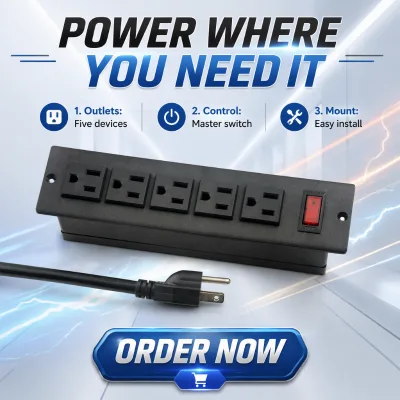
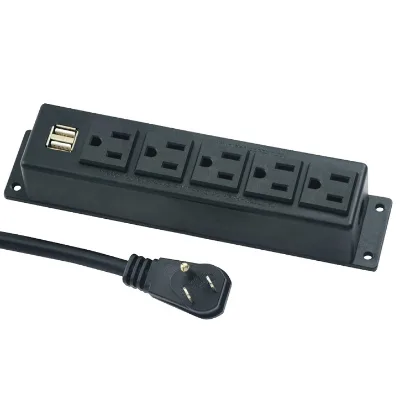
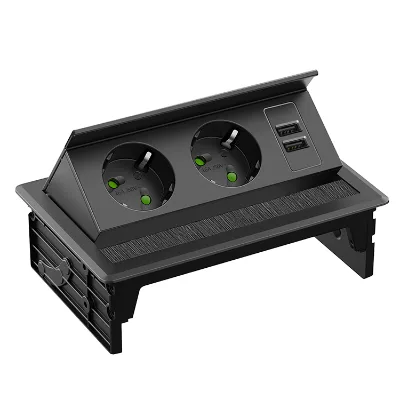
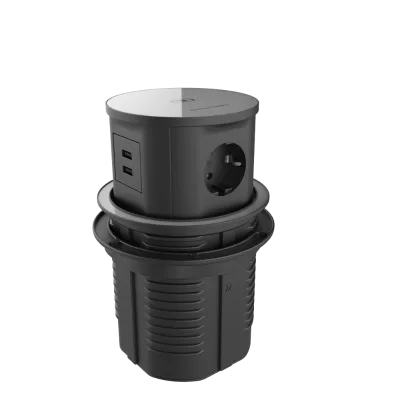
Standard Grounding Tabletop Power Socket Outlet with Multimedia Power Data Socket
$10.00 - $11.00
MOQ: 100 Pieces

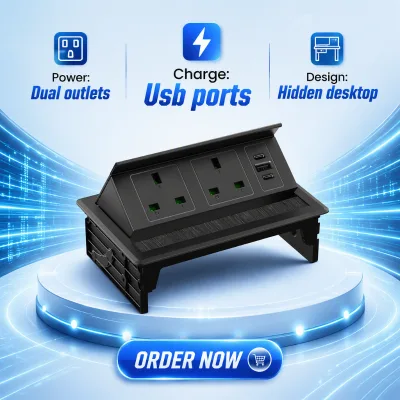
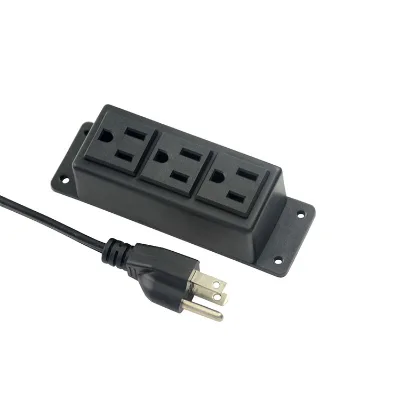
CE Approved Desktop EU Power Outlets Tabletop Socket 3 AC Outlets USB Port
$13.00 - $18.00
MOQ: 10 Pieces




Comprehensive Sourcing Guide
Tabletop Power Outlet with USB Port Sourcing Guide
Sourcing integrated tabletop power solutions requires balancing aesthetic integration with robust electrical functionality. Buyers must evaluate how these units fit into modern workspaces, from conference rooms to hospitality suites. The observed market includes models designed for general-purpose residential use as well as heavy-duty commercial and industrial applications. Understanding the specific environment is the first step in selecting the right hardware, as usage patterns dictate the necessary durability and feature set.
Procurement teams should also consider the physical installation constraints of the target space. Many listings indicate a table-mounted configuration, which demands precise cutout dimensions and secure mounting mechanisms. The variety of available configurations, ranging from simple power-only units to complex multi-interface hubs, means that buyers must align their technical requirements with the physical footprint of the outlet. This alignment ensures that the final product meets both the functional needs of the end-users and the architectural specifications of the facility.
Product Scope and Observed Listing Signals
The current market offers a diverse array of tabletop power outlets, with observed prices ranging from $2.80 to $130.00 USD. This wide variance reflects differences in build quality, material composition, and the number of integrated modules. Buyers will encounter products with varying minimum order quantities, typically spanning from 2 to 500 units. This flexibility allows small-scale projects to test samples while larger commercial deployments can secure bulk pricing, though volume discounts should be negotiated based on the specific supplier’s tiered structure.
Feature sets vary significantly across listings, with some units offering basic power distribution while others include advanced connectivity. Observed configurations include combinations of universal AC outlets, USB-A ports, HDMI, and network interfaces. Some models feature specialized attributes such as wireless phone chargers, soft-close flip-up covers, or bottom weld connectors. Buyers should carefully review the module availability, noting that options like VGA, 3.5mm audio, and various HDMI types are available, allowing for highly customized solutions tailored to specific technological ecosystems.
Technical Specifications to Verify
Dimensional accuracy is critical for tabletop installations, as mismatched cutouts can lead to costly retrofitting or aesthetic failures. Observed cutout sizes include 224x110mm and 335x72mm, while panel dimensions vary from 265x130mm to 350x100mm. Buyers must verify the exact hole digit requirements, which range from 4 to 6 digits, to ensure compatibility with existing furniture or custom-built tables. Additionally, cable length specifications often indicate "without cable," meaning buyers must source or specify separate cabling solutions to complete the installation.
Electrical ratings and physical construction details must be cross-referenced with the intended load requirements. Rated voltages typically span 110V to 250V, with current ratings of 10A or 16A. Grounding options are not uniform; some products offer standard grounding while others are non-grounding, which impacts safety compliance in different regions. Buyers should also check the IP rating, with observed values like IP44 indicating protection against solid objects and water splashes, ensuring the unit can withstand the environmental conditions of its deployment site.
Compliance and Safety Documentation
Certification requirements are a primary concern for international procurement, as regulatory standards vary by destination market. Observed certifications include CE, RoHS, and CCC, which are essential for selling in Europe, restricting hazardous substances, and entering the Chinese market, respectively. Buyers must verify that the specific model they intend to purchase holds the necessary certifications for their target region. Relying on generic claims without documented proof can lead to customs delays or legal liabilities, so requesting valid certificates for each batch is a mandatory step.
Safety features and warranty terms provide additional layers of protection for the buyer. Many suppliers offer a one-year warranty, which serves as a baseline for product reliability. However, buyers should investigate whether extended warranty options are available for large-scale deployments. Furthermore, the condition of the product, whether new or used, must be explicitly stated in the contract. Ensuring that the product is new and meets the specified safety standards helps mitigate the risk of electrical failures or fire hazards in high-traffic commercial environments.
Cost Drivers and Commercial Terms
Pricing for tabletop power outlets is influenced by the complexity of the internal circuitry and the quality of external materials. Units with multiple interfaces, such as HDMI and network ports, generally command higher prices than basic AC-only models. The inclusion of premium features like wireless charging coils or soft-close mechanisms also adds to the unit cost. Buyers should analyze the price-to-feature ratio to determine if the additional functionality justifies the higher expenditure, especially when scaling orders across multiple rooms or buildings.
Commercial terms, including packaging and origin, affect the total landed cost. Products are typically packed in cartons, with quantities ranging from 1 to 20 pieces per carton. The origin of manufacture, often Guangdong or Guangzhou in China, can impact shipping logistics and lead times. Buyers should negotiate clear terms regarding packaging durability to prevent damage during transit. Additionally, understanding the supplier’s OEM/ODM capabilities can be crucial for brands seeking custom branding or unique design modifications, which may involve additional tooling or setup fees.
Supplier Qualification and Quality Control
Verifying supplier credentials is essential to ensure consistent product quality and reliable after-sales support. Buyers should request detailed product specifications, including exact model numbers like BD610-3, BC-09EU, and BF812, to trace the manufacturing lineage. Customization options are available, but buyers must confirm the supplier’s ability to maintain quality control during the customization process. This includes verifying that the customized modules, such as specific network or audio interfaces, meet the same performance standards as the base model.
Quality control protocols should be established before placing large orders. Buyers should inquire about the supplier’s testing procedures for electrical safety and mechanical durability. Observing the production process or requesting third-party inspection reports can provide assurance of product consistency. Additionally, checking the supplier’s history with similar projects or their responsiveness to technical queries can indicate their reliability. Establishing a clear communication channel for addressing defects or discrepancies during the initial delivery phase is vital for maintaining long-term procurement stability.
Long-Term Procurement Checks
Sustainability and lifecycle management are increasingly important factors in electronic component procurement. Buyers should assess the recyclability of the materials used in the outlet’s construction, particularly the plastic housing and internal metal components. Products with RoHS certification indicate a reduced presence of hazardous substances, which aligns with broader environmental goals. Additionally, considering the ease of repair or module replacement can extend the product’s usable life, reducing waste and long-term replacement costs for the end-user.
Future-proofing the procurement strategy involves staying informed about evolving technology standards. As connectivity requirements shift, the demand for specific ports like HDMI or USB-C may change. Buyers should evaluate the supplier’s roadmap for product updates and their willingness to adapt to new standards. Maintaining a relationship with a flexible supplier who can offer updated models ensures that the installed base remains relevant and functional. Regularly reviewing performance data and user feedback can also inform future purchasing decisions, allowing for continuous improvement in the selection of tabletop power solutions.
FAQs
What configurations are available for tabletop power outlets?
Configurations typically include 2 universal power outlets combined with network, HDMI, and USB ports. Some models offer 2 UK AC outlets with power switches and internet connectivity. These setups support commercial and residential general-purpose applications, ensuring versatile connectivity for modern workspaces and home offices.
Can tabletop sockets be customized for specific needs?
Yes, customization is available for many tabletop power outlets. Buyers can often select specific modules such as VGA, HDMI, or 3.5mm audio. OEM and ODM services are also supported, allowing for tailored designs that meet unique functional requirements or branding preferences for specialized commercial or industrial environments.
What certifications do these products typically hold?
Products commonly hold CE, RoHS, and CCC certifications. These standards ensure compliance with safety and environmental regulations for international markets. Buyers should verify specific certification documents for each model, as requirements may vary based on the target region and the specific electrical standards applied to the manufacturing process.
What is the typical cutout size for installation?
Cutout sizes vary by model, with common dimensions being 224x110mm or 335x72mm. The panel size also differs, such as 265x130mm or 350x100mm. Accurate measurement is essential before installation to ensure the socket fits the designated table space properly, preventing structural issues during the mounting process.
Are these sockets suitable for industrial or hospital use?
Yes, certain models are designed for commercial, industrial, hospital, and laboratory applications. These units often feature robust construction and specific IP ratings like IP44. They support rated voltages from 110V to 250V and currents of 10A or 16A, ensuring reliable performance in demanding professional environments.
What features do modern tabletop sockets include?
Modern options often include wireless phone chargers, soft-close flip-up covers, and bottom weld connectors. Features like built-in USB ports and network interfaces enhance functionality. These additions provide convenience for users, allowing seamless device charging and data connectivity while maintaining a sleek and organized tabletop appearance.