Source Hidden Pop Up Floor Sockets for Commercial, Industrial, and Residential Use
Compare 30 Hidden Pop Up Floor Sockets from verified suppliers. These floor-mounted units feature stainless steel or brass housing, IP22 ratings, and customizable options for commercial, industrial, and residential applications; compare the available evidence and request quotations based on your requirements.
Updated
Key considerations
Products List


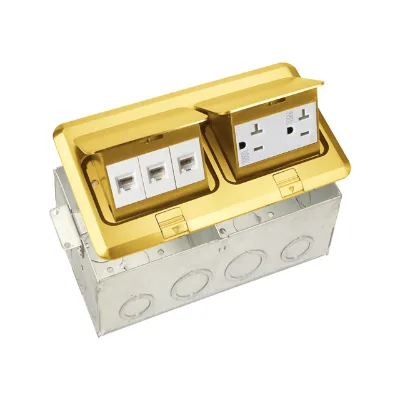
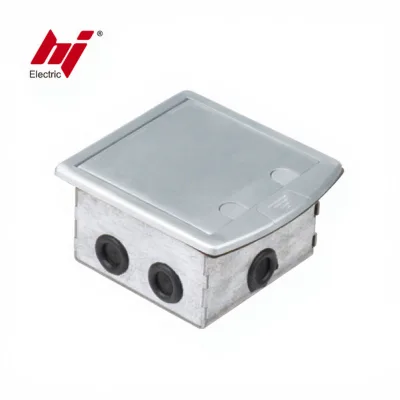
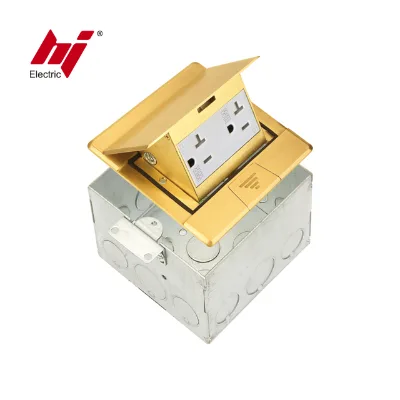
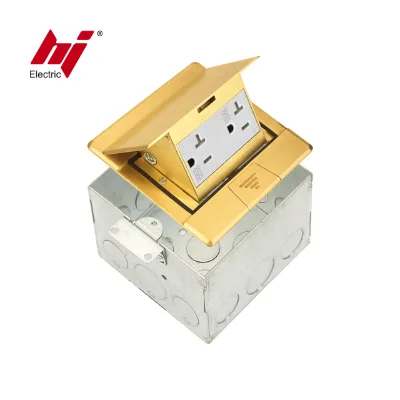
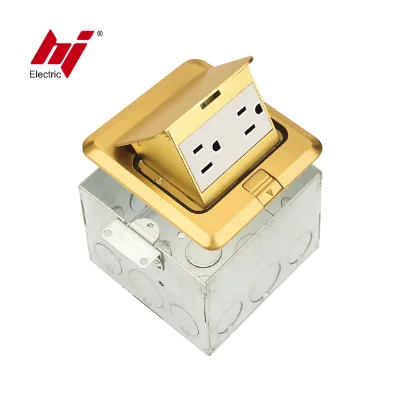
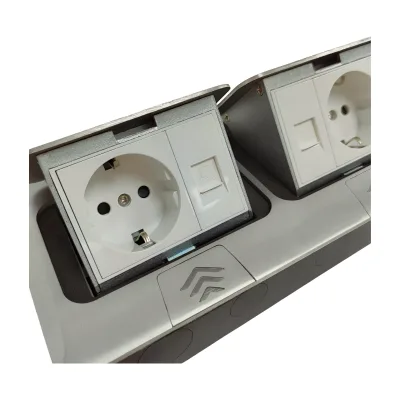
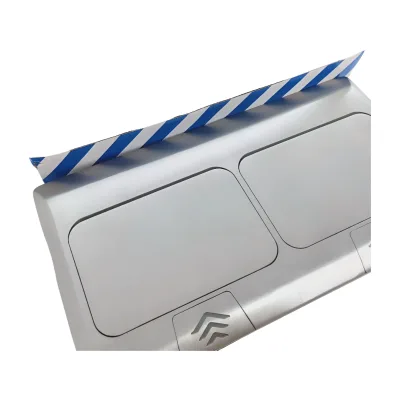
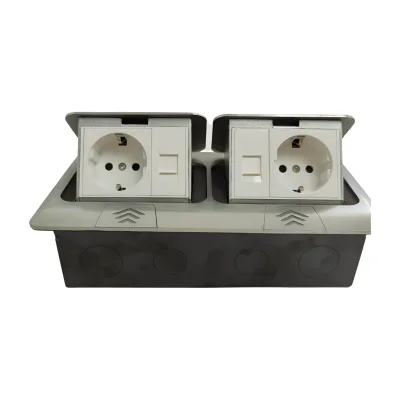
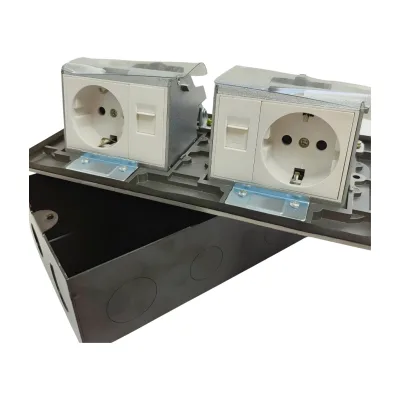
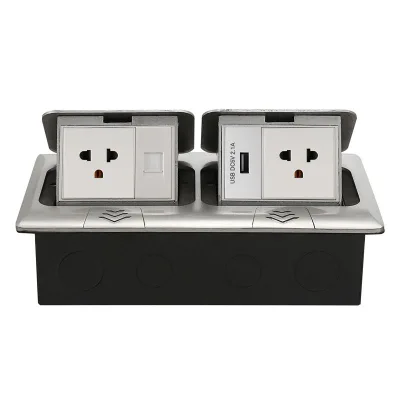
China Supplier America Standard Power Floor Pop up Socket with Electric Outlet
$12.1086 - $15.135
MOQ: 100 pieces
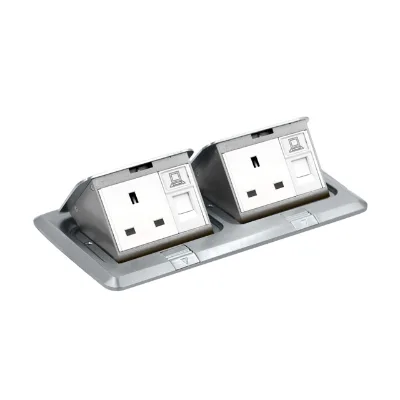


$8.00 - $11.50
MOQ: 10 Pieces

$8.00 - $11.50
MOQ: 10 Pieces
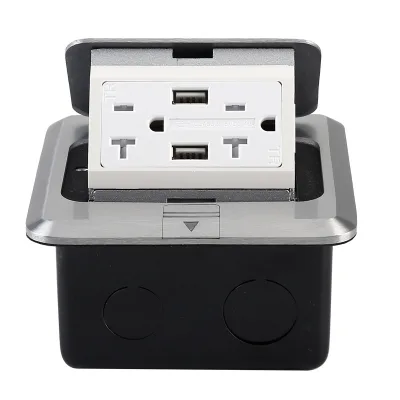
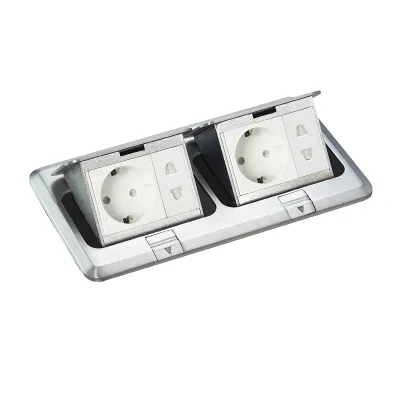
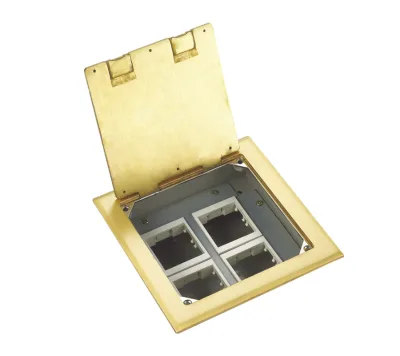
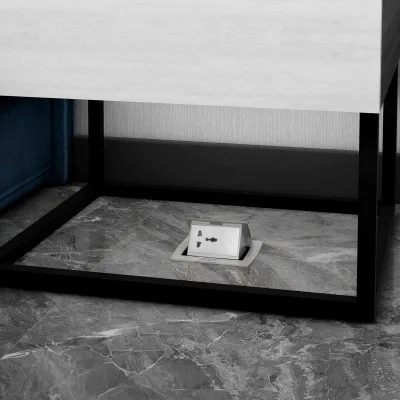
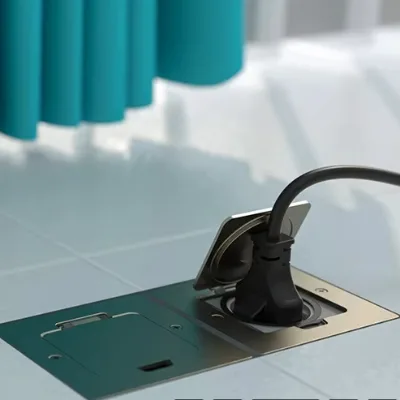
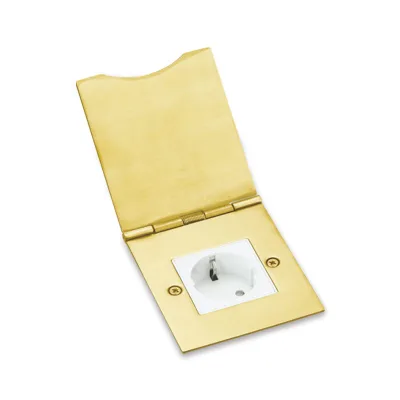
Comprehensive Sourcing Guide
Hidden Pop Up Floor Sockets Sourcing Guide
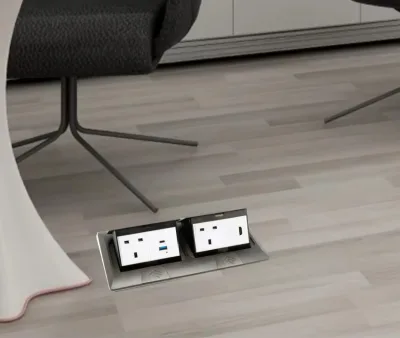
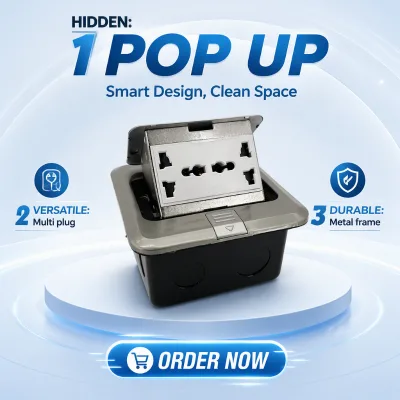
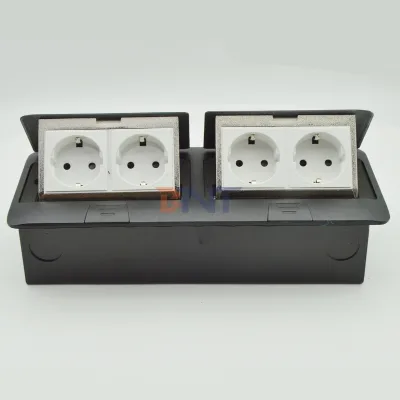
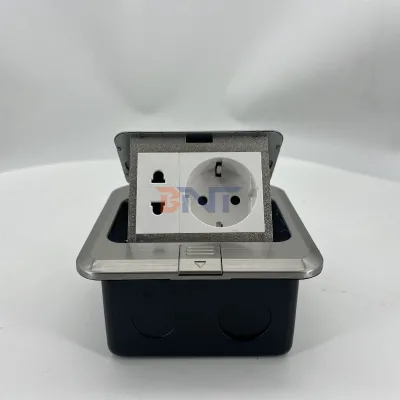
Hidden Pop Up Floor Sockets combine a flush-mounted floor box body with a lid or cartridge that rises on demand, keeping finished floors clear of surface hardware until power or data access is needed. Procurement teams specify them for commercial buildings, hospitals, laboratories, industrial facilities, and general residential projects where floor-level service points must not obstruct traffic, cleaning, or furniture placement. Because the product sits in the floor plane, selection decisions carry structural, electrical, and aesthetic consequences at once, which makes disciplined sourcing especially important.
This guide organizes the buying process around the attributes observed across a set of 30 listings: floor-mounted installation, pop-up opening mechanisms, stainless steel or brass housings, multi-module frames, and listed price and minimum-order ranges. Rather than treating every listing claim as settled, it frames each attribute as a verification point so buyers can compare offers consistently, request the right documentation, and structure quality control around the failure modes that matter most for concealed floor hardware.
Product Scope and Observed Listing Signals
The observed listings describe fixed socket-outlets and appliance socket-outlets intended for floor installation, including models such as SPU-3B, SPU-16, SPU-3, SPU-5B, SPU-1B, and SOB-2S. Listed configurations include three-digit hole layouts, two-outlet units, 2-gang sizes, and frames with three-module capacity accepting F, G, and related module series. Optional base boxes referenced include B100, B100h, and B112h, and some listings describe network-capable floor boxes alongside power modules, which matters when a single floor point must serve data and power together.
Across the 30 listings, the observed price range runs from roughly 3 to 47.5 USD per unit and MOQs range from 5 to 500 pieces, reflecting both small customized orders and larger project quantities. Customization is listed as available and products are marked customized, so variants such as brand name HONGJI/OEM configurations and multi-switch or switch-less types appear side by side. Buyers should therefore treat the catalogue as a family of related products rather than one item, and confirm exactly which variant, module count, and opening style a quoted price refers to before comparing offers.
Technical Specifications to Verify
Start with the mechanical envelope: listed product dimensions such as 8.568 x 4.748 inches, rectangular shape, 2-gang size, and three-module frame capacity define the floor cutout and compatible base boxes. Confirm that the supplier's dimensional drawings match your floor build-up depth, because optional base boxes like B100, B100h, and B112h vary in height. Verify the pop-up opening mechanism itself—whether the lid lifts manually, by spring, or by actuator—and test its return action, since concealed hinges and gaskets are the most common failure points in floor service.
On the electrical side, verify rated voltage and current ratings: listings show 125V ratings and 15/25A current figures, so confirm which rating applies to the variant you buy and that it matches your supply system. Confirm AC outlet quantity, whether the unit includes a switch, and how modules connect—listings reference a "ganable" connection method that should be clarified in drawings. Housing materials matter: listings show stainless steel, copper, and brass alloy panels, with pre-galvanized steel junction boxes; request material thickness data and IP rating evidence, since one listing states IP22 and another claims IP66 tested status.
Compliance and Safety Documentation
Certification claims in the listings include CE, CE with ISO, and CE TUV standards, plus a RoHS reference in the broader background. Do not accept these labels at face value; request the actual certificates and confirm the certificate holder, product model coverage, and validity dates. Because floor-mounted socket outlets are used in hospitals, laboratories, and commercial spaces, ask specifically which safety standard applies to floor boxes in the destination market and confirm the tested configuration matches the variant you order, including switch type and module count.
Ingress protection deserves special scrutiny because the product is recessed in the floor where cleaning water and dust are routine. One listing states IP22, which offers only limited protection, while another claims IP66 tested status—a wide spread that buyers must reconcile by asking for the test report, the tested specimen, and the mounting condition used during testing. Also request documentation of grounding provisions, listed as standard grounding, and confirm the junction box material and earthing terminal arrangement meet local electrical code requirements for floor-installed, concealed wiring accessories.
Cost Drivers and Commercial Terms
The observed price span from 3 to 47.5 USD is driven primarily by material and configuration choices. Brass alloy panels and copper components sit above plain stainless steel in typical cost terms; multi-module frames with three positions, network modules, and multi-switch variants add module and assembly cost; and customized OEM branding affects tooling and finishing charges. When comparing quotes, normalize to a single configuration—same housing material, same module count, same switch option—so that a low headline price for a basic two-outlet unit is not mistaken for a discount on a fully loaded model.
Commercial terms to fix early include MOQ, which ranges from 5 to 500 pieces across listings, and packaging, listed as carton packing or 1PC/inner box. Confirm which applies to your order, because inner-box retail packaging versus bulk cartons affects both unit price and site handling. Clarify what customization is included in the quoted price—branding, panel finish, module selection—and what triggers surcharges. Ask about sample availability before committing to volume, and document acceptance criteria so that delivered units match the approved sample in finish, mechanism action, and marking.
Supplier Qualification and Quality Control
Qualify suppliers by asking for evidence that spans both quality systems and product-specific capability. Listings reference CE and CE with ISO certification, and background context mentions ISO 9001; request the quality management certificate and confirm its scope covers electrical accessories manufacturing, not just trading. Verify the declared origin—Zhejiang, China appears in listings—and understand whether you are dealing with a manufacturer or an intermediary, since customization of brass panels, module assemblies, and OEM branding depends on in-house production depth.
Design incoming inspection around the failure modes of concealed floor products. Check the pop-up mechanism for smooth action and reliable closure, inspect panel flatness and finish on brass or stainless steel surfaces, and verify hole alignment against your floor layout drawings. For electrical checks, confirm outlet continuity, grounding continuity from the outlet earth to the junction box earthing point, and marking legibility of voltage and current ratings. Use a defined sampling plan tied to the agreed AQL, retain sealed reference samples from each shipment, and require that any change in housing material, mechanism supplier, or module source be flagged in advance.
Long-Term Procurement Checks
Plan for lifecycle compatibility from the start: confirm that replacement modules in the F, G, and related series remain available, and that base boxes such as B100, B100h, and B112h stay in the supplier's catalogue across future orders. Because projects often install floor boxes in phases spanning years, secure written confirmation of part numbering, finish consistency across production batches, and a stated commitment to supply spares for installed sites. Record the exact model numbers, such as SPU-3B or SOB-2S, in your building documentation for maintenance teams.
Institutionalize ongoing verification rather than relying on the first qualification round. Reconfirm certificates at renewal dates, request periodic test evidence for ingress protection consistent with the rating claimed—whether IP22 or IP66 tested—for the current production configuration, and audit packaging, marking, and dimensional consistency at each shipment. Track field feedback on mechanism wear, gasket condition, and panel corrosion, and feed confirmed defects back into the acceptance criteria. Long-term buyers who maintain this loop keep floor socket installations serviceable, code-compliant, and visually consistent as buildings change over time.
FAQs
What materials are used for hidden pop up floor socket housings?
Listed models use stainless steel, copper, or brass alloy panel materials, with some housings combining brass and stainless steel. Junction boxes on certain models are made from pre-galvanized steel. Material choice affects durability in floor-mounted settings, so buyers should confirm the housing and panel material for each specific model before ordering.
Can Hidden Pop Up Floor Sockets be customized for specific projects?
Yes, customization is available on the listed product line, and models are marked as customized. Buyers can typically discuss configuration needs with suppliers before ordering. Because these sockets accept different module series and optional base boxes, confirming your exact module and box requirements upfront helps ensure the customized units match your installation plan.
What installation method do these pop up floor sockets require?
These are floor-mounted, floor socket installations designed to sit flush in the floor surface. The open way is pop up, meaning the socket lid rises when needed and hides away when closed. Proper recess depth depends on the chosen base box, such as the B100, B100h, or B112h optional boxes referenced for module frames.
Which certifications apply to these Hidden Pop Up Floor Sockets?
The listed products carry CE certification, and some entries reference CE TUV standards, with ISO also mentioned in combination with CE. One model notes IP66 tested status for its standard. Certification can vary by model, so buyers should request current certificates for the exact model number they intend to purchase.
What applications suit these pop up floor socket products?
The listed application scope covers commercial, industrial, hospital, laboratory, and residential general-purpose settings. This makes them suitable for offices, meeting rooms, hospital wards, and labs where floor access to power or network connections is needed. Confirm the IP rating, such as IP22 on some models, matches the environment where the socket will be installed.
How are the floor sockets packed and what module capacity do they offer?
Packing is listed as carton, with one model specifying 1PC per inner box. Frame capacity on one referenced model is 3 modules, and available modules include F, G, and a series. Optional base boxes include B100, B100h, and B112h. Confirm packing configuration and module count with the supplier for the specific model ordered.