Source Tactical Helmet with Side Rail for Military, Police, Security
Compare 30 Tactical Helmet with Side Rail options from verified Chinese suppliers. View specifications including weight, size, and customization services to find the right head protection for your needs.
Key considerations
Products List


Comprehensive Sourcing Guide
Strategic Sourcing Guide for Tactical Helmets with Side Rail Integration
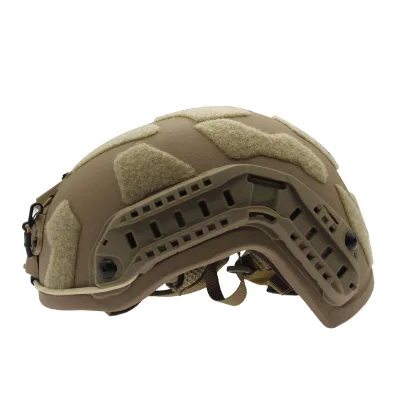
The procurement of tactical helmets featuring side rail integration represents a critical decision point for defense contractors, law enforcement agencies, and specialized security firms. These components are not merely protective headgear but serve as modular platforms for mounting essential mission-critical equipment. The "side rail" feature, often referred to as a fast helmet side rail, allows for the attachment of night vision devices, communication headsets, and tactical lights, significantly enhancing operational versatility. When sourcing these items, buyers must navigate a complex landscape of technical specifications, material standards, and supply chain logistics to ensure the acquired equipment meets rigorous field requirements. The following guide outlines the essential factors for evaluating and procuring tactical helmets with side rail capabilities, grounded in observable market data and industry standards.
Technical Specifications and Modular Compatibility
The primary technical differentiator for tactical helmets in this category is the rail system itself. The side rail must be engineered to withstand the dynamic loads imposed by mounted accessories during high-movement scenarios. In the current market, specific models such as the LQ18041102 Helmet and the JSL-RU620-S1 Airframes Helmet Side Rail demonstrate the prevalence of this feature. Buyers should verify that the rail system is compatible with standard mounting interfaces, such as the Picatinny or Weaver rails, which are industry norms for tactical accessories.
Material composition is equally critical. The core shell of the helmet often utilizes high-impact polymers like ABS (Acrylonitrile Butadiene Styrene) or advanced ballistic composites. For instance, observed product data indicates the use of ABS material in specific tactical configurations, offering a balance between weight reduction and structural integrity. The weight of the helmet is a direct function of these material choices and the integration of the rail system. Market observations show weight variations ranging from 1.45kg to 2.5kg. A lighter helmet, such as one weighing 1.45kg, may be preferable for prolonged wear or airborne operations, whereas a heavier unit at 2.5kg might indicate enhanced ballistic protection or a more robust rail structure.
The fit and sizing mechanisms are also vital technical parameters. Helmets must accommodate a range of head circumferences to ensure a secure fit for diverse operators. Specifications indicate hoop sizes ranging from 51 to 56cm, with some models offering adjustable sizes to further refine the fit. The wear mode, often described as a "press type" mechanism, suggests a specific method of securing the helmet to the head, which impacts both comfort and stability. Additionally, the internal suspension system and the interaction between the shell and the rail must be seamless to prevent shifting during impact or rapid movement.
Compliance, Certification, and Regulatory Standards
When sourcing tactical equipment, verifying compliance with recognized standards is non-negotiable. While specific ballistic ratings (such as NIJ standards) are not explicitly detailed in the provided product observations, buyers must demand evidence of certification. The supply chain data indicates that some manufacturers hold ISO certifications, which serve as a baseline indicator of quality management systems. However, ISO certification alone does not guarantee ballistic performance; it validates the manufacturer's process control.
Buyers should also scrutinize the product standards listed. Some entries reference standards such as DME, HASCO, and LKM, which are typically associated with mold and tooling standards in the manufacturing sector. While these indicate the quality of the tooling used to produce the helmet, they do not replace the need for specific ballistic or impact testing reports. For tactical applications, the "Standard" designation often implies adherence to general manufacturing norms, but specific tactical standards must be verified on a case-by-case basis.
Furthermore, the origin of the product plays a role in regulatory compliance. Products originating from regions like China, specifically Taizhou and Zhejiang, are common in this sector. Buyers must ensure that the supplier can provide documentation proving that the helmets meet the specific regulatory requirements of the destination country, including export controls and safety certifications. The "Customized" standard listed in some product data suggests that manufacturers may offer tailored compliance solutions, but this requires clear communication of the buyer's specific regulatory needs.
Cost Drivers and Economic Factors
The price of tactical helmets with side rails is influenced by a complex array of factors, including material costs, manufacturing complexity, and customization levels. Market observations reveal a significant price variance, with listed prices ranging from $2.50 to $265.00 USD. This wide range often reflects the difference between basic protective shells and fully integrated, high-performance tactical systems. The lower end of the spectrum may correspond to accessories or non-ballistic training helmets, while the higher end likely encompasses full ballistic-rated units with advanced rail systems.
Minimum Order Quantity (MOQ) is another critical economic driver. The observed MOQ range spans from 1 to 600 pieces. A low MOQ of 1 piece may be available for sample acquisition or small-scale testing, but it often carries a premium unit cost. Conversely, bulk orders with an MOQ of 600 pieces typically unlock significant cost efficiencies. The "Service" attribute, which includes OEM (Original Equipment Manufacturer) and ODM (Original Design Manufacturer) capabilities, also impacts pricing. Customization of color, branding, and rail configuration adds to the production cost but allows for brand alignment and specific operational requirements.
Sample availability is a key factor in the initial cost structure. With sample times ranging from 7 to 15 days, buyers must factor in the lead time for prototyping and testing before committing to a full production run. The shipping method, whether by air or sea, also influences the total landed cost. Air freight offers speed but at a higher price, while sea freight is more economical for large volumes but requires longer lead times.
Typical Applications and Operational Context
Tactical helmets with side rails are designed for high-intensity environments where modularity is essential. The primary application is in military and law enforcement operations where the ability to quickly attach and detach equipment is crucial. The "Fast Helmet Side Rail" feature specifically supports rapid deployment of night vision goggles (NVGs), which are standard for low-light operations. The rail system allows operators to switch between different configurations depending on the mission profile, such as switching from a communication headset to a weapon-mounted light.
The target demographic for these products is adults, as indicated by the age group specification. The design considerations, such as the "German" style mentioned in some product data, suggest a focus on ergonomic design and historical tactical aesthetics that prioritize functionality. The seasonal suitability, noted as "Spring / Autumn," implies that the helmet's ventilation and padding systems are optimized for moderate climates, though this may vary based on specific customization.
In addition to direct combat roles, these helmets are used in specialized security units, counter-terrorism teams, and emergency response groups. The "Head Protection" function is the baseline requirement, but the integration of the side rail elevates the helmet to a command and control platform. The ability to mount various accessories transforms the helmet from a passive protective device into an active information and communication node.
Supplier Evaluation and Verification
Selecting the right supplier requires a rigorous evaluation process that goes beyond the basic product listing. Buyers should prioritize suppliers who demonstrate transparency in their manufacturing capabilities. The "Brand Name" attribute, which can be "Lq or Customized," indicates that many suppliers operate under private label arrangements. This is common in the OEM/ODM sector, where the manufacturer's identity may be secondary to the buyer's branding.
Key evaluation criteria include the supplier's ability to provide samples, their lead time consistency, and their quality control protocols. The "Sample Available: Yes" attribute is a positive indicator, suggesting the supplier is willing to engage in the testing phase. However, buyers must verify the quality of the sample against the final production specifications. The "prod_packing" details, such as "Several PC Per Export Box" or "PP Bag+Carton," provide insight into the supplier's logistics capabilities and attention to product protection during transit.
Geographic location is another factor. Suppliers located in Taizhou and Zhejiang, China, are part of established manufacturing clusters. While this can offer cost advantages, buyers must ensure that the specific facility has the capacity to meet the required quality standards. The "Standard" attribute, which varies from "Customized" to specific mold standards like DME, HASCO, and LKM, should be cross-referenced with the supplier's actual tooling capabilities. A supplier claiming to use high-standard molds should be able to provide evidence of their tooling inventory and maintenance schedules.
Quality Control and Long-Term Procurement Considerations
Quality control in the tactical helmet sector must be multi-layered, covering material integrity, rail strength, and finish consistency. The "prod_standard" field often lists "Customized," which places the onus on the buyer to define the acceptance criteria. Buyers should establish clear specifications for rail tensile strength, shell impact resistance, and padding durability. The "Weight" specification, varying between 1.45kg and 2.5kg, should be strictly monitored during production to ensure consistency.
Long-term procurement considerations include the availability of spare parts and the ability to scale production. The "MOQ" of 600 pieces suggests that these products are typically manufactured in batches. Buyers planning for long-term contracts should negotiate volume discounts and ensure the supplier has the capacity to maintain consistent quality over multiple production runs. The "Shipment" options, including air and sea, should be aligned with the buyer's inventory management strategy to avoid stockouts.
Furthermore, the "Color" attribute, which can be "Black" or "Customized," requires careful management. Consistency in color matching across batches is essential for brand identity and operational camouflage requirements. The "Size" attribute, ranging from "Adjustable Size" to "Customized," necessitates precise measurement protocols to ensure that the final product fits the intended user base.
In conclusion, sourcing tactical helmets with side rails requires a balanced approach that weighs technical performance against economic viability. By focusing on verified specifications, robust supplier evaluation, and clear quality control measures, buyers can secure equipment that meets the demanding needs of modern tactical operations. The market offers a wide range of options, from basic models to highly customized solutions, but success depends on the buyer's ability to navigate the complexities of this specialized sector.
FAQs
What customization options are available for tactical helmets with side rail?
Customization is available for tactical helmets with side rail, allowing buyers to select specific colors and branding. The brand name can be set to Lq or customized, and the hoop size ranges from 51 to 56 cm to ensure a proper fit for adult users.
Can I order samples of tactical helmets with side rail before bulk purchase?
Yes, samples are available for tactical helmets with side rail to verify quality before committing to large orders. The sample time typically ranges from 7 to 15 days, and the minimum order quantity for production is 600 pieces, though lower MOQs may exist for specific models.
Which certifications do manufacturers of tactical helmets with side rail hold?
Manufacturers of tactical helmets with side rail often hold ISO certification as a baseline for quality management. While specific ballistic ratings are not listed, the products originate from regions like China and may adhere to mold standards such as DME, HASCO, or LKM for tooling quality.
How does the weight of tactical helmets with side rail vary by model?
The weight of tactical helmets with side rail varies by model, ranging from 1.45 kg to 2.5 kg depending on materials and design. Some units utilize ABS material for a balance of weight reduction and structural integrity, while others may offer adjustable sizes for different head circumferences.
What is the typical lead time for shipping tactical helmets with side rail?
The typical lead time for shipping tactical helmets with side rail includes a sample period of 7 to 15 days before production. Shipping methods include air or sea freight, with packaging options ranging from export boxes to PP bags and cartons depending on the specific order volume.
Which specifications define the side rail integration on tactical helmets?
The side rail integration on tactical helmets is defined by features like the Fast Helmet Side Rail for mounting accessories. Specifications include wear modes such as press type and hoop sizes from 51 to 56 cm, ensuring compatibility with various tactical equipment and secure head protection for adults.