Source Taiwan Table Mat for Home, Restaurant, and Office Use
Compare 30 Taiwan Table Mat options from verified suppliers. Buyers can evaluate PVC and rubber materials, waterproof features, and sizes like 30x45cm for home, restaurant, and office applications.
Key considerations
Products List


Promotional ESD Rubber Table Mat, PVC Table Mats, Table Mats Manufacturer
$10.00 - $55.00
MOQ: 10 Rolls


$0.50 - $0.60
MOQ: 3000 Pieces






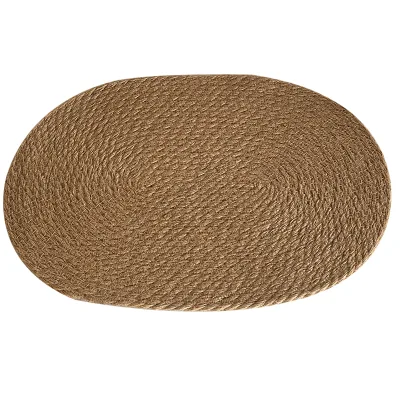


Comprehensive Sourcing Guide
Strategic Sourcing Guide for Table Mat Procurement
Understanding Product Variants and Technical Specifications
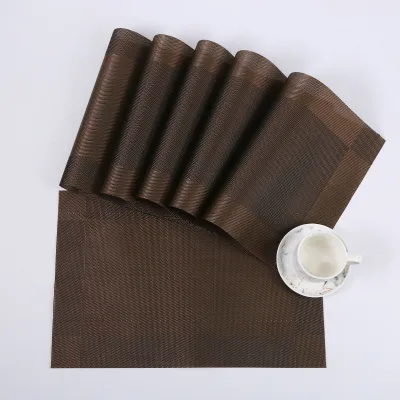
When sourcing table mats under the core keyword of "Taiwan Table Mat," buyers must first navigate a complex landscape of product definitions, as the term often encompasses distinct categories ranging from decorative dining accessories to industrial safety flooring. The market data indicates a significant divergence in product attributes, requiring precise specification to avoid procurement errors. One primary category focuses on decorative and functional dining mats. These items are characterized by a rectangular shape and a "Fashion" style, often available in "Many Colours" with a "Plain" pattern. The material composition for these specific units is frequently listed as PVC, offering a balance of durability and aesthetic appeal. Key technical specifications for this segment include a standard size of 30cm by 45cm, with some variations noted at 38cm in width. The production model identifiers for these dining mats include codes such as AL1714 and AL1712, which serve as critical reference points for ordering and inventory management.
In contrast, a separate and distinct category exists for industrial applications, specifically labeled as "Industrial Rubber Slab" or "Insulating Rubber Slab." These products are fundamentally different from their dining counterparts, designed for environments such as SMT production lines, printing workshops, and electronic component maintenance rooms. The material for this segment is specified as Natural Rubber, often combined with a pad or fabric medium. The technical performance requirements here are rigorous, demanding features such as heat resistance, waterproofing, anti-static properties, and oilproof capabilities. The standard dimensions for these industrial mats are notably larger, with specific listings indicating a size of 0.6 meters by 10 meters. Model identifiers for this industrial segment include codes like 0097 and 3C. Buyers must strictly differentiate between these two product lines, as the material properties and intended usage environments are mutually exclusive. Confusing a PVC decorative mat with a natural rubber industrial slab would result in immediate product failure in either a hospitality or a high-tech manufacturing setting.
Compliance, Certification, and Safety Standards
Compliance verification is a critical step in the procurement process, particularly when dealing with products that may come into direct contact with food or sensitive electronic environments. The supply chain data reveals a fragmented certification landscape, where different product models carry distinct regulatory approvals. For the dining and hospitality sector, certifications such as LFGB and FDA are explicitly listed. These standards are essential for products intended for use in restaurants, cafes, hotels, and home dining areas, ensuring that the materials do not leach harmful substances into food. The presence of these certifications suggests that specific PVC-based mats meet stringent food safety requirements.
Conversely, the industrial rubber segment presents a different compliance profile. The data indicates certifications including RoHS, ISO, GS, CE, and CCC. These standards are indicative of products designed for safety and environmental compliance in industrial settings. The RoHS certification, for instance, restricts the use of specific hazardous materials, which is crucial for electronics manufacturing environments. The CE and GS marks denote conformity with health, safety, and environmental protection standards for products sold within the European Economic Area and Germany, respectively. The CCC mark is specific to the Chinese market, indicating that the product meets national safety standards. Buyers must verify that the specific model number they intend to purchase carries the relevant certification for their target market. Relying on a general "certified" claim without matching it to the specific product model and intended application is a significant risk. Furthermore, the "Eco-Friendly" attribute is noted for certain rubber products, which may be a requirement for companies with strict sustainability mandates, though the specific testing protocols for this claim should be verified with the supplier.
Cost Drivers and Pricing Dynamics
The pricing structure for table mats in this market segment exhibits a wide variance, reflecting the diversity in materials, manufacturing complexity, and intended use. The observed price range spans from 0.43 USD to 55 USD per unit. This broad spectrum is driven primarily by the material composition and the scale of the order. The lower end of the price range likely corresponds to the PVC decorative mats used in hospitality settings, which are mass-produced with standardized dimensions like 30cm by 45cm. These items benefit from economies of scale and simpler manufacturing processes involving printed techniques.
At the higher end of the spectrum, the cost is influenced by the use of natural rubber, which is a more expensive raw material compared to PVC. The industrial rubber slabs, with dimensions such as 0.6 meters by 10 meters, represent a significantly larger surface area and require more complex processing to ensure properties like insulation and anti-static performance. Additionally, the presence of multiple certifications, such as ISO and CE, adds to the compliance costs, which are often factored into the unit price. The Minimum Order Quantity (MOQ) also plays a pivotal role in the final cost. The observed MOQ range is between 2 and 5,000 units. Buyers purchasing small quantities, such as the lower MOQ of 2, may face a higher per-unit cost due to the lack of volume discounts. Conversely, orders approaching the 5,000-unit threshold will likely benefit from optimized production runs and reduced logistics costs per unit. Buyers should structure their procurement strategy to align with these MOQ thresholds to maximize cost efficiency.
Typical Applications and Usage Scenarios
The application of table mats is highly dependent on the specific product attributes and material properties. For the decorative PVC mats, the primary usage scenarios are domestic and commercial hospitality environments. The data explicitly lists "Home, Restaurant, Cafe, Office, and Hotels" as the target usage areas. These mats serve a dual purpose: protecting the table surface from heat, oil, and scratches while adding a decorative element to the dining setting. The "Durable and Elegant" characteristics, combined with the "Western" style and "Fashion" attributes, make them suitable for high-traffic dining areas where aesthetics and longevity are paramount. The "Waterproof" and "Oilproof" features ensure that these mats are easy to clean and maintain, a critical requirement for restaurant operations.
In the industrial sector, the usage scenarios shift dramatically to technical and safety-critical environments. The natural rubber mats are specified for use in "SMT Production Line, Printing Workshop, Electronic Component Maintenance Room, Computer Room, and Combustible & Explosive Area." In these settings, the primary function of the mat is not decoration but safety and equipment protection. The "Insulating Rubber Slab" performance is vital for preventing electrical shocks in electronic maintenance rooms. The "Anti-static" and "Heat-resistant" features protect sensitive electronic components from static discharge and thermal damage. The "Durable" nature of the rubber ensures that the mats can withstand the heavy foot traffic and equipment movement typical of industrial floors. Buyers must ensure that the selected mat matches the specific environmental hazards of their facility, as a decorative mat would offer no protection in an explosive area.
Supplier Evaluation and Product Verification
Evaluating suppliers for table mats requires a rigorous approach to verifying the authenticity of product claims and specifications. The supply chain data indicates that products originate from China, with specific model numbers serving as the primary identifier. Buyers should prioritize suppliers who can provide clear documentation linking the model number (e.g., AL1714, 0097) to the specific material and certification claims. A common pitfall in this market is the conflation of different product lines; a supplier may list a wide range of attributes that do not apply to a single SKU. Therefore, buyers must request a detailed product data sheet for the exact model number they intend to purchase.
The "Customization" attribute is available, which offers flexibility for buyers seeking branded products. However, the data also notes "Without Logo Printing" as a standard attribute for some listings. This suggests that while customization is possible, it may be an optional add-on rather than a standard feature. Buyers interested in logo printing should explicitly confirm the feasibility, cost, and minimum order requirements for this service. Additionally, the packaging method, listed as "Carton Package" or "Bag," should be verified to ensure it meets the buyer's logistical requirements. The condition of the product is specified as "New," but buyers should still inspect samples to ensure there are no manufacturing defects. Given the wide range of certifications, buyers should request copies of the actual certificates for the specific batch of goods, rather than relying on general statements about the supplier's capabilities.
Long-Term Procurement and Quality Control Considerations
Sourcing table mats is not merely a transactional activity but a strategic decision that impacts long-term operational efficiency and safety. Quality control should focus on the consistency of material properties. For PVC mats, this involves verifying the thickness and the adhesion of the printed pattern to ensure it does not wear off quickly in high-traffic areas. For natural rubber mats, the focus should be on the density and the consistency of the anti-static and insulating properties. Buyers should establish a protocol for periodic testing, especially for industrial mats where failure could lead to equipment damage or safety incidents.
The "Eco-Friendly" attribute mentioned in the data suggests a growing market trend towards sustainable materials. Buyers looking to align with corporate sustainability goals should investigate the lifecycle of the product, including recyclability and the environmental impact of the raw materials. The "High Temperature-Resistant" feature is another critical long-term consideration, particularly for kitchen and industrial applications where thermal stress is common. Ensuring that the mats maintain their structural integrity under repeated exposure to heat is essential for reducing replacement frequency and total cost of ownership. Finally, buyers should consider the scalability of the supply chain. With an MOQ range extending up to 5,000 units, suppliers must demonstrate the capacity to fulfill large orders without compromising quality or lead times. Establishing a long-term partnership with a supplier who can consistently deliver on specifications and certifications will provide stability and reduce the administrative burden of frequent vendor re-evaluation.
FAQs
What materials are used for taiwan table mats?
Taiwan table mats are available in PVC or natural rubber materials. PVC options feature printed designs for decorative use, while natural rubber slabs provide industrial insulation and anti-static properties for safety-critical environments.
Which certifications apply to food-safe table mats?
Food-safe table mats often carry LFGB and FDA certifications. These standards ensure the PVC materials do not leach harmful substances, making them suitable for use in restaurants, cafes, and home dining settings.
How can I find industrial rubber mats with specific dimensions?
Industrial rubber mats are available in standard sizes like 0.6 by 10 meters. Buyers can identify models such as 0097 or 3C that meet the required dimensions for SMT production lines and electronic maintenance rooms.
Can I customize the logo on these table mats?
Customization is available for logo printing on these table mats. However, standard listings may come without logo printing, so buyers must explicitly confirm this service and its associated minimum order requirements with the supplier.
What is the typical price range for these mats?
The price range for table mats spans from 0.43 to 55 USD per unit. Costs vary significantly based on material composition, with PVC decorative mats being cheaper than natural rubber industrial slabs.
Which products are suitable for hotel kitchens?
Durable and elegant rectangular mats are suitable for hotel kitchens. These items, often made of PVC, are designed for use in restaurants, cafes, and offices while offering waterproof and oilproof characteristics.
What are the standard sizes for decorative table mats?
Standard sizes for decorative table mats include 30 by 45 centimeters. Some variations may be listed at 38 centimeters in width, with model identifiers like AL1714 and AL1712 serving as key references.