Source Tandem Kayak Inflatable Fishing Boat for Fishing, Racing, and Recreation
Explore 30 listings for the Tandem Kayak Inflatable Fishing Boat, comparing options with single or multiplayer styles, various hull materials like PVC, and capacities for two persons. Buyers can evaluate customization, warranty periods, and packing details across different models.
Key considerations
Products List
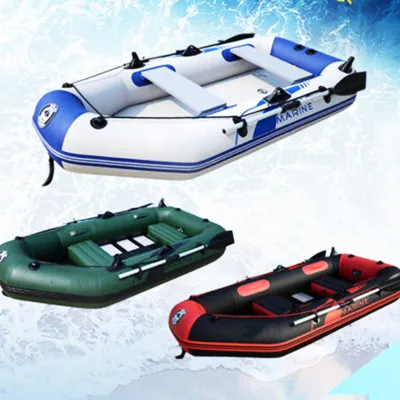


2 Person Inflatable Kayak Fishing Custom PVC Kayak Boat Rubber Inflatable Boat
$361.52 - $400.92
MOQ: 5 Pieces

3 Person Inflatable Fishing Kayaks with Pedals Surfing Camping Raft Boats Kayak
$73.03 - $80.97
MOQ: 1000 Pieces


Comprehensive Sourcing Guide
Strategic Sourcing Guide for Inflatable Tandem Kayak Fishing Boats
The global market for inflatable watercraft has expanded significantly, driven by the demand for versatile, portable, and durable vessels suitable for recreational and professional use. For procurement professionals and B2B buyers targeting the specific niche of a Tandem Kayak Inflatable Fishing Boat, the sourcing landscape requires a disciplined approach. This guide synthesizes observed market data and technical attributes to provide a framework for evaluating suppliers, verifying product specifications, and ensuring long-term supply chain reliability. The focus remains strictly on evidence-based criteria derived from current product listings and industry standards, avoiding speculative claims or unverified performance metrics.
Technical Specifications and Material Composition
When sourcing a tandem kayak designed for fishing, the primary differentiator lies in the construction materials and dimensional specifications. Unlike rigid hull kayaks, inflatable models rely on high-strength polymers to maintain structural integrity under load. Based on observed product data, the hull material for these vessels is predominantly 0.7mm PVC or 0.9mm PVC, with some advanced models utilizing a Drop Stitch+PVC composite. The thickness of the PVC is a critical variable; a 0.9mm thickness generally offers superior puncture resistance compared to 0.7mm, which is a vital consideration for fishing environments where sharp rocks, coral, or fishing gear may pose risks.
Dimensional consistency is equally important for a tandem configuration. The observed data indicates a length range from 220 cm for single units up to 400 cm (Customized) for tandem models. A specific observed model, KPD370, lists a size of 370*90cm, which aligns with the typical footprint required for two-person stability. Width is another crucial metric; a width of 90cm is observed in standardized listings, providing a stable platform for casting and reeling. However, buyers must note that Length and Width can be Customized to specific requirements, with some listings showing ranges of 3-4m. The Hull Surface Profile varies, with observations of both Fish form and Symmetrical profiles. A symmetrical profile often aids in straight-line tracking, while a fish-form hull may offer enhanced maneuverability in currents.
The Hull Material is consistently identified as Plastic in broader categories, but the specific polymer composition (PVC) dictates the vessel's longevity. The Weight of these vessels varies, with one observed tandem model weighing 19 Kg, a figure that influences portability and shipping costs. The Capacity is explicitly listed as 2 Person for tandem units, with a Max Load capacity observed at 170 Kg. This load rating is a hard constraint that procurement teams must verify against the intended user weight and gear load to ensure safety margins are maintained.
Compliance, Certification, and Safety Standards
Navigating the regulatory landscape is essential for international procurement. The market data reveals a mix of certification statuses, with some products listing CE certification and others citing a broader suite including BSCI, CE, and ISO9001. The CE mark indicates conformity with health, safety, and environmental protection standards for products sold within the European Economic Area. However, the presence of a certification in a product listing does not guarantee that every unit in a shipment is certified; it is a supplier claim that must be validated.
Buyers should treat the Certificate field as a starting point for due diligence rather than a final verification. The observed standard Customized suggests that some manufacturers tailor their compliance documentation to specific regional requirements. For fishing boats intended for commercial or serious recreational use, verifying the ISO9001 certification is prudent, as it indicates a quality management system is in place. Similarly, BSCI (Business Social Compliance Initiative) certification addresses labor practices, which is increasingly relevant for corporate social responsibility (CSR) mandates in B2B procurement.
It is critical to distinguish between product standards and company certifications. While some listings mention prod_standard as Customized or CE, others list specific dimensions like 370*90cm under the standard field, which is a data entry inconsistency that buyers must clarify. When evaluating a supplier, request physical copies of the CE and ISO9001 certificates and verify their validity with the issuing bodies. Do not rely solely on the product page description. The Warranty period observed ranges from 1~3 Years, which serves as an indicator of the manufacturer's confidence in their product's durability and their commitment to after-sales support.
Cost Drivers and Pricing Dynamics
The pricing structure for inflatable tandem kayaks is influenced by material thickness, customization levels, and packaging requirements. The observed price range in the market is broad, spanning from 4.56 USD to 715 USD. This variance is not merely a reflection of brand prestige but is heavily driven by the technical specifications discussed earlier. A unit priced at the lower end of the spectrum likely utilizes thinner PVC (0.7mm), standard packaging, and minimal customization. Conversely, a unit approaching the higher end likely features 0.9mm PVC, Drop Stitch technology for increased rigidity, and specialized Customized dimensions.
The MOQ (Minimum Order Quantity) is another significant cost driver. The observed range is 1-1000, indicating a market that accommodates both small-scale retailers and large distributors. A supplier offering an MOQ of 1PC is ideal for sampling or small boutique orders, whereas an MOQ of 1000 suggests a focus on bulk manufacturing and lower per-unit costs. Buyers must balance the MOQ against their inventory turnover rates to avoid capital tie-up.
Packaging also impacts the final landed cost. The data shows variations in prod_packing, ranging from Backpack to Standard Export Brown Box and Carton. A Backpack style implies a focus on portability and potentially lighter packaging materials, which might reduce shipping weight but could offer less protection during transit. Standard Export Brown Box or Carton packaging is generally more robust for sea freight but adds to the volumetric weight. Buyers should calculate the total cost of ownership, including freight, by understanding the packaging dimensions and weight, which are often derived from the product's Weight and Size specifications.
Typical Applications and Usage Scenarios
Understanding the intended application is vital for selecting the right product configuration. The observed Usage attributes for these vessels include Fishing, Racing, Sprint, Marathon, Freestyle, and Recreational activities. For a Tandem Kayak Inflatable Fishing Boat, the Fishing application is paramount. This usage profile requires a hull that is stable enough to support a standing or seated angler while casting, yet maneuverable enough to navigate varying water conditions.
The Style of the vessel further defines its application. While Single Kayak and Tandem Kayak are distinct categories, the market also lists Multiplayer Canoe and Rowing Boat styles. A Tandem Kayak with a Fish form hull is specifically optimized for fishing, offering a low center of gravity and a design that cuts through waves effectively. In contrast, a Symmetrical hull profile might be better suited for Racing or Sprint applications where speed and tracking are prioritized over the stability needed for fishing gear.
The Application Area is broadly defined as Water Activity, but this encompasses everything from calm lakes to coastal waters. The Type classification in the data includes Rib Boat / Yacht and Raft, which suggests that some manufacturers offer hybrid designs. A Raft style might offer more buoyancy and a larger deck area for gear storage, which is beneficial for multi-day fishing trips. Buyers must align the Usage and Style attributes with their specific customer base. For instance, a supplier targeting professional anglers should prioritize vessels with Max Load capacities that accommodate heavy tackle boxes and coolers, whereas a supplier targeting casual tourists might focus on Recreational features and ease of inflation.
Supplier Evaluation and Quality Control
Evaluating a supplier for inflatable watercraft requires a multi-faceted approach that goes beyond the initial product listing. The prod_origin is consistently listed as China, with specific mentions of Weihai, China as a production hub. While this provides a geographic baseline, it does not guarantee quality. Buyers must verify the supplier's manufacturing capabilities, specifically their ability to handle Customized orders. The ability to customize Length and Width indicates a flexible production line, but it also introduces variability in quality control.
Quality control (QC) should focus on the integrity of the Hull Material and the sealing of the air chambers. Given that the Material is PVC, the bonding process is critical. A failure in the bonding process can lead to air leaks, rendering the vessel unusable. Buyers should request sample units to test the Weight and Max Load claims. For example, if a supplier claims a 19 Kg weight for a tandem model, the actual sample must be weighed to ensure it matches the specification. Additionally, the Warranty period of 1~3 Years should be backed by a clear service protocol.
The prod_model numbers, such as HWB_K-001, kayak-06, and KPD370, serve as unique identifiers. Buyers should ensure that the model number on the purchase order matches the model number on the final product to avoid receiving the wrong configuration. The prod_packing method is also a QC indicator; a Standard Export Brown Box should be free of damage upon arrival, and the contents should match the Product Name and Type listed.
Long-Term Procurement Considerations
Sourcing inflatable kayaks is not a one-time transaction but a long-term partnership that requires strategic planning. The Customization attribute is a key factor here. Suppliers that offer Customized options for Length, Width, and Hull Color provide a competitive advantage for buyers looking to differentiate their product lines. However, customization often leads to longer lead times and higher MOQ thresholds. Buyers must negotiate these terms clearly to ensure that the supply chain remains agile.
The Warranty period is a critical long-term consideration. A 1~3 Years warranty suggests that the manufacturer expects the product to last for several seasons. However, the terms of the warranty—what is covered, what is excluded, and the process for claims—must be clearly defined in the contract. For fishing boats, wear and tear from saltwater exposure and UV radiation are common issues. Buyers should inquire about the Hull Color options, as darker colors may fade faster in direct sunlight, affecting the aesthetic longevity of the product.
Finally, the Type of vessel, whether it is a Rowing Boat, Raft, or Kayak, dictates the after-sales support requirements. A Rowing Boat might require different maintenance than a Raft. Buyers should establish a relationship with the supplier that includes access to spare parts, such as repair kits for PVC patches, and technical support for inflation and deflation procedures. The Application Area of Water Activity implies that the product will be exposed to harsh conditions, making a robust support network essential for maintaining customer satisfaction and brand reputation over time.
Summary of Key Product Attributes
To facilitate quick reference during the sourcing process, the following table summarizes the critical attributes observed in the market for inflatable tandem kayaks. This data serves as a benchmark for comparing supplier offerings.
| Attribute | Observed Values / Ranges | Relevance to Procurement |
|---|---|---|
| Hull Material | 0.7mm PVC, 0.9mm PVC, Drop Stitch+PVC | Determines durability and puncture resistance. |
| Dimensions | Length: 220cm - 400cm (Customized); Width: 90cm | Critical for stability and capacity planning. |
| Capacity | 2 Person | Defines the target user group (tandem). |
| Max Load | 170 Kg | Safety limit for gear and passengers. |
| Weight | 19 Kg (Observed) | Affects shipping costs and portability. |
| Certification | CE, BSCI, ISO9001 (Varies by supplier) | Essential for market access and compliance. |
| Warranty | 1~3 Years | Indicator of manufacturer confidence. |
| MOQ | 1 - 1000 | Determines order volume and pricing tiers. |
| Origin | China (e.g., Weihai) | Influences lead time and logistics. |
| Usage | Fishing, Racing, Recreational | Aligns product with market demand. |
By adhering to these evidence-based guidelines, buyers can navigate the complexities of sourcing inflatable tandem kayaks with confidence, ensuring that the final product meets the rigorous demands of the fishing and recreational markets while maintaining cost efficiency and quality standards.
FAQs
What materials are used for the hull of these boats?
The hulls are constructed from 0.7mm PVC, 0.9mm PVC, or a Drop Stitch composite material. Thicker 0.9mm PVC offers superior puncture resistance for fishing environments compared to the standard 0.7mm option.
Which certification marks are available for these inflatable kayaks?
Products may carry CE certification, while some manufacturers also provide BSCI and ISO9001 certificates. Buyers should verify physical copies of these documents as the listing status indicates supplier claims rather than guaranteed unit compliance.
How much weight can a Tandem Kayak Inflatable Fishing Boat hold?
A specific tandem model supports a maximum load of 170 Kg for two persons. This capacity is a hard constraint that must be verified against the total weight of users and their fishing gear to ensure safety.
Can the dimensions of the kayak be customized for specific needs?
Yes, length and width can be customized, with observed ranges extending up to 400 cm in length. Buyers should note that customization often affects the minimum order quantity and may require longer lead times for production.
What is the typical weight of a two-person inflatable kayak?
One observed tandem model weighs 19 Kg, which influences portability and shipping costs. This weight figure varies by model and material thickness, so actual samples should be weighed to confirm specifications before bulk ordering.
Which warranty periods are offered for these inflatable fishing boats?
Warranty periods typically range from 1 to 3 years depending on the manufacturer. This duration indicates the supplier's confidence in durability, but the specific terms for claims and coverage must be clearly defined in the contract.