Source Ten Tube Fluid Analyzer for Water, Urine, and Biochemistry
Find 30 Ten Tube Fluid Analyzer options from verified Chinese manufacturers. Compare semi-auto models for water testing, urine analysis, and biochemistry applications with varying specifications and certifications.
Key considerations
Products List


$2500.00 - $3500.00
MOQ: 1 Sets


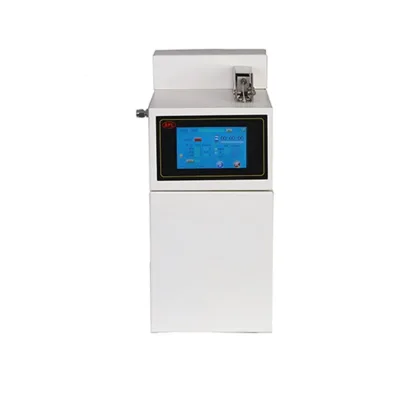
Urine Analysis Instrument System Urine Chemistry Test Analyzer Urine Analyzer
$99.00 - $230.00
MOQ: 1 Pieces




Comprehensive Sourcing Guide
Strategic Sourcing Guide for Ten Tube Fluid Analyzers
Understanding the Technical Landscape of Fluid Analysis Equipment
When sourcing a Ten Tube Fluid Analyzer, buyers must first distinguish between the broad category of fluid analysis and the specific operational requirements of multi-tube systems. The market offers a diverse array of instruments, ranging from semi-automatic urine analyzers to complex biochemistry systems. In the context of the current supply chain, the term "ten tube" often implies a system capable of handling multiple samples simultaneously or a specific configuration for high-throughput testing environments.
Technical specifications are the primary differentiator in this sector. Buyers should look for systems that offer robust sample inlet capabilities, as the flow rate is critical for maintaining throughput. For instance, observed specifications in the market indicate sample inlet flow rates ranging from 1.5 to 3 liters per minute. This metric directly impacts the speed at which a facility can process urine or other fluid samples. Furthermore, the physical footprint of the equipment is a significant consideration for laboratory layout. Dimensions vary significantly; some units are designed with a main cabinet measuring approximately 600mm in width, 1750mm in height, and 800mm in depth. In contrast, other configurations may be more compact, with standard dimensions around 1200mm by 700mm by 300mm.
Power requirements are another critical technical parameter. Most heavy-duty analytical instruments in this category operate on an AC220V supply with a tolerance of ±22V and a frequency of 50Hz. The power consumption can be substantial, with some models requiring up to 1000W to operate the internal heating and processing mechanisms. Consequently, the weight of the main system is also a factor for installation; a typical unit may weigh approximately 150kg, necessitating reinforced flooring or specialized transport equipment. The operating environment must also be controlled, with recommended ambient temperatures between 15°C and 35°C and humidity levels not exceeding 90%.
Compliance and Certification Verification
In the medical and industrial testing sectors, compliance is not merely a formality but a prerequisite for operational legitimacy. When evaluating potential suppliers for fluid analyzers, buyers must rigorously verify the certification status of the equipment. The supply chain data indicates that products often carry ISO and CE certifications. Specifically, the "ISOCE" designation suggests a combination of International Organization for Standardization compliance and European Conformity, which is essential for markets in Europe and regions requiring strict regulatory adherence.
Buyers should not assume that all listed products possess these certifications without verification. The presence of a "CE" mark or "ISO" standard on a product listing must be cross-referenced with the specific model number, such as the U120 Ultra or the YF-WRC-V1. Different models may adhere to different standards; for example, some units are listed with an "ISO" standard, while others might have specific volume weight standards like 10kg or specific dimensional standards like 1200700300mm.
It is crucial to distinguish between the certification of the device and the certification of the manufacturing facility. While the product listing may state "ISOCE," the buyer must ensure that the specific batch or model they are purchasing has valid, up-to-date documentation. Additionally, the origin of the product plays a role in compliance. Many of these analyzers originate from Hangzhou, Zhejiang, or other regions in Mainland China. Buyers should verify that the "Place of Origin" aligns with the certification body's jurisdiction. For instance, a product originating from Zhejiang, China, should have its certifications issued by bodies recognized in the target import market.
Cost Drivers and Pricing Dynamics
The pricing structure for ten tube fluid analyzers is highly variable, reflecting the complexity of the technology and the level of customization required. The observed market range spans from approximately $10 to $27,000 USD. This vast disparity is not indicative of quality differences alone but rather the scope of the equipment. The lower end of the spectrum likely represents basic components, reagents, or smaller, less complex units, while the upper end encompasses full-scale semi-automatic or automatic systems with advanced features.
Several factors drive these costs. First, the level of customization is a primary cost driver. Products listed with "Customization: Available" or "Customized" attributes often command higher prices due to the engineering effort required to tailor the system to specific laboratory workflows. Second, the complexity of the measurement capabilities influences price. Systems capable of measuring pH ranges from 0.00 to 14.00, EC from 0.00 to 19.99, and CF from 0.0 to 199, along with advanced stability metrics like ≤0.3% over 3 minutes, involve sophisticated internal components that increase manufacturing costs.
Packaging and logistics also contribute to the final cost. The standard packaging for these heavy instruments often involves plastic film plus wooden pallets or wooden boxes to ensure safety during transit. For a unit weighing 150kg, the shipping and packaging costs are significant. Furthermore, the inclusion of communication interfaces such as RS232 and USB ports adds to the value proposition and the price point. Buyers should be wary of prices that seem too low for a full system, as they may exclude essential accessories or require additional purchases for connectivity and calibration.
Typical Applications and Operational Scope
The application of ten tube fluid analyzers is diverse, spanning clinical diagnostics, environmental monitoring, and industrial quality control. In clinical settings, these devices are frequently used as urine analyzers, such as the "Acon Mission U120 Ultra Urine Analyzer," which is categorized as a semi-auto analyzer. These systems are designed to process biological samples with high precision, offering stability and repeatability metrics that are essential for medical diagnosis.
In environmental and industrial contexts, the same analytical principles are applied to water quality testing. Specifications such as a measuring range of 0.2 to 100mg/L and a maximum measured concentration of 64,000mg/L indicate the system's versatility in handling both trace and high-concentration samples. The ability to perform direct testing with a detection limit of less than 0.12mg/L, or extraction testing with a limit of 0.0012mg/L, makes these analyzers suitable for rigorous water sample analysis.
The "Biochemistry" appliance classification suggests that these units are also used for broader biochemical analysis, potentially in research laboratories or pharmaceutical manufacturing. The display interface, whether a computer screen or a digital readout, facilitates data interpretation for various applications. The stability of the system, with zero stability maintained within ±1% over 24 hours, ensures that long-term monitoring projects remain accurate without frequent recalibration.
Supplier Evaluation and Origin Considerations
Evaluating suppliers requires a focus on their location, branding, and product history. The majority of the observed products originate from Zhejiang Province, China, specifically Hangzhou. This region is a known hub for medical device manufacturing, offering a concentration of expertise and supply chain efficiency. However, buyers should verify the specific "Brand Name" associated with the product. While some listings mention "Top" as a brand, others may be unbranded or use generic model numbers like SD9029 or M300F.
When assessing a supplier, buyers should check the consistency of the product information. Discrepancies between the model number, the origin, and the certification details can be red flags. For example, a product listed with a model number of "Pht-027" should be cross-referenced with its stated origin of Zhejiang. Additionally, the "Customization" attribute is a strong indicator of a supplier's flexibility. Suppliers who offer customized packing, such as "Carton or Customized," are often more responsive to specific buyer needs regarding logistics and storage.
Buyers should also consider the lead time and minimum order quantity (MOQ). The observed MOQ range is 1-1, suggesting that many suppliers are willing to sell single units, which is beneficial for initial procurement or pilot testing. However, the lack of specific lead time data in the general listing means buyers must request this information directly from the supplier to plan their inventory and operational schedules effectively.
Quality Control and Long-Term Procurement Strategy
Quality control in the procurement of fluid analyzers extends beyond the initial purchase. Buyers must establish protocols for verifying the stability and repeatability of the equipment upon delivery. Key metrics to verify include the repeatability of transmittance (≤0.2%) and the stability of the zero point (±1% over 24 hours). These parameters are critical for ensuring that the analyzer produces reliable data over time.
Long-term procurement considerations should include the availability of spare parts and the ease of maintenance. The power supply requirements and physical dimensions of the unit should be compatible with the laboratory's infrastructure to avoid costly retrofits. Furthermore, the communication interface, typically RS232 and USB, should be compatible with the facility's existing data management systems to ensure seamless integration.
Buyers should also plan for the lifecycle of the equipment. The "Semi-Auto" classification implies that human intervention is required for certain steps, which may affect the long-term operational costs in terms of labor. In contrast, fully automated systems might offer higher throughput but at a higher initial cost. The choice between these options depends on the specific volume of samples the laboratory processes.
Finally, the packaging and shipping standards, such as the use of wooden pallets and plastic film, are part of the quality assurance process. These measures protect the delicate internal components during transit. Buyers should inspect the packaging upon receipt to ensure that the unit has not been damaged, which could compromise the calibration and performance of the analyzer. By adhering to these quality control measures, buyers can ensure that their investment in a Ten Tube Fluid Analyzer delivers consistent and accurate results for years to come.
Summary of Key Specifications and Standards
To assist in the final selection process, the following table summarizes the critical technical and compliance attributes observed in the market for ten tube fluid analyzers. This comparison highlights the variability in specifications that buyers must navigate.
| Attribute Category | Specific Parameter | Observed Value / Range | Relevance |
|---|---|---|---|
| Certification | Standard Compliance | ISO, CE, ISOCE | Regulatory compliance for import and use. |
| Analyzer Type | Automation Level | Semi-Auto | Determines labor requirements and throughput. |
| Dimensions | Cabinet Size | 600x1750x800mm or 1200x700x300mm | Fits laboratory space constraints. |
| Power | Voltage/Frequency | AC220(±22)V, 50Hz | Electrical infrastructure compatibility. |
| Weight | System Mass | Approx. 150kg | Installation and floor load requirements. |
| Flow Rate | Sample Inlet | 1.5~3L/Min | Processing speed and capacity. |
| Measurement | pH Range | 0.00~14.00 pH | Versatility in fluid analysis. |
| Stability | Zero Stability | ±1% (24 Hours) | Long-term accuracy and reliability. |
| Origin | Manufacturing Location | Hangzhou, Zhejiang, China | Supply chain logistics and lead times. |
| Packaging | Shipping Standard | Plastic Film + Wooden Pallet | Protection during transit. |
This guide provides a structured approach to sourcing ten tube fluid analyzers, emphasizing the importance of verifying technical specifications, compliance, and supplier reliability. By focusing on these evidence-based factors, buyers can make informed decisions that align with their operational needs and regulatory requirements.
FAQs
What certifications do ten tube fluid analyzers typically have?
Many models carry ISO and CE certifications, often listed as ISOCE. Buyers must verify these standards against specific model numbers like U120 Ultra or YF-WRC-V1 before purchase.
How much power does a semi-auto fluid analyzer require?
Most units operate on AC220V with a tolerance of ±22V at 50Hz. Heavy-duty systems may consume up to 1000W, requiring stable electrical infrastructure for safe operation.
Can I find customized packaging for these analytical instruments?
Yes, customization is available for packaging options like wooden boxes or cartons. Some suppliers offer plastic film plus wooden pallet packaging to protect heavy units during transit.
Which origin locations are common for these fluid analyzers?
The majority of products originate from Hangzhou, Zhejiang, or Mainland China. Buyers should confirm the specific province matches the certification jurisdiction for regulatory compliance.
What is the typical weight of the main system unit?
A typical main system weighs approximately 150kg. This significant weight necessitates reinforced flooring and specialized transport equipment for proper installation in laboratory settings.
How does the sample inlet flow rate affect testing speed?
Observed flow rates range from 1.5 to 3 liters per minute, directly impacting throughput. Higher flow rates allow facilities to process urine or fluid samples more efficiently.
What is the minimum order quantity for these analyzers?
The observed minimum order quantity is one unit for many suppliers. This allows buyers to procure single units for pilot testing or initial equipment deployment without bulk commitments.