Source Tire Changer and Wheel Balancer Combo for Garages, Dealers, and Workshops
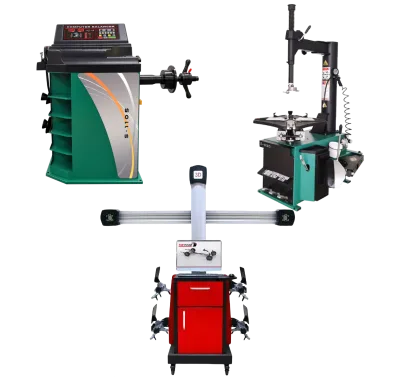
Explore 30 listings for the Tire Changer and Wheel Balancer Combo, featuring electric and pneumatic models with varying rim diameters and balancing precision. Buyers can compare specifications like motor power, operating pressure, and clamping ranges to find suitable equipment for professional automotive service centers.
Key considerations
Products List


Wheel Alignment Car Lift Tire Changer and Wheel Balancer Combo for Car
$4900.00 - $5800.00
MOQ: 1 Pieces


Vehicle Equipment Garage Equipment and Tools Tire Changer Machine Wheel Balancer Combo
$2980.00 - $3260.00
MOQ: 1 Pieces


Combo Tire Changer/Tire Changer Balancer Combo/Balance Changer Combo
$2000.00 - $6000.00
MOQ: 1 Pieces

Tire Balancing Machine/Tire Changer Balancer Combo/Tire Balancer Changer Combo
$550.00 - $1000.00
MOQ: 1 Pieces


Semi-Automatic Tire Changer Tyre Changer Machine and Wheel Balancer Combo
$703.00 - $743.00
MOQ: 1 Pieces


Tire Changer Auto Repair Tool Tyre Changer Machine and Wheel Balancer Combo
$984.00 - $1050.00
MOQ: 1 Pieces


Hot Sale Tire Repair Machine Tyre Changer Machine and Wheel Balancer Combo
$399.00 - $1050.00
MOQ: 1 Pieces




Comprehensive Sourcing Guide
Strategic Sourcing Guide for Tire Changer and Wheel Balancer Combos
Procuring a Tire Changer and Wheel Balancer Combo represents a significant capital investment for automotive service centers, tire retail outlets, and fleet maintenance facilities. These integrated units are designed to streamline the tire service workflow by combining the mechanical force required for tire mounting and dismounting with the precision needed for dynamic wheel balancing. For procurement professionals, the decision-making process extends beyond the initial purchase price to include technical compatibility, regulatory compliance, operational efficiency, and long-term maintenance costs. This guide synthesizes available product attributes and industry standards to provide a disciplined framework for evaluating potential suppliers and specifications.
Technical Specifications and Operational Capabilities
The core functionality of a Tire Changer and Wheel Balancer Combo relies on the precise coordination of mechanical structures and power sources. When evaluating technical specifications, buyers must first distinguish between the structural design of the tire changer and the balancing mechanism of the wheel balancer. In the observed market data, structural configurations vary significantly, with some units utilizing a Horizontal structure while others employ a Vertical design. The vertical type is often preferred for its space efficiency and ergonomic access, whereas horizontal models may offer specific advantages in heavy-duty applications.
Power sources are another critical differentiator. While some units operate on Electric power, others utilize Pneumatic systems. The electric models typically require specific voltage inputs, with observed ranges including 415V/380V/240V/220V/110V, necessitating careful verification of the facility's electrical infrastructure. Pneumatic units, conversely, depend on compressed air supply, with operating pressures typically ranging between 8-10 bar (117-145 psi). The motor power for electric variants is often specified in kilowatts, with observed values such as 0.85/1.1kw, while hydraulic motors may be rated at 4.0HP.
The operational range of the equipment dictates its versatility. Rim diameter capabilities are a primary constraint; observed specifications indicate models capable of handling rims from 12" to 30", while others are optimized for 10"-24" ranges. Similarly, maximum wheel diameters vary, with some units supporting up to 1200mm and others capped at 1000mm or 1040mm (41"). Rim width specifications are equally important, with observed ranges spanning from 1.5" to 16" or 3" to 15". Buyers must ensure the selected unit matches the specific tire inventory of their shop, particularly if they service commercial vehicles or performance cars with wider or larger wheels.
Compliance, Certification, and Safety Standards
In the global B2B market, compliance with international safety and quality standards is non-negotiable. The primary certification observed in the current product pool is the CE mark, which indicates conformity with health, safety, and environmental protection standards for products sold within the European Economic Area. Procurement teams must verify that the CE certification is valid and covers the specific model being purchased, as certifications can be model-specific rather than brand-wide.
Beyond certification, the standard of construction is vital. Products are often described as adhering to a Standard specification, but buyers should demand detailed documentation regarding the manufacturing standards applied to critical components like the spindle, clamping arms, and balancing heads. The Standard Export Package or Exporting Wooden Box mentioned in product attributes suggests a baseline for shipping protection, but it does not guarantee the internal build quality.
Safety features must be explicitly verified. The Working Noise level is a critical ergonomic factor; observed data indicates a threshold of <70db(A), which is generally acceptable for indoor environments. However, buyers should request specific noise test reports to ensure the equipment does not exceed local occupational health limits. Additionally, the Automatic or Semi-Automatic nature of the machine impacts operator safety. Fully automatic systems reduce manual intervention, thereby lowering the risk of injury, whereas semi-automatic models require more direct operator control and training.
Cost Drivers and Pricing Analysis
The pricing of tire changer and wheel balancer combos is influenced by a complex interplay of factors, including motor power, structural complexity, and included features. The observed price range in the market spans from 310 USD to 7150 USD. This wide variance suggests that the lower end of the spectrum likely corresponds to basic, manual, or semi-automatic units with limited wheel size capabilities, while the higher end reflects fully automatic, heavy-duty machines with advanced features.
Key cost drivers include the Motor Power and the Hydraulic Motor capacity. Units with higher horsepower motors or more robust hydraulic systems command a premium. The Maximum Wheel Weight capacity is another significant factor; machines capable of handling wheels up to 70kg are engineered with heavier frames and more powerful actuators, increasing the manufacturing cost. Furthermore, the Precision of the balancing system, observed at ±1g, indicates high-end engineering that justifies a higher price point compared to less precise alternatives.
The Condition of the equipment is also a cost determinant. All observed listings specify New condition, but buyers should be wary of refurbished units that may not carry the same warranty or certification status. The Optional Specifications, such as different kinds of front covers, can also add to the final cost. Buyers should carefully assess whether these optional features provide genuine value or are merely cosmetic upgrades that inflate the price without enhancing performance.
Typical Applications and Workflow Integration
Understanding the intended application is essential for selecting the right equipment. These combos are primarily designed for Car Machine Tyre Changer Plus Balancer applications, serving passenger vehicles, light trucks, and SUVs. The Balancing Type of Wheel is specified as Off-Car Type, meaning the wheel is removed from the vehicle for balancing, which is the standard procedure for most tire service centers.
The Function of the unit is explicitly Wheel Balance, but the combo nature implies a dual function of tire changing and balancing. The Design Type being Vertical suggests a workflow optimized for quick tire mounting and dismounting, which is crucial for high-volume shops. The Spindle Speed of 200r/Min indicates the rotational speed during the balancing process, which must be sufficient to detect imbalances accurately without causing excessive wear on the wheel.
For shops dealing with Small Size Wheel balancing, the Balancing Range must be verified. If the shop services a diverse fleet, including larger commercial vehicles, the Maximum Wheel Diameter and Maximum Wheel Weight become critical constraints. The Bead Breaker Force of 2500kg is a key specification for the tire changer component, ensuring that even stiff-bead tires can be broken and mounted without damaging the rim.
Supplier Evaluation and Origin Verification
When evaluating suppliers, the prod_origin is a critical data point. The observed products originate from China, with specific mentions of Qingdao, China as a manufacturing hub. While this provides a baseline for shipping and logistics, buyers must look beyond the country of origin to assess the specific factory's reputation and quality control processes.
The prod_model numbers, such as OY-W860, BLS-WB130, and BLS-TC5600T, serve as unique identifiers for specific configurations. Buyers should use these model numbers to cross-reference technical data sheets and verify that the specifications match their requirements. The prod_packing details, such as Standard Export Package or Wooden Box, indicate the level of care taken during shipping, which can affect the condition of the equipment upon arrival.
Supplier reliability is also reflected in the Customization availability. The fact that Customization is Available suggests that suppliers are willing to adapt the equipment to specific client needs, such as different voltage requirements or branding. However, buyers should clarify the extent of these customizations and any associated lead time increases. The Optional Specifications 1 regarding different front covers also points to a supplier's flexibility, but buyers should ensure that customization does not compromise the structural integrity or safety of the machine.
Quality Control and Long-Term Procurement Considerations
Quality control is paramount when importing heavy machinery. The Equipment Weight and Machine Weight (e.g., N.W:205kg G.W:225kg) provide insight into the build quality; heavier units often indicate more robust materials and better durability. Buyers should request detailed inspection reports and test results for critical components like the Hydraulic Motor and Spindle.
Long-term procurement considerations include the availability of spare parts and the ease of maintenance. The Type of the machine is described as Simple Disassembly, which is a positive indicator for maintenance and repair. However, buyers should verify the availability of replacement parts for the Hydraulic Motor and other wear-and-tear components. The Working Pressure and Operating Pressure specifications must be maintained consistently to ensure optimal performance, and buyers should inquire about the recommended maintenance schedule.
Finally, the Lead Time and MOQ (Minimum Order Quantity) are practical considerations. While the observed MOQ range is 1-1, indicating flexibility for single-unit purchases, buyers should confirm the actual lead time for production and shipping. The Power Supply compatibility is a long-term operational factor; ensuring the machine can operate on the local voltage grid without expensive transformers is essential for cost-effective deployment.
Comparative Analysis of Key Specifications
To facilitate a clearer decision-making process, the following table summarizes the key technical specifications observed in the market data, highlighting the variations that buyers must consider.
| Specification Category | Observed Range / Value | Relevance to Procurement |
|---|---|---|
| Power Source | Electric / Pneumatic | Determines infrastructure requirements (voltage vs. air supply). |
| Operating Pressure | 8-10 bar / 117-145 psi | Critical for pneumatic units; affects system compatibility. |
| Rim Diameter Range | 10"-24" / 12"-30" | Must match the shop's tire inventory (passenger vs. light truck). |
| Max. Wheel Diameter | 1000mm / 1200mm / 1040mm | Limits the size of wheels that can be serviced. |
| Max. Wheel Weight | 70kg | Indicates the load capacity and structural robustness. |
| Precision | ±1g | Higher precision reduces vibration and extends tire life. |
| Structure | Horizontal / Vertical | Affects floor space usage and operator ergonomics. |
| Certification | CE | Mandatory for EU markets; indicates safety compliance. |
| Origin | China (e.g., Qingdao) | Influences shipping costs and lead times. |
| Condition | New | Ensures full warranty coverage and reliability. |
In conclusion, sourcing a Tire Changer and Wheel Balancer Combo requires a meticulous review of technical specifications, compliance status, and supplier capabilities. By focusing on the observed data points such as CE certification, Electric or Pneumatic power sources, and specific Rim Diameter ranges, buyers can make informed decisions that align with their operational needs. The wide price range and varying specifications underscore the importance of detailed due diligence to ensure the selected equipment delivers the required performance and longevity.
FAQs
What power sources are available for these combos?
These units operate on either electric or pneumatic power sources. Electric models support multiple voltages like 415V or 380V, while pneumatic versions require an operating pressure between 8 and 10 bar for effective function.
Which rim diameters can the equipment handle?
The machines accommodate rim diameters ranging from 10 inches to 30 inches depending on the specific model. Some units support up to 1200mm wheel diameter, while others are optimized for smaller ranges like 10 to 24 inches.
Can I find units with CE certification?
Yes, CE certification is available for these products in the current market pool. This certification indicates conformity with European health, safety, and environmental protection standards for the specific models listed.
How much do these machines typically weigh?
Equipment weights vary significantly based on the model and capacity. Some units weigh around 95kg, while heavier combo machines can have a net weight of 205kg and a gross weight of 225kg.
What is the precision level for wheel balancing?
The balancing precision for these units is typically specified as plus or minus 1 gram. This high level of accuracy ensures that imbalances are detected and corrected effectively during the off-car balancing process.
Are customization options available for buyers?
Customization is available for these tire changer and wheel balancer combos. Buyers can request specific modifications, though they should verify the extent of changes and any potential impact on lead times or pricing.
Which suppliers originate from China?
All observed products in this dataset originate from China, with specific manufacturing hubs noted in Qingdao. Buyers should verify the specific factory details and quality control processes for these Chinese-sourced units.