Source Tire Changer and Wheel Balancer Set for Garages, Dealers, and Workshops
Explore 30 listings for the Tire Changer and Wheel Balancer Set, featuring vertical designs with CE certification and electric or pneumatic power options. Buyers can compare specifications like clamping ranges, balancing types, and optional accessories to find suitable equipment for automotive service centers.
Key considerations
Products List
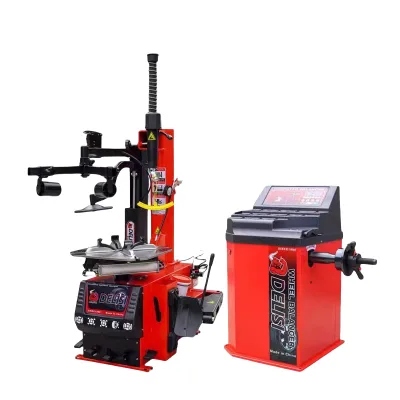


One-Stop CE Certified Tire Changer and Wheel Balancer Combination Tire Mounting Machine
$600.00 - $1800.00
MOQ: 2 Pieces

Tire Changer Balancer Combo/Tire Machine Balancer/Wheel Balancer Price
$2000.00 - $6000.00
MOQ: 1 Pieces


Wheel Balancer Tire Changer/ Tyre Balancer Wheel Balancing Machine/ Manual Wheel Balancer
$390.00 - $450.00
MOQ: 3 Pieces


Tire Changer Auto Repair Tool Tyre Changer Machine and Wheel Balancer Combo
$984.00 - $1050.00
MOQ: 1 Pieces

Hot Sale Tire Repair Machine Tyre Changer Machine and Wheel Balancer Combo
$399.00 - $1050.00
MOQ: 1 Pieces

Automated Tire Repair & Wheel Balancer Machine with Customization Options
$359.00 - $399.00
MOQ: 1 Pieces


Comprehensive Sourcing Guide
Tire Changer and Wheel Balancer Set Sourcing Guide
Sourcing a combined tire changing and wheel balancing machine requires a careful balance of technical verification and commercial due diligence. These integrated units are designed to streamline workshop operations by combining the mechanical force required for bead breaking and tire mounting with the precision electronics needed for dynamic wheel balancing. Buyers must navigate a market where specifications vary significantly between models, particularly regarding power sources, clamping mechanisms, and structural design. The following guide provides a structured approach to evaluating these machines, ensuring that procurement decisions are based on verified data rather than marketing assumptions.
The primary challenge in this category is distinguishing between fully automatic, semi-automatic, and manual configurations, as each offers different levels of operational efficiency and labor requirements. While some listings advertise "automatic" features, others specify "semi-automatic" or "simple disassembly" types, which directly impacts the speed of service and the skill level required for operators. Understanding these distinctions is critical for aligning the equipment with your workshop’s throughput goals and workforce capabilities. This guide focuses on the observable signals and technical parameters that define the quality and suitability of these sets for professional automotive service environments.
Product Scope and Observed Listing Signals
The current market for tire changer and wheel balancer sets exhibits a wide variance in pricing and minimum order quantities, reflecting the diversity of configurations available. Observed listing prices range from approximately $59 to $6,000 USD, a spread that indicates the presence of both basic, entry-level units and high-end, fully automated systems. This price disparity is not merely a function of brand prestige but is driven by the complexity of the internal mechanisms, the quality of the steel components, and the sophistication of the balancing software. Buyers should interpret this range as a signal to define their budget and performance requirements clearly before engaging with suppliers, as the lowest price points often correspond to machines with limited wheel diameter capacities or basic clamping systems.
Minimum Order Quantities (MOQ) in this sector typically range from 1 to 10 units, suggesting that the market is primarily oriented toward individual workshop purchases or small fleet acquisitions rather than large-scale industrial distribution. Most suppliers are willing to sell single units, which facilitates trial purchases and reduces the financial risk for new buyers. However, the availability of customization options, such as specific color requests or alternative front covers, indicates that many manufacturers operate with flexible production lines. Buyers should leverage this flexibility to tailor the machine to their brand identity or specific operational needs, such as selecting between pneumatic or electric power sources based on their facility’s infrastructure.
Technical Specifications to Verify
The structural design and power source of the tire changer are fundamental determinants of its performance and compatibility with your workshop. Observed listings frequently specify a vertical structure, which is the industry standard for space efficiency and ease of operation, but buyers must verify the specific model number and design type to ensure it matches their spatial constraints. Power sources vary between electric and pneumatic systems; pneumatic models often require a compressed air supply with a working pressure of 8-10 bar (117-145 psi), while electric models rely on standard electrical connections. It is essential to confirm the voltage and frequency requirements, such as 380V/50Hz, to ensure the machine can be safely integrated into your existing power grid without the need for expensive transformers or converters.
Clamping mechanisms and wheel capacity are critical technical parameters that define the versatility of the tire changer. Buyers should verify the outside and inside clamping ranges, as these dimensions determine the smallest and largest wheels the machine can handle. For instance, some models offer an outside clamping range of 10-22 inches and an inside range of 13-24 inches, accommodating a broad spectrum of passenger car and light truck wheels. Additionally, the maximum wheel diameter and width must be checked; a maximum diameter of 1040mm (41 inches) and a width of 3-15 inches are common specifications, but exceeding these limits can damage the machine or compromise safety. The bead breaker force, often cited around 2500kg, is another key metric that indicates the machine’s ability to handle stubborn or rusted tires without excessive manual effort.
Compliance and Safety Documentation
Certification is a non-negotiable aspect of sourcing industrial machinery, serving as proof that the equipment meets specific safety and quality standards. In the observed listings, CE certification is frequently mentioned, indicating that the product complies with European health, safety, and environmental protection standards. Some listings also reference ISO certification, which suggests adherence to international quality management systems. Buyers must request valid certification documents directly from the supplier and verify their authenticity, as the presence of a CE mark alone does not guarantee ongoing compliance or the quality of the manufacturing process. It is advisable to ensure that the certifications are current and cover the specific model number being purchased.
Safety features and operational noise levels are also important considerations for workplace compliance and employee well-being. The working noise of these machines is often specified as less than 70dB(A), which is within acceptable limits for most indoor workshop environments and helps reduce operator fatigue. However, buyers should verify that the machine includes necessary safety interlocks, such as guards that prevent operation when the protective cover is open. The automatic or semi-automatic nature of the machine should also be evaluated in the context of safety; fully automatic systems reduce the need for manual intervention, thereby lowering the risk of injury during the tire changing process. Documentation regarding these safety features should be included in the product manual and verified during the pre-shipment inspection.
Cost Drivers and Commercial Terms
The total cost of ownership for a Tire Changer and Wheel Balancer Set extends beyond the initial purchase price to include shipping, installation, and maintenance. The observed price range of $59 to $6,000 USD reflects these variations, with higher prices typically associated with more robust construction, advanced balancing algorithms, and additional accessories. Buyers should carefully analyze what is included in the quoted price, such as whether the cost covers the motorcycle adaptor, bead blaster function, or leverless system, which can be significant value-adds for specialized services. It is also important to clarify the packing method, as wooden or polywood packing is common but may incur additional costs for disposal or recycling at the destination.
Commercial terms, including warranty and customization options, play a crucial role in the financial risk assessment of the purchase. A standard warranty period of 6 months is commonly observed, but buyers should negotiate for extended coverage on critical components like the motor or balancing sensor. Customization options, such as different kinds of pneumatic locking or inflation guns, can be tailored to specific operational preferences, but these may affect the lead time and final price. Buyers should ensure that all agreed-upon customizations are explicitly stated in the purchase contract to avoid discrepancies upon delivery. Additionally, the selling unit is typically a single item, so buyers should confirm whether bulk discounts are available if they are purchasing multiple units for a multi-location operation.
Supplier Qualification and Quality Control
Verifying the supplier’s location and manufacturing capability is a key step in ensuring product reliability and after-sales support. The observed listings indicate that products originate from various regions in China, including Hebei, Yingkou in Liaoning, and other unspecified locations. While these regions are known for industrial manufacturing, buyers should request detailed information about the supplier’s factory, including its size, production capacity, and quality control processes. This due diligence helps mitigate the risk of receiving substandard products or dealing with suppliers who lack the technical expertise to support complex machinery. It is also advisable to check the supplier’s track record and customer reviews to gauge their reliability and responsiveness.
Quality control measures should be established before production begins to ensure that the delivered machine meets the specified technical parameters. Buyers should request a pre-shipment inspection report that verifies key specifications, such as the machine weight, dimensions, and functional performance. For example, the net weight of 205kg and gross weight of 225kg for certain models can be used to verify that the machine is constructed with sufficient steel and components. Additionally, buyers should confirm that the machine undergoes functional testing, including bead breaking and wheel balancing, before packaging. Establishing a clear quality assurance protocol with the supplier can help prevent disputes and ensure that the equipment performs as expected upon installation.
Long-Term Procurement Checks
Sourcing a Tire Changer and Wheel Balancer Set is not a one-time transaction but the beginning of a long-term relationship with the supplier. Buyers should establish clear communication channels for technical support and spare parts availability, as these machines require regular maintenance and occasional component replacement. The availability of optional extra accessories, such as motorcycle adaptors or leverless systems, should be confirmed for future upgrades or specialized services. Ensuring that the supplier can provide ongoing support and genuine spare parts is essential for minimizing downtime and extending the lifespan of the equipment.
Regular reviews of the machine’s performance and the supplier’s service quality should be conducted to identify any emerging issues or opportunities for improvement. Buyers should monitor the machine’s operational efficiency, noise levels, and balancing accuracy over time to detect any degradation in performance. If any discrepancies arise, they should be addressed promptly with the supplier, referencing the original specifications and warranty terms. By maintaining a proactive approach to procurement and supplier management, buyers can ensure that their tire changing and balancing operations remain efficient, safe, and cost-effective in the long run.
FAQs
What certifications do these tire changer and wheel balancer sets have?
These machines typically hold CE and ISO certifications to ensure compliance with international safety and quality standards. The CE mark indicates adherence to European health, safety, and environmental protection requirements. Buyers should verify specific documentation for their local regulatory needs before importing. This certification ensures the equipment meets essential manufacturing and operational benchmarks for professional tire service workshops.
Can the Tire Changer and Wheel Balancer Set be customized for specific brands?
Yes, customization is available for these combined units to meet specific brand or operational requirements. Buyers can often request different front covers, pneumatic locking mechanisms, or inflation guns. Additional accessories like motorcycle adaptors or leverless systems can also be integrated. This flexibility allows workshops to tailor the equipment to their specific workflow and branding preferences without compromising core functionality.
What is the minimum order quantity for these tire changer and wheel balancer sets?
The minimum order quantity is generally one unit, allowing for single-item purchases. This low MOQ facilitates testing for new buyers or small workshop expansions. The selling unit is listed as a single item, making it accessible for individual procurement. Buyers can order just one set to evaluate performance before committing to larger bulk purchases for fleet or multi-location deployment.
How does the automatic function work in this Tire Changer and Wheel Balancer Set?
The system operates with automatic or semi-automatic features to streamline tire mounting and balancing. It includes vertical design structures for efficient wheel handling and off-car balancing types. The machine supports wheels up to 41 inches in diameter and 15 inches in width. This automation reduces manual labor and improves precision, ensuring consistent results for both tire changing and wheel balancing tasks in professional settings.
What power source is used for the Tire Changer and Wheel Balancer Set?
These units typically utilize electric power sources, often compatible with 380V/50Hz standards. Some configurations may also incorporate pneumatic elements for specific functions like bead breaking or locking. The working pressure for pneumatic parts is usually around 8-10 bar. Buyers should ensure their workshop infrastructure supports the required voltage and air pressure specifications for optimal machine performance and safety.
Where are these tire changer and wheel balancer sets manufactured?
These machines are primarily manufactured in Hebei and Liaoning provinces in China. The origin is consistently listed as China, with specific production hubs in regions like Yingkou. This geographic concentration indicates a specialized manufacturing cluster for automotive service equipment. Buyers can expect consistent production standards and supply chain logistics associated with these established industrial regions in China.