Source Touchscreen 5G Smart Watch for Fitness, Calls, and GPS Tracking
Compare 30 available models of Touchscreen 5G Smart Watch featuring diverse displays, battery life, and sensor capabilities. Buyers can evaluate options for fitness tracking, call management, and GPS navigation from verified suppliers in Guangdong.
Key considerations
Products List
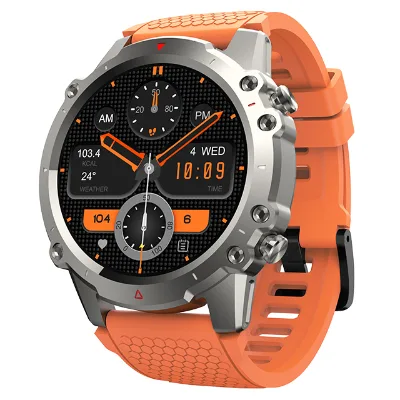
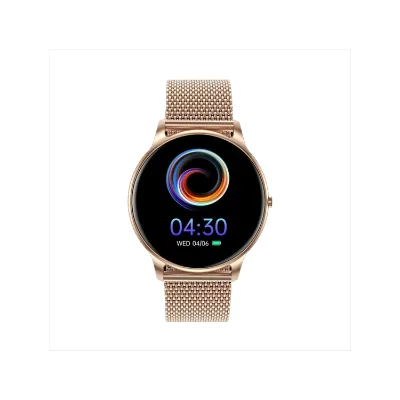
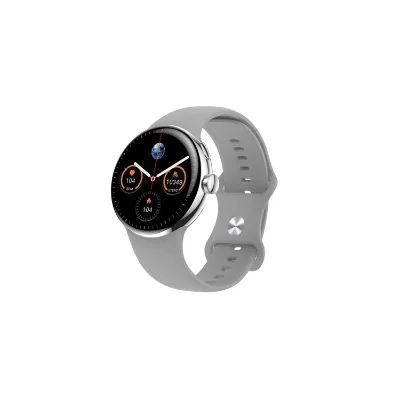


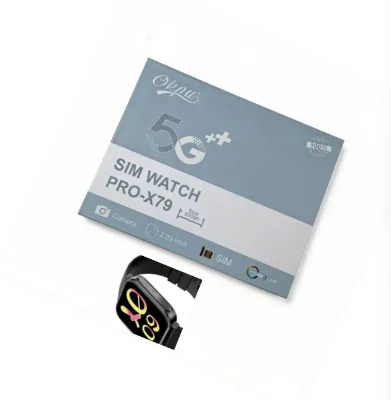
Comprehensive Sourcing Guide
Strategic Sourcing Guide for Touchscreen 5G Smart Watch Procurement
The global demand for wearable technology has surged, with the "Touchscreen 5G Smart Watch" emerging as a critical keyword for buyers seeking next-generation connectivity and user interface capabilities. However, a disciplined procurement approach requires distinguishing between marketing terminology and verifiable technical specifications. This guide synthesizes observed product attributes and industry standards to provide a framework for evaluating potential suppliers. Buyers must recognize that while the core keyword implies 5G connectivity, the actual product data available in current market listings often reflects a spectrum of connectivity options, ranging from standard Bluetooth to advanced BLE versions. The following analysis focuses on technical due diligence, compliance verification, and cost structure analysis to ensure a successful sourcing strategy.
Technical Specification Verification and Connectivity Realities
When sourcing a device labeled as a touchscreen smart watch, the first step is a rigorous audit of the connectivity and display specifications. The term "5G" in the search keyword often suggests cellular integration, yet the provided product data indicates a prevalence of Bluetooth-based connectivity solutions. Specifically, observed units feature a "BLE 5.2 + BT 3.0" configuration, which facilitates robust short-range communication with smartphones but does not inherently confirm standalone 5G cellular capabilities. Procurement teams must verify whether the "Gps" feature listed in product attributes is standalone or dependent on a paired device, as this distinction significantly impacts the device's utility and battery consumption.
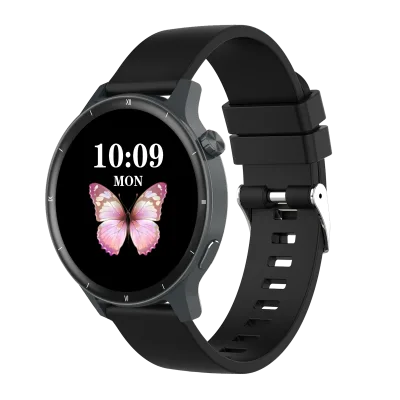
The display technology is another critical differentiator. Market observations reveal a divergence in screen types, with some units utilizing "TFT" technology and others featuring "AMOLED" or "OLED" displays. For instance, specific model data points to a "1.32" TFT screen" with a resolution of 360*360 pixels, while other variants boast a "1.3" AMOLED HD Display" with the same resolution. The choice between TFT and AMOLED affects color accuracy, contrast ratios, and power efficiency. Buyers should prioritize AMOLED screens for premium applications requiring high visual fidelity, while TFT may suffice for cost-sensitive, utilitarian models. Furthermore, the user interface is defined by a "Full screen touch + Dual buttons" configuration, a hybrid approach that balances intuitive gesture control with physical redundancy for critical functions.
| Feature Category | Observed Specification A | Observed Specification B | Procurement Consideration |
|---|---|---|---|
| Display Type | TFT | AMOLED / OLED | AMOLED offers better contrast; TFT is cost-effective. |
| Screen Size | 28mm (approx. 1.32") | 1.3" | Verify physical dimensions for strap compatibility. |
| Resolution | 360*360 pixels | 360*360 pixels | Consistent resolution across variants suggests standardization. |
| Connectivity | BLE 5.2 + BT 3.0 | Bluetooth Enabled | Confirm if "5G" implies cellular or is a marketing term. |
| Touch Interface | Full screen touch + Dual buttons | Touch Screen | Dual buttons add physical control redundancy. |
Compliance, Certification, and Waterproofing Standards
In the realm of wearable electronics, compliance with environmental and safety standards is non-negotiable. The provided data highlights a specific "IP68" waterproof standard for certain models, indicating protection against dust ingress and temporary immersion in water. However, other entries list the waterproof standard simply as "Other" or mention "50m waterproofing" as a feature. This discrepancy necessitates a strict verification protocol. Buyers must request independent test reports confirming the IP rating, as "50m waterproofing" claims often refer to static pressure tests rather than dynamic swimming conditions.
Regarding electromagnetic compatibility and safety, the presence of a "Horn" supporting a "waterproof speaker" introduces acoustic and electrical safety considerations. The device operates on a "Realtek 8763EWE" CPU and utilizes a "VP60A" heart rate sensor, components that must adhere to regional radio frequency regulations. While the data mentions "SDK available," suggesting customization potential, it does not explicitly confirm certifications like CE, FCC, or RoHS. Procurement teams must treat these certifications as variables to be verified rather than inherent attributes. The "Brand: OEM" designation further implies that the final product may carry the buyer's brand, shifting the responsibility for compliance marking and certification to the supplier or the buyer's own compliance team.
Cost Drivers and Material Composition Analysis
Understanding the cost structure of a smart watch requires an analysis of its material composition and manufacturing complexity. The case material is consistently identified as "Plastic," while band materials vary significantly, ranging from "Rubber" and "Silicone" to "Leather" and "Stainless Steel." This variation creates a wide price spectrum, with leather and stainless steel bands commanding a premium over rubber or silicone alternatives. The battery capacity is another primary cost driver, with observed units ranging from "250mAh" to "260mAh." While the difference appears marginal, it directly influences the "battery life" claim, which ranges from "5 to 10 days" for some models to "Up to 4 days" for others.
The internal memory architecture also impacts cost. Specifications indicate a configuration of "RAM 578KB, ROM 640KB." This relatively low memory footprint suggests the device is designed for basic fitness tracking and notification functions rather than heavy app execution. The presence of a "private mold" indicates that the supplier has invested in unique tooling, which can increase the initial tooling cost but offers protection against counterfeiting and allows for distinct branding. The "Single package size" of 20x12x4 cm and a "Single gross weight" of 0.200 kg are critical for logistics planning, as they determine shipping volume and freight costs. Buyers should note that the "Selling Units" are listed as "Single item," which may affect the efficiency of bulk shipping if not consolidated properly.
Functional Capabilities and Application Scenarios
The functional scope of these devices is extensive, covering a wide array of health and utility features. The "function" list includes "chronograph, Calendar, Alarm Clock, Remote Control, Countdown, Sleep Tracker, Speed Measurement, Fitness Tracker, Passometer, Call Reminder, Answer Call, Push Message, Mood Tracker, Message Reminder, Dial Call, Heart Rate Tracker, Gesture C." This breadth of functionality positions the device as a comprehensive health and lifestyle companion. The inclusion of "Accelerometer, Activity monitoring, Barometer, Blood Pressure Monitor, NFC, Phone, Sleep monitor" in multi-function descriptions suggests advanced sensor integration.
However, buyers must align these features with specific application scenarios. For fitness professionals, the "Heart Rate Tracker" and "Sleep Tracker" are paramount, requiring the verification of sensor accuracy, such as the "VP60A" sensor mentioned. For corporate or enterprise users, the "Answer Call" and "Dial Call" features, combined with "Push Message" capabilities, make the device suitable for hands-free communication in industrial settings. The "Gesture C" feature implies gesture control, which enhances usability in scenarios where touch interaction is difficult. The "Compatible Operating System" list, spanning "Android, iOS, BlackBerry, Fire OS, Firefox OS, Windows Phone," indicates broad compatibility, but buyers should verify the specific app requirements for the "App Control" and "SDK available" features to ensure seamless integration with existing enterprise or consumer ecosystems.
Supplier Evaluation and Quality Control Protocols
Evaluating suppliers for touchscreen smart watches requires a focus on their manufacturing capabilities and quality assurance processes. The "place of origin" is listed as "Guangdong, China," a region known for its robust electronics manufacturing ecosystem. The "Port of dispatch" is identified as "Shenzhen," a major logistics hub. Buyers should verify the supplier's capacity to handle "OEM" branding, ensuring they can manage private mold production and custom packaging. The "Model Number" variations, such as "LW97," "LA24," and "SH571L," indicate a diverse product portfolio, suggesting the supplier can offer customization.
Quality control must be rigorous, particularly given the "IP68" waterproof claims and the complexity of the "Touch Screen" interface. Buyers should implement a pre-shipment inspection protocol that includes functional testing of the "Full screen touch + Dual buttons" mechanism, verification of the "250mAh" or "260mAh" battery capacity, and a stress test of the waterproof seals. The "Operating System" requirement of "ios 12.0 or above & Android 6.0 or above" must be validated through software compatibility testing. Additionally, the "RAM 578KB, ROM 640KB" configuration should be tested for performance stability under load. Given the "Brand: OEM" status, the supplier must demonstrate a robust supply chain to ensure consistent quality across batches, especially when dealing with varying "Band Material" options like "Leather" or "Stainless Steel."
Long-Term Procurement and Lifecycle Management
Long-term procurement considerations extend beyond the initial purchase to include software support, spare parts availability, and end-of-life management. The "SDK available" attribute is a significant advantage for buyers seeking to customize the device for specific industry needs, but it requires a commitment to ongoing software maintenance. Buyers must establish a clear agreement with the supplier regarding firmware updates, bug fixes, and compatibility with future operating system versions. The "Battery life" of "5 to 10 days" or "Up to 4 days" is a key selling point, but the degradation of the "250mAh" or "260mAh" battery over time must be accounted for in the product lifecycle plan.
The "Single package size" and "Single gross weight" facilitate efficient logistics, but buyers should plan for the "MOQ range" of 1 to 1000 units. For large-scale deployments, negotiating a lower unit price and securing a dedicated production line for the "private mold" is essential. The "Bundle1" option suggests potential for value-added packaging or accessory bundles, which can enhance the product's marketability. Finally, buyers should consider the environmental impact of the "Plastic" case and "Rubber" or "Silicone" bands, ensuring that the supplier adheres to relevant environmental standards for waste disposal and recycling. By addressing these long-term factors, buyers can secure a sustainable and reliable supply chain for their touchscreen smart watch procurement needs.
FAQs
What connectivity options do these smart watches offer?
These devices support BLE 5.2 and BT 3.0 for smartphone pairing. They do not feature standalone 5G cellular connectivity despite the search keyword, relying instead on Bluetooth for data transmission and GPS tracking.
Which display types are available for this product?
The watches come with either TFT or AMOLED display options. Specific models feature a 1.32-inch TFT screen or a 1.3-inch AMOLED HD display, both maintaining a consistent 360 by 360 pixel resolution.
Can the device be used for swimming or water sports?
Yes, the device meets the IP68 waterproof standard for dust and water immersion. Some listings also mention 50m waterproofing, though independent test reports are required to verify dynamic swimming conditions.
What is the battery life of the touchscreen smart watch?
Battery life varies between 4 days and 10 days depending on the specific model. Units contain either a 250mAh or 260mAh battery, with usage patterns significantly influencing the actual duration.
Which operating systems are compatible with this watch?
The watch supports iOS 12.0 or above and Android 6.0 or above. It is also compatible with various other systems including BlackBerry, Fire OS, and Windows Phone, ensuring broad device integration.
What materials are used for the watch case and band?
The case is constructed from durable plastic material. Band options include rubber, silicone, leather, or stainless steel, allowing buyers to select based on comfort and style preferences for the final product.
Are customization and private mold options available?
Yes, the supplier offers private mold services and OEM branding capabilities. This allows buyers to customize the product design and packaging while maintaining unique tooling for distinct branding protection.