Source Toy Story Embroidered Plush Toys for gifts, events, and retail
Find 30 options for Toy Story Embroidered Plush Toys tailored for gifting, events, and retail displays. Buyers can compare customization, materials, and certifications to select the best supplier for their needs.
Key considerations
Products List




Comprehensive Sourcing Guide
Strategic Sourcing Guide for Embroidered Plush Toys
The global market for embroidered plush toys represents a dynamic segment within the broader children's product and gift industry. Buyers seeking "Toy Story Embroidered Plush Toys" must navigate a landscape defined by high customization potential, diverse material specifications, and rigorous safety compliance. The core of this sourcing strategy involves understanding the intersection of design flexibility and manufacturing capability. Unlike mass-produced generic items, embroidered plush toys often require a partnership with suppliers who can execute complex design requests while maintaining strict quality control. The following analysis outlines the critical factors for procurement, grounded in observed market data and technical specifications relevant to this product category.
Technical Specifications and Material Composition
The foundation of any successful plush toy procurement lies in the precise definition of technical specifications. For embroidered plush toys, the material composition is paramount. Market observations indicate that the primary material used is plush, specifically designed to offer a soft and comfortable tactile experience. This attribute is not merely aesthetic but functional, ensuring the product meets the expectations of end-users across all age groups, including infants. The filling material is consistently identified as PP cotton, a synthetic fiber known for its resilience, washability, and ability to maintain the toy's shape after compression.
Embroidery, a key differentiator for this category, requires specific attention to the plush length and density. The specifications suggest that the plush length is a customizable parameter, allowing buyers to select textures ranging from short, dense piles to longer, shaggier finishes depending on the desired character aesthetic. The modeling source for these toys is predominantly animals, with specific mentions of bears and teddy bears as common design templates. However, the customization capabilities extend to the animal type and style, offering options such as sitting animals, standing animals, or dolls.
The production technique is a critical variable. While some listings indicate machine production for standard items, others highlight hand-made techniques for custom orders. This distinction impacts the final quality and the cost structure. Hand-made embroidery often allows for greater detail and nuance, which is essential for "toy story" themed characters that may require specific facial features or costume details. The technical specifications also include packaging standards, which vary from carton-based bulk shipping to boxed individual units, depending on the order quantity and client request.
Compliance and Certification Verification
Safety compliance is the most non-negotiable aspect of sourcing plush toys, particularly those intended for children. The market data reveals a robust framework of certifications that suppliers should possess. High-confidence facts list multiple international safety standards, including CE, EN71, ASTM, CPSIA, and REACH. These certifications are not merely marketing terms but represent adherence to specific chemical, mechanical, and physical safety requirements.
Buyers must verify that the supplier holds valid certificates for the specific markets they intend to serve. For instance, the European market requires compliance with EN71, while the United States market mandates adherence to ASTM F963 and CPSIA regulations. The provided data also mentions BSCI and ISO9001 certifications, which speak to the supplier's social responsibility and quality management systems. It is crucial to note that while these certifications are listed as available attributes, they must be validated for each specific order. The testing standards referenced include ASTM and EN71, which cover aspects such as flammability, small parts, and chemical content.
The table below summarizes the key certifications and their typical application regions based on the observed data:
| Certification | Region of Application | Primary Focus |
|---|---|---|
| CE | Europe | General product safety and health |
| EN71 | Europe | Toy safety (mechanical, chemical, flammability) |
| ASTM | USA | Toy safety standards (often ASTM F963) |
| CPSIA | USA | Lead content and phthalates in children's products |
| REACH | Europe | Chemical safety and restriction of hazardous substances |
| BSCI | Global | Social compliance and labor standards |
| ISO9001 | Global | Quality management system standards |
Buyers should request current test reports for every batch of production to ensure that the specific embroidery threads and plush fabrics used meet these standards. The presence of a "Test: ASTM/En71" attribute in the product data suggests that suppliers are equipped to perform these checks, but verification remains the buyer's responsibility.
Cost Drivers and Pricing Structures
Understanding the cost drivers for embroidered plush toys is essential for budgeting and negotiation. The observed price range in the market spans from $0.50 to $9.00 USD, a wide variance that reflects differences in size, complexity, and customization level. Several factors influence where a specific product falls within this range.
First, the size of the toy is a primary driver. Larger plush toys require more material, more filling, and more labor for embroidery. The standard dimensions observed include 604050 cm, 504040 cm, and 504030 cm, with custom sizes also available. Second, the complexity of the embroidery significantly impacts cost. Hand-made embroidery, while offering superior quality, is more labor-intensive and time-consuming than machine embroidery, leading to higher unit costs. Third, the customization of the logo and design plays a major role. Suppliers offering "Customers Logo" and "Customized Plush Doll" options typically charge a setup fee or a higher unit price to cover the design and pattern creation costs.
The Minimum Order Quantity (MOQ) is another critical cost factor. The observed MOQ range is 1 to 3000 units. For buyers testing the market or requiring small batches, an MOQ of 1 allows for sampling, but the unit cost will be at the higher end of the spectrum. Conversely, orders approaching 3000 units can leverage economies of scale to reduce the per-unit cost. The packing method also affects logistics costs; bulk packing (30-40 pieces per carton) is more efficient for shipping than individual boxed units, which require more packaging material and handling time.
Typical Applications and Usage Scenarios
Embroidered plush toys serve a diverse range of applications beyond simple play. The data explicitly identifies "Gift" as a primary usage scenario. This makes these toys highly suitable for corporate gifting, promotional events, and holiday distributions. The ability to customize the logo and names of animals allows businesses to create branded merchandise that resonates with their target audience.
The age specification of "All Ages" and "0+" indicates that these toys are versatile enough for infants, children, and even adult collectors. For infants, the soft and comfortable feature is a key selling point, ensuring safety and comfort during play. For older children and adults, the "Toy Story" theme and embroidered details appeal to nostalgia and collectibility. The style variations, such as sitting or standing animals, further expand the application potential. A standing animal might be used as a display piece or a decorative item, while a sitting animal is more suited for cuddling or as a prop in photography.
The customization of the product model, such as "plush toy-679" or "HW000000," suggests that suppliers can adapt existing designs to specific thematic requirements. This flexibility makes embroidered plush toys ideal for themed parties, educational settings, and retail displays where a unique visual identity is required.
Supplier Evaluation and Production Capabilities
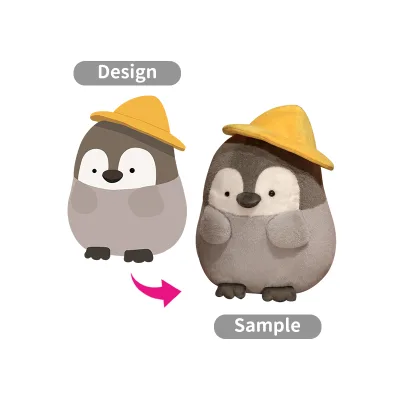
Selecting the right supplier requires a thorough evaluation of their production capabilities and lead times. The data indicates that suppliers offer both machine production and hand-made techniques, providing flexibility based on the buyer's quality and budget requirements. The sample time is a critical metric for project planning. Observed sample times range from 3-7 working days to 15 working days, depending on the complexity of the design and the supplier's current workload. For custom orders, a sample revised time of "Unlimited" is noted, which is a significant advantage for buyers who need to iterate on the design before mass production.
The production time for bulk orders is estimated at about 20 days or according to the order quantity, with some listings specifying 25-35 days. This variance highlights the importance of clear communication regarding the order size and complexity. Suppliers with "OEM/ODM: Yes!" capabilities are essential for buyers seeking unique designs, as they can handle the entire process from concept to final product.
When evaluating suppliers, buyers should verify their capacity for handling different packing requirements. The data mentions packing options ranging from standard cartons to custom packing per toy size and request form. This flexibility is crucial for buyers with specific logistics needs or those requiring specialized packaging for retail display. Additionally, the availability of "Door to Door Service" for shipping via ocean or air freight simplifies the logistics process, reducing the administrative burden on the buyer.
Quality Control and Long-Term Procurement Considerations
Quality control is the final pillar of a successful sourcing strategy. Buyers must establish clear quality standards before production begins. The "Feature: Soft Comfortable" attribute should be verified through physical inspection of samples. The embroidery should be secure, with no loose threads that could pose a choking hazard, especially for toys intended for children under three years old. The filling should be evenly distributed to prevent lumps or uneven weight distribution.
Long-term procurement considerations involve building a sustainable relationship with the supplier. The ability to customize labels, hang tags, and logos ensures brand consistency across multiple orders. Buyers should also consider the environmental impact of their sourcing decisions. While the data does not explicitly mention eco-friendly materials, the availability of PP cotton and plush materials suggests a standard industry approach. Buyers seeking sustainable options should inquire about the sourcing of these materials and the supplier's waste management practices.
The continuous availability of certifications like BSCI and ISO9001 suggests that suppliers are committed to maintaining high standards. However, buyers should conduct regular audits or request third-party inspection reports to ensure ongoing compliance. The "Sample Revised: Unlimited" feature is particularly valuable for long-term partnerships, as it allows for continuous improvement of the product based on market feedback.
In conclusion, sourcing embroidered plush toys requires a balanced approach that considers technical specifications, compliance, cost, and supplier capabilities. By leveraging the observed data and maintaining a rigorous quality control process, buyers can secure high-quality products that meet the demands of the market while adhering to safety standards. The flexibility in customization and the wide range of applications make these toys a valuable addition to any product portfolio.
FAQs
Can I customize the logo and design of the plush toy?
Yes, customization is available for logos, animal types, and styles. Suppliers offer OEM/ODM services with options for custom colors and specific animal models like teddy bears or sitting animals.
What certifications do these embroidered plush toys meet?
Products typically hold CE, EN71, ASTM, CPSIA, and REACH certifications. Additional quality management standards like BSCI and ISO9001 are also available to ensure safety and compliance for international markets.
How long does it take to produce a custom order?
Production time is about 20 days or varies by order quantity. Sample times range from 3 to 15 working days, with unlimited revisions available for custom designs before mass production begins.
What is the minimum order quantity for these toys?
The minimum order quantity ranges from 1 to 3000 units depending on the supplier. Lower MOQs allow for sampling, while larger orders leverage economies of scale for better pricing and shipping efficiency.
What materials are used to make these stuffed animals?
The primary material is plush with PP cotton filling for softness and resilience. The toys are designed for all ages, including infants, and feature customizable plush lengths and animal modeling sources.
Can the packaging be customized for my brand?
Yes, packaging can be customized per toy size and client request. Options include standard cartons, boxed units, and customizable labels or hang tags to suit specific retail or gifting needs.