Source Toyota 2C Engine Cylinder Liner for Repair, Maintenance, and Manufacturing
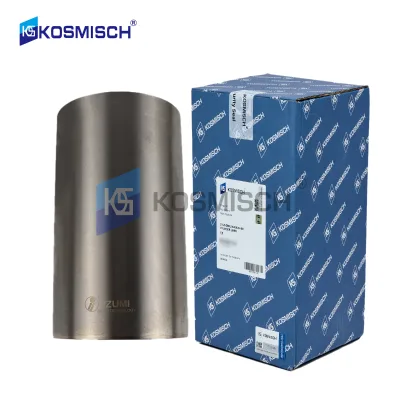
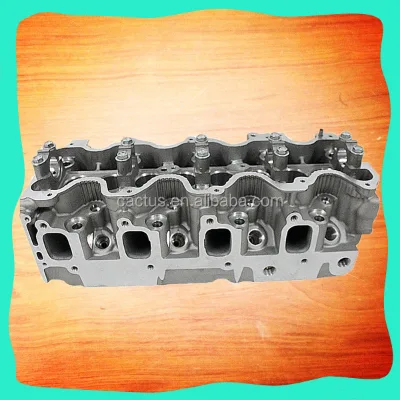
Compare 30 listings for the Toyota 2C Engine Cylinder Liner from verified suppliers offering remanufactured and new options. Review specifications including displacement, power, and warranty terms to find the right fit for machinery repair shops and manufacturing plants.
Key considerations
Products List





Comprehensive Sourcing Guide
Strategic Sourcing Guide for Toyota 2C Engine Cylinder Liners
The global market for heavy-duty engine components continues to demand precision, particularly for legacy platforms like the Toyota 2C engine series. Sourcing cylinder liners for this specific engine requires a nuanced understanding of the intersection between original equipment manufacturer (OEM) specifications and aftermarket availability. Buyers must navigate a complex landscape where product attributes vary significantly between suppliers, even when the core component remains the same. This guide provides a structured approach to evaluating potential suppliers, verifying technical compliance, and ensuring long-term operational reliability for machinery repair shops, manufacturing plants, and construction sectors.
Technical Specifications and Material Compatibility
When evaluating cylinder liners for the Toyota 2C engine, the primary focus must be on dimensional accuracy and material integrity. The supplied product data indicates that the engine code for this series includes variations such as 2L, 2L-T, and 2LT, which are often mechanically similar to the 2C series in terms of block architecture. The displacement for related engine units in the observed market is noted as 2.4L, with a power output of 112kw and a torque of 210nm. While these specific figures may apply to remanufactured or complete engine assemblies, the cylinder liner itself must match the internal bore dimensions of the 2C block precisely.
Material composition is a critical differentiator. The available data highlights Aluminum Alloy as a material used in related engine components, though cylinder liners are typically cast iron or steel to withstand high combustion pressures and friction. Buyers should verify the specific alloy grade of the liner, as the provided context mentions "High Quality" and "100% Professional Test" as general attributes. It is essential to confirm that the liner material is compatible with the piston rings and the engine block's thermal expansion characteristics. The condition of the product is another variable; the market offers both "New" and "Remanufactured" options. A remanufactured liner implies a process of reconditioning an existing part, which may offer cost savings but requires rigorous inspection of the wear surface. Conversely, a new liner ensures original factory tolerances but may come at a higher price point.
Compliance, Certification, and Origin Verification
In the B2B procurement of automotive engine parts, certification and origin are non-negotiable factors that influence liability and compatibility. The observed product listings explicitly mention CE certification, which is a mandatory requirement for products entering the European market. Buyers must ensure that the cylinder liners they source carry valid CE documentation, confirming that the manufacturing process adheres to relevant safety and environmental directives. The absence of such certification could lead to customs delays or legal complications in regulated markets.
The origin of the product significantly impacts the supply chain dynamics. The data indicates a split between products originating from China and Japan. Japanese-origin parts, often associated with the "Original Factory Cat" branding or specific Toyota part numbers like 11461-76001-71, typically align with stricter OEM standards. Chinese-origin parts may offer competitive pricing but require closer scrutiny regarding the consistency of the manufacturing process. Buyers should verify the "prod_origin" field for every order to ensure alignment with their procurement strategy. Furthermore, the "Standard" attribute is listed as "Standard" in some entries, while others specify "Standard Size" or specific dimensions like 61x49x84cm for packaging. These packaging dimensions do not define the liner's technical standard but rather the logistics requirements. Buyers must distinguish between the physical standard of the part and the shipping standard.
Cost Drivers and Pricing Dynamics
The pricing for Toyota 2C engine cylinder liners is influenced by several variables, including the condition of the part, the origin, and the packaging requirements. The observed price range in the market spans from 0.5 USD to 1029.73 USD. This wide disparity suggests that the market includes everything from individual small components or accessories to complete engine assemblies or high-specification kits. For a single cylinder liner, the price is likely at the lower end of this spectrum, whereas a full set or a remanufactured engine block would command the higher values.
MOQ (Minimum Order Quantity) is another significant cost driver. The data shows an MOQ range from 1 PC to 500 units. For small repair shops or individual projects, an MOQ of 1 PC is highly advantageous, allowing for the purchase of single items without tying up capital in bulk inventory. However, larger manufacturing plants or fleet operators may benefit from negotiating bulk rates with an MOQ closer to 500 units. The "Selling Units" are listed as "Single Item," which supports the flexibility of purchasing individual liners. Additionally, the "Supply Ability" of 5000 units per month indicates that suppliers have the capacity to handle large orders, but buyers should confirm if this capacity is dedicated to their specific order or if it is a general aggregate figure.
Typical Applications and Industry Fit
The versatility of the Toyota 2C engine and its components extends across multiple industrial sectors. The product attributes explicitly list "Machinery Repair Shops," "Manufacturing Plant," and "Construction" as applicable industries. This confirms that cylinder liners for this engine are critical for maintaining the uptime of heavy machinery used in construction sites and industrial manufacturing facilities. The "Material Handling" industry is also cited, suggesting that forklifts and other material handling equipment powered by these engines rely on these specific liners.
The "Application" is broadly categorized as "Car," specifically for models like the Toyota Hilux. This indicates that while the engine is automotive in origin, its robust design makes it suitable for industrial applications. The "Advantage" of "OEM & Aftermarket Spare Parts" further underscores the dual nature of the market, where buyers can choose between original factory specifications or high-quality aftermarket alternatives. Buyers should select the option that best fits their operational requirements; OEM parts offer guaranteed compatibility, while aftermarket parts may offer better availability or cost efficiency.
Supplier Evaluation and Service Standards
Evaluating a supplier for cylinder liners requires looking beyond the product itself to the service ecosystem. The data highlights "Excellent After-Sale Service" as a key attribute. In the context of critical engine components, after-sales support is vital for handling warranty claims, technical inquiries, and potential returns. The "Warranty" period varies, with listings showing both 6 months and 12 months. Buyers should clarify the specific warranty terms for the cylinder liner, as this reflects the supplier's confidence in the product's durability.
Another critical evaluation metric is the "Video Outgoing-Inspection" feature. The availability of video evidence for inspection allows buyers to verify the condition of the product before shipment, reducing the risk of receiving damaged or substandard goods. This is particularly important for "Remanufactured" parts where the quality of the reconditioning process is paramount. The "Customization" attribute is listed as "Available" in some entries and "Non-Customized" in others. Buyers requiring specific modifications or custom packaging should prioritize suppliers who explicitly offer customization services. The "Brand" attribute mentions "Original Factory Cat," which may imply a specific supply chain relationship, though buyers should verify if this branding applies to the specific cylinder liner or a broader engine assembly.
Quality Control and Long-Term Procurement
Quality control is the backbone of successful procurement for engine components. The "100% Professional Test" attribute suggests that suppliers perform rigorous testing on their products. However, buyers should not assume this applies to every listed product without verification. It is prudent to request specific test reports or quality certificates for the cylinder liners being purchased. The "Condition" of the product, whether "New" or "Remanufactured," dictates the quality control protocol. For remanufactured parts, the inspection process should include checks for cracks, wear, and dimensional accuracy.
Long-term procurement considerations involve the consistency of the supply chain. The "Delivery Time" is listed as 7-25 working days, depending on various factors. Buyers should plan their inventory management around this lead time to avoid production stoppages. The "Shipment" options include Express, Air, or Sea, offering flexibility based on urgency and budget. For time-sensitive repairs, Express or Air freight may be necessary, while bulk restocking can be handled via Sea freight. The "Single Gross Weight" of 70.000kg to 90.000kg indicates that the shipping weight includes the product and packaging, which affects freight costs. Buyers should calculate the total landed cost, including shipping and insurance, to ensure the procurement remains within budget.
Comparison of Product Attributes
To facilitate a clearer understanding of the market variations, the following table summarizes the key attributes observed in the product listings. This comparison helps buyers identify which suppliers align with their specific needs regarding origin, warranty, and condition.
| Attribute | Option A (Common) | Option B (Alternative) |
|---|---|---|
| Origin | China | Japan |
| Condition | Remanufactured | New |
| Warranty | 6 Months | 12 Months |
| Certification | CE | CE |
| Packaging | Carton | Foam Bag + Carton |
| Customization | Available | Non-Customized |
| MOQ | 1 PC | 1 PC |
| Part Number | 11461-76001-71 | 11461-78200-71-D1 |
| Applicable Model | Toyota Hilux | Toyota 7/8F/1DZ |
| Material | Aluminum Alloy | (Verify per listing) |
This table illustrates that while core attributes like certification and MOQ remain consistent, other factors like origin, condition, and warranty vary. Buyers must carefully match these attributes to their operational requirements. For instance, a buyer requiring a 12-month warranty and a new condition part should prioritize listings with those specific attributes, even if the origin is different.
Final Procurement Considerations
Sourcing Toyota 2C engine cylinder liners requires a methodical approach that balances technical specifications, compliance, and supplier reliability. By leveraging the available data on certifications, origins, and warranty terms, buyers can make informed decisions that minimize risk and ensure operational continuity. The wide range of price points and MOQs offers flexibility for different business sizes, but the variability in product condition and origin necessitates thorough due diligence. Buyers should always verify the specific part numbers, such as 11461-76001-71 or 11461-78200-71-D1, to ensure compatibility with their specific engine models. Ultimately, the goal is to secure high-quality components that meet the rigorous demands of machinery repair, manufacturing, and construction industries, ensuring that the Toyota 2C engine continues to perform reliably in the field.
FAQs
What certifications do the cylinder liners carry?
The cylinder liners carry CE certification for compliance with safety and environmental directives. This certification is mandatory for products entering the European market and ensures adherence to relevant manufacturing standards.
Can I purchase a single unit as a minimum order?
Yes, the minimum order quantity is 1 PC for single items. This flexibility allows small repair shops to purchase individual liners without needing to tie up capital in bulk inventory.
How long is the delivery time for these parts?
Delivery typically takes 7 to 25 working days depending on specific conditions. Buyers should plan their inventory management around this lead time to avoid production stoppages during urgent repairs.
Which engine models are compatible with these liners?
These liners are applicable for Toyota Hilux and models with engine codes like 2L, 2L-T, and 2LT. They are also suitable for machinery repair shops and manufacturing plants using similar engine architectures.
What warranty periods are available for the parts?
Warranty periods vary between 6 months and 12 months depending on the specific listing. Buyers should clarify the exact terms to ensure alignment with their operational requirements and risk tolerance.
Are custom packaging options available for these parts?
Customization is available for some listings, while others are non-customized. Buyers requiring specific modifications or packaging should prioritize suppliers who explicitly offer these customization services to meet their logistics needs.