Source Toyota Blower Fan Motor for Auto Repair HVAC Maintenance
Find 30 Toyota Blower Fan Motor options from verified Chinese suppliers. Buyers can compare specifications like voltage, power, and warranty to select the right part for vehicle HVAC systems or industrial applications.
Key considerations
Products List
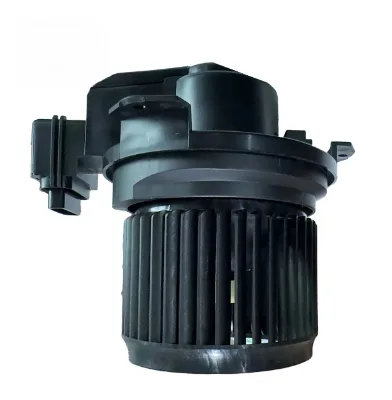


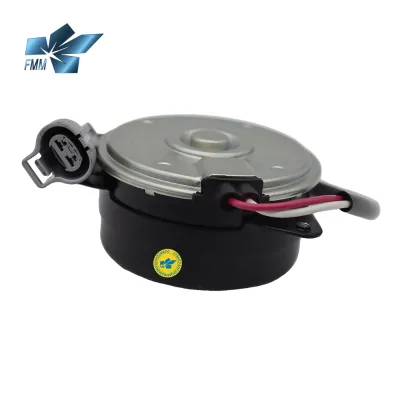
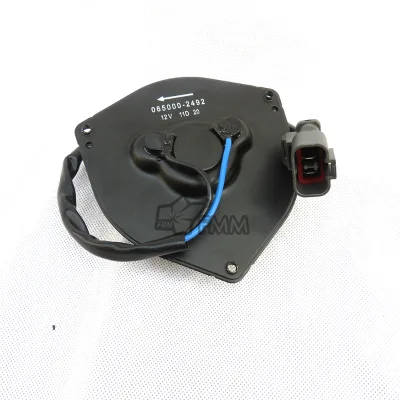

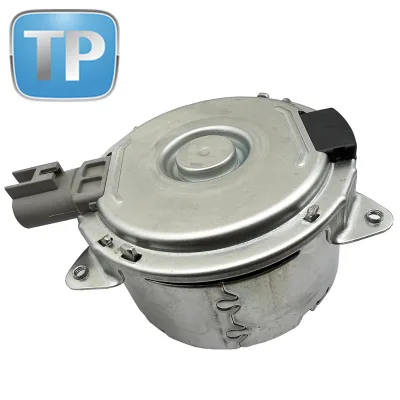
Ventilador De Motor /16363-0y040 /Auto Fan Motor for Toyota /Cooling Fan Motor
$5.50 - $8.00
MOQ: 300 Pieces




Comprehensive Sourcing Guide
Strategic Sourcing Guide for Toyota Blower Fan Motors
Understanding the Product Landscape and Technical Specifications
When sourcing a Toyota Blower Fan Motor, buyers must navigate a product category defined by specific electrical and mechanical parameters. The core keyword "Toyota Blower Fan Motor" points to a component designed primarily for vehicle HVAC systems, yet the available market data reveals a broader spectrum of industrial and automotive applications. A critical observation from current listings is the variation in voltage requirements. While specific automotive applications often align with standard vehicle electrical systems, the market data explicitly lists a voltage of 12 V as a high-confidence attribute for certain units. However, other entries in the same search space indicate voltage ranges of 100V-240V or 220V-380V, suggesting that some suppliers may be offering universal motors or industrial-grade centrifugal fans that are not strictly limited to the 12V automotive standard.
The physical construction and material composition are equally vital for durability. The supplied facts highlight "Stainless Steel" as a material attribute, which implies a focus on corrosion resistance and longevity, particularly in environments where moisture or temperature fluctuations are common. The product condition is consistently listed as "New," ensuring that buyers are not dealing with refurbished or used components unless explicitly stated otherwise. Packaging standards vary, with "Neutral Packing" being a common observation, though "According Customer Requirement" is also available, allowing for branding customization.
Performance metrics for these motors show significant diversity. Some units are described with a power range of 100W-300W, while others exceed 300W or reach up to 750W. The rotation speed is another variable, with observed ranges from 600-1430 rpm for industrial models and specific instances of 900 rpm. The type of fan motor also varies; while the core keyword suggests an axial flow or centrifugal design for automotive use, the data includes both "Centrifugal Fan" and "Axial Flow Fan" classifications. Buyers must verify that the specific motor type matches the airflow requirements of the intended application, as a centrifugal fan typically generates higher pressure, whereas an axial fan moves larger volumes of air at lower pressure.
Compliance, Certification, and Safety Standards
Navigating the regulatory landscape is essential for international procurement, especially when sourcing from China. The provided data indicates a robust set of certifications associated with these products. High-confidence facts list CE, ROHS, SGS, UL, and CCC as available standards. The presence of CCC (China Compulsory Certification) is particularly relevant for products intended for the Chinese market or those manufactured within China, while UL certification is critical for entry into the North American market. The insulation class is also a key compliance factor, with data specifying Class B/F (CCC) and Class a/B (UL).
For buyers targeting specific markets, verifying the Level of Protection (IP rating) is mandatory. The observed data includes IP20 and IP43 ratings. An IP20 rating indicates protection against solid objects larger than 12.5mm but offers no protection against water, suitable for dry indoor environments. In contrast, an IP43 rating provides protection against solid objects larger than 1mm and water spray, making it more suitable for harsher industrial or semi-outdoor conditions. The frequency of operation is also a compliance consideration, with listings showing 50Hz/60Hz compatibility, which ensures the motor can operate on standard grid frequencies in different regions.
Buyers should not assume that every listed product possesses all these certifications. The data presents them as available attributes across the product pool. Therefore, procurement teams must request specific certification documents for the exact batch being purchased. The "Goods arrival time" of 7-15 days suggests a supply chain that can meet moderate urgency, but this does not replace the need for pre-shipment quality audits to ensure that the physical product matches the certified specifications.
Cost Drivers and Pricing Dynamics
The pricing structure for Toyota blower fan motors is influenced by several factors, including voltage, power output, and material quality. The observed listed price range spans from $2.15 to $1,800 USD. This wide disparity is not indicative of a single product line but rather reflects the diversity of the category, ranging from small, low-power replacement units to large, high-power industrial fans. The lower end of the price spectrum likely corresponds to basic 12V automotive replacement motors with standard materials, while the higher end may include industrial-grade centrifugal fans with stainless steel construction, advanced insulation classes, and higher power outputs (e.g., 750W).
Minimum Order Quantity (MOQ) is another significant cost driver. The observed MOQ range is 1 to 1000 units. Suppliers offering an MOQ of 1 PC are ideal for small businesses or those conducting initial market testing, while those requiring 1000 units are typically geared toward large-scale distributors or OEMs. The ability to accept "Small Orders" is a favorable attribute for buyers who need flexibility. Additionally, the "Customization" attribute being available suggests that buyers can negotiate pricing based on specific branding or packaging requirements, which may incur additional costs but add value to the final product.
Payment terms also play a role in the overall cost of procurement. The data lists TT (Telegraphic Transfer), PayPal, Western Union, and Trade Assurance as accepted methods. Trade Assurance is particularly valuable as it offers a layer of financial protection for the buyer, ensuring that funds are released only upon satisfactory delivery. The "payment completed: 1-3 days delivery" note implies that once payment is secured, the logistical process begins quickly, which can reduce holding costs and improve cash flow for the buyer.
Typical Applications and Compatibility
The primary application for the Toyota Blower Fan Motor is, as the name suggests, automotive repair and replacement. The data explicitly lists "for Toyota" under the car model specification and cites OEM numbers such as 87103-36011 and 8710336011. These specific part numbers are critical for ensuring compatibility with various Toyota models. The purpose is clearly defined as "for replace/repair," indicating that these components are intended to restore functionality to existing HVAC systems rather than serve as original equipment in new vehicle manufacturing.
However, the data also reveals that these motors have broader applications. The "Application" attribute lists both "Industrial" and "Household" uses. This suggests that the same motor technology, or similar variants, can be repurposed for ventilation systems in homes, commercial buildings, or industrial machinery. The "Key Words" section reinforces this versatility with terms like "Blower Motor" and "Auto Parts Blower Fan Motor." Buyers interested in industrial applications must pay close attention to the voltage and power specifications. For instance, a motor designed for a 12V automotive system will not function correctly in a 220V-380V industrial setting without appropriate conversion or a different unit entirely.
The "Remote Control" attribute being "With Remote Control" for some units indicates that certain models may be part of a larger control system, suitable for automated HVAC environments. This feature is less common in standard automotive replacements but highly relevant for industrial ventilation where remote monitoring and adjustment are necessary. The "Timer" feature further supports this, suggesting applications where scheduled operation is required.
Supplier Evaluation and Selection Criteria
Selecting the right supplier requires a rigorous evaluation process based on the available data points. The "Place of Origin" is consistently listed as China, with specific mentions of Changzhou, Jiangsu, and Guangdong. While these are major manufacturing hubs, buyers should verify the specific factory location to ensure it aligns with their logistical preferences. The "Brand Name" varies, with "ZJTEX" and "FMM" appearing in the data, but buyers should not rely on brand names alone. Instead, they should focus on the supplier's ability to provide OEM services, as "OEM Services Provided" and "OEM NO: OEM Services Provided" are explicitly mentioned.
The "Warranty" is a critical metric for supplier reliability. The data shows a standard warranty of "1 year" or "1year" across multiple listings. This indicates a baseline expectation for product longevity. However, buyers must clarify the terms of this warranty, including what is covered (e.g., manufacturing defects vs. wear and tear) and the process for claims. The "Small Orders: Accepted" attribute suggests that the supplier is flexible, which is a positive sign for smaller buyers who may not have the volume to demand special treatment.
Logistics and shipping are also key evaluation factors. The "Shipping" options listed include SEA, AIR, DHL, FEDEX, EMS, TNT, Railway, and Train. This variety allows buyers to choose the most cost-effective or time-sensitive method based on their needs. The "Goods arrival time" of 7-15 days provides a realistic expectation for delivery, but buyers should confirm if this is the production lead time or the total transit time. The "Single package size" varies between 24X25X22 cm and 30X20X30 cm, which affects shipping costs and storage requirements.
Quality Control and Performance Verification
Ensuring product quality is paramount, especially when dealing with electrical components. The "Quality" attribute is listed as "High-Quality," but this is a subjective claim that must be verified through objective testing. Buyers should request test results for critical parameters such as insulation resistance, rotation speed consistency, and thermal performance. The "Level of Protection" (IP20 or IP43) and "Insulation Class" (Class B/F or Class a/B) are specific metrics that should be validated against the actual product.
The "Material" being Stainless Steel is a strong indicator of durability, but buyers should verify the grade of the steel and the quality of the welding or assembly. The "Single gross weight" of 4.000 kg provides a benchmark for the physical mass of the unit, which can be used to check for missing components or substandard materials. The "Selling Units" being "Single item" simplifies the ordering process but requires careful attention to the "Single package size" to ensure the product arrives undamaged.
For industrial applications, the "Rotate Speed" and "Power" must be precisely matched to the system requirements. Discrepancies in these values can lead to system failure or inefficiency. Buyers should insist on a pre-shipment inspection that verifies these parameters. The "Customization" option allows for specific quality adjustments, but it also introduces variables that must be strictly controlled to maintain consistency.
Long-Term Procurement and Supply Chain Stability
Long-term success in sourcing Toyota blower fan motors depends on building a stable supply chain. The "Customization: Available" and "OEM Services Provided" attributes suggest that suppliers are willing to adapt to buyer needs, which is essential for long-term partnerships. The "Payment Terms" including Trade Assurance offer a safety net for ongoing transactions, reducing the risk of financial loss.
The "Warranty" of 1 year provides a baseline for product support, but buyers should consider the availability of spare parts and the supplier's responsiveness to after-sales issues. The "Goods arrival time" of 7-15 days indicates a relatively quick turnaround, but buyers should plan for potential delays, especially during peak seasons or global logistics disruptions. The "MOQ" flexibility, ranging from 1 to 1000, allows buyers to scale their orders up or down based on demand, reducing the risk of overstocking or stockouts.
In conclusion, sourcing Toyota blower fan motors requires a balanced approach that considers technical specifications, compliance, cost, and supplier reliability. By carefully evaluating the provided data and verifying critical attributes, buyers can secure high-quality components that meet their specific needs while maintaining a robust and flexible supply chain. The diversity in the market offers opportunities for both automotive repair and industrial applications, provided that buyers conduct thorough due diligence to ensure compatibility and performance.
FAQs
What voltage options are available for Toyota blower fan motors?
Available voltage options include 12 V for automotive use and ranges like 100V-240V or 220V-380V for industrial applications. Buyers must verify the specific unit's electrical rating to ensure compatibility with their vehicle or machinery power supply.
Which certifications are typically provided for these motors?
High-confidence facts list CE, ROHS, SGS, UL, and CCC as available certifications. These standards indicate compliance with safety and environmental regulations, though buyers should request specific documents for the exact batch being purchased.
Can I find motors with stainless steel construction?
Yes, stainless steel is listed as a material attribute for these products. This construction offers corrosion resistance and durability, making it suitable for environments with moisture or temperature fluctuations common in automotive or industrial settings.
What is the typical warranty period for these units?
The standard warranty period observed is 1 year. This coverage typically applies to manufacturing defects, but buyers should clarify specific terms regarding wear and tear or the claims process with the supplier before finalizing the order.
How long does delivery typically take after payment?
Goods arrival time is generally listed as 7 to 15 days. This timeframe includes production and logistics, though actual delivery may vary based on the selected shipping method such as sea, air, or express courier services.
What is the minimum order quantity for these parts?
The minimum order quantity ranges from 1 PC to 1000 units depending on the supplier. Small orders are accepted, making these parts accessible for both individual repairs and large-scale industrial distribution needs.
Which car models are compatible with these OEM parts?
These parts are specified for Toyota models with OEM numbers like 87103-36011. They are designed for replacement and repair purposes, ensuring direct fitment for the intended vehicle HVAC systems.