Source Tractor Mounted Automatic Corn Planter for Wheat, Rice, Beans
Find and compare 30 Tractor Mounted Automatic Corn Planter models from Chinese manufacturers. Evaluate specifications like working width, power requirements, and seeding precision for diverse agricultural applications including wheat, rice, and beans.
Key considerations
Products List


Tractor Mounted 4 Rows Corn Seeder Corn Planter with Fertilizer Maize Seeder
$3400.00 - $3690.00
MOQ: 1 Pieces


$9.00 - $11.00
MOQ: 180 Pieces


$9.00 - $11.00
MOQ: 180 Pieces

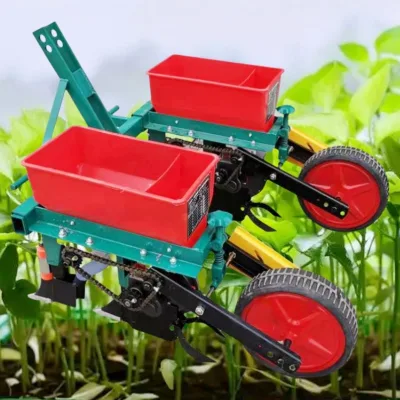


Tractor Mounted 4 Rows Corn Seeder with Fertilizer
$340.00 - $1725.00
MOQ: 1 Pieces
Shandong Liying Agricultural Technology Development Co., Ltd.


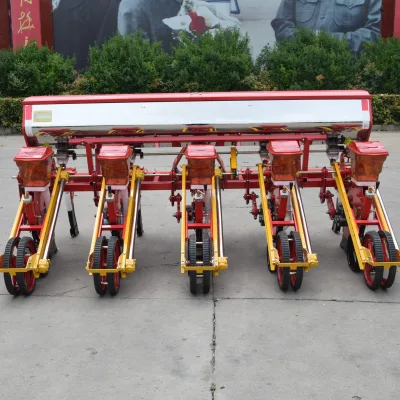
Corn and Wheat Seeder Maize and Wheat Dual-Use Planter Dual Purpose Seeder
$450.00 - $500.00
MOQ: 1 Pieces

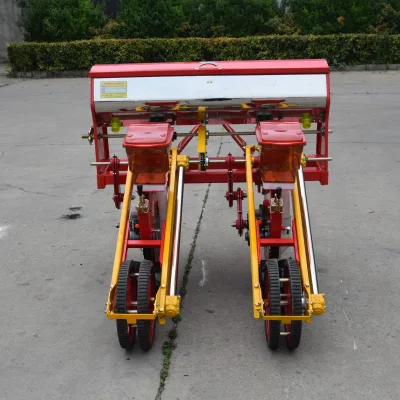
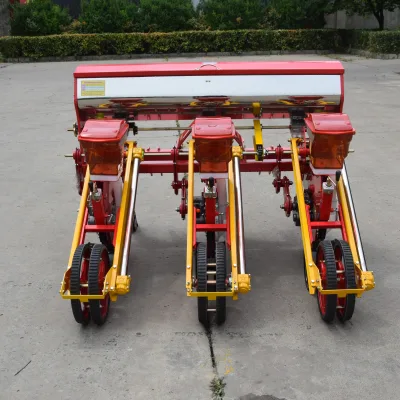
3 Row Tractor Driven Corn Planter Use/New Conditions for Farming and Farming
$300.00 - $600.00
MOQ: 1 sets



Comprehensive Sourcing Guide
Tractor Mounted Automatic Corn Planter Sourcing Guide
A Tractor Mounted Automatic Corn Planter is a mechanized seeding implement designed to be hitched to, and powered by, an agricultural tractor, enabling precision planting of corn with minimal manual intervention. For procurement teams evaluating this equipment category, the sourcing decision typically hinges on matching the machine's power requirements, row configuration, and functional scope to the buyer's existing tractor fleet and crop profile. The listings observed in this category frequently describe machines that go beyond corn alone, with dual seeding and fertilization capability and stated applications spanning corn, rice, wheat, and beans, which means buyers should clarify which of those functions are essential versus optional for their operations.
This guide is written for distributors, agricultural cooperatives, and farm operators sourcing from Chinese manufacturing bases, with observed origins including Xi'an in Shaanxi province and Shandong. The recommendations below focus on evidence-disciplined verification: confirming stated attributes directly with suppliers, requesting documentation before deposit payments, and structuring procurement so that quality assurance continues past the first shipment. Because listing attributes are observations rather than guarantees, every specification mentioned here should be treated as a question to pose, not a fact to assume.
Product Scope and Observed Listing Signals
The observed product scope in this category includes rotary-tillage combined seeders, pneumatic wide fertilizing planters, and semi-automatic precision seeders, several with patented production status claimed by suppliers. One listing signals a machine with a 225 cm working width, 48 blades, 8 coulters, and a working row configuration of 9 rows for wheat, 3–5 rows for corn, and 3–9 fertilizer rows, alongside a semi-automatic mechanization level and intermittent ditching mode. Buyers should note that "automatic" in this keyword context often refers to tractor-powered, tractor-mounted operation rather than fully autonomous machines, so the level of operator involvement should be confirmed for each model under consideration.
Listing signals also reveal meaningful variation in packaging and logistics readiness: some suppliers cite crate packing, others iron frames, and others packing per customer requirement, which affects whether the buyer must arrange additional protective crating for sea freight. Certifications claimed in observed listings include ISO9001 (with one listing pairing it to new condition) and CE with ISO9001:2008 on another, but these are supplier statements that must be verified through certificate copies valid for the exact model purchased. Customization availability is also flagged in the category, suggesting buyers with non-standard row spacing or ridge widths can request modifications rather than settling for catalog defaults.
Technical Specifications to Verify
Before ordering, compile a specification sheet and reconcile it against each supplier's stated data. Key parameters observed in this category include matching power (80–100 HP on one listing, 45–60 PS on another), working speed range of 2–5 km/h, tilling depth of 8–18 cm, sowing depth stated at 15 cm on one machine, and a production rate expressed both as hectares per hour (0.27–0.81 hm²/h) and as a working production rate of 0.54–1.36 per hour on different listings. Confirm which units apply, how the manufacturer measured them, and whether figures reflect field conditions or bench tests. The drivetrain deserves attention as well: one listing specifies intermediate gear drive for the rotary tilling part and a land wheel plus chain drive for the sowing mechanism, both of which affect maintenance intervals and parts availability.
Beyond headline figures, verify the mechanical details that determine field performance and wear life. Blade specifications matter considerably — one observed machine uses 48 R 245 curved blades with a 245 mm maximum turning radius of the blade roll, explicitly noted as customizable, so confirm blade material, thickness, and replacement availability. Also confirm overall dimensions (one listing states 1930 × 2550 × 1330 mm; another lists 1630 × 2100 × 1230 mm) and structural weight (640 kg in one case) to ensure compatibility with your tractor's three-point hitch capacity and your transport constraints. Ask whether the stated working row numbers — wheat 9, corn 3–5, fertilizer 3–9 in one listing — can be adjusted, and request clarification of the tilling ridge width figures (12 cm for wheat, 3–6 for corn on one machine), since ridge configuration directly affects your existing cropping system.
Compliance and Safety Documentation
Safety documentation begins with the machine's conformity to the destination market's requirements. One observed listing claims CE and ISO9001:2008 certification, which would matter for European buyers, while another claims only ISO9001. Never accept certification logos in a listing at face value: request the actual certificate documents, check the certifying body's accreditation, confirm the certificate's scope covers the specific model number (such as 2BFG-9(220G) or 2BYF-4(230) observed in this category), and verify validity dates. A quality-management certificate held by the factory does not automatically equate to product safety conformity in your market.
Request a safety manual, operator instructions in your required language, and clear labeling of rotating parts, guard coverage for the PTO and driveline, and warning decals. Machines with rotary tilling components and moving seed-metering chains present entanglement hazards, so ask the supplier how guards and shields are fitted and whether they meet the hazard-mitigation expectations of your market's agricultural machinery regulations. Where the buyer is an importer rather than an end user, clarify in the contract which party bears responsibility for market-specific conformity assessment, and retain documentation samples with each shipment so future batches can be checked for consistency.
Cost Drivers and Commercial Terms
Observed prices in this category range from 9 to 4397 USD, a spread wide enough to signal that listings include everything from spare components and small attachments to complete planters; buyers should therefore anchor quotations to the full specification sheet rather than to price alone. The principal cost drivers are working width and row count (wider machines with more fertilizer rows use more material and metering units), drive type (gear-driven rotary components generally cost more than simpler arrangements but may offer different durability), blade quantity and quality, patented or proprietary mechanisms, and customization. MOQ values observed range from 1 to 180, so confirm whether unit pricing changes at higher volumes and whether sample-unit orders are supported at all.
Commercial terms to clarify include the Incoterm basis (FOB, CIF, or EXW affect who arranges freight and insurance), payment structure, and packing method — crates, iron frames, or per customer requirement as observed — since inadequate packing is a common source of transit damage for implements with exposed blades and tines. Ask for a quotation that itemizes machine price, spare blade sets, tooling, and documentation, and confirm lead time as a written term rather than a verbal assurance. For first orders, a modest deposit with balance against inspection or shipping documents limits exposure while the supplier relationship is still unproven.
Supplier Qualification and Quality Control
Qualify suppliers by examining evidence of consistent manufacturing rather than by listing quality alone. Where an origin such as Xi'an, Shaanxi or Shandong is stated, request the factory's business license, production capability descriptions, and any third-party audit reports. Ask for references to prior export shipments of the same model family, and confirm that the claimed patent status (one listing states "Patented Production") is documented with patent numbers you can independently check. A supplier that markets multiple related products — planters, fertilizer applicators, and plant protection machinery appear in this category — should be able to explain which products are made in-house versus sourced externally, since outsourced components affect quality control reach.
For pre-shipment quality control, define an inspection protocol before the order is confirmed: verify overall dimensions and weight against specification, check blade count and type, test the sowing mechanism's drive engagement, inspect weld quality and coating, and confirm row-spacing adjustability. If feasible, arrange a functional test — even a short bench or field demonstration video showing seed metering at the stated working speed — before balance payment. Record serial numbers and retain photographic records so that any subsequent spare-parts or warranty discussion references an identifiable machine rather than a generic model description.
Long-Term Procurement Checks
Sustained value from a planter purchase depends on parts availability and repeat-order consistency. Before committing to a supplier for fleet-level procurement, secure a written commitment on spare-part supply — blade sets are the most frequently consumed item given 48-blade rotary assemblies — including pricing, packing, and dispatch terms for future replacement orders. Confirm that wear items such as chains for the land-wheel drive, metering components, and coulters can be ordered individually with the same model references, and establish whether the supplier will hold production drawings or tooling for your customized blade or ridge configurations over time.
Finally, institutionalize a repeat-purchase review process. After the first season, compare field performance — achieved seeding depth, row accuracy at the stated 2–5 km/h working speed, and fertilizer distribution across the 3–9 fertilizer rows — against the supplier's stated production rates, and document any deviations in writing. Use this field data in annual supplier reviews, negotiate improved terms based on cumulative order volume within the observed MOQ structure, and periodically re-verify certifications and factory status, since supplier circumstances change between orders. A buyer who treats the first shipment as a qualification batch rather than a completed transaction is far better positioned to scale procurement of tractor mounted corn planters with confidence.
FAQs
What is the working speed range for this Tractor Mounted Automatic Corn Planter?
The working speed range is 2-5 km/h. This ensures precise seed placement and consistent fertilizer distribution during operation. Operators should maintain this speed to achieve the stated production rate of 0.54-1.36 hectares per hour. Adjusting speed outside this range may affect sowing depth accuracy and overall planting quality.
Which crops can this dual seeding and fertilization machine handle?
This machine is designed for corn, rice, wheat, and beans. It features a dual seeding and fertilization function suitable for these major crops. The working row numbers vary by crop, with specific configurations for wheat and corn. This versatility allows farmers to use the same equipment for different planting seasons and crop rotations.
Can the blade type be customized for specific soil conditions?
Yes, customization is available for the blade type. The standard configuration uses R 245 curved blades, but options can be tailored to local soil requirements. This flexibility helps optimize tillage depth and ridge width for different agricultural environments. Buyers should specify their soil conditions when requesting custom blade specifications to ensure optimal performance.
What certification does this planting machine hold for quality assurance?
The machine holds ISO9001 certification, indicating adherence to quality management standards. Some models also carry CE certification for European market compliance. These certifications ensure that the manufacturing process meets international quality and safety requirements. Buyers can rely on these standards for consistent product quality and reliable after-sales support from certified manufacturers.
What is the matching power requirement for this semi-automatic planter?
The matching power requirement is 80-100 HP. This power range ensures sufficient torque for intermittent ditching and precision seeding operations. Tractors within this horsepower range should be used to maintain optimal working speed and production rates. Using a tractor with insufficient power may lead to operational inefficiencies and increased fuel consumption during field work.
How is the machine packed for international shipping?
The machine is typically packed in crates or iron frames. Packaging methods can be adjusted based on customer requirements to ensure safe transit. This robust packaging protects the 640 kg unit from damage during long-distance shipping. Buyers should specify their preferred packing method to align with logistics constraints and destination port regulations.