Source Tractor Mounted Compost Turner for Manure, Waste, and Fermentation
Compare 22 Tractor Mounted Compost Turner units from Chinese manufacturers. Buyers can evaluate specifications like working width, voltage, and matching power for organic manure and waste composting applications.
Key considerations
Products List


Tractor Mounted Compost Turner Hydraulic Compost Turner Organic Fertilizer Compost Machine
$3700.00 - $8000.00
MOQ: 1 Sets


Lane Tractor Mounted Compost Turner Organic Fertilizer Compost Turner Machine
$5200.00 - $8000.00
MOQ: 1 Pieces

Lane Factory Direct Supply Tractor Mounted Towable Compost Turner Machine
$5000.00 - $8500.00
MOQ: 1 Pieces


Lane Button Mushroom Compost Turner Machine Fertilizer Compost Turner
$3600.00 - $5200.00
MOQ: 1 Pieces

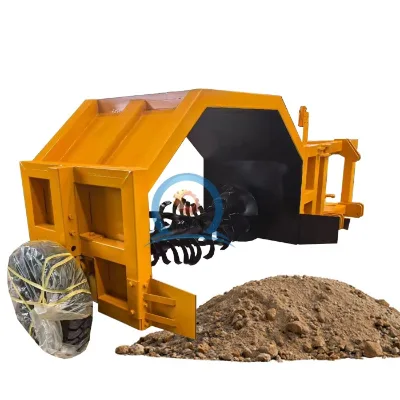
Heavy Duty Tractor Rear Tow Compost Turner for Livestock Manure Composting
$3356.35 - $3559.77
MOQ: 1 sets


Motorized Compost Turner Machine for High Productivity Agricultural Equipment
$23500.00 - $65800.00
MOQ: 1 Pieces


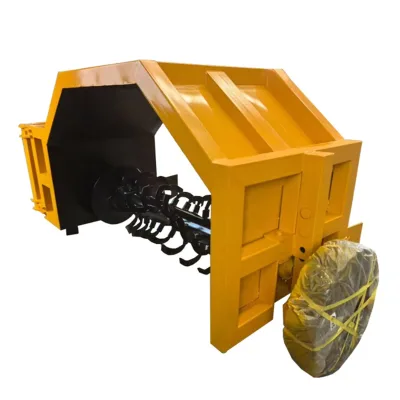
Comprehensive Sourcing Guide
Strategic Sourcing Guide for Tractor-Mounted Compost Turners
The global demand for organic waste management solutions has elevated the importance of efficient composting machinery. Among the various technologies available, the tractor-mounted compost turner stands out as a versatile and cost-effective solution for agricultural operations ranging from small-scale farms to large industrial composting facilities. For procurement professionals, navigating the market requires a disciplined approach that distinguishes between verified product attributes and generalized market claims. This guide provides a structured framework for sourcing these machines, focusing on technical specifications, compliance verification, cost analysis, and supplier evaluation based on observable industry data.
Technical Specifications and Operational Parameters
When evaluating a tractor-mounted compost turner, the primary focus must be on the machine's physical dimensions, power requirements, and operational capacity. The data indicates that these machines are often categorized by their working width and height, which directly correlates to the volume of material they can process in a single pass. For instance, specific models in the market exhibit a working width ranging from 2 to 3.5 meters, allowing for the processing of substantial windrows. The working height is another critical dimension, typically observed between 1.1 and 1.8 meters, ensuring compatibility with various pile heights common in organic waste fermentation.
Power matching is a decisive factor in the selection process. The machinery is designed to be towed or pulled by tractors, and the required engine power varies significantly based on the model and intended load. Verified specifications suggest a matching power range of 60 to 200 horsepower (HP), with some models explicitly requiring a minimum of 60 HP. This variance means that a buyer cannot assume a single tractor size will suffice for all units; the specific model number, such as the ZFQ series or QYDF series, dictates the exact power requirement. Additionally, the walking mode is generally described as tractor-towed and steered, which implies that the operator must have a compatible tractor with the necessary hydraulic and PTO capabilities.
The raw material compatibility is another technical consideration. These turners are engineered specifically for organic manure and animal waste composting. The row spacing of the piled material is a crucial operational parameter, with observed standards suggesting a spacing of 0.8 to 1 meter. This spacing ensures that the turning mechanism can effectively aerate the pile without compacting the material, which is essential for the aerobic fermentation process. The travel speed of these machines is also a performance metric, with typical ranges observed between 5 and 10 meters per minute. This speed must be balanced against the desired aeration frequency and the viscosity of the compost material.
Compliance and Certification Verification
In the B2B procurement of agricultural machinery, compliance with international standards is not merely a formality but a prerequisite for market access and operational safety. The supply chain for these turners often originates from manufacturing hubs in China, specifically regions like Shandong and Henan. While the origin is a known variable, the certification status requires rigorous verification by the buyer.
Market data indicates that many units carry CE certification, which is a mandatory conformity marking for products sold within the European Economic Area. Some listings also reference ISO certifications, such as ISO 9001, though the specific application of these standards varies by manufacturer. It is critical for buyers to distinguish between a generic claim of "ISO" and a specific, verifiable certificate number. The presence of a CE mark suggests adherence to essential health, safety, and environmental protection requirements, but the buyer must request the actual test reports or certificates to validate these claims.
Furthermore, the production standards for these machines are often model-specific. Some specifications list standards as "According to model," while others provide dimensional standards like 260x170x160 cm for specific packaging or operational footprints. Buyers should not rely on general statements but must demand documentation that aligns the specific model number with the applicable safety and performance standards. The availability of machinery test reports is another indicator of compliance, with some suppliers offering these reports as part of their standard documentation. This transparency allows the buyer to verify that the machine's performance claims, such as efficiency and energy consumption, are backed by empirical data.
Cost Drivers and Pricing Dynamics
Understanding the cost structure of tractor-mounted compost turners is essential for budgeting and total cost of ownership analysis. The observed price range for these machines in the market spans from approximately $3,356 to $65,800. This wide disparity is not indicative of a single product category but rather reflects the diversity in model complexity, material quality, and included features. The lower end of the spectrum likely corresponds to basic models with standard dimensions and minimal customization, while the higher end may include heavy-duty units with advanced features, larger working widths, or specialized configurations.
Several factors drive these costs. The raw material used in construction, such as the quality of steel for the frame and the durability of the gearbox, significantly impacts the price. The matching power requirement is also a cost driver; machines designed for higher horsepower tractors generally require more robust components, increasing the manufacturing cost. Customization is another variable, with many suppliers offering options for machine color (red, yellow, blue, or custom) and specific dimensional adjustments. These customizations add to the base price but can be necessary for specific operational environments.
The Minimum Order Quantity (MOQ) for these machines is typically low, often observed as 1 unit, which facilitates procurement for individual farms or small enterprises. However, the total cost must also consider logistics and packaging. The packing methods vary, ranging from steel frames to direct container loading or standard wooden packages. These packaging choices affect shipping costs and the risk of damage during transit. Buyers should factor in the "Standard Sea Freight Packaging" or "Standard Wooden Package" costs when calculating the landed price, as these are not always included in the base unit price.
Typical Applications and Operational Efficiency
The primary application of tractor-mounted compost turners is in the processing of organic waste, specifically animal manure and other organic materials. These machines are designed to facilitate the fermentation process by turning the compost windrows, which introduces oxygen and accelerates decomposition. The application field is broad, covering agricultural waste management, organic fertilizer production, and environmental remediation projects.
Efficiency is a key selling point for these machines, with many models boasting high efficiency and low energy consumption. The production capacity can vary, with some units capable of processing 800 to 1000 square meters per hour. This capacity is dependent on the machine's width and the speed of operation. The working width of 2 to 3.5 meters allows for the processing of large volumes of material in a single pass, reducing the time required for the composting cycle.
The versatility of these machines is further enhanced by their ability to handle different types of organic manure. Whether dealing with poultry litter, cattle manure, or mixed agricultural waste, the turner's design ensures consistent aeration and mixing. The "Groove Type" and "Wheel Type" configurations mentioned in the market data suggest that different models are optimized for specific pile geometries, allowing buyers to select the machine that best fits their existing infrastructure. The advantage of high efficiency and low energy consumption translates directly into reduced operational costs and faster compost production, making these machines a valuable asset for commercial composting operations.
Supplier Evaluation and Quality Assurance
Selecting a reliable supplier is as critical as selecting the right machine. The market data indicates that suppliers are located in various regions of China, with Shandong and Henan being prominent manufacturing hubs. When evaluating suppliers, buyers should prioritize those who provide comprehensive documentation, including machinery test reports and warranty information. A standard warranty period of 1 year is observed in the market, which serves as a baseline for after-sales support.
The availability of after-sales service is another crucial evaluation criterion. Many suppliers offer video technical support, which can be invaluable for troubleshooting operational issues without the need for immediate on-site visits. Buyers should verify the scope of this support, including whether it covers installation guidance, maintenance procedures, and spare parts availability. The core components of the machine, such as the gearbox, are critical to its longevity. Buyers should inquire about the quality and brand of these components, as they are often the first to wear out under heavy usage.
Quality control measures should be transparent and verifiable. The presence of a machinery test report is a strong indicator of a supplier's commitment to quality. Buyers should request these reports to confirm that the machine meets the claimed specifications for working width, height, and power matching. Additionally, the production capacity of the supplier, such as 800-1000 square meters per hour, can be an indicator of their ability to meet large orders. However, buyers must ensure that this capacity is consistent with the specific model they are purchasing and not just a general company metric.
Long-Term Procurement Considerations
Sourcing a tractor-mounted compost turner is a long-term investment that requires careful consideration of maintenance, spare parts, and scalability. The machine's design, with features like a steel frame or direct container loading, suggests a focus on durability and ease of transport. However, the long-term viability of the investment depends on the availability of spare parts and the supplier's ability to provide timely support.
Buyers should consider the customization options available, as these can impact the machine's adaptability to future operational changes. For example, the ability to customize the machine color or dimensions can be beneficial for branding or specific site requirements. The matching power range of 60-200 HP also offers flexibility, allowing buyers to upgrade their tractor fleet as their operations expand.
Finally, the standard of the machine, often defined by the model number (e.g., ZFQ200, QYDF-001), should be aligned with the buyer's long-term goals. A model with a higher production capacity and robust core components may have a higher upfront cost but offer better long-term value. Buyers should also consider the environmental impact of the machine, ensuring that its operation aligns with sustainability goals. The low energy consumption and high efficiency of these machines contribute to a smaller carbon footprint, making them a sustainable choice for modern agricultural operations. By focusing on these long-term factors, buyers can ensure that their investment in a tractor-mounted compost turner delivers lasting value and operational success.
FAQs
What certifications do tractor mounted compost turners have?
Many units carry CE certification, and some listings also reference ISO certifications. Buyers must verify specific certificate numbers and request test reports to validate compliance claims before purchasing.
Which power range matches these machines to tractors?
Verified specifications suggest a matching power range of 60 to 200 horsepower. The exact requirement depends on the specific model number, so buyers should check the model details to ensure tractor compatibility.
How wide and tall can the working dimensions be?
Working widths typically range from 2 to 3.5 meters, while working heights are observed between 1.1 and 1.8 meters. These dimensions allow for processing substantial windrows compatible with various pile heights.
Can buyers customize the machine color and dimensions?
Customization is available for machine colors including red, yellow, blue, or custom options. Specific dimensional adjustments may also be offered, though these customizations can increase the base price of the unit.
What is the typical price range for these turners?
The observed price range spans from approximately $3,356 to $65,800. This disparity reflects differences in model complexity, material quality, and included features like larger working widths or specialized configurations.
Where are these machines typically manufactured?
The supply chain often originates from manufacturing hubs in China, specifically regions like Shandong and Henan. Buyers should verify the specific place of origin for the model they intend to purchase.
What warranty and after-sales support are provided?
A standard warranty period of 1 year is observed in the market. Many suppliers also offer video technical support for troubleshooting, though the scope of installation and spare parts support varies by vendor.