Source Tractor Mounted Dual Seeding and Fertilization Agricultural Seeder for Corn, Beans, and Peanuts
Explore 30 verified options for the Tractor Mounted Dual Seeding and Fertilization Agricultural Seeder designed for corn, beans, and peanuts. Buyers can compare specifications, certifications, and pricing to find the right machinery for their farming needs.
Key considerations
Products List


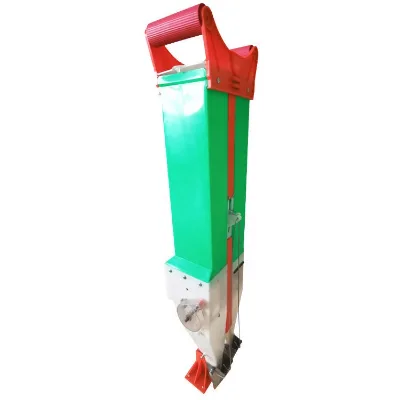

New Type Tractor Hydraulic Mounted and Trailed Dual-Purpose Seeder with Fertilizer
$2300.00 - $2500.00
MOQ: 1 Pieces

Corn and Wheat Seeder Maize and Wheat Dual-Use Planter Dual Purpose Seeder
$450.00 - $500.00
MOQ: 1 Pieces


Agricultural Pneumatic Seeder for Tractor with Uniform Seed Distribution
$500.00 - $600.00
MOQ: 1 Pieces


Efficient No-Till Precision Tractor Mounted Seeder for Farm and Precision Agriculture
$6000.00 - $6180.00
MOQ: 1 pieces

2 Rows Tractor Mounted Seeds Drill/Maize Seeder
$450.00 - $500.00
MOQ: 32 Pieces
Deyang City Jinxing Agricultural Machinery Manufacturing Co., Ltd.

Tractor Mounted Agricultural Wheat Rice Seed Fertilizer Seeder Machine on Sale
$2650.00 - $3750.00
MOQ: 1 Pieces


High Efficiency Corn Planter Fertilizer Seeder for Tractor Agriculture Seeder
$3890.00 - $4397.00
MOQ: 1 Sets


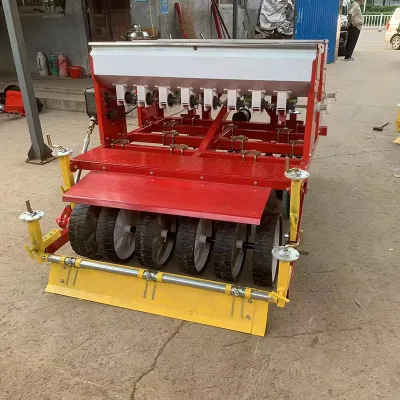

Comprehensive Sourcing Guide
Strategic Sourcing Guide for Tractor-Mounted Dual Seeding and Fertilization Agricultural Seeders
Understanding the Core Machinery and Operational Scope
The acquisition of a tractor-mounted dual seeding and fertilization agricultural seeder represents a significant investment in modernizing farm operations. This category of machinery is designed to integrate two critical agricultural processes—seeding and fertilization—into a single pass, thereby optimizing field time and reducing fuel consumption. Based on observed market data, these units are frequently categorized as "Seedling Planting Machines" or "Full-size Fertilizer" systems that rely on a tractor as their primary power source. The mechanization level varies across the supply base, ranging from semi-automatic to fully automatic configurations, with some models specifically identified as "Precision Seeders" or "Drilling Seeders."
The functional scope of these machines is broad, yet specific. The dual capability allows for the simultaneous placement of seeds and the application of fertilizer, which is particularly advantageous for crops such as corn, beans, and peanuts. Some observed specifications indicate a broader application range that may include rice and wheat, while others are tailored specifically for forestry, livestock, or aquaculture contexts. The physical configuration often includes a "Select Ditching" or "Continuous Ditching" mode, allowing operators to adapt to different soil conditions. A key observation in the current market is the prevalence of single-row units, such as the "1 Row Manual Seeder," alongside larger multi-row configurations. Buyers must distinguish between these variants, as the row count directly impacts the scale of operation and the required tractor horsepower.
Technical Specifications and Configuration Analysis
When evaluating the technical specifications of a tractor-mounted seeder, the buyer must scrutinize the dimensional and mechanical attributes to ensure compatibility with existing farm infrastructure. The physical footprint of these machines is critical; observed data indicates specific dimensions such as 81x10x10cm for certain single-row models, while others are described by package sizes that require verification. The "prod_model" field in supplier listings often varies significantly, with identifiers like "HS-6D2," "2BMF," and "2BXYF" appearing in the market. These model numbers often correlate with the number of rows the machine can handle, with standards ranging from 3 to 36 rows depending on the specific unit and its intended application scale.
The internal mechanics of these seeders are equally important. Core components frequently cited include gears and seeds wheel cores, which are the heart of the seeding mechanism. The reliability of these components determines the longevity and precision of the machine. Furthermore, the "Ditching Mode" is a critical technical differentiator. Whether a machine offers "Select Ditching" or "Continuous Ditching" dictates its suitability for specific soil types and crop requirements. Buyers should verify the "Machinery Test Report" availability, as this document provides empirical evidence of the machine's performance under controlled conditions. The weight of the unit, with some observations noting a weight of 6 (units unspecified, likely tons or kg depending on context), influences the hitching requirements and the stability of the tractor during operation.
Compliance, Certification, and Regulatory Standards
Navigating the compliance landscape is essential for ensuring that the purchased machinery meets international safety and quality standards. The supply chain for these agricultural machines is diverse, with origins primarily located in regions such as Shandong and Dezhou in China. To mitigate risk, buyers should prioritize suppliers who provide robust certification documentation. Observed data highlights several key certifications, including ISO9001, CE, GMP, QS, and UL. The presence of ISO9001 is a strong indicator of a manufacturer's commitment to quality management systems, while CE certification suggests compliance with European health, safety, and environmental protection standards.
However, the presence of a certification in a product listing does not guarantee that every unit sold meets that standard. Buyers must treat these certifications as observations of the supplier's capabilities rather than automatic attributes of the specific item. It is imperative to request valid, up-to-date certification documents for the specific batch of machinery being purchased. Additionally, the "prod_standard" field often lists a range of rows (e.g., 6-36 rows or 3-12 rows) rather than a single fixed value, indicating that the standard is adaptable to customer requirements. Verifying that the machine adheres to the specific standards required by the buyer's local agricultural regulations is a non-negotiable step in the procurement process.
Cost Drivers and Pricing Dynamics
The pricing of tractor-mounted dual seeding and fertilization seeders is influenced by a complex array of factors, resulting in a wide observed price range in the market, spanning from $7 to $6,241.20 USD. This vast disparity is not indicative of quality alone but reflects differences in scale, complexity, and customization. The lower end of the price spectrum typically corresponds to manual or semi-automatic single-row units, such as the "1 Row Manual Seeder," which have simpler mechanical structures and lower production costs. Conversely, the higher price points are associated with fully automatic, multi-row precision seeders that feature advanced mechanization, larger dimensions, and more complex core components.
Several variables drive these costs. The "Mechanization" level is a primary driver; automatic systems command a premium over semi-automatic or manual options. The number of rows is another significant factor, with machines capable of handling 36 rows costing substantially more than those handling only one or two rows. Customization availability also impacts the final price; units built to "Customers Requirement" specifications will invariably cost more than standard off-the-shelf models. Furthermore, the "prod_packing" method, whether "Iron Net Box Package" or custom packaging, adds to the logistical costs. Buyers should be wary of prices that seem anomalously low, as they may indicate compromised quality or missing components. The Minimum Order Quantity (MOQ) also plays a role, with observed ranges from 1 to 50 units, affecting the per-unit cost for smaller buyers.
Typical Applications and Crop Compatibility
The versatility of tractor-mounted dual seeding and fertilization machines makes them suitable for a wide array of agricultural applications. The primary crops identified in the market data include corn, beans, and peanuts, which are staple crops in many regions. However, the application field extends beyond these, with some models explicitly designed for rice, wheat, and even forestry and aquaculture. The "Application" attribute often lists multiple crops, suggesting that the machine's seeding mechanism can be adjusted to accommodate different seed sizes and spacing requirements.
The "Function" of these machines is dual-purpose, serving as both a seeder and a fertilizer applicator. This integration is particularly beneficial for large-scale farming operations where efficiency is paramount. The ability to perform "Sowing" via "Drilling" or "Precision" methods allows for precise seed placement, which is crucial for maximizing yield. The "use" of these machines is broadly defined as "farm seeds palnt," indicating their fundamental role in the planting phase of the agricultural cycle. Buyers should carefully match the machine's specific capabilities, such as the "Ditching Mode" and "row" count, to their specific crop requirements and field conditions. For instance, a continuous ditching mode might be preferred for large-scale corn production, while select ditching might be better suited for delicate seedlings in vegetable farming.
Supplier Evaluation and Quality Assurance
Selecting the right supplier is as critical as selecting the right machine. The market is populated with suppliers from various origins, with Shandong and Dezhou in China being prominent hubs. When evaluating potential suppliers, buyers should look for evidence of a robust quality control process. The availability of a "Machinery Test Report" is a strong indicator of a supplier's commitment to transparency and quality. This report should provide detailed performance data, including test results for seeding accuracy, fertilizer distribution uniformity, and overall machine durability.
The "Condition" of the product is another vital factor; all observed listings specify "New" condition, but buyers must verify that the machine is indeed new and not refurbished or reconditioned. The "warranty" period, typically observed as 1 Year, is a standard metric for assessing supplier confidence in their product. However, buyers should negotiate terms that go beyond the minimum, considering the critical nature of agricultural machinery during planting seasons. The "brand name," such as "HANS," can also be a factor, though buyers should be cautious of generic branding and focus on the manufacturer's track record. Additionally, the "Customization" availability should be assessed to ensure the supplier can adapt the machine to specific needs, such as unique row configurations or specialized packing requirements.
Long-Term Procurement and Maintenance Considerations
Long-term success with agricultural machinery depends on more than just the initial purchase; it requires a strategic approach to maintenance and support. The "key selling points" of these machines often include "Easy To Operate," which is a significant advantage for reducing training time and minimizing operator error. However, ease of operation must be balanced with the complexity of the internal components, such as the "Gear" and "seeds wheel core," which will require regular maintenance and potential replacement.
Buyers should consider the availability of spare parts and the technical support offered by the supplier. The "prod_packing" method, such as "Iron Net Box Package," should be evaluated for its ability to protect the machine during shipping and storage, ensuring it arrives in optimal condition. The "Single package size" and "dimension(lwh)" are crucial for logistics planning, especially for buyers with limited storage space. Furthermore, the "Standard" of the machine, often listed as a range of rows, implies that the machine may need to be reconfigured for different seasons or crops, requiring a flexible maintenance strategy.
In conclusion, sourcing a tractor-mounted dual seeding and fertilization agricultural seeder requires a meticulous approach that balances technical specifications, compliance, cost, and supplier reliability. By focusing on verified certifications, detailed technical data, and robust quality assurance processes, buyers can secure machinery that enhances their agricultural productivity and ensures long-term operational success. The wide range of available options, from single-row manual units to large-scale automatic systems, offers flexibility for various farm sizes, but careful due diligence is essential to navigate the complexities of the global market.
FAQs
What certifications do these machines typically have?
These machines typically hold ISO9001 and CE certifications, with some listings also showing GMP, QS, and UL marks. Buyers should verify that the specific batch includes valid documentation for these standards before purchase.
Which crops can this dual seeding and fertilization machine handle?
The machine is designed for crops such as corn, beans, peanuts, rice, and wheat. Some models also support applications in forestry, livestock, and aquaculture depending on the specific configuration and row count.
How is the power source for these agricultural seeders defined?
The power source is defined as a tractor, requiring a compatible vehicle to operate the machinery. This setup allows for efficient field movement while integrating seeding and fertilization functions into a single pass.
Can buyers request customization for these planting machines?
Yes, customization is available for these planting machines to meet specific customer requirements. Buyers can often specify packing methods, such as iron net boxes, or adjust row configurations based on their operational needs.
What is the typical warranty period for these new units?
The typical warranty period for these new units is one year. This coverage applies to the machinery condition, which is listed as new, ensuring protection against defects during the initial operational phase.
Which locations are the primary origins for these seeders?
The primary origins for these seeders are Shandong and Dezhou in China. Suppliers from these regions frequently list their products with specific model numbers like HS-6D2 or 2BMF to denote their manufacturing source.
How does the mechanization level vary across available models?
Mechanization levels vary from semi-automatic to fully automatic configurations, including precision and drilling seeder types. Some units are manual single-row seeders, while others are larger tractor-mounted systems capable of handling multiple rows.