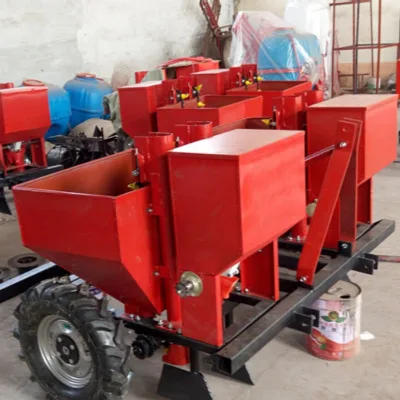
Source Tractor Mounted Potato Planter for Corn Rice Beans
Compare 30 Tractor Mounted Potato Planter options from verified suppliers. These machines support precision seeding and fertilization for corn, rice, and beans with adjustable row spacing and semi-automatic or automatic mechanization; compare the available evidence and request quotations based on your requirements.
Key considerations
Products List


High Efficiency, Convenient and Durable Agricultural Machinery Potato Planter
$1428.60 - $1500.00
MOQ: 1 Pieces


2cm Series - Multi-Functional, High-Efficiency, Advanced Potato Planter
$628.00 - $660.00
MOQ: 1 Pieces


Factory-Direct Potato Planter with Seed Bunker, Fertilizer Bunker, Pesticide Tank
$28660.00 - $29000.00
MOQ: 1 Sets
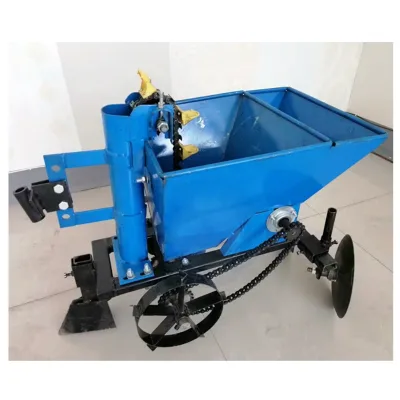


Potato Planter Potato Seeder with Fertilizer 1-4 Rows Potato Planter for Tractor
$550.00 - $600.00
MOQ: 1 Pieces

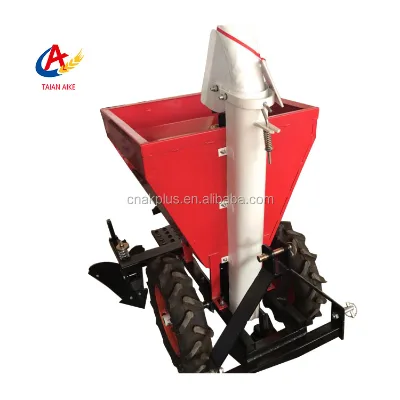
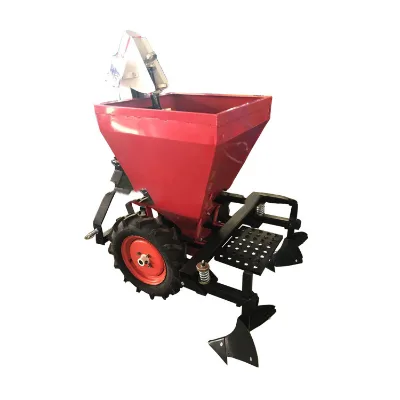


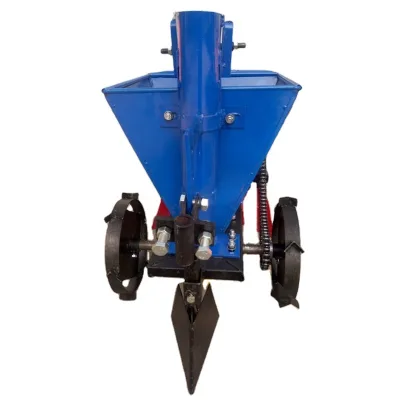

Comprehensive Sourcing Guide
Tractor Mounted Potato Planter Sourcing Guide
Buyers must first distinguish between semi-automatic and fully automatic mechanization levels when evaluating tractor-mounted potato planters. The observed market data indicates a split between semi-automatic units designed for dual seeding and fertilization tasks and fully automatic models optimized for precision sowing. Understanding this distinction is critical because the operational efficiency and labor requirements differ significantly between the two categories. A semi-automatic system often relies on manual intervention for specific adjustments, whereas an automatic unit integrates complex mechanisms to handle the entire planting cycle with minimal human oversight.
Procurement decisions should also account for the specific crop applications supported by the machinery, as not all planters are universally compatible. The available listings highlight versatility for crops such as corn, rice, beans, and soybeans, alongside specialized potato planting functions. Buyers should verify that the selected model explicitly supports the target crop's physical requirements, such as the specific hill-drop mechanism required for potatoes. Selecting a machine with a mismatched application profile can lead to poor germination rates and unnecessary operational downtime during the critical planting season.
Product Scope and Observed Listing Signals
The product scope for tractor-mounted potato planters encompasses a wide range of structural types, from three-point suspended units to those with specific ditching modes. Listings frequently describe continuous ditching capabilities and dual-faced share furrow openers, which are essential for creating uniform planting beds in various soil conditions. Buyers should scrutinize the structural type to ensure compatibility with their existing tractor fleet, as the mounting interface must align with the tractor's hydraulic system and power take-off specifications. The presence of adjustable row spacing and plant spacing features further defines the scope, allowing operators to adapt to different field layouts.
Observed listing signals reveal significant variation in power sources and matching power requirements, ranging from diesel engines to direct tractor PTO connections. Some units are specified with a matching power range of 36.8 to 58.8 kilowatts for wheel-type tractors, while others simply list "Tractor" as the power source without specific wattage. This variance necessitates a careful review of the power transmission system, such as hard shaft transmissions, to ensure the machine can handle the torque demands of the specific soil type. Additionally, the seed box capacity, observed at 1280 liters in some models, indicates the scale of operation and the frequency of refilling required during large-scale planting.
Technical Specifications to Verify
Verification of working dimensions and operational efficiency is paramount for ensuring the machine fits the intended field geometry. Buyers must confirm the working width, which can be adjustable up to 3600 millimeters, and the overall dimensions of 1750 by 2000 by 1680 millimeters to ensure transportability and maneuverability. The number of working rows, typically four in the observed data, directly impacts the throughput and must align with the field width to minimize overlap and missed areas. Furthermore, the transport clearance of at least 300 millimeters is a critical specification for moving the equipment between fields or on public roads without causing damage or safety hazards.
The precision of the seeding mechanism requires detailed verification, particularly regarding the scoop-type quantity and the adjustable plant spacing range. Specifications indicate a plant spacing of 290 to 330 millimeters for certain potato models, while others offer a broader range of 18 to 35 centimeters for different crops. Buyers should validate the ground wheel type, such as the 6.00-14 rubber tires with a 680-millimeter diameter, to ensure adequate traction and stability during operation. The operation efficiency of 0.2 to 0.3 hectares per hour provides a baseline for planning, but actual performance will depend on soil conditions and operator skill, making it essential to request real-world performance data from the supplier.
Compliance and Safety Documentation
Compliance with international safety standards is a non-negotiable requirement for importing agricultural machinery into most markets. The observed listings frequently cite CE and ISO9001 certifications, which serve as indicators that the manufacturer adheres to specific quality management and safety protocols. Buyers must request valid certification documents that are current and applicable to the specific model being purchased, as these documents are often required for customs clearance and local regulatory approval. The absence of these certifications or the presence of outdated documentation should be treated as a significant red flag that warrants further investigation or rejection of the supplier.
Safety documentation must also cover the operational hazards associated with high-speed rotating parts and heavy machinery. The vibration fall harvest method mentioned in some listings implies specific mechanical actions that could pose risks if not properly guarded. Buyers should verify that the supplier provides comprehensive operation manuals that detail safety procedures, emergency stop mechanisms, and maintenance protocols. Additionally, the structural integrity of the iron frame or standard export packaging must be confirmed to ensure the machine can withstand the rigors of transport and operation without compromising the safety of the operator or the integrity of the equipment.
Cost Drivers and Commercial Terms
The cost of a tractor-mounted potato planter is heavily influenced by the level of mechanization and the complexity of the power source. Units featuring automatic planting mechanisms and diesel engines generally command higher prices compared to semi-automatic models that rely on tractor power take-offs. The observed price range of 160 to 29,000 USD reflects this disparity, with the lower end likely representing simpler, smaller-scale units and the higher end covering advanced, high-capacity machines. Buyers should analyze the total cost of ownership, including fuel consumption, maintenance frequency, and the potential for customization, rather than focusing solely on the initial purchase price.
Commercial terms such as minimum order quantity (MOQ) and packaging standards play a crucial role in the final procurement cost. The observed MOQ range of 1 to 10 units suggests flexibility for small-scale buyers, while larger orders may benefit from volume discounts. Packaging is another cost driver, with options ranging from standard export packaging to specialized iron frame protection, which can affect shipping costs and the risk of damage during transit. Buyers must clarify who bears the cost of freight and insurance, as well as the lead times associated with production and delivery, to accurately budget for the project and avoid unexpected financial burdens.
Supplier Qualification and Quality Control
Supplier qualification should begin with a thorough verification of the manufacturing origin and production standards. The data indicates that many suppliers are located in Shandong, China, a region known for agricultural machinery production, but buyers must confirm the specific factory capabilities and history. It is essential to request evidence of the supplier's production capacity and their track record in exporting similar machinery to the buyer's region. A qualified supplier should be able to provide detailed information about their quality control processes, including inspection stages before the machine leaves the factory.
Quality control measures must extend beyond the initial manufacturing phase to include pre-shipment inspections and post-delivery support. Buyers should verify that the supplier conducts rigorous testing on critical components such as the furrow openers, seed boxes, and transmission systems. The condition of the product, listed as "New" in most cases, should be confirmed through high-resolution images or video inspections to ensure there are no defects or signs of prior use. Establishing a clear communication channel for technical support and spare parts availability is also vital, as the longevity of the machine depends on the supplier's ability to provide timely assistance and genuine replacement parts.
Long-Term Procurement Checks
Long-term procurement success relies on the availability of spare parts and the durability of the machine's core components. Buyers should assess the supplier's inventory management for critical parts like the scoop-type seeders, rubber tires, and transmission shafts to ensure minimal downtime during the planting season. The structural type and material quality, such as the iron frame or three-point suspension, should be evaluated for their resistance to wear and tear in harsh agricultural environments. A supplier that offers a comprehensive warranty and a clear policy for part replacement demonstrates a commitment to the long-term reliability of their products.
Performance monitoring and feedback loops are essential for maintaining the efficiency of the tractor-mounted potato planter over multiple seasons. Buyers should establish a system for tracking the machine's operation efficiency, fuel consumption, and maintenance costs to identify any deviations from the expected performance metrics. Regular maintenance schedules should be developed in collaboration with the supplier to ensure that the machine remains in optimal condition. Additionally, buyers should stay informed about any updates or improvements to the model, such as adjustments to the row spacing or plant spacing mechanisms, to maximize the return on their investment and adapt to changing agricultural needs.
FAQs
What is the power source for the Tractor Mounted Potato Planter?
The machine uses a diesel power source for its operation. It is designed to be mounted on a wheel-type tractor with a matching power range of 36.8 to 58.8 kW. This ensures efficient performance during continuous ditching and precision seeding tasks in agricultural fields.
Can the row spacing be adjusted on this planting machine?
Yes, the row spacing is fully adjustable. The standard configuration supports four working rows with a spacing of 900mm. This flexibility allows operators to customize the planting width to suit different crop requirements and field conditions, ensuring optimal plant distribution and growth efficiency.
What certifications does the new potato seeder have?
The new potato seeder holds CE and ISO9001 certifications. These credentials confirm that the manufacturing process meets international quality and safety standards. Buyers can rely on these documented certifications to ensure compliance with regulatory requirements when importing machinery from suppliers in China.
How much seed can the box hold on this planter?
The seed box has a capacity of 1280 liters. This large volume supports extended planting sessions without frequent refilling. It is particularly useful for large-scale agricultural operations where minimizing downtime is crucial for maintaining high operational efficiency and consistent planting speeds across vast fields.
What is the working efficiency of this semi-automatic planter?
The working efficiency ranges from 0.2 to 0.3 hectares per hour. This performance level is suitable for semi-automatic operations requiring precision seeding. Operators can adjust plant spacing between 290 and 330mm to optimize yield potential while maintaining a steady and reliable planting pace.
Is customization available for this hill-drop potato planter?
Customization is available for this hill-drop potato planter. Buyers can request specific modifications to meet unique agricultural needs. The manufacturer supports tailored solutions, allowing for adjustments in structural type or functional components to better align with specific crop types like corn, rice, or beans.