Source Transforming Educational Toy for School, Home, and Play
Explore 30 listings for Transforming Educational Toy options made from PP plastic with EN71 and CE certifications. Buyers can compare models like RFD270960 and KSL397642 for their specific intellectual and promotional needs.
Key considerations
Products List


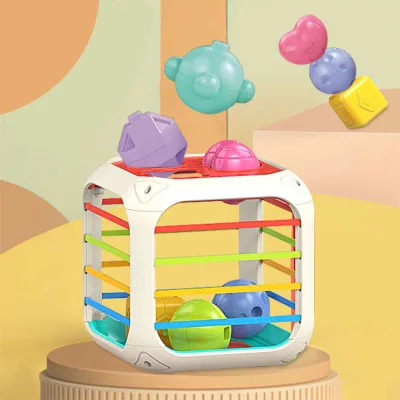


Kids Toy Plastic Wild Animal Set for Learning Children Educational Toys
$0.49 - $0.53
MOQ: 1200 Pieces


Comprehensive Sourcing Guide
Strategic Sourcing for Transforming Educational Toys in the B2B Market
The global demand for transforming educational toys has surged as parents and institutions seek products that merge entertainment with cognitive development. These items, often characterized by their ability to change form or function, offer unique value propositions for retailers and distributors. Sourcing these products requires a disciplined approach that balances creative design with rigorous safety compliance. Buyers must navigate a complex landscape of material specifications, certification requirements, and logistical constraints to ensure a successful procurement strategy. This guide outlines the essential factors for evaluating transforming educational toys, focusing on the specific attributes observed in current market listings while adhering to strict evidence-based sourcing principles.
Technical Specifications and Material Composition
Understanding the physical and functional attributes of transforming educational toys is the first step in any sourcing process. The market offers a diverse range of models, each defined by specific dimensions, packaging requirements, and material compositions. Based on available product data, the primary material used in these toys is plastic, specifically Polypropylene (PP). This material choice is significant because PP offers a balance of durability, flexibility, and safety, making it suitable for children's products. The "Plastic Type" attribute is a critical verification point for buyers, as it directly influences the toy's longevity and resistance to wear and tear.
Dimensions vary significantly across different product models, reflecting the diverse nature of transforming mechanisms. For instance, specific models such as RFD270960 are listed with a standard size of 141420.7cm, while others like RFD310493 measure 24183cm. These variations indicate that transforming toys can range from compact, flat designs to more substantial, three-dimensional structures. The "prod_standard" attribute often refers to the physical dimensions of the product or its packaging, which is essential for logistics planning. Buyers must carefully review these specifications to ensure the product fits their shelf space or shipping container requirements.
Packaging is another critical technical specification. The data indicates a mix of "Color Box" and "Carton Box" packaging options. For example, model RFD540127 utilizes a "Colour Box" with a specific packing size of 173.516.5 cm. In contrast, other models may be shipped in larger cartons with dimensions like 52.54375 cm. The "Qty/CTN" (Quantity per Carton) also varies, with some listings showing 216 pieces per carton and others showing only 12 pieces. These figures are vital for calculating shipping costs and warehouse storage needs. The "Cbm/CTN" (Cubic Meter per Carton) values, such as 0.184 or 0.169, further assist in optimizing freight consolidation.
Compliance and Certification Verification
Safety compliance is non-negotiable in the children's toy industry. The market listings for transforming educational toys frequently cite a range of international certifications, including EN71, CE, ASTM F963-96a, and Hr4040/7p. These standards represent the minimum threshold for market entry in various regions. EN71 is a European standard for toy safety, while ASTM F963-96a is the corresponding American standard. The presence of "CE" marking indicates conformity with health, safety, and environmental protection standards for products sold within the European Economic Area.
Buyers must verify that the certifications listed on the product page are valid and applicable to the specific model being sourced. The data shows variations in certification lists; some products list "ENASTM" as a combined attribute, while others explicitly list "En71/ASTM/10p/Hr4040". The "10p" and "Hr4040" references likely pertain to specific chemical restrictions or heavy metal limits, which are crucial for ensuring the toy does not contain harmful substances. It is imperative that buyers request current test reports from the supplier to confirm that the specific batch of toys meets these standards. Relying solely on the product listing description is insufficient; independent verification is necessary to mitigate liability risks.
Furthermore, the "Toy Department" attribute, which often lists "Children" or "Girls & Boys," implies that the product is intended for a specific age group. Compliance standards often vary based on the intended age range. For example, toys for younger children may require stricter testing for small parts and choking hazards. Buyers should ensure that the certification documentation explicitly covers the intended age group for the transforming toy.
Cost Drivers and Pricing Structures
The pricing of transforming educational toys is influenced by several factors, including material costs, customization options, and packaging complexity. The observed price range in the market spans from $0.19 to $99,999, a vast disparity that reflects the difference between simple plastic components and complex, electrically powered systems. The "Function" attribute, which includes "Electric" and "Game" capabilities, is a primary driver of higher price points. Toys with electronic components require more sophisticated manufacturing processes, additional quality control steps, and potentially higher material costs for batteries and circuitry.
Customization is another significant cost driver. The data confirms that "Customization" and "Customized" options are available, along with "Logo Print" and "Imprint" capabilities such as "Logo Sticker" or "Full Color" printing. These value-added services increase the unit cost but can provide a competitive advantage for retailers seeking branded products. The "MOQ Order" (Minimum Order Quantity) also plays a role in pricing; some listings indicate an MOQ of 60 pieces, while others may require quantities up to 3000 units. Higher order volumes typically result in lower per-unit costs due to economies of scale in production and shipping.
Buyers should analyze the "G.W./N.W." (Gross Weight/Net Weight) and "Carton Meas" to understand the shipping cost implications. For instance, a carton with a gross weight of 24 kg and a net weight of 22 kg, or a carton weighing 19.8 kg with a net weight of 16.65 kg, will incur different freight charges depending on the shipping method (air vs. sea). The "Cbm/CTN" values directly impact the number of units that can fit into a shipping container, which is a critical calculation for maximizing profit margins.
Typical Applications and Market Positioning
Transforming educational toys serve multiple applications, ranging from individual play to institutional use. The "Usage" attribute highlights categories such as "Funny," "Intellectual Toy," and "Promotion." This versatility allows these products to appeal to a broad spectrum of buyers. As "Intellectual Toys," they are designed to stimulate cognitive development, problem-solving skills, and spatial reasoning. The "Style" attribute, which includes "Educational Toy" and "Cartoon Toy," suggests that the design often incorporates engaging characters or themes to attract children.
The "Use for" attribute explicitly mentions "Children Education," indicating that these toys are suitable for use in schools, daycare centers, and educational programs. In this context, the transforming aspect of the toy is not merely a gimmick but a pedagogical tool that helps children understand concepts like geometry, mechanics, and transformation. Retailers targeting the "Girls & Boys" demographic can leverage the "Color" and "Cartoon" attributes to create appealing product displays. Additionally, the "Promotion" usage suggests that these toys can be effective as corporate gifts or promotional items, provided they are customized with the company logo.
Supplier Evaluation and Origin Considerations
Evaluating suppliers requires a focus on their location, production capabilities, and track record. The data indicates that the "prod_origin" for these toys is primarily "Shantou" or "China." Shantou is a well-known manufacturing hub for toys in China, offering a dense ecosystem of suppliers and specialized labor. However, buyers should not assume that all products from this region are identical; quality can vary significantly between factories.
When evaluating a supplier, buyers should verify their capacity to handle the specific "Customization" requirements. The ability to provide "Full Color" logo printing or specific "Imprint" methods like "Logo Sticker" is a key differentiator. Suppliers that offer these services must have the necessary equipment and expertise to maintain high-quality standards during the customization process. Additionally, the "MOQ Order" requirements should be aligned with the buyer's inventory strategy. A supplier with a high MOQ may be suitable for large retailers, while one with a lower MOQ might be better for startups or test markets.
Buyers should also assess the supplier's responsiveness to certification requests. A reliable supplier will readily provide up-to-date test reports for EN71, ASTM F963, and other relevant standards. The presence of multiple certifications in the product data suggests that the market is competitive, and suppliers are eager to demonstrate compliance. However, buyers must remain vigilant and verify these claims independently.
Quality Control and Long-Term Procurement
Implementing a robust quality control (QC) protocol is essential for managing the risks associated with sourcing transforming educational toys. Given the "Electric" and "Game" functions of some models, electrical safety testing is paramount. QC checks should include visual inspections for defects in the plastic molding, verification of the "Color" consistency, and functional testing of the transforming mechanisms. The "Packing" quality must also be scrutinized to ensure that the "Color Box" or "Carton Box" protects the product during transit.
Long-term procurement considerations involve building a sustainable relationship with suppliers. This includes negotiating favorable terms for "Customized" orders and ensuring consistent supply chain performance. Buyers should monitor the "Lead Time" and "MOQ" flexibility to adapt to market fluctuations. The "G.W./N.W." and "Cbm/CTN" data should be used to optimize logistics and reduce costs over time. Furthermore, buyers should stay informed about changes in safety standards, such as updates to EN71 or ASTM F963, to ensure ongoing compliance.
In conclusion, sourcing transforming educational toys requires a comprehensive understanding of technical specifications, compliance requirements, and market dynamics. By focusing on the evidence provided in product listings and adhering to rigorous verification processes, buyers can identify high-quality products that meet the needs of their customers while maintaining safety and profitability. The interplay of material quality, certification validity, and logistical efficiency determines the success of any procurement strategy in this dynamic sector.
FAQs
How can I verify the safety certifications for these toys?
You can verify safety certifications by requesting current test reports for EN71, CE, and ASTM F963-96a. The product listings explicitly mention these standards, but independent verification is necessary to ensure the specific batch meets all chemical and physical safety requirements for children.
What materials are used to construct these transforming toys?
These transforming educational toys are primarily constructed from Polypropylene plastic, identified as PP in the product data. This material is selected for its durability and flexibility, making it suitable for children's products that require resistance to wear and tear during play.
Which customization options are available for branding these toys?
Full color logo printing and logo sticker imprints are available for customizing these toys. Suppliers offer these services to help retailers create branded products, though the unit cost will increase compared to standard unbranded inventory due to the added manufacturing steps.
Can I find suppliers with a minimum order quantity of 60 pieces?
Yes, some suppliers list a minimum order quantity of 60 pieces for these transforming educational toys. This lower threshold allows smaller retailers or startups to test the market without committing to the higher volumes often required for bulk manufacturing runs.
What are the typical packaging dimensions for shipping these items?
Packaging dimensions vary by model, with some cartons measuring 52.5 by 43 by 75 cm and others being smaller at 17 by 3.5 by 16.5 cm. Buyers must review specific carton measurements to calculate shipping costs and ensure the products fit their warehouse storage requirements.
How do electric functions affect the pricing of these toys?
Toys with electric and game functions generally command higher prices due to complex manufacturing and electronic components. The observed price range spans from $0.19 to $99,999, reflecting the significant cost difference between simple plastic models and those with integrated electrical systems.
Where are these transforming educational toys typically manufactured?
The primary manufacturing origin for these toys is Shantou, China, a known hub for toy production. Buyers should verify the specific factory location and production capabilities, as quality can vary significantly between different suppliers within this regional manufacturing ecosystem.