Source Translucent ESD Shielding Bag for Electronics, Medical, Industrial
Compare 30 listings of Translucent ESD Shielding Bag options from verified Chinese manufacturers. Buyers can evaluate customization, thickness, and antistatic features for electronic product packaging needs.
Key considerations
Products List


$0.01 - $0.10
MOQ: 500 Pieces


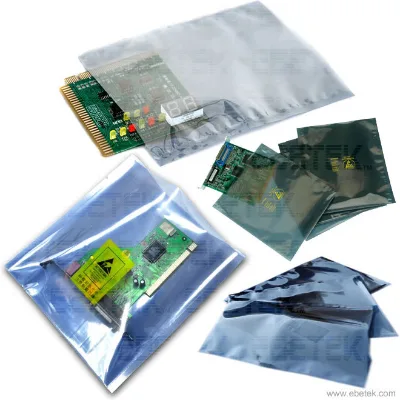


Bag Pattern Can Be Printed According to Customer Requirements ESD Shielding Bag
$0.01 - $0.99
MOQ: 5000 Pieces


Multi - Layer Anti Static ESD Shielding Bags for Electronic Static Control
$0.05 - $0.40
MOQ: 5000 Pieces


Comprehensive Sourcing Guide
Strategic Sourcing Guide for Translucent ESD Shielding Bags
The procurement of translucent electrostatic discharge (ESD) shielding bags represents a critical decision point for supply chains managing sensitive electronic components. These specialized packaging solutions are designed to protect devices from static electricity, moisture, and physical damage during storage and transit. The market offers a diverse array of options, ranging from simple polyethylene constructions to complex multi-layer composites. Buyers must navigate a landscape defined by varying material compositions, specific shielding mechanisms, and rigorous compliance requirements. This guide synthesizes observed product attributes and industry standards to provide a structured approach for sourcing these essential packaging materials effectively.
Understanding Material Composition and Shielding Mechanisms
The fundamental distinction between standard packaging and ESD shielding lies in the material architecture. Observed product data indicates that the most common construction involves a composite of Polyethylene (PE) and other polymers such as BOPA (Biaxially Oriented Polyamide) or PET (Polyethylene Terephthalate). Specifically, a frequent configuration noted in the market is a two-layer structure consisting of PE and PET, often denoted as PE+Pet. This combination leverages the moisture resistance and flexibility of PE with the mechanical strength and barrier properties of PET.
For applications requiring higher levels of protection, the material specification may include High Pressure Polyethylene Plastic Bag as a raw material base, sometimes layered with conductive materials to achieve specific surface resistance values. The surface resistance is a critical metric; observed specifications list values below 10e6 Ohms, which is a key indicator of effective static dissipation. It is important to note that while some products are described as "Transparent," others are explicitly "Translucent" or "Translucent Grey," and some offer "Black & Transparent / Customized" options. The translucency allows for visual inspection of the contents without compromising the shielding integrity, a feature highly valued in inventory management.
The manufacturing process typically involves composite packaging techniques, where multiple layers are bonded together to create a unified barrier. Surface handling methods, such as Gravure Printing or Screen Printing, are applied to these bags to facilitate branding or identification, though the printing is often neutral or customized based on buyer requirements. The sealing mechanism is equally vital; options observed include Heat Seal and Zipper Top configurations. The choice between these depends on the frequency of access required for the packaged items and the need for re-sealability versus a permanent hermetic seal.
Technical Specifications and Customization Parameters
When evaluating potential suppliers, buyers must scrutinize the technical specifications to ensure they align with the specific needs of their electronic products. The product models observed, such as JH5061, JH2010, and PB-S, suggest that manufacturers offer distinct SKUs tailored to different volume and dimension requirements. A primary customization parameter is size, with "Customized Size" being a standard offering. This flexibility allows buyers to match the bag dimensions precisely to the product footprint, minimizing wasted space and material costs.
Thickness is another critical specification that varies significantly across the market. Observed data points to a range of 0.06-0.15 mm, with specific instances of 0.1 mm thickness noted. The thickness directly correlates with the bag's durability, puncture resistance, and shielding effectiveness. Thicker bags generally offer better protection against physical shock and moisture but may be less flexible. Conversely, thinner bags are more cost-effective and easier to handle but may require more careful handling to prevent tearing.
The customization capabilities extend beyond dimensions to include layers, logo printing, and packing configurations. Buyers can often request specific layer counts, such as the observed two-layer PE+Pet structure, or opt for more complex multi-layer designs. The color of the bag is also customizable, with options ranging from standard transparent and translucent grey to black and transparent variants. The black coloration is particularly relevant for ESD applications as it often indicates the presence of conductive carbon particles, which enhance shielding capabilities.
Compliance, Certification, and Regulatory Standards
In the realm of electronic packaging, compliance with international standards is non-negotiable. The observed product data highlights RoHS (Restriction of Hazardous Substances) as a prevalent certification. This certification ensures that the materials used in the manufacturing of the bags do not contain hazardous substances such as lead, mercury, cadmium, or specific flame retardants, which is a mandatory requirement for electronics sold in many global markets, particularly the European Union.
Furthermore, ISO certification is also observed in the product listings. While the specific ISO standard number is not universally fixed in the provided data, the presence of ISO certification generally indicates that the manufacturer adheres to quality management systems (such as ISO 9001) or specific environmental management standards. Buyers should verify that the supplier holds valid, current certificates that cover the specific production lines used for their order.
The standard for the product itself is often listed as "customized," which implies that the manufacturer can tailor the bag to meet specific client-defined standards or industry norms. However, buyers must not assume that all products meet every standard without verification. For instance, while some bags are described as having a standard size of 43x46 cm, this is likely a reference model rather than a universal industry standard. Buyers must explicitly define their required standards in the purchase order to ensure the final product meets their internal quality control protocols.
Cost Drivers and Minimum Order Quantity Considerations
The cost of sourcing translucent ESD shielding bags is influenced by several variables, primarily material costs, customization complexity, and order volume. The observed price range in the market spans from $0.01 to $7.50 USD, a wide variance that reflects differences in material quality, thickness, and order size. The lower end of the spectrum typically corresponds to standard, non-customized bags with minimal thickness, while the higher end reflects complex, multi-layered, or heavily customized solutions.
Minimum Order Quantity (MOQ) is a significant factor in procurement planning. The observed MOQ range is substantial, spanning from 100 to 20,000 pieces. A specific observation notes an MOQ of 10,000 pieces for certain models, indicating that high-volume production is often required to achieve cost efficiency. Buyers with lower volume needs may face higher per-unit costs or may need to negotiate with suppliers who can accommodate smaller batches, though this is less common in the industrial packaging sector.
Other cost drivers include the printing requirements. While neutral printing is standard, customized printing with logos or specific markings incurs additional setup and production costs. The sealing method also impacts price; zipper-top bags are generally more expensive than heat-seal bags due to the added component and assembly process. Additionally, the origin of the product, primarily Guangdong and Foshan in China, influences logistics costs. Buyers should factor in shipping, tariffs, and lead times when calculating the total landed cost of the packaging.
Typical Applications and Industrial Use Cases
The primary industrial use for these bags is electronic product packaging. The observed attributes explicitly list "Electronic Product Packaging" as the intended application. This encompasses a wide range of components, including printed circuit boards (PCBs), integrated circuits (ICs), microchips, and sensitive electronic assemblies. The shielding properties of these bags are essential for preventing electrostatic discharge, which can cause immediate failure or latent defects in electronic components.
Beyond ESD protection, the bags offer features such as moisture proofing, dustproofing, and shock resistance. These attributes make them suitable for long-term storage and international shipping, where environmental conditions can vary significantly. The recyclable nature of some of these bags also aligns with growing sustainability goals in the electronics industry. The "Back Seal Bags" variety is particularly useful for packaging items that need to be sealed flat, while "Shrink Bags" offer a tight, conformal fit for irregularly shaped products.
The versatility of these bags allows them to be used in various stages of the supply chain, from raw component storage to final product packaging. The ability to customize the bag size and thickness ensures that they can be adapted for different product sizes, from small surface-mount devices to larger circuit boards. The transparent or translucent nature of the bags facilitates visual quality control without the need to open the package, streamlining the inspection process.
Supplier Evaluation and Quality Control Protocols
Selecting the right supplier requires a rigorous evaluation process that goes beyond price comparison. Buyers should verify the supplier's production capabilities, specifically their ability to handle composite packaging processes and surface printing techniques like gravure or screen printing. The presence of certifications like RoHS and ISO should be confirmed through valid documentation, not just marketing claims.
Quality control is paramount when dealing with ESD shielding bags. Buyers must establish clear acceptance criteria for surface resistance, ensuring it remains below the specified threshold (e.g., below 10e6 Ohms). Testing for moisture barrier properties and seal integrity is also essential. The observed "New" condition of the products suggests that buyers should request samples to verify the physical quality, including the clarity of the translucent material and the strength of the heat seal or zipper mechanism.
Suppliers should demonstrate flexibility in customization, offering options for layers, size, thickness, and printing. The ability to produce "Customized Size" and "Customized" layers is a strong indicator of a supplier's capability to meet specific client needs. Buyers should also assess the supplier's capacity to handle large order volumes, given the high MOQs observed in the market. A reliable supplier will have a consistent track record of meeting delivery schedules and maintaining quality consistency across large batches.
Long-Term Procurement and Supply Chain Resilience
For long-term procurement strategies, buyers should focus on building relationships with suppliers who offer consistent quality and reliable customization. The "Custom Order: Accept" attribute indicates that many suppliers are willing to engage in long-term partnerships to develop tailored solutions. This flexibility is crucial for adapting to changes in product design or packaging requirements over time.
Supply chain resilience is another key consideration. Given that the primary origin of these products is China, buyers should evaluate the supplier's logistics capabilities and their ability to manage lead times effectively. The observed lead times and production capacities should be factored into inventory planning to prevent stockouts. Additionally, buyers should consider the environmental impact of their packaging choices, prioritizing suppliers who emphasize recyclable materials and sustainable manufacturing practices.
In conclusion, sourcing translucent ESD shielding bags requires a balanced approach that considers technical specifications, compliance, cost, and supplier reliability. By carefully evaluating the material composition, thickness, and shielding properties, buyers can ensure that their electronic products are protected throughout the supply chain. The ability to customize the bags to specific needs, combined with rigorous quality control and compliance checks, will lead to a robust and efficient packaging strategy.
FAQs
What materials are used for translucent ESD shielding bags?
These bags typically use a composite of Polyethylene and PET layers. The observed data confirms a two-layer PE+Pet structure or High Pressure Polyethylene Plastic Bag as the raw material base for effective shielding.
Can I customize the size and thickness of these bags?
Yes, customization is available for size, thickness, layers, and printing. Buyers can request specific dimensions like 43x46 cm or custom thicknesses ranging from 0.06 to 0.15 mm to fit their products.
What certifications do these bags typically hold?
Most products carry RoHS certification to ensure they are free from hazardous substances. Some listings also indicate ISO certification, verifying adherence to quality management systems for electronic packaging.
How is the static protection level measured?
Protection is measured by surface resistance, which is observed to be below 10e6 Ohms. This low resistance value ensures effective dissipation of static electricity to protect sensitive electronic components.
What is the minimum order quantity for these bags?
The minimum order quantity ranges from 100 to 20,000 pieces depending on the supplier. Specific models like JH5061 may require an MOQ of 10,000 pieces for standard production runs.
Are these bags waterproof and moisture proof?
Yes, the bags are designed to be waterproof and moisture proof. They also offer shock resistance and dustproof features, making them suitable for long-term storage and transit of electronic products.