Source Transparent Baby Safety Corner Protectors for furniture, roads, and parking
Find 30 Transparent Baby Safety Corner Protectors designed for sharp furniture corners, car roads, and parking areas. Buyers can compare L-shape and U-shaped options made from PU or PP materials with customizable sizes and anti-shock features.
Key considerations
Products List


Baby Edge Protector Corner Guard Safety Waterproof Wall Corner Protector
$3.50 - $19.50
MOQ: 50 Pieces


Soft Baby Proofing Edge/Corner Guards Child Safety Table Corner Protector
$0.03 - $0.08
MOQ: 1000 Pieces




Comprehensive Sourcing Guide
Strategic Sourcing Guide for Transparent Baby Safety Corner Protectors
Defining Product Specifications and Material Composition
When sourcing Transparent Baby Safety Corner Protectors, the primary objective is to identify products that balance visibility with robust impact absorption. The core product category is defined as "Corner Cover" or "Baby Corner Protector," specifically designed to mitigate injuries caused by sharp furniture edges. In the current market landscape, the material composition is a critical differentiator. While some listings indicate a "PU/PP" blend, other specific models rely heavily on "Polyurethane Foam" to achieve the necessary softness. The transparency attribute is a key visual requirement for many buyers, allowing the protector to blend seamlessly with furniture finishes, though alternative color options like "Black and Yellow" are also available for high-visibility applications.
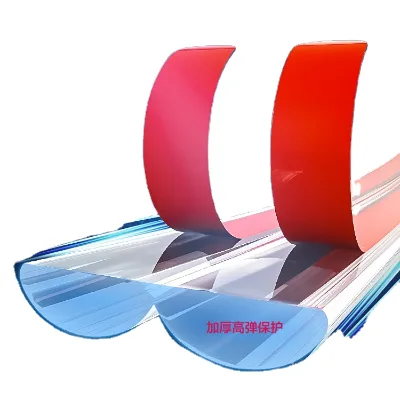
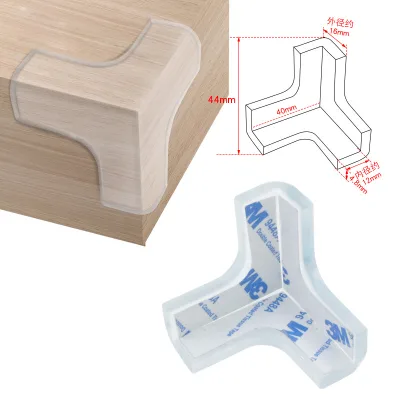
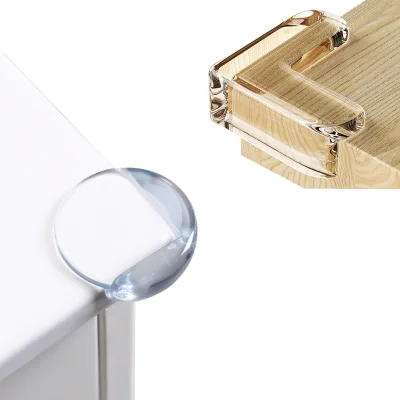
The physical dimensions and structural integrity are equally vital. The observed product specifications reveal a thickness of less than 2mm for certain transparent variants, which suggests a design focused on minimal visual intrusion while maintaining a protective barrier. The shape is predominantly "L Shape," though the market also offers "U," "Semi-Circle," "Flat," and "Waved" profiles to accommodate different furniture geometries. The "Size" is frequently listed as "Customized," indicating that buyers should expect a high degree of flexibility in dimensions to match specific corner radii. Weight variations are noted across the product range, with specific models weighing 250g, 310g, or 450g, depending on the density of the foam and the overall size. The design style is generally categorized as "Modern," aligning with contemporary interior aesthetics.
Compliance, Certification, and Safety Standards Verification
Safety is the paramount concern when procuring items intended for child protection. Buyers must rigorously verify compliance with international safety standards, particularly those governing toy safety and material toxicity. While the supplied data mentions "EN 71-1-2-3" as a background reference, this standard is not explicitly confirmed as a certified attribute for every listed product. Consequently, procurement teams must treat this as a verification target rather than an inherent guarantee. The buyer's due diligence should focus on confirming that the "Polyurethane Foam" or "PP" materials used meet specific phthalate-free and non-toxic requirements.
The "100% Eco-Friendly" feature is observed in some product listings, which implies a commitment to sustainable manufacturing practices. However, this claim requires validation through independent laboratory testing reports. Buyers should request documentation proving that the materials do not release harmful volatile organic compounds (VOCs) once installed. Furthermore, the "Function" is explicitly stated as "Prevent Baby Injuries" and "Shock-Proof," but these are functional descriptions rather than certified performance metrics. To ensure safety, the procurement process must include a requirement for the supplier to provide third-party test results demonstrating impact resistance and material safety. The "After-Sale Service" often includes "Online Technical Support," which can be valuable for troubleshooting installation issues or addressing quality concerns, but it does not replace the need for pre-shipment quality audits.
Cost Drivers and Pricing Structure Analysis
Understanding the cost structure of Transparent Baby Safety Corner Protectors is essential for effective budget management. The observed price range in the market spans from $0.03 to $19.50 USD, a significant variance that reflects differences in material quality, customization levels, and order volume. The low end of the spectrum likely corresponds to standard, non-customized sizes with basic packaging, while the higher end may include specialized shapes, premium eco-friendly materials, or complex customization requests.
The Minimum Order Quantity (MOQ) is a major driver of unit cost. The data indicates an MOQ range from 1 to 2000 units, with specific models showing MOQs of 48, 50, or 100 pieces. Suppliers often offer tiered pricing structures where the unit cost decreases as the order volume increases. For buyers requiring large-scale deployment, such as for furniture retailers or construction projects, negotiating a lower MOQ or a higher volume discount is a critical strategy. Additionally, the "Customization" attribute significantly impacts pricing. Custom sizes, colors, or branding (OEM) will invariably increase the per-unit cost and may extend the production lead time. The "Weight" of the product also influences shipping costs; heavier items like the 450g variant will incur higher freight charges compared to lighter 250g options.
Typical Applications and Installation Methods
The application scope for these protectors extends beyond simple residential use. While the primary "Application" is listed as "Sharp Furniture Corner," the product data also highlights uses in "Car, Road Construction, Parking, Tunnel, Road" scenarios. This suggests that the material's durability and shock-absorbing properties make it suitable for industrial and transportation safety as well. In a residential context, the "Transparent" attribute makes these protectors ideal for glass tables, marble countertops, and modern furniture where visual clarity is preferred.
Installation is a critical factor in the overall user experience. The majority of these products utilize a "Self-Adhesive" method, which simplifies the installation process for end-users and reduces labor costs during bulk deployment. The "Easy to Install" feature is a key selling point, but the success of the installation depends heavily on the surface preparation and the quality of the adhesive. Buyers should verify that the adhesive is strong enough to withstand daily wear and tear but can be removed without damaging the furniture surface. The "L Shape" and "U-Shaped" designs are particularly effective for covering 90-degree corners, while "Flat" or "Waved" options may be better suited for edge protection on tables or countertops. The "Sample" availability allows buyers to test the installation process and adhesive strength before committing to a large order.
Supplier Evaluation and Operational Capabilities
Selecting the right supplier requires a comprehensive evaluation of their operational capabilities and reliability. The "Product Origin" is consistently listed as "China," which is a major manufacturing hub for these goods. Buyers should assess the supplier's capacity to handle "OEM" requests, as many require custom branding or specific packaging solutions. The "Packing" methods vary, with options including "OPP" bags, "Carton Box," and "Cartons." The choice of packaging affects both the protection of the goods during transit and the unboxing experience for the end customer.
Lead times are a crucial operational metric. The observed "Lead Time" ranges from 10 to 40 days, with specific models citing 10-30 days or 15-40 days. This variance suggests that production schedules can be influenced by order complexity and current factory workload. Buyers must factor in these timelines when planning inventory replenishment. The "Sample Time" of 3-7 days is generally acceptable for initial quality checks, but the transition from sample to mass production must be managed carefully to ensure consistency. Payment terms such as "Tt, Paypal, Western Union" are standard, but buyers should negotiate terms that protect their interests, such as partial payments upon shipment. The "Loading Port" is typically a "China Main Port," which affects shipping logistics and customs clearance procedures.
Quality Control and Long-Term Procurement Strategy
Implementing a robust quality control (QC) strategy is essential to mitigate risks associated with bulk procurement. Given the variation in material thickness and weight, buyers should establish clear acceptance criteria based on the "Specification" of thickness (<2mm) and weight. Visual inspections for transparency and color consistency are also necessary, especially when "Customized" colors are involved. The "Feature" of being "Anti Shocked" and "High Visual" should be validated through physical testing, such as dropping a weighted object onto the protector to ensure it absorbs impact effectively without tearing or detaching.
For long-term procurement, building a strategic partnership with the supplier is advisable. The "Market" is described as "Worldwide," indicating that suppliers are experienced in international logistics and compliance. However, buyers should maintain open communication channels to address any potential issues with "After-Sale Service." Regular audits of the production line can help ensure that the "100% Eco-Friendly" claims are maintained over time. Additionally, buyers should monitor changes in the "Standard" requirements, as regulations regarding child safety products can evolve. By maintaining a flexible approach to specifications and fostering a collaborative relationship with the supplier, buyers can secure a reliable supply chain for Transparent Baby Safety Corner Protectors that meets both safety standards and business objectives.
Comparative Analysis of Product Attributes
To facilitate decision-making, the following table summarizes the key attributes observed across different product models, highlighting the variations in specifications that buyers should consider.
| Attribute | Model A (XCFH-019) | Model B (XCFH-009) | Model C (XCFH-036) | Model D (XCFH-001) |
|---|---|---|---|---|
| Product Name | Child Protection Corner Protector | PU Foam Protector Edge Safeguard | Very Soft Foam Corner Edge Protector | U-Shaped Foam Baby Safety Proofing |
| Material | PU/PP | Polyurethane Foam | Polyurethane Foam | Polyurethane Foam |
| Shape | L Shape | L, U, Semi-Circle, Flat, Waved | L, U, Semi-Circle, Flat, Waved | U-Shaped |
| Thickness | <2mm | Customized | Customized | Customized |
| Weight | 250g or Customized | 450g | 310g | 250g |
| MOQ | 50 PCS | 100 PCS | 48 PCS | Not Specified |
| Lead Time | 10-30 Days | 15-40 Days | Not Specified | Not Specified |
| Packing | OPP | Carton Box | Not Specified | Not Specified |
| Color | Transparent | Black and Yellow or Customized | Not Specified | Not Specified |
| Standard | 331 | Customized | Not Specified | Not Specified |
This comparison underscores the diversity within the product category. Buyers must align their specific needs—such as the required shape, weight, and lead time—with the capabilities of the supplier. For instance, if a project requires a lightweight, transparent solution with a low MOQ, Model A or D might be suitable. Conversely, if the application demands high impact resistance with a heavier foam density, Model B could be the preferred choice. Understanding these nuances allows for a more precise and effective sourcing strategy.
FAQs
What materials are used for Transparent Baby Safety Corner Protectors?
Products are typically made from PU/PP blends or Polyurethane Foam to ensure softness and impact absorption. Some listings specify a thickness of less than 2mm for minimal visual intrusion while maintaining a protective barrier against sharp furniture edges.
Can I customize the size and color of these corner guards?
Yes, customization is available for size, color, and branding through OEM services. Buyers can request specific dimensions like 15*15*7cm or choose from options such as transparent, black and yellow, or other custom colors to match their furniture.
How long does it take to receive samples and bulk orders?
Sample production typically takes 3 to 7 days for initial quality checks. Bulk order lead times vary between 10 and 40 days depending on the specific model and customization requirements, so planning for this window is essential for inventory management.
What is the minimum order quantity for these baby safety products?
Minimum order quantities range from 1 to 2000 units, with specific models requiring 48, 50, or 100 pieces. The exact MOQ depends on the selected product model and whether customization is requested, allowing flexibility for different buyer volumes.
How are these corner protectors installed on furniture?
Most units feature a self-adhesive installation method for easy application without tools. The design includes features like anti-shock properties and high visibility, ensuring they stay securely attached to sharp corners while protecting against injuries.
Are these products considered eco-friendly and safe for children?
Some listings claim the products are 100% eco-friendly, but buyers should verify this through independent testing. The primary function is to prevent baby injuries, and materials like Polyurethane Foam are selected for their shock-proof and impact-resistant capabilities.