Source Transparent BOPP Shrink Film for Packaging, Printing, and Logistics
Explore 30 listings for Transparent BOPP Shrink Film suitable for packaging, printing, and logistics applications. Buyers can compare specifications like thickness, material composition, and customization options from multiple suppliers in China.
Key considerations
Products List


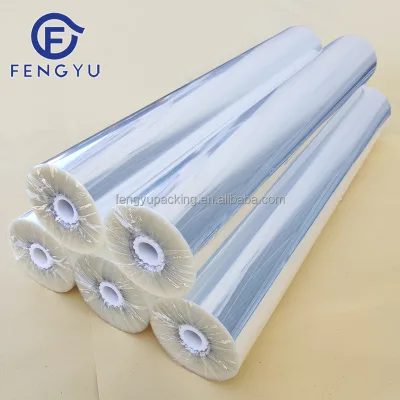
Heavy Duty PE Film Plastic Film Transparent Soft Packaging Shrink Film
$0.30 - $0.60
MOQ: 1000 Square Meters




Comprehensive Sourcing Guide
Strategic Sourcing Guide for Transparent BOPP Shrink Film
Understanding Material Composition and Core Properties
When sourcing transparent BOPP (Biaxially Oriented Polypropylene) shrink film, the primary objective is to identify materials that balance optical clarity with mechanical durability. The foundational material for these products is consistently identified as BOPP, often combined with EVA (Ethylene Vinyl Acetate) or BOPET (Biaxially Oriented Polyethylene Terephthalate) layers to enhance specific performance metrics. The core characteristic of this material is its transparency, which allows for high-quality product visibility on retail shelves. However, buyers must distinguish between fully transparent variants and those offering translucency, as the latter may be specified for different lighting or aesthetic requirements.
The physical structure of the film is critical for its performance. The processing type for these films is predominantly Multiple Extrusion, a technique that ensures uniform layer distribution and consistent thickness. The surface finish is typically smooth, which facilitates high-speed packaging operations and prevents jamming in automated machinery. In terms of hardness, the material is classified as soft, a property that is essential for the film to conform tightly to irregular product shapes during the shrinking process. The film is designed with a layered structure that includes heat-seal capabilities, ensuring that the film remains intact and secure once applied. The dyne level, a measure of surface tension critical for ink adhesion and printability, is observed at 38, which is a standard benchmark for ensuring that graphics and branding adhere properly to the film surface.
Technical Specifications and Dimensional Standards
Precision in technical specifications is paramount when ordering BOPP shrink film, as deviations can lead to packaging failures or machine downtime. The thickness of the film is a variable parameter that buyers must define based on their specific application needs. Available thickness ranges include specific configurations such as 12+8.12+9 microns, as well as standard options like 22, 25, 30, 35, and 40 microns. Customized thickness options are widely available, allowing procurement teams to tailor the film to the weight and fragility of the products being packaged.
Width specifications are equally flexible, with many suppliers offering customized width options to match the dimensions of the products or the width of the packaging machinery. The standard product dimensions often reference a width of 400mm combined with a length of 4000m, though this can vary based on the specific model and customer requirements. The product models identified in the market, such as GT-JSN03, GT-JSN02, GT-Ayla, and GT-joan 03, represent different configurations of these films, each potentially optimized for specific shrink ratios or sealing temperatures.
The following table summarizes the key technical parameters observed in the current market for Transparent BOPP Shrink Film:
| Parameter | Observed Values / Options | Notes for Verification |
|---|---|---|
| Material Base | BOPP; BOPP+EVA; BOPET+EVA | Verify layer composition for specific barrier needs. |
| Thickness | 12+8.12+9, 22, 25, 30, 35, 40 microns | Customized options available; verify tolerance. |
| Width | Customized | Standard reference often 400mm; confirm machine fit. |
| Surface Finish | Smooth; Glossy/Matt | Determine based on aesthetic and friction requirements. |
| Transparency | Transparent; Translucency | Ensure visual clarity meets brand standards. |
| Hardness | Soft | Essential for conformability and shrink tightness. |
| Surface Tension | 38 Dyne | Critical for print adhesion and sealing quality. |
| Processing Type | Multiple Extrusion; Blow Molding | Indicates manufacturing complexity and layer bonding. |
Compliance, Certification, and Quality Verification
While specific certification bodies are not explicitly listed in the provided product data, the industry standard for BOPP shrink film relies heavily on consistent manufacturing processes and material integrity. Buyers should verify that the supplier adheres to recognized international standards for plastic film testing, such as ASTM D882 for tensile properties, ASTM D2732 for tear resistance, and ASTM D1003 for haze and clarity. Although these standards are not guaranteed for every listed product, they represent the benchmark for quality assurance that procurement teams should request during the supplier evaluation phase.
Quality control in the production of BOPP shrink film involves rigorous checks on the surface smoothness and the consistency of the heat-seal layer. The "Heat Seal" attribute indicates that the film is designed to bond under heat, a critical feature for maintaining package integrity. Buyers must ensure that the film meets the "Moisture-Proof" special property requirement if the packaged goods are sensitive to humidity. The surface tension of 38 Dyne is a specific observation that suggests the film is pre-treated for printing, but buyers should confirm this value for each batch to ensure consistent print quality.
Furthermore, the "Bag Sealing Methods" such as Flat Bag Packaging indicate how the film is delivered to the customer. This packaging method must be verified to ensure it protects the film from damage during transit. The "Paper Core + Cardboard Box" or "Hanging Wooden Tray" packing options suggest different logistical considerations for storage and handling. Buyers should confirm that the packaging standard aligns with their warehouse capabilities and that the film remains free from contamination before use.
Cost Drivers and Procurement Economics
The cost of Transparent BOPP Shrink Film is influenced by several factors, including the raw material composition, the complexity of the extrusion process, and the customization level. The material cost is a primary driver, with films incorporating EVA or BOPET layers generally commanding a higher price point than pure BOPP films due to the enhanced barrier properties and mechanical strength they provide. The thickness of the film also directly impacts cost; thicker films require more raw material and energy to produce, leading to a higher unit price.
Minimum Order Quantity (MOQ) is another significant economic factor. The observed MOQ range spans from 1 unit to 5000 units, with specific product models like the Metalized BOPP Film requiring an MOQ of 3000kg. This variability allows buyers to scale their orders based on their inventory needs and cash flow constraints. However, smaller orders may come with a higher per-unit cost, while larger orders often benefit from economies of scale.
The supply capacity of the manufacturer, observed at 20,000,000 pieces per month, indicates a high-volume production environment. This capacity suggests that large-scale buyers can secure consistent supply without significant lead time delays, provided they place orders well in advance. The location of the manufacturing facility, primarily in Tianjin, China, also influences logistics costs and lead times. Buyers should factor in shipping costs and potential tariffs when calculating the total landed cost of the film.
Typical Applications and Industry Use Cases
Transparent BOPP Shrink Film is versatile and finds application across a wide range of industries, particularly in business and shopping sectors. The primary use case is packaging film, where it serves to protect, preserve, and present products to consumers. The film's transparency allows for clear product visibility, which is crucial for retail environments where aesthetic appeal drives purchasing decisions. The "Recombination" use attribute suggests that the film can be used for bundling multiple items together, creating value-added packs that are convenient for consumers.
In the printing industry, the film is utilized as a printing film, where its smooth surface and 38 Dyne surface tension ensure high-quality graphic reproduction. This makes it ideal for branded packaging that requires vibrant colors and sharp text. The "Thermal Film" and "Thermal Lamination Film" designations indicate that the product is also used in thermal lamination processes, where heat is applied to bond the film to a substrate, providing a protective and glossy finish.
The "Industrial Use" classification as "Packing" highlights the film's role in logistics and distribution. The film's ability to shrink tightly around products provides a secure wrap that prevents shifting during transport, reducing the risk of damage. The "Matte Film" variant offers a different aesthetic option, suitable for products where a non-reflective, premium look is desired. The "Stretch Film" attribute suggests that some variants may also possess stretch properties, offering an alternative to traditional shrink films for certain applications.
Supplier Evaluation and Quality Control Protocols
Selecting the right supplier for Transparent BOPP Shrink Film requires a thorough evaluation of their manufacturing capabilities and quality control systems. Buyers should prioritize suppliers who demonstrate a clear understanding of the "Multiple Extrusion" and "Blow Molding" processes, as these techniques are critical for producing high-quality, multi-layer films. The availability of samples, including free samples, is a strong indicator of a supplier's confidence in their product quality. Buyers should request samples to test the film's shrinkage ratio, seal strength, and printability before committing to a large order.
Quality control protocols should include regular testing of the film's thickness, transparency, and surface tension. The "Customized" logo and "Customized" standard attributes indicate that suppliers are willing to tailor their products to specific buyer requirements. Buyers should verify that the supplier has the capacity to maintain consistency across these customizations. The "Pallet Packing" and "Paper Core+Carton" packaging methods should be inspected to ensure that the film arrives in good condition, free from tears or contamination.
Suppliers with a high supply capacity, such as the observed 20,000,000 pieces per month, are better positioned to handle large orders and maintain consistent quality. However, buyers should also assess the supplier's responsiveness and ability to provide technical support. The "Tianjin China" origin suggests a specific logistical hub, and buyers should consider the supplier's proximity to their own facilities or ports to minimize shipping costs and lead times.
Long-Term Procurement and Sustainability Considerations
For long-term procurement strategies, buyers should focus on building relationships with suppliers who offer stable pricing and reliable supply chains. The "Customized" nature of the product allows for flexibility in adapting to changing market demands, but it also requires clear communication to ensure that specifications are met consistently. Buyers should establish a quality agreement that outlines the acceptable tolerances for thickness, transparency, and surface tension.
Sustainability is an increasingly important factor in the packaging industry. While the provided data does not explicitly mention recyclability or biodegradability, buyers should inquire about the environmental impact of the film. The use of BOPP and EVA materials is standard, but the end-of-life disposal options should be considered. Buyers may also explore the possibility of using recycled content in the film production, although this may affect the transparency and mechanical properties.
The "Sample Available" attribute suggests that suppliers are open to collaboration and testing, which is beneficial for long-term partnerships. Buyers should leverage this to conduct pilot tests and validate the film's performance in their specific applications. By maintaining a proactive approach to supplier evaluation and quality control, buyers can ensure a steady supply of high-quality Transparent BOPP Shrink Film that meets their operational and strategic goals.
FAQs
What materials are used for Transparent BOPP Shrink Film?
The film is primarily made from BOPP, often combined with EVA or BOPET layers. This composition ensures transparency and mechanical durability while allowing for customization based on specific packaging needs.
Can I customize the thickness of the shrink film?
Yes, customized thickness options are widely available for this product. Buyers can select standard ranges like 22 to 40 microns or specific configurations such as 12+8.12+9 microns to match their machinery requirements.
How is the surface finish of the film described?
The surface finish is typically smooth, which facilitates high-speed packaging operations. Some variants offer a glossy or matte finish, allowing buyers to choose based on aesthetic and friction requirements for their specific application.
What is the minimum order quantity for these films?
The minimum order quantity ranges from 1 unit up to 5000 units depending on the product model. Specific items like metalized BOPP film may require a minimum of 3000kg, so buyers should verify the exact MOQ for their selection.
Where are these BOPP shrink films manufactured?
The manufacturing origin is primarily located in Tianjin, China. This location influences logistics costs and lead times, so buyers should factor in shipping from this hub when calculating the total landed cost of the film.
Is the film suitable for printing applications?
Yes, the film is designed for printing with a surface tension of 38 Dyne. This level ensures high-quality graphic reproduction and proper ink adhesion, making it ideal for branded packaging and thermal lamination processes.