Source Transparent Waterproof Phone Pouch for Swimming Diving Surfing
Find 30 transparent waterproof phone pouches from verified suppliers. Compare PVC and polyester options with sizes like 10.5x20.5cm, IP6 ratings, and customization services for swimming, diving, and surfing.
Key considerations
Products List


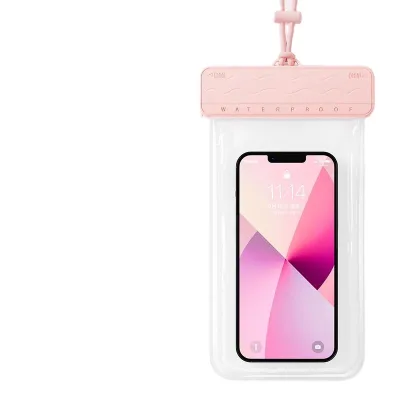
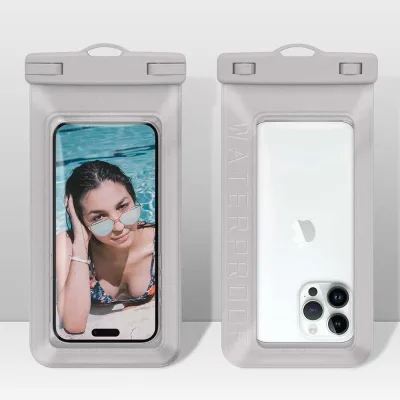
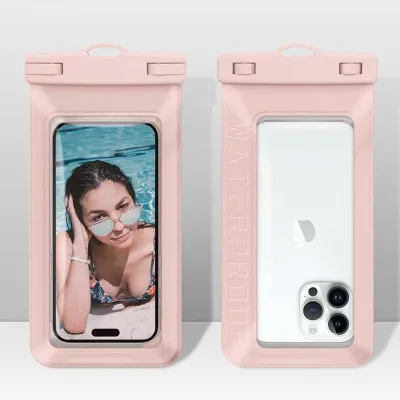
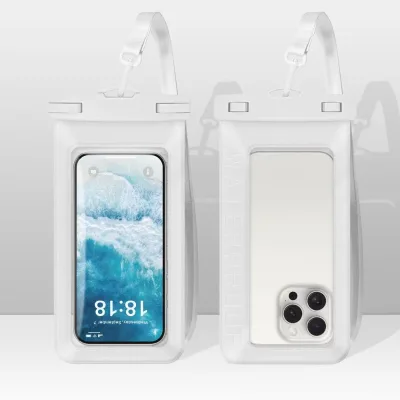
Pudding Waterproof Pouch for Phone, Phone Waterproof Bag with Logo Printing
$0.06 - $0.19
MOQ: 200 Pieces




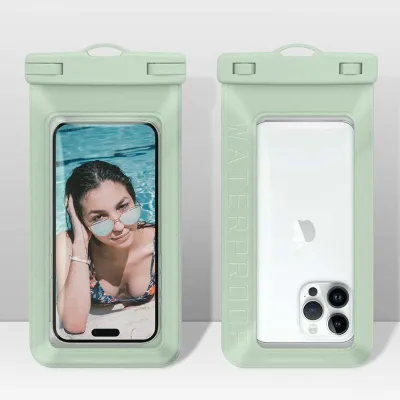


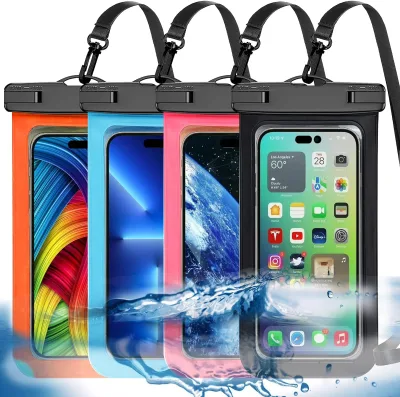
Comprehensive Sourcing Guide
Strategic Sourcing Guide for Transparent Waterproof Phone Pouches
The global demand for transparent waterproof phone pouches has surged as consumers and businesses seek reliable protection for mobile devices in aquatic and high-moisture environments. This category encompasses a diverse range of products, from simple swimming pouches to specialized diving gear, all sharing the core function of water resistance while maintaining visibility for screen interaction. For B2B procurement professionals, navigating this market requires a disciplined approach to verifying technical specifications, understanding material composition, and ensuring compliance with international safety standards. The following guide outlines the critical factors for sourcing these items effectively, based on observed market data and established industry parameters.
Technical Specifications and Material Composition
The foundation of a reliable waterproof phone pouch lies in its material composition and dimensional accuracy. Market observations indicate that Polyvinyl Chloride (PVC) is a dominant material for this category, offering a balance of flexibility, durability, and transparency. The transparency is a critical functional attribute, allowing users to view notifications and operate touchscreens without removing the device. However, not all transparent pouches are identical; some listings specify "Various Colors" alongside transparent options, while others strictly adhere to a clear aesthetic.
Dimensional consistency is equally vital. Procurement data reveals a wide variance in sizing, ranging from compact dimensions like 10.5x20.5cm to larger formats such as 17.5x105cm or 19x10cm. The specific model codes, such as WPB025, WPB021, and WPB004, often correlate with these size variations. Buyers must verify that the selected model matches the target device's dimensions, as a mismatch can compromise the seal. For instance, a pouch designed for a "Medium Size" device may not accommodate larger phablets, while a model with a standard size of 11x26cm offers a different fit than one measuring 10x20cm.
The closure mechanism is another technical differentiator. While some products utilize a zipper for a secure seal, others may rely on roll-top or snap-lock mechanisms. The "Hardness" attribute is typically noted as "Soft," which is essential for comfort and flexibility during use. Additionally, the "Closed Way" must be robust enough to prevent water ingress under pressure. Buyers should request physical samples to test the seal integrity, as the theoretical specification of "Waterproof" does not always guarantee performance in dynamic conditions like swimming or diving.
Compliance, Certification, and Safety Standards
In the realm of consumer electronics accessories, compliance is non-negotiable. Sourcing guides must prioritize products that adhere to recognized safety and environmental standards. The supplied data highlights specific certifications such as RoHS (Restriction of Hazardous Substances) and ISO9001, which indicate a manufacturer's commitment to quality management and the exclusion of hazardous materials. Furthermore, the standard "En-71" is frequently cited, a European safety standard for toys, which is often applied to products intended for children or general consumer use to ensure they are free from harmful phthalates.
The "Non-Phthalate" designation is a crucial verification point, particularly for products that may come into contact with skin or be used by children. While some background data mentions ISO 14001:2015 or CE markings, these should be treated as potential attributes rather than guaranteed facts unless explicitly confirmed by the supplier's current documentation. Buyers must demand valid test reports to confirm that the PVC or Polyester materials used do not contain restricted substances.
Waterproof ratings are another area requiring precise verification. The observed data includes a specific "Waterproof Level" of IP6. While IP67 or IP68 are common industry benchmarks for submersion, the specific rating provided in the product listing must be validated against the intended use case. A rating of IP6 suggests a high level of dust protection and water resistance, but the depth and duration of submersion must be clearly defined by the manufacturer. Buyers should not assume a universal waterproof capability; instead, they must verify the specific IP rating and the testing conditions under which it was achieved.
Cost Drivers and Pricing Dynamics
The pricing landscape for transparent waterproof phone pouches is characterized by significant variability, with observed ranges spanning from $0.06 to $12.99 USD. This wide disparity is driven by several key factors, including material quality, customization complexity, and order volume. The lower end of the price spectrum typically corresponds to basic PVC models with standard sizes and minimal customization, often produced in high volumes. Conversely, the higher price points reflect specialized features, such as enhanced durability, specific certifications, or custom branding services.
Minimum Order Quantity (MOQ) is a primary cost driver in this sector. Data indicates an MOQ range of 2 to 3,000 units. For small businesses or startups, an MOQ of 2 units allows for sampling and low-risk testing, whereas large retailers may negotiate lower per-unit costs by committing to the 3,000-unit threshold. The "Sample" attribute is often listed as "Free," which facilitates the evaluation process without immediate financial commitment, though shipping costs may apply.
Production capacity also influences pricing. Suppliers with a monthly production capability of 10,000 units or more can often offer more competitive rates due to economies of scale. However, buyers must balance cost against lead times and quality control. A lower price point may come with longer lead times or less rigorous quality assurance if the supplier is operating at full capacity. The "Service" attribute, often listed as OEM/ODM, adds value but may increase the unit cost due to the customization effort involved.
Typical Applications and Usage Scenarios
The versatility of transparent waterproof phone pouches makes them suitable for a wide array of applications. The "Usage" field explicitly lists swimming, diving, surfing, showering, and hot springs, indicating that these products are designed for both recreational and practical aquatic environments. The "Season" attribute is noted as "All," suggesting that these items are not limited to summer use but are relevant year-round for indoor pools, spas, and water parks.
The "Gender" classification is typically "Unisex," making these products appealing to a broad demographic. The "Style" varies from "Simplicity" to "Sports," catering to different aesthetic preferences and functional needs. For example, a "Sports" style pouch might feature a wrist strap or a more rugged design, while a "Simplicity" style focuses on minimalism and ease of use. The "Shape" is often described as "Horizontal Square," which is ergonomic for holding a phone in a natural position.
It is important to note that not all pouches are equipped with a "Car Holder." Some models are designed solely for handheld use or attachment to a wrist, while others may include mounting options. Buyers must align the product features with the specific use case. For instance, a pouch intended for a car mount would require a different attachment mechanism than one designed for a swimmer's wrist. The "Type" classification, ranging from "Bag" to "Pouch," further delineates the intended function and capacity.
Supplier Evaluation and Operational Capabilities
When evaluating potential suppliers, buyers should look beyond the basic product listing and assess the supplier's operational capabilities. The "Location" data points to origins such as China and Yiwu, Zhejiang, which are known manufacturing hubs for this category. Yiwu, in particular, is recognized for its extensive supply chain and ability to produce a wide variety of consumer goods. However, the specific origin should be verified to ensure it aligns with the buyer's logistics and compliance requirements.
The "Export" attribute indicates a "Global" reach, suggesting that the supplier is experienced in international shipping and compliance. Buyers should verify the supplier's track record in exporting to their specific region. The "Production" capacity of 10,000 units monthly is a strong indicator of reliability, but it is essential to confirm that this capacity is consistent and can be scaled up during peak demand periods.
Packaging is another critical aspect of supplier evaluation. The "prod_packing" attribute varies from "Carton" to "One Piece in One Polybag" or "1PC/Bag; 250PCS/CTN." The choice of packaging affects shipping costs, product protection, and retail readiness. A supplier offering standardized, durable packaging can reduce the risk of damage during transit. Additionally, the "Sample Date" of 3-5 days indicates a responsive supply chain, which is crucial for rapid prototyping and order fulfillment.
Quality Control and Long-Term Procurement Considerations
Ensuring consistent quality is paramount in the long-term procurement of waterproof phone pouches. The "Standard" attribute, such as "L27W6cm" or "1020cm or customized," highlights the importance of dimensional accuracy. Buyers should implement a rigorous quality control process that includes testing for water ingress, seal integrity, and material durability. The "Hardness" and "Style" attributes should be checked against the initial sample to ensure consistency across the production run.
Long-term procurement strategies should focus on building relationships with suppliers who offer flexible customization options. The "Customization" attribute being "Available" allows buyers to tailor products to their brand identity, which can be a significant competitive advantage. However, customization should not compromise the core functionality of the product. Buyers must ensure that any customizations, such as logo printing or color changes, do not affect the waterproof rating or the structural integrity of the pouch.
Finally, buyers should maintain a clear understanding of the "Standard" and "Certification" requirements for their target markets. While some products may meet En-71 or RoHS standards, others may require additional certifications depending on the destination country. Regular audits and third-party testing can help mitigate risks and ensure that the supplied products consistently meet the required quality and safety benchmarks. By focusing on these critical areas, buyers can secure a reliable supply of high-quality transparent waterproof phone pouches that meet the demands of their customers.
FAQs
What materials are used for transparent waterproof phone pouches?
The primary materials are PVC and Polyester, offering flexibility and durability. PVC is dominant for transparency, while Polyester provides alternative strength. Both materials support the waterproof function required for aquatic activities.
Which certifications ensure safety for these waterproof pouches?
High-confidence certifications include RoHS and ISO9001, ensuring restricted substances are excluded. Some products also meet En-71 and Non-Phthalate standards for safety. Buyers should verify specific test reports for these standards.
How do sizes vary across different Transparent Waterproof Phone Pouch models?
Sizes vary significantly, ranging from 10.5x20.5cm to 17.5x105cm depending on the model. Specific models like WPB025 and WPB004 have distinct dimensions. Buyers must match the pouch size to their specific device dimensions.
Can buyers customize the transparent waterproof phone pouches with branding?
Yes, customization is available for these products. Suppliers offer OEM and ODM services to tailor designs. This allows businesses to add logos or specific features while maintaining the core waterproof functionality.
What is the typical minimum order quantity for these pouches?
The minimum order quantity ranges from 2 to 3000 units depending on the supplier. Low MOQs allow for sampling, while higher volumes reduce per-unit costs. Buyers should confirm the specific MOQ before placing an order.
Where are these transparent waterproof phone pouches typically manufactured?
Products originate from China, with specific hubs like Yiwu, Zhejiang. This region is known for its extensive supply chain capabilities. Buyers should verify the exact origin to align with logistics and compliance requirements.
What is the production capacity for transparent waterproof phone pouches?
Some suppliers have a monthly production capacity of 10,000 units. This capacity supports large-scale orders and ensures consistent supply. Buyers should confirm capacity availability during peak demand periods.