Source Tuya Compatible Smart Plug for Home, Office, and Commercial Use
Compare 30 Tuya Compatible Smart Plug options featuring WiFi connectivity, 16A rated current, and British Standard sockets. Buyers can evaluate specifications including voice control compatibility with Google Home and Amazon Alexa, energy monitoring functions, and fire-retardant PC V0 shell materials for various applications.
Key considerations
Products List


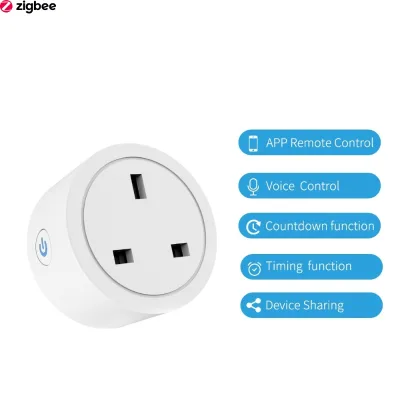


New Design Support APP Application Multifunction Us Standard 10A WiFi Smart Plug
$3.60 - $3.87
MOQ: 1000 pieces

Support OEM Customization Modern Style Smart Home Control Smart Plug 10A
$3.60 - $3.87
MOQ: 1000 pieces




Comprehensive Sourcing Guide
Strategic Sourcing Guide for Tuya-Compatible Smart Plugs
The global shift toward connected home ecosystems has elevated the smart plug to a cornerstone of residential and commercial automation. For procurement professionals, the specific requirement for Tuya compatibility introduces a distinct layer of technical and logistical complexity. Tuya is a leading global IoT cloud platform that enables device interoperability, allowing manufacturers to produce hardware that seamlessly integrates with a vast array of third-party applications, voice assistants, and smart home hubs. When sourcing these devices, buyers must navigate a landscape defined by specific wireless protocols, rigorous electrical standards, and the critical need for verified cloud integration. This guide outlines the essential factors for evaluating suppliers and products to ensure a successful procurement cycle that balances technical performance with regulatory compliance.
Technical Architecture and Wireless Protocol Verification
The foundational requirement for any Tuya-compatible smart plug is the underlying communication architecture. The device must possess a wireless module capable of connecting to the Tuya IoT cloud and subsequently to the user's local network. Based on observed market data, the most prevalent configuration for these units utilizes WiFi technology operating at 2.4GHz, often paired with Bluetooth Low Energy (BLE) 5.1 for initial device provisioning. The BLE feature is critical during the setup phase, allowing a mobile device to discover the plug and transfer network credentials before the unit connects to the WiFi network. Buyers must verify that the supplier explicitly states support for the 2.4GHz band, as 5GHz networks are generally incompatible with these specific IoT modules.
Furthermore, the electrical specifications must align with the target market's infrastructure. Common observations indicate a rated voltage range of 100V to 240V, accommodating global power grids, with a frequency of 50-60Hz. The rated current is a pivotal safety metric; high-capacity models are frequently rated at 16A, supporting a maximum power load of approximately 2875W at 230V. This capacity allows the plug to handle heavy appliances such as heaters or air conditioners, provided the local wiring supports such loads. However, procurement teams must scrutinize the "Working Voltage" and "Rated Current" fields in product datasheets to ensure they match the specific requirements of the intended application, as some models may be limited to lower amperages for general-purpose lighting control.
Compliance, Certification, and Electrical Safety Standards
Electrical safety is non-negotiable in the procurement of smart plugs, particularly given the high currents involved. The product must adhere to the electrical standards of the destination country. For instance, models intended for the United Kingdom market often cite the British Standard and utilize a UK 3 Pin configuration. In contrast, other regions may require different plug geometries or socket standards. Beyond physical compatibility, the device must carry recognized safety certifications. The supply chain data frequently highlights CE and RoHS certifications as standard attributes. The CE mark indicates conformity with health, safety, and environmental protection standards for products sold within the European Economic Area, while RoHS ensures the absence of specific hazardous materials.
Buyers should also examine the material composition of the device housing. High-quality smart plugs typically utilize PC V0 Fire Retardant material for the shell, a specification that significantly reduces the risk of fire propagation in the event of an electrical fault. Additionally, the internal conductors should be verified as 100% pure copper to ensure optimal conductivity and minimize heat generation under load. The presence of a "Non-Grounding" attribute in some listings suggests that certain models are designed for double-insulated applications or specific regional standards where a ground pin is not mandatory, but this requires careful validation against local building codes.
Functional Capabilities and Integration Ecosystem
The primary value proposition of a Tuya-compatible plug lies in its functional versatility. Modern units often include advanced features such as energy monitoring, which allows users to track power consumption in real-time through the mobile application. This feature is particularly valuable for commercial and industrial applications where energy efficiency is a key metric. Other common functionalities include overload protection and lightning protection, which safeguard connected appliances from power surges and electrical spikes.
Integration with voice assistants is another critical specification. The supply data confirms compatibility with major platforms such as Google Home and Amazon Alexa. This interoperability relies on the device's ability to register with the Tuya cloud and subsequently be linked to the respective voice assistant's ecosystem. Buyers should verify that the "Voice Control" attribute is explicitly listed and that the device supports the latest firmware versions required for stable integration. The "Number of Switch" attribute, often listed as a single main switch, defines the control granularity, while the "AC Outlets Quantity" indicates whether the unit provides a single socket or a multi-outlet configuration, which is essential for bulk power distribution in office or workshop environments.
Application Scenarios and Environmental Constraints
The suitability of a smart plug is heavily dependent on its intended environment. The product attributes indicate a broad application range covering commercial, industrial, hospital, and residential general-purpose settings. For residential use, the IP Rating is a crucial consideration. While some models are rated for home use with specific IP classifications, others may carry an IP13 rating, indicating protection against vertically falling water droplets but not against dust or direct water jets. This distinction dictates whether a unit is suitable for indoor living spaces or if it requires placement in a protected area away from moisture.
Temperature tolerance is another environmental factor. The observed working temperature range of -10°C to 35°C suggests that these devices are optimized for controlled indoor environments. Procurement for outdoor or unheated industrial warehouses requires careful evaluation, as temperatures outside this range could lead to component failure or connectivity issues. The physical dimensions, such as 54x54x87mm or 61x61x67mm, also influence placement options, particularly in tight electrical enclosures or behind furniture where airflow and heat dissipation are limited.
Supplier Evaluation and Quality Assurance Protocols
When selecting a supplier for Tuya-compatible smart plugs, the verification of the supply chain's integrity is paramount. Buyers must confirm the origin of the product, with Guangdong, China, being a noted hub for this manufacturing sector. The "Condition" of the product should be strictly "New," and the "Customization" options should be clearly defined. Some suppliers offer customized packaging, such as color boxes or cartons, which can be vital for branding and retail presentation. The "Selling Units" attribute, often listed as "Single Item," indicates the standard packaging configuration, which affects logistics and inventory planning.
Quality control processes should be a central part of the supplier evaluation. Buyers should request evidence of the manufacturing process, including the use of 100% pure copper conductors and PC V0 fire-retardant materials. The "Standard" attribute, which may list specific dimensions or customized requirements, serves as a benchmark for consistency. It is essential to verify that the "Product Model" numbers, such as EA8, EA9, or OIT-IN02, correspond to the specific technical specifications required. Discrepancies between the model number and the actual delivered product can lead to integration failures or safety hazards.
Cost Drivers and Procurement Strategy
The pricing of smart plugs is influenced by several variables, including the complexity of the wireless module, the quality of materials, and the level of customization. The observed price range in the market spans from $0.50 to $1400, reflecting the diversity from basic single-outlet units to complex, multi-functional industrial controllers. The Minimum Order Quantity (MOQ) also varies significantly, ranging from 1 unit for sampling to 5000 units for bulk production. Buyers must balance the cost per unit against the MOQ to optimize inventory costs.
Lead times and production capacity are additional cost drivers. Suppliers with the ability to offer "Customized" solutions may have longer lead times due to the need for tooling and firmware development. The "Packing" method, whether in cartons or color boxes, impacts shipping volume and cost. For large-scale deployments, buyers should negotiate based on volume tiers and request detailed breakdowns of the cost structure, including the module, casing, and cloud service fees. Understanding these cost drivers allows for more accurate budgeting and prevents unexpected expenses during the procurement lifecycle.
Long-Term Viability and Firmware Management
The longevity of a smart plug investment depends on the supplier's commitment to firmware updates and cloud service stability. Tuya-compatible devices rely on the cloud platform for remote access and advanced features; therefore, the continuity of the cloud service is essential. Buyers should inquire about the supplier's track record in maintaining firmware compatibility and their policy on end-of-life support. The "Working Temperature" and "IP Rating" constraints also dictate the lifespan of the device in specific environments; operating a device beyond its specified temperature range or in an environment with insufficient IP protection can drastically reduce its operational life.
In conclusion, sourcing Tuya-compatible smart plugs requires a meticulous approach that balances technical specifications, regulatory compliance, and supplier reliability. By verifying wireless protocols, electrical ratings, and material quality, buyers can ensure that the procured devices meet the rigorous demands of modern smart home and industrial applications. The diversity of models available, from basic residential units to advanced energy-monitoring controllers, offers significant opportunities for customization and integration, provided that the procurement process is grounded in rigorous verification and quality assurance.
FAQs
What certifications do these smart plugs hold?
The devices carry CE and RoHS certifications. These marks confirm compliance with European safety and environmental standards, ensuring the products are free from hazardous materials and meet electrical safety requirements for international markets.
Which wireless protocols are supported by the unit?
The plugs utilize WiFi 2.4GHz and BLE 5.1 for connectivity. The Bluetooth Low Energy feature assists in initial device provisioning, while the 2.4GHz WiFi band enables stable cloud integration with the Tuya platform for remote control.
Can the plug handle high-power appliances safely?
Yes, the unit supports a rated current of 16A and a maximum power of 2875W. This capacity allows it to operate heavy loads like heaters, provided the local wiring infrastructure can safely support the specified electrical load.
What material is used for the device housing?
The shell is constructed from PC V0 Fire Retardant material. This specification ensures the device resists fire propagation, offering enhanced safety for commercial, industrial, and residential applications where electrical faults might occur.
How does the plug integrate with voice assistants?
The device supports voice control via Google Home and Amazon Alexa. This integration relies on the Tuya cloud platform to link the plug with the respective voice assistant ecosystems for hands-free operation of connected appliances.
What is the minimum order quantity for bulk purchase?
The observed minimum order quantity ranges from 1 to 5000 units. Buyers can order single items for sampling or negotiate larger volumes up to 5000 units depending on the supplier's capacity and specific customization requirements.
Which socket standard is compatible with the UK market?
The product adheres to the British Standard with a UK 3 Pin configuration. This ensures physical compatibility with UK electrical outlets, making it suitable for deployment in residential and commercial settings within the United Kingdom.