Source Tuya Smart Wifi Smoke Detector for Home Hotel RV
Find 30 verified listings for the Tuya Smart Wifi Smoke Detector to compare features like voice control, app integration, and battery life. Buyers can evaluate models such as AW-D611W and ZDD-004S-WF for home, hotel, and RV applications with CE and RoHS compliance options.
Key considerations
Products List


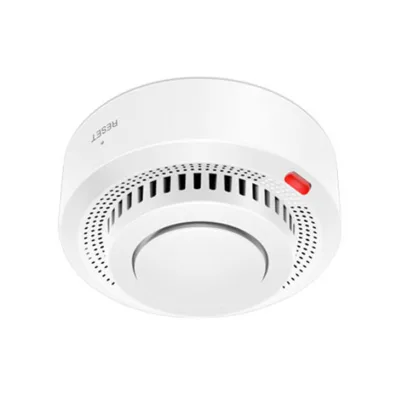


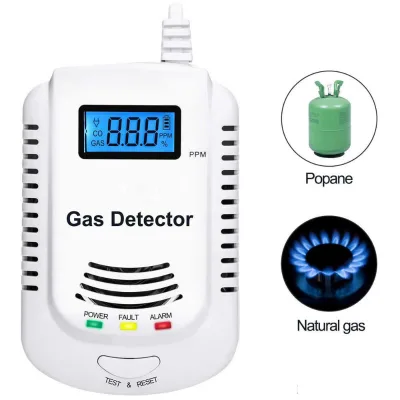


Smart WiFi Smoke Detector with Home Appliance Control Function (ES-6400W)
$7.00 - $10.00
MOQ: 10 Pieces


Comprehensive Sourcing Guide
Strategic Sourcing Guide for Tuya Smart WiFi Smoke Detectors
The global market for residential and commercial safety systems has shifted decisively toward connected IoT solutions, with the Tuya Smart Wifi Smoke Detector emerging as a primary category for procurement. For B2B buyers, sourcing these devices requires a nuanced understanding of the intersection between fire safety standards and smart home interoperability. The core keyword "Tuya Smart Wifi Smoke Detector" points to a specific ecosystem where hardware reliability must coexist with seamless software integration. This guide provides a disciplined framework for evaluating suppliers, verifying technical claims, and managing procurement risks without relying on unverified marketing assertions.
Technical Architecture and Sensor Specifications
The fundamental differentiator for any smoke detector in the Tuya ecosystem is the sensor technology employed. Based on available product attributes, the market predominantly features Photoelectric Smoke Style detectors. This technology is generally preferred for detecting smoldering fires, which produce larger smoke particles, making it a critical specification for residential applications. The device architecture typically integrates a Smoke Sensor Probe with an Infrared Sensor Probe. Buyers must verify the specific type of infrared sensor used, as the data indicates variations between Inclination Sensors and Infrared Temperature Sensors. The former suggests motion or tilt detection capabilities, while the latter implies thermal monitoring, though the primary function remains smoke detection.
The physical form factor is equally critical for installation logistics. Observed specifications indicate a compact design with dimensions around 8.558.8cm, constructed from ABS material. This plastic housing is standard for durability and fire resistance but requires verification against local building codes. The installation method is predominantly Ceiling Mounted, utilizing an Embedded Wall or direct ceiling approach. The device operates on a 3V Cr123A Lithium Battery, which dictates the power management strategy. The standby current is reported as less than 10uA, and the alarm current remains under 100mA, indicating efficient power consumption that extends battery life. The system utilizes MCU Auto-Processing Technology to improve stability, reducing false alarms through intelligent signal filtering.
Connectivity and Smart Home Integration
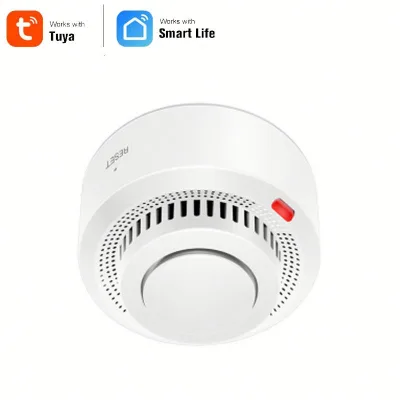
The defining feature of this product category is its connectivity. The "Tuya SmartLife" and "Smart Life" applications serve as the central control hubs. Procurement teams must ensure that the supplier's firmware is locked to the Tuya IoT platform to guarantee compatibility with the buyer's existing infrastructure. The system supports Voice Control integration with Google Home and Amazon Alexa, a feature that is now a baseline expectation for modern smart home devices.
Connectivity is established via Wi-Fi, enabling remote monitoring and control. The product attributes confirm "App Control" capabilities, allowing users to receive real-time alerts. The alarm output is multifaceted, combining Sound and Flash mechanisms with an APP Alarm. This redundancy is vital for scenarios where the user is asleep or away from the immediate vicinity of the device. The system also supports "Wifi Smart Control," which implies the ability to adjust sensitivity or test the unit remotely. Buyers should note that while the "Function" is listed as Wifi Smart Control, the actual network protocol (2.4GHz vs. 5GHz) must be confirmed with the supplier, as many IoT devices are restricted to 2.4GHz bands.
Compliance, Certification, and Safety Standards
Navigating the regulatory landscape is the most complex aspect of sourcing fire safety equipment. While the provided data lists "CE" and "RoHS" as observed standards for specific models, these are not universal guarantees for all products in this category. CE certification indicates conformity with health, safety, and environmental protection standards for products sold within the European Economic Area, while RoHS restricts the use of specific hazardous materials. However, the presence of these marks on a product listing does not automatically validate the device for sale in other jurisdictions, such as the United States or Australia.
Buyers must verify if the product meets EN 14604, a standard often cited for smoke alarms, though it is not explicitly confirmed in the high-confidence facts for every unit. The data mentions "Standalone Battery Smoke Detector" as a standard classification, which implies the device operates independently of a central fire alarm panel. This is a crucial distinction for procurement, as it affects liability and installation requirements. The "prod_standard" field also lists "Carton box," which appears to be a packaging standard rather than a safety certification. Procurement teams must request valid, current certification documents from the supplier rather than relying on the presence of a logo on the product page.
Cost Drivers and Supply Chain Variables
The pricing landscape for Tuya smart smoke detectors is influenced by several variables. The observed price range in the market is 0-30 USD, suggesting a highly competitive, low-margin environment. However, the final landed cost depends heavily on the MOQ (Minimum Order Quantity), which ranges from 1 to 3000 units. Buyers ordering small quantities may face higher per-unit costs, while bulk orders can significantly reduce the price but increase capital expenditure.
Customization is a key cost driver. The attribute "Customization: Available" and "OEM: yes" indicate that suppliers can modify the product for branding purposes. This includes adding a private mold, though the data notes "private mold: No" for some items, suggesting that many suppliers use open molds. Customization typically incurs tooling fees and higher MOQs. The packaging is another variable; while "Carton Box" is common, "Color Box" is also observed, which may add to the unit cost but improve retail presentation. The origin of the products is primarily Guangdong and Shenzhen, China, which are major manufacturing hubs. This location concentration can streamline logistics but also creates supply chain concentration risk.
Typical Applications and Market Segmentation
The versatility of these detectors allows for deployment across multiple sectors. The "application" attribute explicitly lists Home, Hotel, and RV (Recreational Vehicle) use. In residential settings, the device serves as a primary life-safety tool, integrating with home automation systems. For hotels, the remote monitoring capability via the Tuya app allows facility managers to check battery status and alarm history without physical inspection, a significant operational advantage. The RV application highlights the device's portability and battery efficiency, as these environments often lack hardwired power.
The "Usage" is described as "Universal," implying broad compatibility with various ceiling types and room sizes. The "Highly Sensitive Perception" of 360° ensures detection from any angle, which is essential for open-plan living spaces. However, buyers must consider the "Anti-Theft Alarm System Approach," which is listed as "Active." This suggests the device may have features to prevent tampering or unauthorized removal, a feature particularly relevant for rental properties or commercial spaces. The "Space Security Alarm Detector" and "Point Control Alarm Detectors" classifications further indicate that these devices can function as part of a broader security network, not just a standalone fire alarm.
Supplier Evaluation and Quality Control Protocols
When evaluating suppliers for Tuya smart smoke detectors, buyers must look beyond the product listing. The "prod_model" numbers, such as AW-D611W and ZDD-004S-WF, serve as unique identifiers for specific configurations. A robust supplier evaluation process should include verifying the "Stability Improved" claims by requesting sample units for stress testing. The "MCU Auto-Processing Technology" claim requires validation to ensure the device does not suffer from high false-alarm rates, which can lead to user disengagement.
Quality control should focus on the "Alarm Output" consistency. The device must reliably trigger both the sound and flash mechanisms and successfully transmit the "APP Alarm" signal. Buyers should test the "Standby" current to ensure the battery life claims hold up under real-world conditions. The "Warranty" is listed as 1-Year, which is a standard industry term, but the terms of this warranty must be clearly defined in the contract. Additionally, the "prod_packing" and "prod_standard" fields indicate that packaging quality varies; a "Color Box" may offer better protection than a standard "Carton Box," reducing damage during transit.
Long-Term Procurement and Lifecycle Management
Sourcing these devices is not a one-time transaction but a long-term partnership. The "APP" ecosystem is central to the product's lifecycle. If the Tuya platform changes its API or discontinues support for certain firmware versions, the device could become obsolete. Buyers should inquire about the supplier's commitment to firmware updates and their ability to maintain compatibility with the "Smart Life" app. The "Operating Voltage" of 3V Cr123A Lithium Battery is a standard, but the availability of replacement batteries must be considered for the device's 10-year or longer service life.
The "Color" is typically White, which is neutral for most interiors, but buyers should confirm if other colors are available for specific branding needs. The "Selling Units" are listed as "Single item," which simplifies inventory management but may increase shipping costs per unit. For large-scale deployments, buyers should negotiate consolidated shipping and consider the "Lead Time" implications of the "Guangdong, China" origin. Finally, the "Anti-Theft Alarm System Distance" is noted as "Power Detector" or "Common Detectors," requiring clarification on the effective range of the alarm signal to ensure it covers the intended area.
| Feature Category | Observed Specification | Procurement Verification Requirement |
|---|---|---|
| Sensor Type | Photoelectric Smoke Style | Verify sensitivity to smoldering vs. flaming fires. |
| Connectivity | Wi-Fi, Tuya SmartLife | Confirm 2.4GHz compatibility and API stability. |
| Power Source | 3V Cr123A Lithium Battery | Validate battery life claims and replacement availability. |
| Installation | Ceiling Mounted, Embedded Wall | Check mounting hardware and ceiling material compatibility. |
| Certifications | CE, RoHS (Model Specific) | Request valid certificates for target export markets. |
| Warranty | 1-Year | Define terms for replacement and liability coverage. |
| Packaging | Carton Box, Color Box | Assess protection level for international shipping. |
In conclusion, sourcing Tuya smart WiFi smoke detectors requires a balance between leveraging the benefits of the Tuya ecosystem and rigorously validating the hardware's safety and compliance. The market offers a wide range of models with varying specifications, from the AW-D611W to the ZDD-004S-WF. Buyers must prioritize verification of sensor accuracy, network stability, and regulatory compliance over price alone. By adhering to a disciplined evaluation process and maintaining clear communication with suppliers regarding technical and logistical details, procurement teams can secure reliable safety solutions that meet the demands of modern smart environments.
FAQs
How is the Tuya Smart Wifi Smoke Detector powered?
The device operates on a 3V Cr123A Lithium Battery. This power source supports a standby current of less than 10uA and an alarm current under 100mA, ensuring efficient energy use for long-term deployment in homes and hotels.
What smart home platforms does the detector support?
It integrates with the Tuya SmartLife and Smart Life applications for full app control. The system also enables voice control via Google Home and Amazon Alexa, allowing users to manage alarms remotely through Wi-Fi connectivity.
Which sensor technology is used in this smoke detector?
The unit utilizes a Photoelectric Smoke Style sensor for detecting smoke particles. It combines this with an Infrared Sensor Probe, which may function as an inclination or temperature sensor depending on the specific model configuration.
Can buyers request custom branding for these devices?
Yes, customization is available and OEM services are offered for this product line. However, some models currently do not support private molds, so buyers should verify specific branding capabilities and minimum order quantities with the supplier.
What certifications are available for the Tuya Smart Wifi Smoke Detector?
Specific models like ZDD-004S-WF carry CE and RoHS certifications. Buyers must verify these documents for their target export markets, as standards like EN 14604 are not universally confirmed for every unit in the product range.
How is the device installed on a ceiling?
The installation method is ceiling mounted, often utilizing an embedded wall approach. The compact design measures approximately 8.5 by 5 by 8.8 cm and is constructed from durable ABS material to ensure stability in various environments.
What is the warranty period for this smoke detector?
The product comes with a standard 1-Year warranty covering manufacturing defects. This warranty applies to the standalone battery smoke detector and covers the MCU auto-processing technology that improves stability and reduces false alarms.