Source TV Mounts for Home, Office, and Retail Displays
Source 30 TV Mount options from verified suppliers. Compare adjustable and fixed models supporting screens from 14 to 100 inches with varying load capacities and VESA standards.
Key considerations
Products List


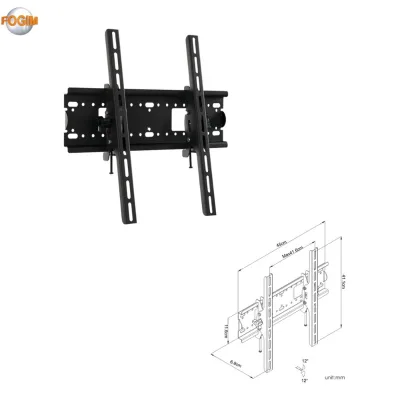


$2.80 - $3.20
MOQ: 100 Pieces


Comprehensive Sourcing Guide
Strategic Sourcing Guide for TV Mounts
Understanding Product Categories and Technical Specifications
The global market for television mounting solutions offers a diverse array of products designed to accommodate various screen sizes, weights, and installation environments. When sourcing these items, buyers must first distinguish between the primary functional categories available. The supply data indicates a clear segmentation between fixed, tilt, and full-motion architectures. Fixed mounts, characterized by their static nature, are often selected for their simplicity and cost-efficiency, providing a secure, low-profile installation where the screen remains flush against the wall. In contrast, adjustable and full-motion variants offer dynamic flexibility, allowing for tilt angles typically ranging from +5 to -15 degrees, and swivel capabilities that can extend up to 180 degrees. These features are critical for environments where viewing angles vary or where the screen must be pulled away from the wall to manage cabling or improve sightlines.
A critical technical parameter in this category is the VESA mounting standard, which dictates the compatibility between the mount and the television. The observed specifications highlight standard patterns such as 200x200mm and 400x400mm. Buyers must verify that the specific mount model aligns with the VESA hole pattern of their target screens. Furthermore, the load-bearing capacity is a non-negotiable safety metric. The available data points to maximum loading weights ranging from 20kg to 35kg (approximately 44lbs to 77lbs). Selecting a mount with a capacity exceeding the actual weight of the television is essential to prevent structural failure. The recommended screen sizes vary significantly across the product range, spanning from compact 13-25 inch displays to large-format screens up to 100 inches. This variance necessitates a precise mapping of the intended screen size to the specific model number, such as CT-LCD-MU101 or CT-LCD-T3101X, to ensure optimal performance.
Material Composition and Structural Integrity
The longevity and safety of a TV Mount are heavily dependent on the materials used in its construction. The supply chain data reveals a heterogeneous mix of materials, including steel, aluminum, metal alloys, acrylic, carbon fiber, nylon, PET, silicone, and wood or bamboo composites. Steel and aluminum are the predominant choices for the primary structural arms and brackets due to their high tensile strength and resistance to deformation under load. The presence of nylon and silicone components often indicates the use of high-friction washers or protective padding, which helps in securing the television and preventing scratches on the screen bezel.
When evaluating material quality, buyers should look for evidence of corrosion resistance, particularly for installations in humid environments or coastal regions. The "Black" color attribute observed in the product listings suggests a standard powder-coated finish, which is common for steel components to enhance durability and aesthetic appeal. However, the inclusion of materials like acrylic or wood/bamboo may indicate a focus on interior design integration, where the mount serves as a decorative element rather than purely a functional fixture. It is imperative to verify that the structural load-bearing elements are made of high-grade metal rather than plastic, even if the outer casing or decorative plates utilize other materials. The "Carbon fiber" mention in the material list suggests high-end, lightweight options, but these must be scrutinized for their actual load-bearing claims against the standard steel or aluminum alternatives.
Compliance, Standards, and Safety Verification
In the absence of explicit certification data in the provided product descriptions, buyers must adopt a rigorous verification protocol regarding safety and compliance. While the text references specific standard dimensions like 200200mm and 400400mm, these refer to VESA mounting patterns rather than safety certifications. Buyers should not assume that a product listing a specific model number automatically meets international safety standards such as UL, CE, or ISO. The responsibility lies with the procurement team to request valid test reports and certification documents from the supplier before finalizing an order.
Safety verification should focus on the structural integrity of the mount under dynamic loads, including the stress of tilting and swiveling. The "Full Motion" attribute implies a complex mechanical system with multiple pivot points, each of which must be tested for fatigue and stability. Buyers should inquire about the specific testing protocols used to validate the "Max Loading Weight" claims. For instance, a mount rated for 35kg should ideally undergo testing at 1.5 to 2 times that load to ensure a safety factor. Additionally, the "TV to Wall" distance, which can range from 65mm to 395mm, must be verified to ensure that the mount does not compromise the structural integrity of the wall anchor points. The origin of the product, noted as China (specifically Guangzhou and Zhejiang), suggests a need for careful due diligence regarding the manufacturing quality control processes employed by the specific factory.
Cost Drivers and Pricing Dynamics
The pricing for TV mounts is influenced by a complex interplay of factors, including material costs, mechanical complexity, and order volume. The observed price range in the market spans from $0.69 to $312, a disparity that reflects the vast difference between basic fixed brackets and high-end, full-motion articulating systems. The lower end of the spectrum likely corresponds to simple, fixed steel mounts with minimal features, while the higher prices are associated with models featuring advanced articulation, premium materials like carbon fiber, or specialized designs for large-screen applications.
Order volume is a significant determinant of unit cost. The data indicates a Minimum Order Quantity (MOQ) of 1000 pieces for certain standard items, while other listings note that "Small Orders" are accepted with an MOQ as low as 1 piece. This suggests a tiered pricing structure where bulk purchases yield significant per-unit savings. Buyers must balance the need for inventory against the capital tied up in stock. The packaging requirements, such as "Gift Box" or "Carton" configurations, also impact the final landed cost. A "Gift Box" implies a retail-ready presentation, which adds to the packaging cost but may be necessary for direct-to-consumer sales channels. Conversely, bulk "Carton" packaging, often containing 20 pieces per carton, is more cost-effective for wholesale distribution. The "Deliverty Time" of 15-30 days is a standard lead time that buyers must factor into their supply chain planning, especially when managing seasonal demand spikes.
Supplier Evaluation and Operational Capabilities
Selecting the right supplier requires a comprehensive evaluation of their operational capabilities and track record. The supply data lists specific model numbers and brand names like "CHARMOUNT," which can serve as identifiers for potential partners. However, buyers should not rely solely on brand recognition. Instead, they should assess the supplier's ability to provide consistent quality across different product lines. The presence of multiple model numbers, such as CT-LCD-T3201SX and CT-PLB-E801G, indicates a manufacturer with a broad portfolio, which can be advantageous for sourcing a complete range of mounting solutions.
Key evaluation criteria should include the supplier's response to customization requests. The data confirms that "Customization" is available, allowing buyers to tailor products to specific market needs, such as unique color finishes or specialized packaging. The ability to accommodate small orders alongside large volume production is another critical factor, as it demonstrates supply chain flexibility. Buyers should also verify the "prod_origin" details, distinguishing between general "China" origins and specific manufacturing hubs like "Guangzhou" or "Zhejiang," which may have different industrial ecosystems and labor standards. Finally, the "Package" and "Carton Package" specifications should be reviewed to ensure they meet the logistical requirements of the buyer's distribution network, minimizing damage during transit and optimizing storage efficiency.
Quality Control and Long-Term Procurement Strategy
Implementing a robust quality control (QC) strategy is essential for mitigating risks associated with TV Mount procurement. Given the safety implications of mounting heavy screens, buyers should establish clear acceptance criteria before production begins. This includes verifying the material composition, checking the finish quality for defects like scratches or uneven coating, and testing the mechanical movement of tilt and swivel mechanisms. The "Cable Management" feature, noted as "Include" in some listings, should be inspected to ensure it functions effectively and does not interfere with the mount's stability.
For long-term procurement, buyers should focus on building a relationship with suppliers who demonstrate a commitment to continuous improvement and quality assurance. The "15-30 days" delivery time suggests a need for accurate forecasting to avoid stockouts. Establishing a consistent order schedule can help secure better pricing and prioritize production slots. Additionally, buyers should consider the lifecycle of the product; a mount that is durable and resistant to wear will reduce the need for replacements and minimize liability issues. Regular audits of the supplier's production line and periodic sampling of finished goods can help maintain high standards. By treating product attributes as observations rather than guaranteed claims, buyers can maintain a critical eye on the actual performance of the products they source, ensuring that the final installation meets both safety and aesthetic expectations.
Application Scenarios and Market Fit
The versatility of TV mounts allows them to serve a wide range of applications, from residential living rooms to commercial spaces. The "Modern" and "Classic" style attributes indicate that these products are designed to fit various interior design themes. Fixed mounts are ideal for permanent installations in bedrooms or offices where the viewing angle is fixed. Tilt mounts are particularly useful in areas where the screen is mounted high above eye level, allowing the viewer to adjust the angle for comfort. Full-motion mounts are best suited for commercial environments like bars, restaurants, or conference rooms where the screen needs to be visible from multiple angles.
The "Recommend Screen Size" data, which ranges from 14 inches to 100 inches, highlights the scalability of these solutions. Small screens are often used in retail displays or kitchen setups, while large screens are common in home theaters and public venues. The "Loading Capacity" of 25kg to 35kg suggests that these mounts are suitable for most consumer-grade televisions, but for ultra-large commercial displays, buyers must ensure the specific model can handle the weight. The "Angle" and "Swivel" specifications further refine the suitability for different environments. For instance, a 180-degree swivel is essential for spaces where the screen must be rotated to face different zones. By matching the technical specifications to the specific application, buyers can ensure that the sourced products deliver optimal value and performance in their intended use cases.
FAQs
What customization options are available for tv mounts?
Customization is available for these tv mounts to meet specific buyer requirements. Buyers can request tailored finishes or packaging, such as gift boxes or standard cartons, to align with their brand or distribution needs.
Which screen sizes are compatible with the recommended tv mounts?
The recommended screen sizes range from 14 to 100 inches depending on the specific model. Options include sizes like 14-32 inches, 26-50 inches, and up to 50-100 inches for larger displays.
Can I find tv mounts with adjustable angles and swivel capabilities?
Yes, adjustable and full-motion tv mounts are available with tilt and swivel features. Some models offer a tilt range of +5 to -15 degrees and a swivel capability of up to 180 degrees.
What is the maximum loading capacity for these tv mounts?
The maximum loading capacity varies by model, ranging from 20kg to 35kg. Specific units support weights like 25kg or 35kg, ensuring safety for screens up to 77lbs.
How long is the delivery time for bulk TV Mount orders?
The standard delivery time is 15 to 30 days for most orders. This lead time applies to production and shipping, though it may vary based on order volume and customization requests.
What materials are used to construct these tv mounts?
Materials include steel, aluminum, metal alloys, and composites like carbon fiber or wood. These materials ensure structural integrity, with steel and aluminum being predominant for load-bearing arms.
Are small orders accepted for TV Mount purchases?
Small orders are accepted for some models, allowing flexibility for buyers with lower volume needs. While some standard items have an MOQ of 1000 pieces, others accommodate smaller quantities.