Source Ultrasonic Fingerprint Sensor Module for Security, Access, and Biometrics
Source the Ultrasonic Fingerprint Sensor Module for secure access control, biometric authentication, and identity verification. Compare 30 available options featuring analog or digital outputs, various detection ranges, and customizable packaging to find the right fit for your hardware needs; compare the available evidence and request quotations based on your requirements.
Key considerations
Products List


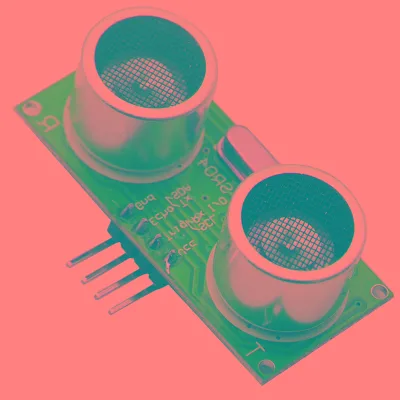


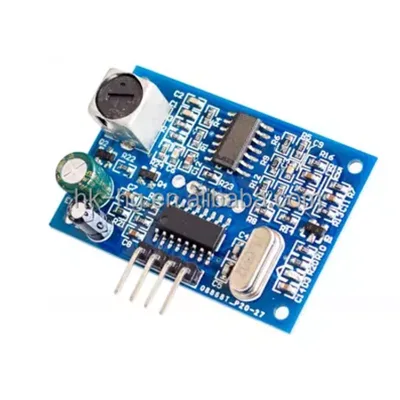
Comprehensive Sourcing Guide
Ultrasonic Fingerprint Sensor Module Sourcing Guide
Procuring ultrasonic fingerprint sensor modules requires a nuanced understanding of both the underlying transducer technology and the specific integration requirements of modern biometric systems. Unlike optical or capacitive alternatives, ultrasonic sensors utilize high-frequency sound waves to map the three-dimensional topography of a fingerprint, offering superior security against spoofing attempts using fake materials. Buyers must recognize that while the core keyword suggests a specific module form factor, the actual market listings often reveal a broader spectrum of components, including raw transducers, complete sensor arrays, and associated signal processing units. This diversity means that sourcing strategies must be flexible enough to accommodate different stages of product development, from initial prototyping to mass production.
The observed market data indicates a wide variance in product specifications, with detection ranges extending from short distances up to several meters, and operating voltages ranging from low-power DC5V to industrial 12VDC standards. This variability underscores the importance of precise requirement definition before engaging with suppliers. Buyers should not assume that all listed items are direct replacements for one another; rather, they must evaluate each listing against their specific mechanical and electrical constraints. The presence of both analog and digital output types further complicates the selection process, necessitating a clear understanding of the host system’s interface capabilities to ensure seamless integration and reliable performance in the final application.
Product Scope and Observed Listing Signals
The current market landscape for ultrasonic sensing components reveals a significant divergence between specialized biometric modules and general-purpose distance or level sensors. While the core search term points toward fingerprint identification, many available listings describe products with detection ranges of 30 to 150 centimeters or even up to 3 meters, which are typical for industrial liquid level transmitters or proximity detection rather than high-resolution biometric imaging. Buyers must carefully distinguish between these applications, as the resolution and sensitivity requirements for fingerprint scanning are vastly different from those for bulk object detection. The presence of models labeled with generic identifiers like "Hc-Sr04" or broad frequency ranges suggests a market saturated with general-purpose ultrasonic transducers that may not possess the necessary precision for secure biometric authentication.
Furthermore, the observed product attributes highlight a mix of customization options and standardized packaging, indicating that suppliers often offer both off-the-shelf components and tailored solutions. Some listings specify a production process involving ceramics, which is common for durable ultrasonic transducers, while others mention photosensitive resin shells, potentially indicating different housing materials or protective layers. The variation in packing quantities, ranging from single units to packages of 2000 pieces, suggests that suppliers cater to both small-scale prototyping and large-volume manufacturing needs. Buyers should interpret these signals as evidence of a fragmented supply chain where product standardization is low, requiring rigorous verification of each component’s actual capabilities against the specific demands of a fingerprint sensor application.
Technical Specifications to Verify
When evaluating ultrasonic components for fingerprint sensing, the most critical technical parameter is the frequency of operation, as higher frequencies generally provide better resolution for detailed ridge and valley mapping. The observed listings mention frequencies such as 2MHz and 300KHz, which represent vastly different performance profiles; buyers must verify which frequency aligns with the required image clarity and penetration depth for their specific use case. Additionally, the output signal type, whether analog or digital, dictates the complexity of the downstream processing required. Digital outputs simplify integration with microcontrollers but may lack the raw data fidelity needed for advanced algorithmic processing, whereas analog signals offer more flexibility but require additional hardware for conversion and noise filtering.
Other essential specifications include the operating voltage, quiescent current, and effective angle, all of which impact the power budget and field of view of the final device. Listings indicate operating voltages of 5VDC and 12VDC, with quiescent currents under 2mA, suggesting that low-power designs are feasible but require careful power management. The effective angle, noted as less than 15 degrees in some contexts, is crucial for ensuring that the sensor captures a focused and undistorted image of the fingerprint. Buyers must also consider the resolution, with some specifications citing values like 0.3 cm, which may be insufficient for high-security biometric applications requiring millimeter-level detail. Verifying these parameters against the specific requirements of the biometric algorithm is essential to avoid performance bottlenecks in the final product.
Compliance and Safety Documentation
Regulatory compliance is a non-negotiable aspect of sourcing electronic components, particularly those intended for consumer-facing biometric devices. The observed listings include references to RoHS and CE certifications, which are fundamental for ensuring that the materials used in the sensor modules do not exceed restricted substance limits and meet European safety standards. Buyers must request valid certification documents from suppliers to verify that these claims are legitimate and up-to-date, as counterfeit or expired certificates are a common risk in the global electronics supply chain. Compliance with these standards not only facilitates market access in regulated regions but also demonstrates a commitment to environmental responsibility and product safety, which can be a significant differentiator in competitive markets.
Beyond basic certifications, buyers should investigate whether the suppliers adhere to specific industry standards for biometric data security and privacy, although these are not explicitly listed in the provided facts. The mention of customizable standards suggests that some suppliers may offer flexibility in meeting specific regional or industry requirements, but this should be treated as a potential capability rather than a guaranteed feature. It is crucial to ensure that the sensor modules do not introduce additional compliance burdens, such as electromagnetic interference issues, by verifying that the components meet relevant EMC directives. Engaging with suppliers who have a robust quality management system and transparent documentation practices helps mitigate the risk of non-compliance and ensures that the sourced components can be legally and safely integrated into the final product.
Cost Drivers and Commercial Terms
The cost structure of ultrasonic sensor modules is influenced by several factors, including the complexity of the transducer design, the type of output signal, and the volume of the order. The observed price range of 0.1 to 399 USD reflects this variability, with lower prices likely corresponding to basic, non-customized transducers and higher prices associated with specialized, high-resolution modules or those with additional integrated circuitry. Buyers should be aware that the minimum order quantity (MOQ) can significantly impact the unit price, with MOQs ranging from 1 to 50 pieces. For prototyping, higher per-unit costs may be acceptable, but for mass production, negotiating volume discounts and lower MOQs is essential to maintain profitability.
Commercial terms also play a critical role in the total cost of ownership, including shipping, packaging, and potential customization fees. The observed packing specifications, such as 1000 to 2000 pieces per package, suggest that suppliers are optimized for bulk handling, which can reduce packaging costs but may require buyers to have adequate storage and inventory management capabilities. Additionally, the availability of customization services, as indicated by the "Customization: Available" attribute, may incur additional setup fees or longer lead times. Buyers should clarify all potential extra costs upfront, including tooling charges for custom housings or firmware modifications, to avoid unexpected expenses during the procurement process. Understanding these cost drivers allows for more accurate budgeting and more effective negotiation with suppliers.
Supplier Qualification and Quality Control
Selecting a reliable supplier for ultrasonic sensor modules requires a thorough assessment of their manufacturing capabilities and quality control processes. The observed production process involving ceramics suggests that some suppliers have specialized expertise in transducer fabrication, which is a positive indicator of technical competence. Buyers should verify the supplier’s experience in producing components for biometric or high-precision applications, as this experience often correlates with better quality consistency and technical support. Additionally, the mention of a warranty period of one year for some products indicates that suppliers stand behind their quality, but buyers should clarify the terms of this warranty, including coverage for defects and return procedures.
Quality control measures should be a key part of the supplier evaluation, including in-process inspections and final testing protocols. Buyers should inquire about the supplier’s defect rate and their methods for ensuring consistency across batches, especially given the observed variability in product specifications. The presence of a brand name, such as "JYWD," and a specific place of origin, like Guangdong, China, provides some traceability, but buyers should not rely solely on these identifiers. Instead, they should conduct due diligence by requesting sample units for testing, reviewing the supplier’s quality management certifications, and potentially conducting factory audits. Establishing a strong relationship with a supplier who prioritizes quality and transparency is essential for ensuring the long-term reliability of the sourced components.
Long-Term Procurement Checks
Sourcing ultrasonic sensor modules is not a one-time transaction but an ongoing relationship that requires continuous monitoring and evaluation. Buyers should establish key performance indicators (KPIs) to track supplier performance over time, including on-time delivery rates, product quality metrics, and responsiveness to technical queries. The observed variability in product models and specifications suggests that suppliers may frequently update their offerings, so buyers must stay informed about new developments and potential obsolescence risks. Regularly reviewing the supplier’s product portfolio and engaging in strategic discussions about future needs can help ensure that the sourced components remain aligned with the buyer’s evolving product requirements.
Additionally, buyers should maintain a diversified supplier base to mitigate supply chain risks, such as geopolitical disruptions or raw material shortages. The observed origin of products in China highlights the importance of having alternative sourcing options, particularly if the buyer operates in regions with trade restrictions or high tariffs. Building a robust supply chain also involves fostering open communication with suppliers regarding market trends, capacity constraints, and potential improvements in technology. By proactively managing these relationships and continuously evaluating supplier performance, buyers can ensure a stable and cost-effective supply of ultrasonic sensor modules, supporting the long-term success of their biometric products.
FAQs
What is the detection range for the large range ultrasonic sensor?
The large range ultrasonic sensor offers a detection range of 30 to 150 cm. This specific model utilizes a dual probe design to ensure accurate measurements. It is suitable for applications requiring extended distance monitoring. The sensor operates with high sensitivity to detect targets effectively within this defined range.
Can the ultrasonic sensor shell color be customized for branding?
Yes, the shell color is fully customizable to meet specific branding requirements. The product attributes indicate that customization is available for the exterior appearance. This allows buyers to align the sensor's visual identity with their corporate standards or project specifications without compromising functionality.
Which certification does the ultrasonic sensor module hold for compliance?
The ultrasonic sensor module holds RoHS and CE certifications for regulatory compliance. These certifications ensure the product meets strict environmental and safety standards. Buyers can rely on these documented credentials for international trade and deployment in regulated industries. The certifications are verified attributes of the supplied product.
How is the HC-SR04 ultrasonic module powered and what is its current draw?
The HC-SR04 ultrasonic module is powered by a DC 5V supply. Its quiescent current is less than 2mA, while the working current is approximately 15mA. This low power consumption makes it efficient for battery-operated or energy-sensitive applications. The module outputs a 5V signal for digital interfacing with microcontrollers.
What is the accuracy and resolution of the split type ultrasonic sensor?
The split type ultrasonic sensor provides an accuracy of 0.25% and a resolution of 0.3 cm. It features a measuring angle of 30 degrees for precise targeting. The device is designed as a liquid level transmitter with a range of 0 to 3 meters. This high precision supports detailed measurement requirements in industrial settings.
What is the minimum order quantity for the packaged ultrasonic sensors?
The minimum order quantity varies by packaging configuration, ranging from 1 to 50 units. Specific packages contain 1000, 1300, or 2000 pieces per package. Buyers can select the packaging option that best fits their inventory needs. The flexible MOQ allows for both small-scale testing and large-volume procurement.