Source Ultrasonic Fuel Injector Cleaner for Auto Repair
Find and compare 30 Ultrasonic Fuel Injector Cleaner models from Chinese manufacturers. Evaluate specifications like tank capacity, power, and material to select the right equipment for automotive maintenance and hardware cleaning tasks.
Key considerations
Products List


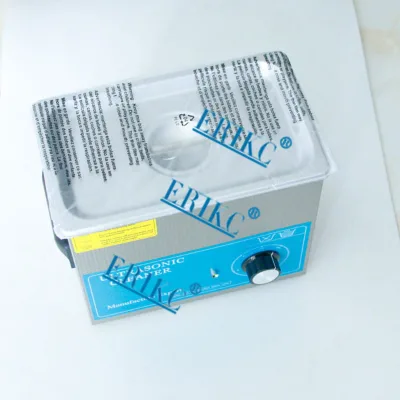


Sweep Ultrasonic Cleaner Washing Equipment Fuel Injector Cleaning Machine
$3600.00 - $5500.00
MOQ: 1 Pieces


Car Engine Injection Test Machine Best Ultrasonic Fuel Injector Cleaner
$20.00 - $2000.00
MOQ: 1 Pieces

Ultrasonic Fuel Injector Cleaning Machine Car Petrol Injector Cleaner & Tester
$306.00 - $322.00
MOQ: 1 Pieces


Ultrasonic Fuel Injector Tester Cleaner for Petrol Vehicle 220V 6-Cylinde
$306.00 - $322.00
MOQ: 1 Pieces


Comprehensive Sourcing Guide
Ultrasonic Fuel Injector Cleaner Sourcing Guide
Sourcing industrial-grade ultrasonic fuel injector cleaners requires a nuanced understanding of both the cleaning technology and the specific operational needs of your facility. These machines utilize high-frequency sound waves to generate cavitation bubbles in a liquid medium, which implode with enough force to dislodge contaminants from complex geometries like fuel injectors. The procurement process involves evaluating a diverse range of equipment, from compact benchtop units suitable for small workshops to large-capacity industrial systems designed for high-volume production lines. Buyers must navigate a market where specifications vary significantly, ensuring that the selected equipment aligns with their throughput requirements, cleaning precision standards, and budget constraints.
The observed market data indicates a wide spectrum of available options, with product counts reaching thirty distinct listings and price ranges extending from approximately $0.80 to $17,000 USD. This variance reflects differences in tank capacity, ultrasonic power, automation levels, and material construction. Minimum Order Quantities (MOQs) also fluctuate, ranging from single-unit purchases to batches of five hundred, suggesting that suppliers cater to both individual technicians and large-scale manufacturing operations. Understanding these market signals is crucial for setting realistic expectations regarding lead times, customization options, and total cost of ownership, allowing procurement teams to make informed decisions based on their specific operational scale.
Product Scope and Observed Listing Signals
The product landscape for ultrasonic fuel injector cleaners is characterized by a mix of standardized and customizable solutions. Many listings highlight the availability of customization, allowing buyers to tailor voltage options, tank capacities, and timer settings to their specific power infrastructure and workflow requirements. For instance, some models offer mechanical timers ranging from one to thirty minutes, providing precise control over the cleaning cycle duration. Others emphasize automatic operation, reducing manual intervention and enhancing consistency in high-volume environments. The presence of customized features suggests that suppliers are flexible in adapting their base designs to meet unique client needs, such as specific groove sizes or tank dimensions.
Material construction and physical dimensions are critical differentiators in this category. Stainless steel, particularly SUS304 or 304 grade, is a common material for tank construction due to its corrosion resistance and durability, which is essential when dealing with various cleaning agents and fuels. Tank capacities vary widely, with observed options including small 2-liter units for precision cleaning and larger 30-liter tanks for industrial-scale operations. The physical footprint of these machines also differs, with some compact units measuring around 175x160x210 mm, while larger industrial models may have significantly greater dimensions. Buyers should carefully assess the available space in their facility and the volume of injectors to be cleaned to select the appropriate size and capacity.
Technical Specifications to Verify
Ultrasonic power and frequency are primary technical indicators of cleaning effectiveness. The observed data includes models with 60W ultrasonic power, which is typical for smaller, precision-focused units. However, for larger tanks or heavier contamination, higher power outputs may be necessary to ensure thorough cleaning. Buyers should verify the ultrasonic power rating relative to the tank volume to ensure adequate cavitation intensity. Additionally, the principle of cleaning is physical, relying on the mechanical action of cavitation rather than chemical reactions, although compatible cleaning media are often used to enhance the process. Understanding the relationship between power, frequency, and tank size is essential for achieving the desired cleaning precision, whether it is general industrial cleaning or ultra-precision work.
Tank size and groove dimensions are critical for accommodating different types of fuel injectors. Some listings specify groove sizes such as 17.2x16x9.5 cm, which may be designed to hold specific injector configurations securely during the cleaning process. The overall tank dimensions, such as 150x135x100 mm for smaller units, must be compatible with the physical size of the components being cleaned. Furthermore, the voltage options, including 110/220V, must match the local power supply to ensure safe and efficient operation. Buyers should also consider the timer functionality, with mechanical timers offering a simple and reliable way to control cleaning cycles, ensuring consistent results across multiple batches.
Compliance and Safety Documentation
Certification and standard compliance are vital for ensuring that the purchased equipment meets international safety and quality benchmarks. The observed listings include certifications such as CE, RoHS, and FCC, which indicate adherence to specific regulatory requirements in various markets. CE marking, for example, is essential for selling and using equipment within the European Economic Area, signifying that the product meets EU safety, health, and environmental protection requirements. RoHS compliance ensures that the equipment is free from certain hazardous substances, which is increasingly important for environmentally conscious procurement. Buyers should request and verify these certifications to ensure that the equipment is legally compliant and safe for use in their respective regions.
Quality management standards also play a significant role in supplier evaluation. Some listings reference ISO 9001:2000 and ISO/TS 16949, which are indicators of a supplier’s commitment to quality management systems. ISO 9001 focuses on general quality management principles, while ISO/TS 16949 is specific to the automotive industry, suggesting that the supplier may have experience in meeting the rigorous demands of automotive manufacturing. While these standards provide a baseline for quality assurance, buyers should also inquire about the supplier’s internal quality control processes, including testing procedures for ultrasonic output and tank integrity. Verifying these standards helps mitigate risks associated with equipment failure and ensures that the cleaning process meets the required precision levels.
Cost Drivers and Commercial Terms
The price range of ultrasonic fuel injector cleaners is influenced by several factors, including tank capacity, ultrasonic power, material quality, and automation features. Smaller, less powerful units with basic features tend to be more affordable, while larger, industrial-grade machines with advanced automation and higher power outputs command premium prices. The observed price range of $0.80 to $17,000 USD reflects this diversity, with the lower end likely representing small, manual units and the higher end corresponding to large, automated systems. Buyers should consider the total cost of ownership, including energy consumption, maintenance requirements, and potential downtime, rather than just the initial purchase price.
Commercial terms such as MOQ, lead time, and packaging also impact the overall procurement strategy. MOQs ranging from 1 to 500 units allow for flexibility, enabling buyers to start with small orders for testing or scale up for larger operations. Lead times, such as the observed 15-day delivery time, should be factored into production planning to avoid delays. Packaging details, including standard packing or carton options, and package dimensions, are important for logistics and storage considerations. Buyers should negotiate clear terms regarding shipping, insurance, and warranty coverage to protect their investment and ensure a smooth procurement process.
Supplier Qualification and Quality Control
Supplier origin and manufacturing capabilities are key indicators of product reliability. The observed listings indicate origins in Zhejiang and Guangdong, China, regions known for their robust manufacturing infrastructure and expertise in industrial equipment production. Buyers should assess the supplier’s production capacity, quality control processes, and after-sales support to ensure they can meet their requirements consistently. Requesting samples or conducting factory audits can provide valuable insights into the supplier’s capabilities and commitment to quality. Additionally, verifying the supplier’s experience in the ultrasonic cleaning industry can help gauge their ability to provide technical support and troubleshooting assistance.
Quality control measures should be clearly defined and agreed upon before placing an order. This includes specifications for material thickness, weld quality, and ultrasonic transducer performance. Buyers should inquire about the testing procedures used to verify the cleaning efficiency and durability of the equipment. Documentation such as test reports, material certificates, and inspection records can provide evidence of quality compliance. Establishing a clear communication channel with the supplier for addressing any quality issues or discrepancies is also essential for maintaining a productive relationship and ensuring that the equipment meets the specified standards.
Long-Term Procurement Checks
Sustainability and environmental impact are increasingly important considerations in procurement. Many listings highlight features such as eco-friendly operation, which may relate to energy efficiency or the use of environmentally benign cleaning agents. Buyers should evaluate the energy consumption of the equipment, particularly for high-power units, to assess their long-term operational costs and environmental footprint. Additionally, considering the compatibility of the equipment with various cleaning media can help optimize the cleaning process and reduce waste. Selecting equipment that aligns with sustainability goals can enhance the company’s reputation and contribute to regulatory compliance.
Maintenance and serviceability are critical for ensuring the longevity and performance of ultrasonic fuel injector cleaners. Buyers should inquire about the availability of spare parts, such as transducers and generators, and the ease of accessing these components for repair or replacement. Understanding the recommended maintenance schedule, including cleaning of the tank and inspection of electrical connections, can help prevent unexpected downtime and extend the equipment’s lifespan. Establishing a relationship with the supplier for ongoing technical support and training can also ensure that operators are proficient in using and maintaining the equipment, maximizing its value over time.
FAQs
What is the cleaning process for this fuel injector cleaner?
The cleaning process utilizes physical ultrasonic cleaning to remove dust, oil, and grime thoroughly. This method ensures precision industrial cleaning without damaging sensitive components, making it suitable for gasoline fuel injectors.
Can the voltage be customized to meet specific requirements?
Yes, the voltage option is available as your specific requirement to ensure compatibility with local power standards. The device supports 110V or 220V power supply configurations to accommodate diverse operational environments.
What is the delivery time for orders of this machine?
The delivery time is typically within 15 days after order confirmation. This lead time applies to standard production runs and ensures timely shipment of the fuel injector ultrasonic cleaner to your location.
Which certifications does the ultrasonic cleaner machine hold?
The machine holds CE, RoHS, and FCC certifications to ensure safety and compliance. It also adheres to ISO 9001:2000 and ISO/TS 16949 standards for quality management in industrial manufacturing processes.
How is the tank capacity configured for different cleaning needs?
Tank capacity varies by model, with options ranging from 2 liters to 30 liters available. This flexibility allows users to select a unit that matches their specific hardware cleaning volume and production scale requirements.
What material is used to construct the cleaning tank?
The tank is constructed from 304 stainless steel to ensure durability and corrosion resistance. This material choice supports long-term use in wet cleaning environments while maintaining hygiene and structural integrity.
Is customization available for the ultrasonic cleaner specifications?
Customization is available for certain models to meet unique industrial requirements. Buyers can request specific adjustments to dimensions or features, although some standard models are sold as non-customized units.