Source USB Fiber Optic Power Meter for Testing, Monitoring, and Maintenance
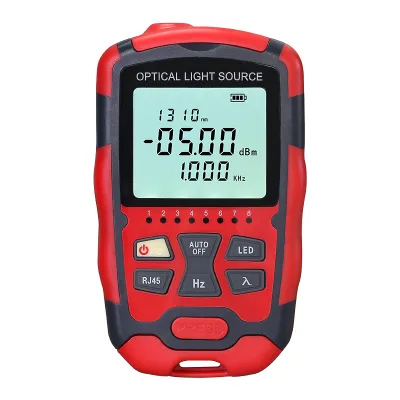
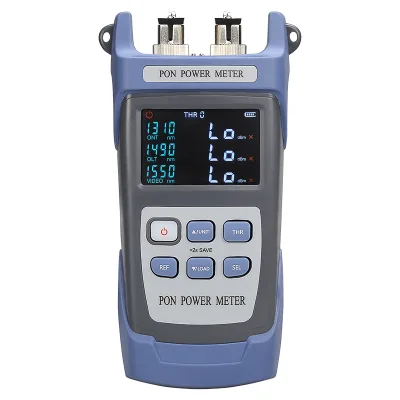
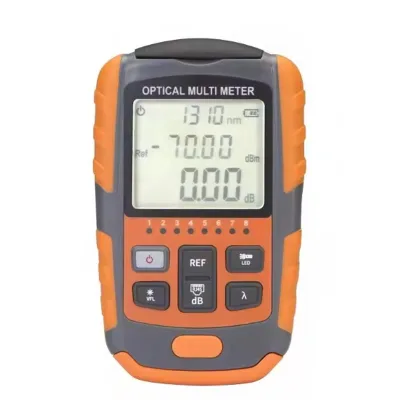
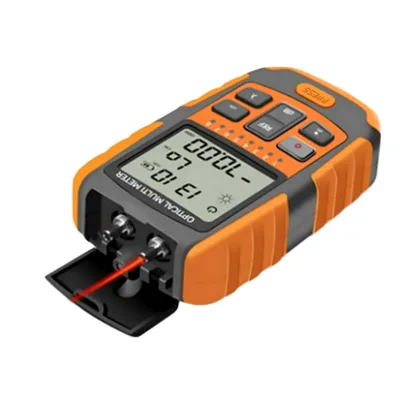
Find a USB Fiber Optic Power Meter among 30 listings from Chinese manufacturers. Buyers can compare models like T-OP300 and T-PO3213 series with features such as FC/PC connectors, wide wavelength support, and portable designs for fiber link testing.
Key considerations
Products List


$25.00 - $40.00
MOQ: 1 Pieces

$40.00 - $60.00
MOQ: 1 Pieces

$150.00 - $180.00
MOQ: 1 Pieces


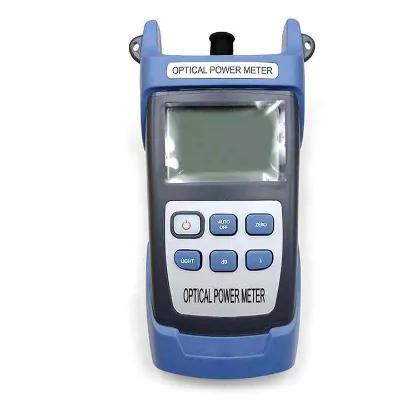
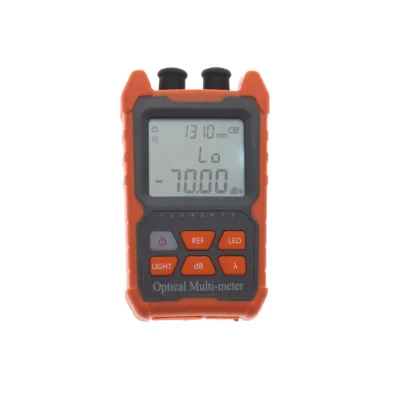
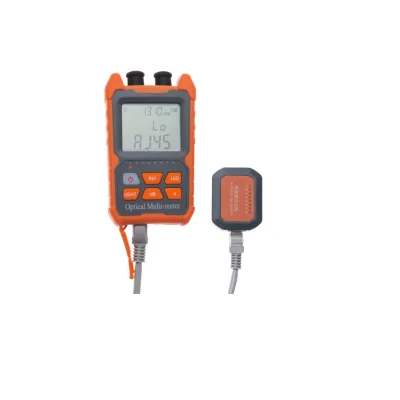

Comprehensive Sourcing Guide
Strategic Sourcing Guide for USB Fiber Optic Power Meters
The procurement of fiber optic power meters, particularly those featuring USB connectivity for enhanced data management and integration, requires a disciplined approach to ensure technical compatibility and supply chain reliability. Buyers entering this market must navigate a landscape where specifications vary significantly between models, and the distinction between generic testing tools and calibrated, application-specific instruments is critical. This guide provides a structured framework for evaluating potential suppliers and products, grounded in observed market data and essential technical criteria. The focus remains on the T-OP300 series and similar digital optic fiber power meters, which represent a significant segment of the available inventory for network testing and link verification.
Technical Specifications and Operational Capabilities
When sourcing a USB Fiber Optic Power Meter, the primary technical evaluation must center on measurement accuracy, wavelength coverage, and detector technology. The core function of these devices is to measure optical power levels within fiber links, and the precision of these measurements directly impacts the reliability of network diagnostics. Observed specifications for high-confidence models indicate a measurement range spanning from -70 dBm to +26 dBm, with specific configurations offering a range of -50 dBm to +26 dBm. This wide dynamic range is essential for testing both low-power signals in long-haul transmission and high-power outputs in short-reach applications.
Accuracy is another non-negotiable parameter. Market observations suggest that reliable units typically offer an accuracy of ±0.2 dB. For procurement purposes, buyers should verify that the device maintains this tolerance across the full operating temperature range, which is often cited between -10°C and +60°C. The detector type is equally critical; Ingaas (Indium Gallium Arsenide) detectors are the industry standard for this application due to their superior linearity and sensitivity in the near-infrared spectrum. The operating wavelength range for these devices generally covers 800 nm to 1700 nm, ensuring compatibility with standard fiber optic bands.
Specific calibrated wavelengths are often pre-set for common telecommunication applications. Buyers should look for models that explicitly support calibration at 850 nm, 1300 nm, 1310 nm, 1490 nm, 1550 nm, and 1625 nm. These specific points allow for precise testing of PON (Passive Optical Network) systems and single-mode fiber links. Furthermore, the resolution of the device, often observed at 0.01 dB, determines the granularity of the data presented to the technician. A USB interface facilitates the transfer of this high-resolution data to a PC for detailed analysis, a feature that distinguishes modern digital meters from older analog counterparts.
Compliance, Certification, and Regulatory Standards
In the B2B procurement of electronic test equipment, compliance with international standards is a prerequisite for market entry and operational safety. Buyers must verify that the product carries recognized certifications. Observed data indicates that compliant models often hold ISO and CE certifications, with some units also meeting RoHS (Restriction of Hazardous Substances) requirements. These certifications ensure that the device is safe for use in various environments and does not contain restricted hazardous materials.
Beyond general safety, specific industry standards may apply depending on the application sector. For instance, some products reference standards such as SGS, CSI, and ISO9000, which relate to quality management systems and product safety. It is important to note that while ISO 17025 is a relevant standard for calibration laboratories, buyers should verify if the supplier's calibration process adheres to this standard rather than assuming the device itself is ISO 17025 certified. The product origin is also a factor in compliance; many observed units originate from manufacturing hubs in China, specifically Nanjing or Shanghai, where production facilities must adhere to local and export regulations.
Buyers should request documentation proving the validity of these certifications for the specific batch being purchased. The presence of a "CE" mark, for example, is a declaration that the product meets EU safety, health, and environmental requirements. Similarly, "ISO" certification implies adherence to international quality management standards. When evaluating a supplier, do not rely on marketing claims alone; request the actual certificate numbers and verify their status with the issuing body. This due diligence prevents the acquisition of non-compliant equipment that could lead to regulatory fines or operational failures in regulated industries such as telecommunications or medical sensing.
Cost Drivers and Procurement Economics
The pricing of fiber optic power meters is influenced by a complex matrix of factors, including the complexity of the optical engine, the quality of the display, data storage capabilities, and the level of customization offered. Observed market data reveals a price range from $0.10 to $1,300 USD, a span that reflects the vast difference between basic handheld testers and sophisticated, multi-function instruments with advanced software integration. The lower end of this spectrum typically covers basic units with limited features, while the higher end includes models with built-in VFL (Visual Fault Locators), extensive data storage, and real-time monitoring capabilities.
Minimum Order Quantity (MOQ) is another critical economic factor. The observed MOQ range spans from 1 to 50 units. For small-scale procurement or pilot projects, suppliers offering an MOQ of 1 are preferable, allowing for cost-effective testing without significant inventory commitment. Conversely, for large-scale network deployments, buyers may negotiate lower unit costs by ordering within the 50-unit range or higher. Customization is a significant cost driver; options such as custom branding (OEM), specific connector types, or tailored wavelength calibrations will increase the unit price and potentially the lead time.
Buyers must also consider the total cost of ownership, which includes the cost of consumables like adapters and the longevity of the battery. Units with a battery life exceeding 100 hours, powered by a 1800mAh battery, offer better long-term value by reducing downtime and charging cycles. The inclusion of a built-in VFL, which can be 1mW, 10mW, or customized, adds value by allowing for simultaneous power measurement and fault location, potentially eliminating the need for a separate tool. When comparing suppliers, do not focus solely on the sticker price; evaluate the feature set, warranty terms, and the availability of spare parts to determine the true economic value.
Typical Applications and Use Cases
The versatility of USB fiber optic power meters makes them suitable for a diverse array of applications across multiple industries. The primary use case is fiber link testing, where the device measures the power loss in a fiber optic cable to ensure it meets design specifications. This is fundamental in the installation and maintenance of telecommunications networks, data centers, and enterprise LANs. The ability to store up to 40 traces of data allows technicians to document the history of a link, which is invaluable for troubleshooting intermittent faults or verifying performance over time.
Beyond standard telecommunications, these devices are utilized in the medical and sensor industries. The observed application list includes medicine, sensors, art, and probes, indicating that the technology is adaptable to specialized environments where precise optical measurement is required. In medical applications, for instance, fiber optics may be used for imaging or therapeutic devices, requiring high-precision power verification. The "Integrated Wiring" feature observed in some models suggests suitability for complex cabling environments where space is limited and connectivity is critical.
The portability of these units is a key advantage for field technicians. The compact dimensions, often around 1728233 mm, allow for easy transport to remote sites. The auto-power-off feature, which engages after 10 minutes of inactivity, helps conserve battery life during long field operations. Additionally, the option for real-time monitoring and data transfer via USB makes these devices ideal for integration into automated testing systems or for generating detailed reports for clients. Buyers should match the specific application requirements, such as the need for a built-in VFL or specific connector types, to the capabilities of the selected model.
Supplier Evaluation and Quality Control
Selecting the right supplier is as important as selecting the right product. Buyers should prioritize suppliers who demonstrate transparency regarding their manufacturing processes and quality control measures. The product origin, often listed as Nanjing or Shanghai, China, should be verified to ensure the supplier has a physical presence and established logistics in that region. The presence of "Integrated Wiring" and "Shielded Cable Type" in product descriptions suggests a focus on durability and signal integrity, which are indicators of a quality-focused manufacturer.
Quality control should be a central part of the evaluation process. Buyers must inquire about the calibration procedures used for the power meters. While the device may come with a certificate of calibration, the frequency of recalibration and the traceability of the calibration standards are critical. The "Test Region" of "Forming Cable" mentioned in some contexts suggests that the supplier may have specific testing protocols for cable assembly, which can be a valuable capability if the buyer requires integrated cable solutions.
When evaluating a supplier, look for evidence of their commitment to standards such as ISO9001, which governs quality management systems. The availability of customization options, such as "Wave ID" or "Data Transfer" features, indicates a flexible manufacturing process capable of meeting specific client needs. However, buyers should be cautious of suppliers who promise features that are not supported by the technical specifications. Always request samples for testing before placing a bulk order to verify that the actual product matches the advertised specifications regarding accuracy, resolution, and battery life.
Long-Term Procurement Considerations
Sourcing fiber optic power meters is not merely a one-time transaction but a long-term relationship that impacts operational efficiency. Buyers should consider the availability of spare parts, such as adapters and batteries, and the ease of replacing them. The "Standard Carton Packing" or "Customer Required" options indicate that the supplier is flexible regarding packaging, which can be important for logistics and storage. The "New" condition of the products ensures that buyers receive fully functional units, but the warranty terms should be clearly defined to cover potential defects.
Future-proofing is another consideration. As network speeds increase and new wavelengths are adopted, the ability of the power meter to support new standards becomes crucial. Models with a wide operating wavelength range (800-1700 nm) and support for multiple calibrated wavelengths offer better longevity. The option for "Customized" connectors and the availability of "Sc, St" as optional connectors provide flexibility for different fiber types.
Finally, buyers should consider the software ecosystem. The USB connectivity allows for data transfer to a PC, and the availability of software for analyzing the stored traces is a significant value-add. The "Real Time Monitor" feature suggests that the device can be integrated into live network monitoring systems. By choosing a supplier that supports robust software and regular updates, buyers can ensure their testing equipment remains relevant and effective for years to come. The "Portable" nature of the device, combined with its advanced features, makes it a strategic asset for any organization involved in fiber optic infrastructure management.
Comparative Analysis of Key Features
To assist in the decision-making process, the following table summarizes the key technical and operational attributes observed in the market for USB fiber optic power meters. This comparison highlights the critical differentiators that buyers should prioritize during the evaluation phase.
| Feature Category | Critical Specification | Observed Range/Value | Procurement Priority |
|---|---|---|---|
| Measurement Range | Power Measurement | -70 ~ +26 dBm / -50 ~ +26 dBm | High |
| Accuracy | Measurement Tolerance | ± 0.2 dB | High |
| Wavelengths | Calibrated Bands | 850, 1300, 1310, 1490, 1550, 1625 nm | High |
| Detector Type | Sensor Technology | Ingaas | High |
| Resolution | Display Precision | 0.01 dB | Medium |
| Connectivity | Interface & Adapters | USB, FC/PC, 2.5mm Upp (Sc, St Optional) | High |
| Battery Life | Operational Duration | > 100 Hours (1800mAh) | Medium |
| Data Storage | Trace Capacity | 40 Traces | Medium |
| Certifications | Compliance Standards | ISO, CE, RoHS, SGS, ISO9001 | High |
| Customization | Branding & Features | OEM, Built-in VFL, Wave ID | Low/Medium |
This table serves as a checklist for buyers to ensure that the selected product meets the minimum technical requirements for their specific application. By systematically evaluating each category against the observed data, procurement teams can make informed decisions that balance cost, performance, and reliability.
FAQs
What certifications do usb fiber optic power meters typically hold?
These devices typically hold ISO, CE, and RoHS certifications to ensure safety and compliance. Some models also meet SGS, CSI, and ISO9000 standards for quality management. Buyers should verify specific batch certificates to confirm regulatory adherence for their region.
How accurate are the power measurements on these digital meters?
High-confidence models offer an accuracy of ±0.2 dB across the operating range. The resolution is often 0.01 dB, allowing for precise readings. This tolerance is maintained within the specified operating temperature range of -10 to +60 degrees Celsius.
Which wavelengths are supported by the T-OP300 series power meters?
The T-OP300 series supports calibrated wavelengths at 850nm, 1300nm, 1310nm, 1490nm, 1550nm, and 1625nm. The general operating range spans from 800nm to 1700nm. This coverage ensures compatibility with standard single-mode and multi-mode fiber applications.
Can these meters be customized for specific connector types?
Yes, customization is available for connector types such as FC/PC, SC, and ST. Some models feature interchangeable 2.5mm Upp connectors. Buyers can also request custom branding or specific wavelength calibrations to meet unique project requirements.
What is the battery life for these portable fiber optic testers?
These units provide a battery life of above 100 hours powered by an 1800mAh battery. An auto-power-off feature engages after 10 minutes of inactivity to conserve energy. This ensures long-term reliability for field technicians without frequent recharging.
Where are these usb fiber optic power meters manufactured?
Manufacturing locations include Nanjing and Shanghai in China. Some products originate from Nanjing specifically, while others list Shanghai as the origin. Buyers should verify the specific factory location for shipping and compliance documentation purposes.