Source USB Debug Cable for Industrial Automation, Data Transmission, and Charging
Find and compare 30 USB Debug Cable options featuring USB interfaces, retractable designs, and various connector types. Evaluate specifications like cable length, IC chip presence, and certifications to select the right solution for your industrial automation and data transmission needs.
Key considerations
Products List


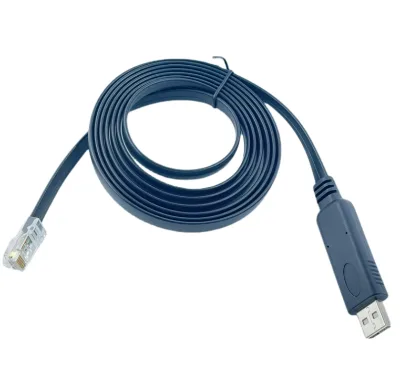


$1.00 - $1.50
MOQ: 1000 Pieces


Comprehensive Sourcing Guide
USB Debug Cable Sourcing Guide
The procurement of USB debug cables requires a clear distinction between general data transfer solutions and specialized tools designed for industrial automation and hardware diagnostics. While many listings describe universal charging cables, the specific category of USB debug cables often involves unique interface configurations, such as USB 2.0 to RJ45 serial wire debug converters, which serve critical roles in firmware flashing and system troubleshooting. Buyers must carefully evaluate whether a product is intended for standard consumer charging or for specialized technical applications, as the internal architecture and connector types differ significantly between these use cases.
Sourcing decisions should be grounded in the specific functional requirements of the project, particularly regarding data transmission capabilities and interface compatibility. The market offers a wide spectrum of options ranging from simple charging cables to complex assemblies with specific IC chips or retractable designs. It is essential to verify that the selected cable supports the necessary data transmission functions rather than merely offering charging capabilities, as the presence or absence of an IC chip can determine the stability and speed of the debug connection.
Product Scope and Observed Listing Signals
The observed product landscape for USB debug cables includes a diverse array of models, such as the HITEK-1024 and HITEK-1038, which exhibit varying degrees of customization and interface support. Listings indicate that some units are non-customized while others offer tailored solutions, and the physical form factors range from standard lengths under four feet to specific models like the V H901 measuring 1.2 meters. Buyers should note that while some products are marketed as universal, others are explicitly defined as non-universal, necessitating a precise match between the cable's connector type and the target device's port specifications.
Packaging and material composition also serve as key signals for product categorization and intended market segment. Products are frequently supplied in PE bags, blister packs, or gift boxes, with materials ranging from ABS plastic to various cable assemblies. The presence of specific model numbers like YKW5 or YC-US-002 suggests a structured inventory where each SKU corresponds to a distinct configuration, such as Type C to 3.5mm adapters or Micro USB 3.0 cables. Procurement teams must cross-reference these model identifiers with their technical requirements to ensure the selected item aligns with the intended application, whether it is for industrial automation or general consumer use.
Technical Specifications to Verify
Technical verification begins with confirming the interface type and data transmission function, as these are the primary determinants of a cable's utility in a debug environment. The supplied data highlights interfaces ranging from standard USB to USB-C cable assemblies and USB 3.0 variants, with some units featuring retractable designs while others are fixed. Buyers must explicitly check for the presence of an IC chip, as models without an IC chip may lack the necessary handshake protocols for high-speed data transfer or secure charging, whereas those with an IC chip are better suited for complex debugging tasks.
Output capacity and physical dimensions are equally critical for ensuring compatibility with the target hardware. Specifications such as a 5V 2.4A output rating indicate the power delivery capability, which is vital for devices that require stable power during firmware updates. Additionally, the cable length must be verified against the workspace constraints, with observed options including lengths under four feet and specific models like the 1.2-meter V H901. The connector type, whether it is a standard USB, USB-C, or a specialized serial wire debug converter, must match the device's port exactly to prevent physical damage or connection failures.
Compliance and Safety Documentation
Compliance documentation is a non-negotiable aspect of sourcing USB debug cables, particularly for industrial applications where safety and environmental standards are strictly enforced. The market listings indicate that many products adhere to RoHS, PAHs, CE, and ISO9001 standards, which are essential for ensuring the materials are free from hazardous substances and meet quality management requirements. Buyers should request current certification documents to verify that the specific batch of cables being purchased maintains these standards, as compliance can vary between different production runs or suppliers.
Safety certifications also extend to the electrical performance and material safety of the cable assemblies. Certificates such as CE and RoHS confirm that the product meets European safety directives and restricts the use of specific hazardous materials, which is crucial for products originating from manufacturing hubs like Shenzhen or Zhejiang, China. It is imperative to ensure that the "Made in China" or "Made in Shenzhen" origin labels are accompanied by valid test reports, as the country of origin alone does not guarantee adherence to international safety protocols. Procurement teams must treat these certifications as mandatory prerequisites rather than optional features.
Cost Drivers and Commercial Terms
Cost structures for USB debug cables are influenced by a combination of customization levels, material quality, and order volume. The observed minimum order quantities (MOQ) range widely from 1 to 10,000 units, suggesting that pricing models vary significantly based on the scale of the purchase. Buyers should anticipate that customized solutions, which may include specific branding or unique connector configurations, will carry a higher unit cost compared to standard non-customized models. Additionally, the selling units often come in multiples, such as sets of 50, which can impact the total procurement cost and inventory management strategy.
Commercial terms must be carefully negotiated to align with the project timeline and budget constraints. While specific price points are not universally fixed, the observed range of 0.01 to 475 USD indicates a broad spectrum of value propositions depending on the cable's complexity and features. Factors such as the inclusion of a warranty, typically observed as a 6-month period, and the type of packaging, whether a simple bag or a premium gift box, can also influence the final price. Buyers should clarify whether the quoted price includes shipping and handling, especially given that products originate from different regions within China, which may affect logistics costs.
Supplier Qualification and Quality Control
Supplier qualification requires a rigorous assessment of the manufacturer's ability to maintain consistent quality and adhere to the specified standards. The presence of ISO9001 certification suggests a commitment to quality management systems, but buyers should verify that this certification is active and covers the specific production lines for the USB debug cables. It is also important to confirm the supplier's location, as origins like Zhejiang and Shenzhen represent different manufacturing ecosystems with varying capabilities in terms of scale and technical expertise.
Quality control processes should be validated through sample testing and review of past performance metrics. Buyers should request samples to verify physical attributes such as the material composition (e.g., ABS), connector durability, and the accuracy of the data transmission function. The "Good" quality rating observed in some listings is a subjective claim that must be substantiated through independent testing or third-party audit reports. Establishing a clear quality agreement that defines acceptable defect rates and specifies the testing procedures for each batch is essential for mitigating the risk of receiving substandard products.
Long-Term Procurement Checks
Long-term procurement success depends on establishing a reliable supply chain that can adapt to changing technical requirements and market conditions. Buyers should implement a system for regular supplier audits to ensure continued compliance with RoHS, CE, and other relevant standards over time. It is also advisable to maintain a relationship with the supplier that allows for flexibility in order quantities, given the wide range of observed MOQs, to accommodate fluctuations in project demand without incurring excessive inventory costs.
Continuous monitoring of product performance and warranty claims is vital for maintaining operational efficiency. The 6-month warranty period observed in the market provides a baseline for accountability, but buyers should negotiate terms that extend coverage for critical industrial applications. Additionally, keeping abreast of new model releases, such as the transition from older USB standards to newer USB-C or USB 3.0 variants, ensures that the procurement strategy remains aligned with the latest technological advancements. Regular reviews of the supplier's ability to deliver customized solutions will help sustain a competitive edge in the long term.
FAQs
What certifications do usb debug cables typically have?
Many usb debug cables carry CE, ROHS, and ISO9001 certifications to ensure safety and quality. Some products also meet PAHs standards for restricted substances. Buyers should verify specific certificates for each supplier to confirm compliance with regional regulations.
Can I find usb debug cables with IC chips?
Yes, some usb debug cables include IC chips while others are sold without them. The presence of a chip often depends on the specific model and intended data transmission function. Buyers must check product attributes to confirm if a chip is included.
What is the typical cable length for these products?
Common usb debug cables are available in lengths under 4 feet or around 1.2 meters. Specific models like the V H901 come with a 1.2-meter length. Buyers should review the specification section for exact dimensions before ordering.
Are usb debug cables available with customization options?
Customization is available for many USB Debug Cable models to meet specific buyer requirements. Some products are listed as customized while others are non-customized standard items. Buyers can request tailored solutions depending on the supplier's capabilities.
Which interface types are supported by usb debug cables?
Supported interface types include USB, USB3, and USB-C cable assemblies for various devices. Some cables also feature Type C to 3.5mm specifications. Buyers should match the interface type to their device requirements for proper connectivity.
What is the minimum order quantity for these cables?
Minimum order quantities range from 1 to 10000 units depending on the supplier and product type. Some sellers require orders in multiples of 50 units. Buyers should check the specific MOQ for their selected model before placing an order.
Where are usb debug cables manufactured?
Most usb debug cables are manufactured in China, with specific origins in Shenzhen and Zhejiang. Buyers can expect products to be made in these regions based on current supply data. Origin details are typically listed in the product specifications.