Source Usb Mouse Pad for Office, Gaming, and Household Use
Explore 30 listings of Usb Mouse Pad options featuring foam or memory foam materials with customizable designs. Buyers can compare specifications, pricing, and lead times from Dongguan manufacturers for office, gaming, and household applications.
Key considerations
Products List





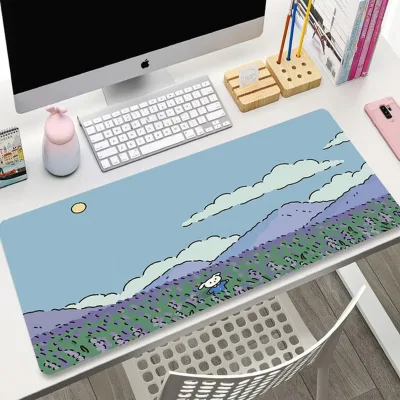
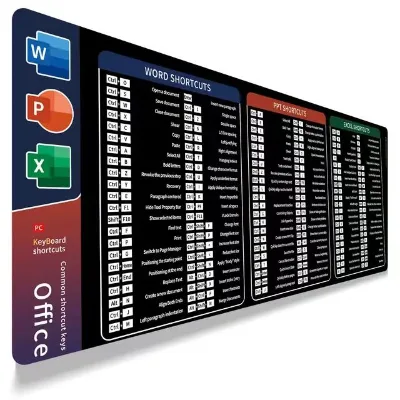

$2.50 - $4.00
MOQ: 1000 Pieces


Comprehensive Sourcing Guide
Strategic Sourcing Guide for USB-Integrated and Standard Mouse Pads
Understanding Product Categories and Technical Specifications
When sourcing mouse pads, buyers must first distinguish between standard passive surfaces and advanced variants that may integrate connectivity, though the core keyword often encompasses both. The market offers a diverse range of designs, from compact travel pads to large gaming surfaces. Technical specifications are the primary differentiator in this category. The physical dimensions of the product are critical for user experience and desk ergonomics. Available data indicates standard sizes such as 2520 cm, which are suitable for general office use, while larger variants reach dimensions like 448.5 cm or are categorized simply as "Large" to accommodate extensive mouse movement in gaming scenarios. Conversely, "Small" sizes are available for portable applications.
Material composition significantly influences performance and durability. The supply chain offers pads constructed from Foam and Memory Foam. Memory Foam variants are particularly noted for their ability to provide ergonomic support, often integrating a wrist rest to reduce strain during prolonged typing sessions. Buyers should verify whether the product includes a wrist rest, as some models are designed "With Wrist Rest" while others are "Without Wrist Rest." The surface texture is another vital specification; a "Smooth" surface texture is standard for optimal mouse sensor tracking. Additionally, the thickness of the pad, observed at 2.5 cm in specific high-end ergonomic models, contributes to the cushioning effect. It is essential to confirm these exact measurements with the supplier, as generic listings may vary. The product type is often described as an "Advertising Mouse Pad," "3D Mouse Pad," or "Photo Mouse Pad," indicating that the surface is optimized for high-resolution graphic printing.
Compliance, Certifications, and Safety Standards
In the B2B procurement of consumer electronics accessories, compliance with international safety and environmental standards is non-negotiable. Suppliers in the region, particularly those based in Dongguan, China, often adhere to rigorous certification frameworks. Buyers must verify that the supplier holds valid certifications such as RoHS, which restricts the use of hazardous substances in electrical and electronic equipment. Furthermore, compliance with BSCI (Business Social Compliance Initiative) and Sedex ensures that the manufacturing process adheres to ethical labor standards.
Environmental safety is equally critical. Products intended for global distribution often require testing against Reach, Ca65 (California Proposition 65), PAHs (Polycyclic Aromatic Hydrocarbons), and PFAS (Per- and Polyfluoroalkyl Substances) regulations. The presence of ISO9001 certification indicates that the manufacturer maintains a quality management system that ensures consistent product quality. When evaluating a potential supplier, buyers should request current certificates for these specific standards. It is important to note that while some listings mention these certifications, the buyer must confirm that the specific batch of goods being ordered is covered under these valid certificates. The absence of a specific certification on a listing does not necessarily mean the product is non-compliant, but it requires a proactive verification step to ensure the supplier can provide the necessary documentation upon request.
Cost Drivers and Pricing Dynamics
The pricing structure for mouse pads is influenced by several variable factors, including material quality, customization complexity, and order volume. The observed market price range for these products spans from $0.20 to $5.50 USD. This wide disparity is primarily driven by the type of material and the level of personalization. Basic foam pads with standard printing will sit at the lower end of this spectrum, while premium memory foam models with custom 3D designs or complex ergonomic features will command higher prices.
Minimum Order Quantity (MOQ) is a significant cost driver. Suppliers typically set MOQs at 100 sets or 100 pieces, though some may offer lower thresholds starting at 1 unit for sample orders. Higher order volumes generally reduce the unit cost, but buyers must balance this against inventory holding costs. The customization process itself adds to the cost. Options such as sublimation, heat transfer, CMYK offset, or silk-screen printing require different setups and material costs. Custom branding, where the product is labeled as "Custom" or "OEM/ODM" friendly, involves additional design and setup fees. Payment terms, typically structured as TT (Telegraphic Transfer) or PayPal, also influence the financial flow, with TT often preferred for larger B2B transactions due to lower transaction fees compared to credit card processing.
Typical Applications and Usage Scenarios
The versatility of mouse pads allows them to serve multiple sectors, from corporate offices to competitive gaming environments. The "Suit for" attribute often lists Office, Game, and Household applications. In an office setting, the primary requirement is often ergonomics and durability. Pads with wrist rests and memory foam are preferred here to support the "Easy Typing" advantage and reduce repetitive strain injuries. These are frequently used as branded corporate gifts or desk accessories, leveraging the "Advertising Mouse Pad" capability to display company logos.
For the gaming sector, the focus shifts to performance and aesthetics. "Gaming" design attributes are common, with large surface areas required for low-sensitivity mouse movements. The "Large" size specification is particularly relevant here. These pads often feature high-contrast graphics or 3D designs to enhance the visual appeal of a gaming setup. Household users may prioritize simple, cost-effective solutions for general computer use, where the "Small" or standard 25*20 cm sizes are sufficient. The "Non-Heated" feature is a standard specification across most models, indicating that these are passive accessories without active electronic components, which simplifies maintenance and reduces failure points.
Supplier Evaluation and Operational Capabilities
Selecting the right supplier requires a deep dive into their operational capabilities and flexibility. A key differentiator is the ability to handle customization. The market shows a strong preference for suppliers who welcome OEM/ODM services and offer "Customizable" designs. This allows buyers to tailor the product to their specific branding needs. The printing capabilities are a critical evaluation point; suppliers offering both Sublimation/Heat Transfer and Cmyk off-Set/Silk-Screen Printing provide greater flexibility for different design requirements.
Logistics and lead times are equally important for supply chain planning. The "Port of Loading" is frequently identified as Shenzhen, a major hub for electronics manufacturing in China. Buyers should be aware of the production timeline, which typically ranges from 10 to 20 days for standard orders. For custom designs, the lead time may extend to 15-20 days. Sample production is a necessary step before mass production; sample times vary from 3-5 days to 5-10 days depending on the complexity of the design. The "Selling Units" are typically listed as 1 Set or 1 PC, which simplifies the ordering process but requires buyers to calculate the total quantity needed for their specific project. Verifying the supplier's origin, often Dongguan, China, helps in assessing the maturity of the local manufacturing ecosystem and the availability of raw materials like foam and fabric.
Quality Control and Long-Term Procurement Considerations
Ensuring consistent quality is paramount for maintaining brand reputation. Buyers should implement a robust quality control protocol that includes pre-production sample approval and in-line inspections. The "Surface Texture" must be verified to ensure it remains smooth and does not degrade over time, which could affect mouse tracking. The "Thickness" of 2.5 cm in specific models should be measured to ensure it meets the ergonomic claims. For products with wrist rests, the structural integrity of the foam must be tested to ensure it does not compress permanently under weight.
Long-term procurement considerations involve building a sustainable relationship with the supplier. This includes establishing clear communication channels regarding changes in design or material availability. The "Product Name" and "Model" numbers, such as XC-65, XC-72 SET, or XC-R77, serve as unique identifiers that should be locked in the purchase order to prevent mix-ups. Buyers should also consider the environmental impact of the materials used, especially if they are targeting markets with strict sustainability regulations. The availability of certifications like Reach and RoHS is a strong indicator of a supplier's commitment to environmental compliance. Finally, buyers should plan for the lifecycle of the product; while mouse pads are generally low-cost items, the volume of orders can be high, making consistency in quality and delivery reliability a critical factor for long-term success. By focusing on these technical and operational details, buyers can secure a reliable supply chain for their mouse pad requirements.
FAQs
What certifications do these mouse pads hold?
The products hold multiple certifications including RoHS, BSCI, Sedex, Reach, Ca65, PAHs, and ISO9001. These ensure compliance with international safety and ethical labor standards for global distribution.
How long is the production lead time?
Standard production lead times range from 10 to 20 days depending on the specific model. Custom designs may require 15 to 20 days to complete the manufacturing process.
Can I customize the design and branding?
Yes, OEM and ODM services are welcome with customizable designs available. You can choose from sublimation, heat transfer, or silk-screen printing methods for your custom branding needs.
What is the minimum order quantity required?
The minimum order quantity is typically 100 sets or 100 pieces for most models. Some suppliers may accept lower quantities for sample orders starting at just one unit.
Which materials are used for the wrist rests?
The wrist rests are constructed from Foam or Memory Foam to provide ergonomic support. Some models feature a thickness of 2.5 cm for enhanced cushioning during typing sessions.
Where is the product manufactured and shipped from?
The products originate from Dongguan, China, and are shipped from the Port of Shenzhen. This location offers access to a mature manufacturing ecosystem for foam and fabric materials.