Source vegan multi-strains probiotics capsules for Gut Health, Digestion, and Immunity
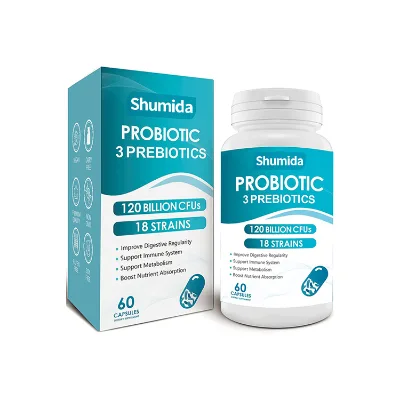
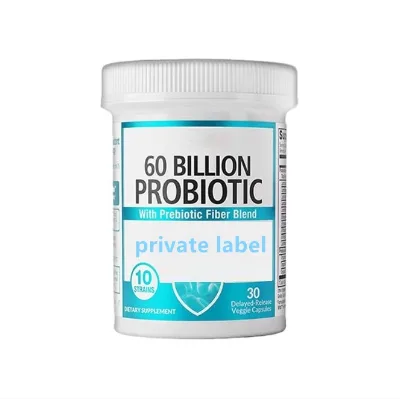
Find 30 listings for vegan multi-strains probiotics capsules suitable for digestive support, gut health maintenance, and immune function. Buyers can compare specifications like CFU counts, capsule types, and certifications from verified Chinese manufacturers offering customization and natural resources.
Key considerations
Products List


FDA Qualified Probiotics Formulations with Organic Prebiotics for Gut Health
$2.80 - $4.00
MOQ: 5000 Pieces


Multi-Strains Herbal Extract Probiotics Premix Capsule Herb Powder Pills
$0.02 - $0.10
MOQ: 300000 Pieces

Weight Management Appetite Control Healthy Blood Sugar Level Probiotics Herbal Blend Capsule
$0.01 - $0.08
MOQ: 300000 Pieces

Ultra-Potent Probiotic Complex Multi-Strain Formula for Optimal Gut Health & Immune Support
$0.01 - $0.06
MOQ: 300000 Pieces


Probiotic Capsules for Immune Health and Enhanced Nutrient Absorption
$0.13 - $0.15
MOQ: 300000 capsule


Probiotic Formula for Sensitive Stomach and Nutrient Absorption Health Food
$0.01 - $0.02
MOQ: 600000 Pieces

Vitamin Vegan Probiotic Supplement with Prebiotic Fiber for Gut Health
$0.01 - $0.02
MOQ: 600000 Pieces


Nutrition Supplement Probiotic Formula for Optimal Gut Health Support
$0.44 - $0.49
MOQ: 300000 Pieces

Health Food Lactobacillus and Bifidobacterium Probiotic for Daily Wellness
$0.01 - $0.02
MOQ: 600000 Pieces


Comprehensive Sourcing Guide
Strategic Sourcing Guide for Vegan Multi-Strains Probiotic Capsules
Understanding Product Specifications and Formulation
When sourcing vegan multi-strains probiotic capsules, buyers must first establish a clear understanding of the technical specifications that define the product's integrity and efficacy. The core of this category lies in the active biological agents, which are often derived from natural resources. In the context of current market offerings, the active substance content is a critical metric, with high-confidence observations indicating that effective products often maintain active substance levels greater than 90%. This high purity is essential for ensuring that the capsule delivers the intended therapeutic or health benefits without excessive filler materials that could dilute potency.
The physical form of the probiotic is equally significant. While the core keyword specifies capsules, the market presents a diverse array of dosage forms including drops, tablets, and dry powders. For the specific inquiry into capsules, the industry standard often involves the use of 1# HPMC (Hydroxypropyl Methylcellulose) capsules. This material is preferred for its vegan status, as it is plant-based and free from gelatin, which is derived from animal sources. The appearance of the product inside the capsule is typically described as a white to yellow dry powder, which may be freeze-dried to preserve the viability of the bacterial strains.
Strain identification is a technical requirement that cannot be overlooked. Advanced sourcing protocols rely on molecular identification methods, such as 16s rRNA analysis, to verify the specific strains included in the multi-strain formulation. This ensures that the product contains the exact bacterial profiles claimed by the manufacturer. Furthermore, the nutrient composition of these supplements often includes vitamins and proteins, which may be added to support the stability of the probiotics or to provide additional nutritional value. The net content of the product can vary significantly, with some formulations listing specific grain counts, such as 1,000 grains, while others focus on colony-forming units (CFU) per serving, such as 50 billion CFU per gram or specific counts per capsule like 60 billion or 100 billion.
Compliance Framework and Certification Verification
Navigating the regulatory landscape for probiotic supplements requires rigorous verification of certifications. The global market for these products is highly regulated, and compliance serves as a primary indicator of supplier reliability. Buyers should expect to see a robust portfolio of certifications that cover manufacturing processes, food safety, and ethical standards. Common high-confidence certifications observed in this sector include cGMP (current Good Manufacturing Practices), ISO standards (such as ISO 22000 and ISO 9000), and HACCP (Hazard Analysis and Critical Control Points).
In addition to general manufacturing standards, specific dietary and religious certifications are crucial for vegan products. The presence of Halal and Kosher certifications is often a baseline requirement for international distribution, ensuring the product adheres to specific dietary laws. For the "vegan" aspect of the keyword, buyers must verify that the capsule shell and any excipients are free from animal derivatives. While the provided data lists Organic certification as a possibility, buyers should not assume every product is organic unless explicitly verified. Similarly, FDA registration or compliance is a significant marker for products targeting the North American market, though the specific status must be confirmed on a per-supplier basis.
The certification landscape also extends to specific product standards. Some manufacturers adhere to standards defined by the CFU count, such as "100 Billion" or "60 Billion per capsule," which act as internal quality benchmarks. Others may reference specific product models like "LCP051" or "ProCap" as identifiers for their proprietary formulations. It is vital for buyers to cross-reference these model numbers with the supplier's documentation to ensure the certification applies to the exact SKU being procured. The workshop environment is another compliance factor; a 100,000-level purification workshop indicates a high degree of environmental control, minimizing the risk of contamination during the manufacturing process.
Cost Drivers and Pricing Dynamics
The pricing structure for vegan multi-strains probiotic capsules is influenced by a complex interplay of factors, ranging from raw material costs to manufacturing complexity. The observed price range in the market is extensive, spanning from $0.01 to $500 per unit, reflecting the vast difference between bulk raw powder and finished, branded retail units. This wide variance underscores the importance of defining the procurement stage clearly. Buyers purchasing raw materials or bulk capsules will encounter prices at the lower end of the spectrum, while those sourcing finished, packaged goods with clinical validation will see prices at the higher end.
A primary cost driver is the CFU count and the complexity of the multi-strain formulation. Products with higher potency, such as those containing 100 billion CFUs per capsule, generally command a premium over lower potency options. The inclusion of additional nutrients, such as vitamins or proteins, also adds to the cost. Furthermore, the packaging method plays a significant role. While standard cartons are common, specialized packaging like insulated bags or HDPE bottles designed for moisture protection increases the unit cost. The choice of capsule material, specifically HPMC, is a cost factor compared to traditional gelatin, though it is necessary for vegan compliance.
Minimum Order Quantity (MOQ) is another critical variable affecting the effective cost per unit. The market exhibits a broad MOQ range, from as low as 1 unit for sampling up to 600,000 units for large-scale industrial procurement. Suppliers often offer tiered pricing structures where the unit cost decreases as the order volume increases. For buyers, understanding the MOQ is essential for cash flow management. Some suppliers may offer samples, which are available but may carry a different price point or logistical cost compared to bulk orders. The lead time and storage requirements, such as the need for a cool, dry place or specific temperature control during shipping, can also indirectly influence the total landed cost.
Typical Applications and Target Demographics
The application of vegan multi-strains probiotic capsules extends across various health sectors, driven by the specific functions attributed to the product. The primary applications include overall digestive health and gut health maintenance. These supplements are designed to support the balance of the gut microbiome, which is essential for digestion, nutrient absorption, and immune function. Additionally, specific formulations are marketed for oral health, addressing issues related to the oral cavity and potentially reducing bad breath or supporting gum health.
The target demographic for these products is primarily adults. While the product is formulated for general adult consumption, specific warnings are often noted regarding applicability to newborns, indicating that these particular formulations are not intended for infants without medical supervision. The dosage form influences the application; capsules are generally preferred for their ease of swallowing and precise dosing, with a typical recommendation of one capsule or tablet per serving. However, the market also includes drops and tablets, which may be preferred for different user preferences or specific delivery mechanisms.
The functional claims of the product are often supported by patent and clinical studies, which adds a layer of credibility to the applications. Products that are qualified with such studies are often positioned for more serious health interventions or therapeutic support. The "Addable" nature of the smell suggests that these products can be customized for flavor or odor masking, making them suitable for integration into various dietary regimens. The storage method, typically normal or cool dry places, ensures that the product remains stable and effective throughout its shelf life, which is generally observed to be greater than 12 months.
Supplier Evaluation and Manufacturing Capabilities
Evaluating a supplier for vegan probiotic capsules requires a deep dive into their manufacturing capabilities and operational standards. The physical environment of the production facility is a key indicator of quality. A 100,000-level purification workshop signifies a controlled environment with strict limits on particulate matter and microbial contamination, which is critical for biological products. Buyers should verify that the supplier's facility maintains these standards consistently.
The resource sourcing is another evaluation point. High-quality probiotics are derived from natural resources, and the supply chain for these raw materials must be transparent and reliable. The supplier's ability to provide freeze-dried probiotic powder indicates advanced processing technology, as freeze-drying is a method used to preserve the viability of live bacteria. The identification of strains via 16s rRNA analysis demonstrates a commitment to scientific accuracy and strain verification.
Customization is a significant capability to look for in a supplier. The availability of customization options allows buyers to tailor the product to specific market needs, such as adjusting the CFU count, modifying the capsule size, or altering the nutrient composition. The ability to offer OEM (Original Equipment Manufacturer) products is also a strong indicator of a supplier's flexibility and capacity to handle private label projects. Buyers should assess the supplier's sample availability, as this provides an opportunity to physically inspect the product quality before committing to a large order. The net content and packaging options, such as 30 pieces per bottle or bulk cartons, should align with the buyer's distribution strategy.
Quality Control and Long-Term Procurement Strategy
Implementing a robust quality control (QC) strategy is essential for maintaining the integrity of probiotic supplements. The shelf life of these products, typically exceeding 12 months, depends heavily on proper storage and handling. The recommended storage method is a cool, dry place, and deviations from this can lead to a loss of potency. Buyers must ensure that their logistics partners are equipped to maintain these conditions, especially for products requiring insulated bags during transit.
Long-term procurement considerations involve establishing a relationship with a supplier that can consistently meet quality standards over time. The variability in product models, such as "Probiotic Supplement Capsules," "ProCap," and "Probiotic Tablets," suggests that buyers should standardize their specifications to ensure consistency. The standard of 100 billion or 60 billion CFUs per capsule should be a fixed requirement in the purchase agreement to prevent quality drift.
The certification status should be reviewed periodically, as certifications like FDA, ISO, and HACCP require ongoing audits and compliance. Buyers should also monitor the "Qualified" status of the product, ensuring that any claims regarding patents or clinical studies remain valid and up-to-date. The packaging material, often plastic or cardboard, must be durable enough to protect the product from moisture and light, which can degrade the probiotics.
Finally, the procurement strategy should account for the potential need for different dosage forms or packaging sizes based on market feedback. The flexibility to switch between bottle sizes (30, 60, 90 pieces) or packaging types (HDPE bottles, GSP bottles) allows the buyer to adapt to changing consumer preferences. By focusing on these quality control and strategic elements, buyers can secure a reliable supply of high-quality vegan multi-strains probiotic capsules that meet both regulatory requirements and consumer expectations.
Comparative Analysis of Product Attributes
To facilitate a clearer understanding of the diverse options available in the market, the following table summarizes key attributes observed in the product landscape. This comparison highlights the variations in specifications, certifications, and packaging that buyers should consider during the sourcing process.
| Attribute Category | Observation A | Observation B | Observation C |
|---|---|---|---|
| Product Model | Probiotic Supplement Capsules | ProCap | Probiotic Tablets |
| Active Substance | >90% | 100 Billion CFU | 60 Billion CFU |
| Dosage Form | Capsules | Capsules | Tablets |
| Capsule Material | 1# HPMC | HPMC | N/A (Tablet) |
| Color/Appearance | White to Yellow | White/Transparent | Dry Powder Inside |
| Certifications | cGMP, ISO, Halal | NSF-GMP, FDA, Halal | FDA, ISO |
| Packaging | Carton | Gsp Bottle, HDPE Bottle | Plastic, Insulated Bags |
| Origin | China | China | China |
| MOQ | 1 - 600,000 | 100 Bottles | Optional |
| Shelf Life | >12 Months | >12 Months | >12 Months |
| Storage | Normal | Cool Dry Place | Cool Dry Place |
| Target Audience | Adult | Adult | Adult |
This table illustrates that while the core product category remains consistent, the specific attributes vary significantly. Buyers must align these attributes with their specific product requirements and market demands. The presence of multiple certification types and packaging options underscores the need for detailed specification sheets when engaging with suppliers. By carefully evaluating these factors, buyers can make informed decisions that ensure the procurement of high-quality, compliant, and effective vegan multi-strains probiotic capsules.
FAQs
What certifications do vegan probiotic capsule manufacturers hold?
Manufacturers typically hold cGMP, ISO, HACCP, Halal, and Kosher certifications. Some also possess FDA, NSF-GMP, and Organic certifications to ensure compliance with international safety and dietary standards for vegan products.
How is the active substance content verified in these capsules?
The active substance content is verified to be greater than 90% using 16s rRNA identification methods. This molecular analysis ensures the specific bacterial strains are present and meet the high purity standards required for efficacy.
Which capsule material is used for vegan multi-strain formulations?
Vegan formulations typically use 1# HPMC capsules made from plant-based materials. This material is preferred because it is free from animal-derived gelatin, ensuring the product remains suitable for strict vegan dietary requirements.
Can buyers customize the CFU count and nutrient composition?
Yes, customization is available for CFU counts like 60 billion or 100 billion per capsule. Buyers can also adjust nutrient compositions to include vitamins or proteins, and request specific packaging options like HDPE bottles or cartons.
What is the typical shelf life and storage requirement for these supplements?
The shelf life generally exceeds 12 months when stored correctly. Products require storage in a cool, dry place, and some shipments may use insulated bags to maintain stability during transit and preserve bacterial viability.
How does the MOQ vary for bulk versus sample orders?
Minimum Order Quantities range from 1 unit for samples up to 600,000 units for large-scale procurement. Specific orders may start at 100 bottles, with pricing structures often adjusting based on the volume purchased.
What manufacturing standards ensure the purity of the workshop environment?
Manufacturers utilize 100,000-level purification workshops to minimize contamination risks. This controlled environment is critical for processing freeze-dried probiotic powders and ensuring the final product meets high-quality safety and hygiene standards.