Source Vegan Organic Acne Patches for blemish control, sun care, and wound healing
Compare 30 listings for Vegan Organic Acne Patches designed for combination skin and face spots. These hydrocolloid patches offer customization, OEM services, and various certifications for effective blemish control and skin care applications.
Key considerations
Products List


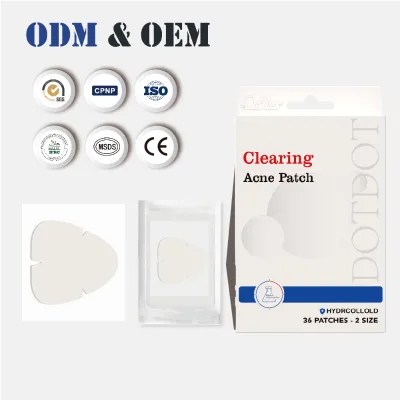
Acne Patches Treatment for Face and Body Mighty Fast-Acting Vegan Cruelty Free
$0.15 - $0.20
MOQ: 10000 Pieces


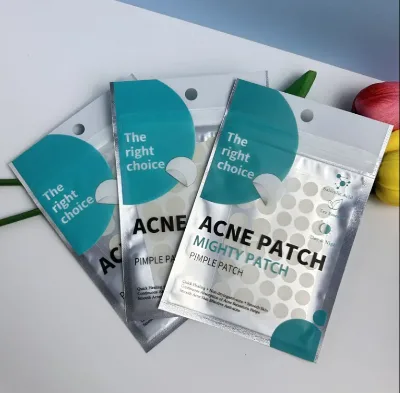
Acne Pimple Patches, 14 Patches, Hydrocolloid Patch with Tea Tree Oil Vegan Free
$0.10 - $0.13
MOQ: 5000 Pieces




Comprehensive Sourcing Guide
Strategic Sourcing Guide for Vegan Organic Acne Patches
Understanding Product Attributes and Functional Claims
When initiating a procurement strategy for acne patches, buyers must first reconcile the core keyword of "vegan organic" with the specific technical realities observed in the current market. The supplied product data indicates a diverse range of formulations and applications, primarily centered on hydrocolloid technology. The primary function identified in the inventory is "Acne/Blemish Control," with some listings also noting "Sun Care" capabilities. This suggests that while the core utility is spot treatment, the product ecosystem may include multi-functional skincare items.
A critical observation for the buyer is the material composition. The data explicitly lists "Hydrocolloid" as a primary material. Hydrocolloid patches are the industry standard for absorbing exudate from blemishes, creating a moist healing environment. However, the term "organic" in a B2B context requires rigorous definition. While the product attributes mention "Main Ingredients" and specific components like "Iron Powder, Activated Carbon, Salt Water" for certain variants, these specific ingredients are often associated with heat packs or different therapeutic applications rather than standard hydrocolloid acne patches. Buyers must verify if the "organic" claim refers to the source of the hydrocolloid polymer or if it implies the inclusion of botanical extracts. The data also notes a "Function" of "Reduce Pain Cure The Wound for Burn," which indicates that some suppliers in this category may offer broader wound care products that overlap with acne treatment.
The physical specifications vary significantly across the observed inventory. Sizes range from small dots to larger sheets, with specific dimensions noted as "6.28.2cm" and "6.58.5cm." Some listings specify a diameter of "12mm" with a quantity of "20 dots," while others offer custom shapes. The "Shape" attribute is listed as "Rectangle" in some contexts but also allows for "Can Make as Your Request," indicating high flexibility in manufacturing. For a buyer seeking "vegan" products, the shape and size customization options are vital, as they allow for the creation of specific designs that align with brand identity without relying on animal-derived gelatin or collagen, which are sometimes used in alternative patch types.
Technical Specifications and Material Verification
The technical backbone of these products lies in the hydrocolloid matrix. The supplied facts confirm that "Hydrocolloid" is the designated material for the "pimple patch" and "zit stickers" models. This material is essential for the absorption mechanism. When sourcing "vegan organic" variants, the buyer must ensure that the hydrocolloid is derived from plant-based sources or synthetic polymers that do not involve animal by-products. The data also highlights a "Sterile Method" of "Gamma-Ray" and "Ethylene Oxide Sterilization." This is a crucial technical differentiator. Gamma-ray sterilization is often preferred for maintaining the integrity of organic or sensitive materials without leaving chemical residues, whereas Ethylene Oxide requires careful off-gassing verification.
The "Product Model" field reveals a segmentation of the market. Models include "Type D," "Pimple Patches," "hydrocolloid acne patch," and "dark spot patches." This variation suggests that "vegan organic" claims may apply differently to each model. For instance, "dark spot patches" might rely on different active ingredients compared to standard "pimple patches." The "Color" attribute is listed as "Transparent or Custom," and the "Design" can be "Pink or Your Own Design." This customization capability is a significant technical advantage for buyers looking to create a distinct brand identity. The "Packing" options range from "1PCS/Bag" to "Inner Box with out Carton Box" and "Carton," with some specific mentions of "Surgical Drapes with Sterile PA." The choice of packaging directly impacts the product's shelf life and sterility maintenance.
The "Shelf Life" is consistently noted as "3 Years" across the observed data. This is a standard benchmark for hydrocolloid products, provided they are stored correctly. However, the presence of "Iron Powder, Activated Carbon, Salt Water" in the ingredient list for some items suggests a different chemical mechanism, likely for heat generation or odor absorption, which is distinct from the standard hydrocolloid absorption method. Buyers must clearly distinguish between standard hydrocolloid acne patches and these specialized variants to ensure the "vegan organic" claim is accurate for the specific product function required.
Compliance, Certification, and Regulatory Standards
Navigating the regulatory landscape is paramount for B2B procurement, especially when marketing products as "vegan" and "organic." The supplied data provides a robust list of certifications that serve as a baseline for compliance verification. The observed certifications include "CE," "FDA," "ISO9001," "ISO13485," and general "ISO." These are critical indicators of quality management and medical device compliance. Specifically, "ISO13485" is the international standard for medical device quality management systems, which is highly relevant for acne patches that are often classified as medical devices or Class I medical products.
The "Certificate" field also lists "CE FDA ISO13485" and "CE, FDA, ISO," confirming that the suppliers in this dataset have pursued international market access. For a buyer targeting the "vegan organic" niche, the presence of these certifications is a prerequisite but not a guarantee of the specific "vegan" or "organic" status. The "CE" mark indicates conformity with health, safety, and environmental protection standards for products sold within the European Economic Area. "FDA" registration or clearance is essential for the US market. The "ISO9001" certification ensures a general quality management system is in place.
Buyers must verify the specific scope of these certifications. For example, does the FDA clearance cover the specific "hydrocolloid" formulation or just the general device category? The data mentions "Ethylene Oxide Sterilization" and "Gamma-Ray" as sterilization methods. Regulatory bodies often have strict limits on residual levels of ethylene oxide. Therefore, the "Sterile Method" must be cross-referenced with the specific regulatory requirements of the target market. The "Place of Origin" is listed as "Hubei, China" and generally "China." While China is a major manufacturing hub, buyers should ensure that the specific factory holds the valid certificates and that the certificates are current and not expired. The "Manufacture Type" is confirmed as "Manufacturer," which suggests a direct supply chain, potentially reducing the risk of counterfeit documentation compared to trading companies.
Cost Drivers and Pricing Dynamics
The economic landscape for sourcing acne patches is defined by a wide range of variables. The observed price range in the dataset is between $0.08 and $3.50 USD per unit. This significant variance indicates that price is not solely a function of the base material but is heavily influenced by customization, packaging, and order volume. The "MOQ" (Minimum Order Quantity) ranges from 1 to 50,000 units. This flexibility allows buyers to test the market with small samples or commit to large-scale production runs.
Several factors drive the cost within this range. First, the "Customization" attribute is listed as "Available." Custom shapes, colors ("Pink or Your Own Design"), and logo printing ("with Logo Printing") will invariably increase the unit cost. The "Shape" can be made "as Your Request," which requires mold creation and setup fees, impacting the price for lower MOQs. Second, the packaging complexity affects cost. Options like "Inner Box with out Carton Box" or "Surgical Drapes with Sterile PA" are more expensive than simple "1PCS/Bag" packaging. Third, the sterilization method plays a role. Gamma-ray sterilization might carry different cost implications compared to Ethylene Oxide, depending on the supplier's infrastructure and volume.
The "Sample" attribute is listed as "Free," which is a significant cost-saving factor for buyers during the evaluation phase. This allows for quality testing without immediate financial commitment. However, buyers should be aware that while the sample itself may be free, shipping costs and potential customs duties may apply. The "Service" options include "OEM" and "ODM," which implies that the supplier can manufacture under the buyer's brand or develop a product from scratch. ODM services typically command a premium due to the R&D and design effort involved. The "Main Ingredient" being listed as "Main Ingredients" without specific botanical details suggests that the cost of "organic" or "vegan" additives may be a variable factor not fully detailed in the standard listing, requiring direct negotiation.
Typical Applications and Market Segmentation
The applications for these products extend beyond simple acne treatment, as indicated by the diverse "Function" and "Used for" attributes. The primary application is "Acne/Blemish Control" and "Apply: Face Spot." However, the data also notes "Sun Care" and "Reduce Pain Cure The Wound for Burn." This suggests that the product category is versatile, serving both cosmetic and therapeutic needs. The "Body Part" is consistently "Face," and the "Applicable" field specifies "for Face Beauty." This confirms that the core market is facial skincare.
The "Age Group" is listed as both "Adult" and "All Ages." This broad demographic appeal is a key market driver. For "vegan organic" positioning, the "All Ages" category is particularly attractive to parents seeking gentle, non-irritating solutions for teenagers or children. The "Gender" is "Unisex," which expands the potential market reach. The "Design" options, such as "Pink," suggest a marketing angle towards specific consumer preferences, while "Your Own Design" allows for gender-neutral or brand-specific targeting.
The "Type" attribute lists "Skin Care Products" and "Infusion Set." While "Infusion Set" seems out of place for a standard acne patch, it may refer to a specific delivery mechanism or a broader product line offered by the manufacturer. Buyers should clarify if the "Infusion Set" refers to a different product entirely or a specialized acne patch with a transdermal delivery system. The "Used for" attribute confirms "Skin Care," reinforcing the primary market segment. The "Standard" dimensions like "6.28.2cm" and "diameter 12mm20dots" indicate that the products are designed for specific spot treatments rather than full-face coverage. This precision application is a key selling point for consumers looking to treat individual blemishes without affecting the surrounding skin.
Supplier Evaluation and Quality Control Protocols
Evaluating suppliers for "vegan organic" products requires a multi-layered approach. The data confirms the "Manufacture Type" is "Manufacturer," which is a positive indicator for quality control and supply chain transparency. Buyers should prioritize suppliers who can provide direct access to their production facilities, especially in "Hubei, China." The "Service" offerings of "OEM" and "ODM" suggest that these manufacturers have the capacity to adapt to specific client needs, which is essential for maintaining the integrity of "vegan" and "organic" claims.
Quality control must focus on the "Sterile Method" and "Material" consistency. The presence of "Gamma-Ray" and "Ethylene Oxide" sterilization methods requires verification of the sterilization logs and residual testing reports. For "vegan" claims, the buyer must request a certificate of analysis (CoA) that details the source of the hydrocolloid and any other active ingredients. The "Main Ingredient" listing as "Main Ingredients" is vague; a reputable supplier should provide a full ingredient list to verify the absence of animal-derived components. The "Certificate" list includes "CE, FDA, ISO13485," which are strong indicators of a compliant facility. However, buyers should verify that these certificates are valid and cover the specific product line being sourced.
The "Product Packing" options, such as "Carton" or "Inner Box," are also quality indicators. Proper packaging is essential to maintain sterility and prevent contamination. The "Shelf Life" of "3 Years" is a standard benchmark, but buyers should verify the expiration date calculation method used by the supplier. The "Sample" availability allows for physical inspection of the product's texture, adhesion, and absorption capabilities. Buyers should test the "Shape" and "Size" accuracy against the specifications provided, such as "6.2*8.2cm" or "diameter 12mm." Any deviation could indicate poor quality control.
Long-Term Procurement and Strategic Considerations
Sourcing "Vegan Organic Acne Patches" is not merely a transactional activity but a strategic decision that impacts brand reputation and long-term supply chain stability. The "Customization" and "Design" capabilities of the suppliers offer a pathway to differentiation in a crowded market. The ability to create unique shapes and colors allows brands to stand out. However, this customization comes with the need for robust quality assurance processes to ensure that every batch meets the "vegan" and "organic" standards.
The "MOQ" range of 1 to 50,000 units provides flexibility for scaling. Buyers can start with low-volume orders to test the market and gradually increase volumes as demand grows. The "Free Sample" policy facilitates this low-risk entry. However, as volumes increase, buyers should negotiate pricing tiers and ensure that the "Manufacturer" can maintain consistent quality and supply. The "Place of Origin" being "China" requires consideration of logistics, lead times, and potential geopolitical factors. Buyers should establish clear communication channels with the supplier to monitor production schedules and inventory levels.
The "Function" overlap with "Sun Care" and "Burn" treatment suggests that the product line may have potential for expansion. Buyers should consider if the "vegan organic" formulation can be adapted for these other applications, creating a broader product portfolio. The "Type" classification as "Skin Care Products" and "Infusion Set" indicates a diverse product range. Buyers should evaluate if the supplier has the capacity to support future product launches. The "Standard" certifications like "ISO13485" provide a foundation for regulatory compliance in new markets.
In conclusion, sourcing "Vegan Organic Acne Patches" requires a careful balance of technical verification, regulatory compliance, and strategic supplier selection. The data provided offers a solid foundation for understanding the product landscape, but buyers must conduct due diligence to ensure that the specific "vegan" and "organic" claims are substantiated by the supplier's documentation and quality control processes. By leveraging the customization options and understanding the cost drivers, buyers can build a resilient and competitive supply chain for this growing market segment.
FAQs
What materials are used for Vegan Organic Acne Patches?
Hydrocolloid is the primary material used for these patches. Some variants may include iron powder or activated carbon, but buyers must verify if the hydrocolloid source is plant-based to ensure vegan status.
Which certifications do these acne patch manufacturers hold?
Suppliers typically hold CE, FDA, ISO9001, and ISO13485 certifications. These credentials indicate compliance with medical device quality standards and safety regulations for international markets.
Can I customize the shape and design of the patches?
Yes, customization is available for shape, color, and logo printing. Buyers can request specific dimensions like 6.2*8.2cm or custom designs to align with their brand identity.
How long is the shelf life of these hydrocolloid patches?
The shelf life is consistently three years for these products. Proper storage is required to maintain sterility and effectiveness throughout this period.
What is the minimum order quantity for sourcing these patches?
The minimum order quantity ranges from 1 to 50,000 units depending on the supplier. This flexibility allows buyers to test samples or commit to large production runs.
Where are these acne patches manufactured and shipped from?
Products originate from Hubei, China, with general origins listed as China. Buyers should verify specific factory locations to ensure supply chain transparency and logistics planning.