Source Washable Mesh Window Pet Carrier for dogs, cats, and small animals
Compare 30 listings for the Washable Mesh Window Pet Carrier designed for dogs, cats, and small animals. Buyers can review specifications like size, material, and customization options to find the right supplier for their needs.
Key considerations
Products List
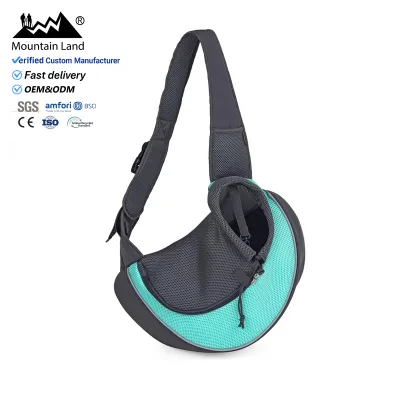
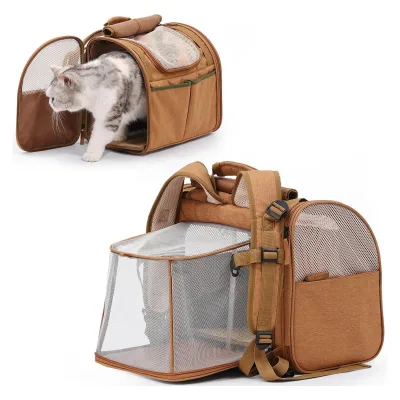


Pet Dog Sling Carrier Breathable Mesh Travel Safe Sling Bag Carrier for Dogs Cats
$1.90 - $2.30
MOQ: 100 Pieces


Pet Dog Hand Carrier with Transparent Window Front and Back Double Doors
$17.50 - $18.70
MOQ: 20 Pieces


Comprehensive Sourcing Guide
Strategic Sourcing Guide for Washable Mesh Window Pet Carriers
The global demand for specialized pet travel solutions has surged, driven by an increasing trend of pet ownership and the normalization of traveling with animals. Among the various categories of pet gear, the Washable Mesh Window Pet Carrier stands out as a critical item for both daily commutes and long-distance travel. For B2B buyers, sourcing this specific product requires a nuanced understanding of material composition, structural integrity, and supply chain logistics. This guide provides a comprehensive framework for evaluating suppliers and products, grounded in observable product attributes and industry standards, ensuring that procurement decisions are data-driven and risk-mitigated.
Technical Specifications and Material Composition
When evaluating a Washable Mesh Window Pet Carrier, the primary technical differentiator lies in the material composition and dimensional consistency. The core structural element is often a blend of durable fabrics, with polyester serving as the main material for the carrier's body due to its resistance to tearing and ease of cleaning. The mesh windows, essential for ventilation, are typically constructed from a breathable mesh material that allows for airflow while maintaining security. Buyers must verify that the mesh is tightly woven to prevent small paws or claws from snagging, which could compromise the safety of the animal inside.
Dimensional specifications vary significantly across different models, necessitating a clear understanding of the target market's needs. Observed product data indicates a wide range of sizes, from compact units measuring approximately 312422cm to larger models reaching 462628cm. Some suppliers offer a standardized sizing system (S, M, L) to accommodate various pet breeds, while others provide a "One Size" option that may be suitable for smaller animals like cats or small dogs. The single package size is another critical metric for logistics planning; observed data shows variations ranging from 66.0X18.0X46.0 cm to 50X40X50 cm. These dimensions directly impact shipping costs and warehouse storage efficiency. Buyers should request specific size charts for each model number, such as PDB0008 or PB8260, to ensure the product fits the intended retail shelf space or e-commerce packaging requirements.
Functional Attributes and Design Features
The functionality of a pet carrier extends beyond simple containment; it encompasses portability, comfort, and ease of use. A defining feature of high-quality carriers is their breathability, which is crucial for preventing overheating during transport. This attribute is often highlighted alongside other advantages such as being windproof and suitable for car travel. The closure type is another vital design element; while some models feature an open design for easy access, others utilize zippers to ensure the pet cannot escape unexpectedly. The carrying type also varies, with options including shoulder bags and hand bags, allowing retailers to cater to different consumer preferences regarding ergonomics and style.
Color and customization options play a significant role in the product's marketability. The observed color palette includes a diverse range of options such as black, pink, green, gray, brown, blue, orange, white, yellow, red, and purple. This variety allows buyers to stock products that align with current fashion trends or specific brand identities. Furthermore, the ability to accept customized logos is a key feature for B2B buyers looking to build private label brands. The style of these carriers is often described as "fashion," indicating a design that appeals to modern pet owners who view their pets as family members. The condition of the product is typically listed as "New," and the application covers a broad spectrum of animals, including dogs, small animals, cats, and even reptiles, suggesting a versatile design that can be marketed to multiple pet owner demographics.
Compliance, Certification, and Safety Standards
In the pet product industry, compliance and safety are paramount, yet the verification of specific certifications requires careful scrutiny. While background knowledge suggests that standards like BSCI (Business Social Compliance Initiative) and OEKO-TEX are relevant to the textile industry, these should not be assumed to apply to every listed product without explicit confirmation from the supplier. Buyers must treat certification status as a variable to be verified rather than a guaranteed attribute. The primary focus should be on the physical safety of the carrier, ensuring that materials are non-toxic and that the construction can withstand the weight and movement of the animal.
For washable products, the durability of the material after repeated cleaning cycles is a critical safety and quality indicator. Buyers should inquire about the washing instructions and verify that the mesh and zippers do not degrade after standard laundering processes. Additionally, the weight capacity is a crucial safety parameter; observed data indicates a maximum weight limit of 3-10kg for certain models. This specification is vital for preventing structural failure during transport. When evaluating suppliers, buyers should request documentation regarding the testing of zippers, seams, and mesh tensile strength. While specific test results are not provided in the general product data, the expectation is that reputable manufacturers will have internal quality control measures in place to ensure the carrier meets basic safety standards for pet containment.
Cost Drivers and Pricing Dynamics
The pricing of washable mesh window pet carriers is influenced by a complex interplay of factors, including material costs, customization requirements, and order volume. The observed price range for these products spans from 1.9 to 30.32 USD, reflecting the diversity in quality, size, and feature sets. Lower-priced items often correspond to basic models with standard colors and minimal customization, while higher-priced units may feature premium materials, complex designs, or extensive branding options.
Order Volume is a significant driver of cost efficiency. The Minimum Order Quantity (MOQ) for these products typically ranges from 10 to 2000 pieces, with a specific high-confidence observation noting an MOQ of 300 PCS for certain models. Buyers must align their inventory strategy with these MOQ thresholds to avoid excessive capital tie-up or per-unit cost penalties. Customization adds another layer of cost; while some suppliers offer a low MOQ for custom logos (e.g., 500 PCS), others may require higher volumes. The "Customized" attribute is available across many listings, but the associated cost and lead time must be negotiated clearly. Additionally, the packing method, such as 1pc/Poly Bag or 35PCS/Carton, affects the final landed cost due to variations in packaging material and shipping volume.
Supplier Evaluation and Production Capabilities
Selecting the right supplier involves a thorough assessment of their production capabilities, location, and reliability. The place of origin for the majority of these products is Fujian, China, a region known for its robust textile and manufacturing infrastructure. However, buyers should not rely solely on the region's reputation; instead, they must verify the specific factory's capacity and history. Key evaluation criteria include the supplier's ability to meet the "Delivery Date" of 7-35 days, which indicates a flexible production schedule capable of handling both urgent and standard orders.
The sample lead time is another critical metric, with observed data suggesting a sample availability of 7 days. This rapid turnaround allows buyers to evaluate product quality before committing to large orders. Buyers should also assess the supplier's flexibility regarding the "Customization" aspect, ensuring they can accommodate specific design changes, color requests, and logo placements. The "Stocked" attribute indicates that some suppliers maintain inventory of standard models, which can be advantageous for buyers needing immediate shipment. However, for custom orders, the production lead time becomes the primary constraint. It is essential to establish clear communication channels and verify the supplier's track record in handling orders of similar scale and complexity.
Quality Control and Long-Term Procurement Strategy
Implementing a robust quality control (QC) strategy is essential for maintaining product integrity and brand reputation. Given the "Washable" nature of the product, QC should focus on the durability of the mesh and the functionality of the zippers after multiple wash cycles. Buyers should define clear acceptance criteria for defects such as loose stitching, torn mesh, or malfunctioning closures. The "Single gross weight" of the product, observed at 1.5 kg for some models and 1.078 kg for others, serves as a baseline for verifying that the product includes all necessary components and is not under-weighted or missing parts.
For long-term procurement, building a sustainable relationship with suppliers is key. This involves regular audits of production processes and consistent communication regarding quality expectations. The "Sustainable" attribute observed in some product descriptions suggests that eco-friendly materials or processes may be available, but buyers should verify this claim through specific inquiries rather than assuming it applies to all stock. Additionally, the "Condition: New" status should be maintained throughout the supply chain to ensure that customers receive pristine products. By focusing on these long-term considerations, buyers can mitigate risks associated with supply chain disruptions and ensure a steady flow of high-quality pet carriers that meet the evolving needs of the market.
Typical Applications and Market Positioning
The versatility of washable mesh window pet carriers allows them to serve a wide array of applications, making them a staple product for pet retailers. The primary application is as an outdoor dog carrier bag, designed for travel, hiking, and daily walks. However, the product data also highlights their suitability as a pet storage seat bag, indicating their use in vehicles where they can serve as a secure and comfortable resting place for pets. The application extends to small animals, cats, and reptiles, broadening the potential customer base beyond just dog owners.
The "Car travel" advantage suggests that these carriers are designed to be secure in moving vehicles, often featuring straps or handles that can be anchored or easily carried. The "Fashion" style and customizable colors allow retailers to position these products as lifestyle accessories rather than just functional gear. This positioning can command higher price points and foster brand loyalty among pet owners who value aesthetics alongside utility. By understanding these diverse applications, buyers can tailor their marketing strategies to highlight specific use cases, such as "The Perfect Companion for Road Trips" or "Stylish Travel for Small Pets," thereby maximizing the product's appeal in competitive marketplaces.
FAQs
What materials are used for washable mesh window pet carriers?
The main material is typically polyester, while the mesh windows are made from breathable mesh fabric. These materials ensure durability and ventilation, with some models featuring specific color options like black, pink, or green.
How much is the minimum order quantity for custom logos?
The minimum order quantity for custom logos is 500 pieces. Standard models may have a lower MOQ of 300 pieces, while some basic listings start at 10 pieces depending on the specific supplier and product model.
Which size options are available for these pet carriers?
Carriers come in various sizes including specific dimensions like 31*24*22cm or 46*26*28cm. Some models offer a standardized S, M, L sizing system, while others provide a single size option suitable for small animals.
Can these carriers be used for car travel and outdoor activities?
Yes, these carriers are designed for car travel and outdoor use as an outdoor dog carrier bag. They feature advantages like being windproof and breathable, making them suitable for transporting dogs, cats, and small animals safely.
What is the typical delivery time for orders?
The delivery date ranges from 7 to 35 days depending on order volume and customization. Sample availability is typically 7 days, allowing buyers to verify quality before committing to larger production runs.
How much weight can the carrier support safely?
The maximum weight capacity for these carriers is between 3 and 10 kilograms. This limit ensures structural integrity during transport, making them suitable for small dogs, cats, and other small animals within this weight range.