Source Waterproof Changeable Smart Truck Light for Trailers
Compare 30 listings for the Waterproof Changeable Smart Truck Light, featuring 12V and 24V options with 7-pin connectors. Buyers can evaluate customization, certifications like CCC and E-mark, and packing details for truck front lamps, trailer plugs, and parking lights.
Key considerations
Products List


Offroad 9 Inch LED Driving Light Dual Color Position Light Truck Light
$19.99 - $20.99
MOQ: 100 Pieces


Offroad Truck 4.3 Inch Water Flow LED Work Lamp Warning Light Position Light
$2.99 - $3.99
MOQ: 100 Pieces


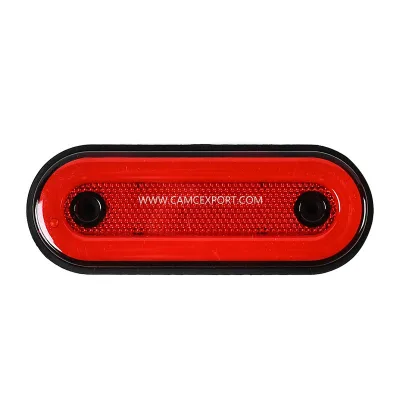


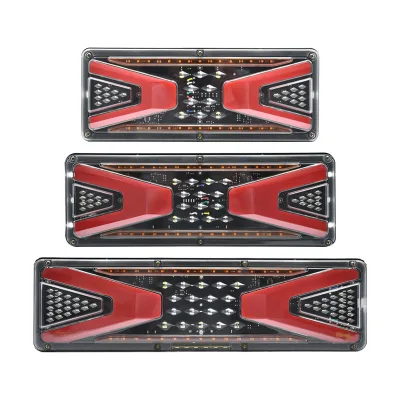
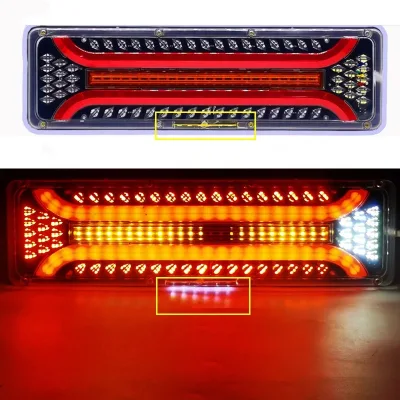
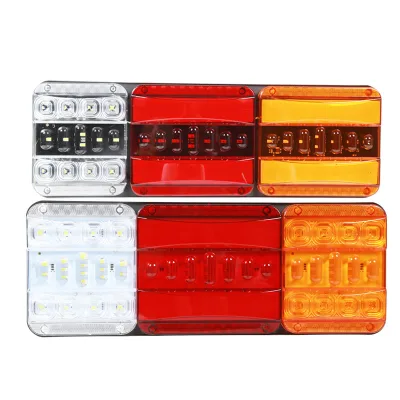

Comprehensive Sourcing Guide
Strategic Sourcing Guide for Waterproof Changeable Smart Truck Lighting Solutions
The global demand for heavy-duty vehicle lighting has shifted toward systems that combine durability with adaptability. For procurement professionals targeting the core keyword "Waterproof Changeable Smart Truck Light," the market presents a complex landscape of specialized components rather than a single monolithic product. The available data indicates a diverse inventory ranging from trailer plug cables to specific lamp shades and license plate lights, all designed to withstand rigorous operational environments. This guide synthesizes observed product attributes, certification requirements, and supply chain variables to provide a disciplined framework for evaluating potential suppliers and securing reliable lighting solutions for commercial fleets.
Technical Specifications and Component Architecture
When sourcing lighting solutions for trucks, the technical architecture must align with the specific electrical and mechanical demands of the vehicle. The observed product data reveals a clear segmentation in voltage requirements, with specific items listed at 12V and others at 24V. This distinction is critical, as 24V systems are standard for heavy-duty trucks and commercial vehicles, while 12V is often associated with lighter commercial applications or specific lighting subsystems. Procurement teams must verify the voltage compatibility of any proposed solution against the vehicle's electrical system to prevent component failure or wiring damage.
Material composition is another primary specification. The available data highlights "LED" as a primary material category, appearing in contexts such as "LED License Plate Light" and general LED product lines. The use of LED technology suggests a focus on energy efficiency and longevity, which are essential for commercial operations. Furthermore, the concept of "changeable" functionality is supported by the attribute "Customization: Available." This implies that suppliers can modify physical dimensions, colors, or functional outputs to meet specific fleet requirements. For instance, the "Trailer Plug Cable" is noted with a specific wire gauge of "7c X 1mm2" and a "7 Pin" connector, indicating a standardized interface for trailer connectivity that can be customized in length.
Water resistance is a non-negotiable specification for outdoor trucking applications. The data explicitly lists "Waterproof" as a key attribute for several items, including the "Trailer Plug Cable." Buyers should verify the specific IP (Ingress Protection) rating or equivalent water resistance standard for each component, as the term "waterproof" can vary in industry interpretation. Additionally, the "Install Method" for certain light products is specified as "Screw," which dictates the mounting hardware and labor requirements during installation. Understanding these mechanical and electrical baselines is the first step in defining a precise technical scope of work.
Compliance and Certification Verification
Navigating the regulatory landscape is paramount when importing or sourcing truck lighting components. The supply data indicates a wide array of certifications, ranging from regional standards to international safety marks. A high-confidence observation notes the presence of "CCC" (China Compulsory Certification) and "E-mark" certifications. The combination of "CCC, E-mark" appears on multiple product entries, suggesting that these are common compliance markers for the specific product categories observed.
However, the data also lists a more extensive set of certifications for certain high-performance items, including "DOT, GOST, SONCAP, PVOC, NRCS, GCC, ARAI." This diverse list reflects the global nature of the trucking industry, where vehicles operate across different jurisdictions with unique regulatory requirements. For example, "DOT" is essential for the North American market, while "GOST" applies to Russia and Eurasia. "SONCAP" and "PVOC" are critical for West and East African markets, respectively. Procurement teams must not assume that a single product listing satisfies all these standards. Instead, the verification process should involve requesting specific test reports or certificates of conformity for the target market of the intended vehicle deployment.
The "HS Code" 8512201000 is observed in the data, which corresponds to electric lighting equipment for vehicles. This classification is vital for accurate customs declaration and duty calculation. Buyers should ensure that the supplier's documentation aligns with this HS code to avoid clearance delays. Additionally, while "ISO 14001" and "CE" are mentioned in the background context, they should be treated as potential attributes rather than guaranteed facts for every listed item. Verification of these specific standards should be requested directly from the supplier to confirm their applicability to the specific batch of goods being procured.
Cost Drivers and Pricing Variables
The observed price range for the product category spans from $0.20 to $103.69 USD. This significant variance indicates that the market offers everything from basic wiring components to complex, fully integrated lighting assemblies. The minimum order quantity (MOQ) also varies widely, from 1 unit to 1,300 units. This flexibility allows buyers to scale their orders based on immediate needs or long-term inventory strategies.
Several factors drive the cost of these lighting solutions. First, the level of customization is a primary cost driver. Items with "Customized Length" or "Customized Color" attributes often command a higher price point due to the additional manufacturing steps required. Second, the complexity of the certification suite influences cost. Products that have undergone testing for multiple international standards (e.g., DOT, E-mark, CCC) involve higher compliance costs, which are passed on to the buyer. Third, the material and build quality, such as the specific wire gauge or the robustness of the waterproofing, directly impact the unit price.
Buyers should analyze the cost per unit in the context of the total lifecycle value. While a lower-priced item with a high MOQ might seem attractive, the storage costs and capital tie-up may outweigh the savings. Conversely, a higher-priced item with a lower MOQ and extended warranty (such as the "18 Months" or "1 Year" warranties observed) may offer better value by reducing long-term replacement costs. The "prod_packing" methods, ranging from "Carton" to "Box Packed" and "Normal Packing," also affect shipping costs and potential damage rates, which are hidden cost factors that must be factored into the total landed cost calculation.
Typical Applications and Functional Use Cases
The functional diversity of the observed products suggests a wide range of applications within the trucking and transport sector. The data identifies specific functions such as "Front Position Lamp," "Parking Light," and "Back Position Lamp." These components are essential for vehicle visibility and regulatory compliance during operation. The "Trailer Plug Cable" with its "7 Pin" connector is specifically designed for connecting trailers to the towing vehicle, ensuring that brake lights, turn signals, and running lights function correctly across the entire convoy.
The "Truck Front Lamp Shade Light" and "LED License Plate Light" represent auxiliary lighting solutions that enhance visibility and identification. The "Base: H5W" specification points to specific bulb or socket compatibility, which is crucial for retrofitting older vehicles or ensuring compatibility with existing lighting systems. The "Applicable Models: All" attribute suggests a degree of universality in certain components, making them suitable for mixed fleets with varying vehicle makes and models.
The "Main Sales Area" data, which includes "Africa, Europe, South America, Southeast Asia," indicates that these products are designed for global deployment. This geographic spread implies that the lighting solutions must be adaptable to different road conditions, climate zones, and regulatory environments. For instance, vehicles operating in Southeast Asia may require different cooling or dust protection compared to those in Europe. Procurement strategies should therefore prioritize suppliers who can demonstrate experience in supplying to these specific regions and can provide lighting solutions that meet the local environmental challenges.
Supplier Evaluation and Operational Capabilities
Evaluating suppliers requires a focus on their ability to deliver consistent quality and meet logistical demands. The observed product origins include "Shanghai," "Ningbo," "Zhengjiang, China," and a general "China" origin. These locations are major manufacturing hubs in China, known for their electronics and automotive parts industries. Buyers should verify the specific factory location to assess the supply chain proximity and potential logistics advantages.
The "Customization: Available" attribute is a strong indicator of a supplier's flexibility. However, buyers must assess the supplier's capacity to handle custom orders without compromising lead times or quality. The "prod_standard" dimensions, such as "diameter 123mm * high 36mm" or "43.523.535cm," provide a baseline for quality control. Suppliers should be able to demonstrate that their production processes consistently meet these dimensional tolerances.
Furthermore, the "Warranty" terms, ranging from "1 Year" to "18 Months," serve as a proxy for the supplier's confidence in their product quality. A longer warranty period often indicates a more robust manufacturing process and a commitment to after-sales support. Buyers should also inquire about the supplier's quality control protocols, including in-process inspections and final testing procedures, to ensure that the "Waterproof" and "LED" attributes are maintained throughout the production run.
Quality Control and Long-Term Procurement Strategy
Maintaining product quality over time is essential for the safety and reliability of commercial fleets. The "Warranty" period is a key metric, but it should be complemented by a rigorous incoming quality control (IQC) process. Buyers should implement sampling plans based on the observed "MOQ" ranges to detect defects early. For example, if an order is placed for 50 units (the observed MOQ for some items), a 100% inspection might be necessary, whereas larger orders might allow for statistical sampling.
The "Waterproof" attribute requires specific testing to verify. Buyers should request evidence of water resistance testing, such as immersion tests or spray tests, to ensure that the sealing mechanisms are effective. Similarly, the "LED" material should be tested for color consistency and lumen output over time to ensure that the "Changeable" or "Customized" aspects do not degrade the light quality.
Long-term procurement considerations involve building a relationship with suppliers who can scale with the buyer's needs. The observed "prod_model" variations, such as "LT111," "LT120," and "LT401," suggest a modular product line. Buyers should look for suppliers who can offer a consistent product family, allowing for easier maintenance and parts replacement. Additionally, the "Standard" dimensions and "Packing" methods should be standardized across orders to simplify logistics and storage. By focusing on these long-term factors, buyers can mitigate risks associated with supply chain disruptions and ensure a steady supply of high-quality lighting solutions for their trucking operations.
Conclusion
Sourcing "Waterproof Changeable Smart Truck Light" solutions requires a meticulous approach that balances technical specifications, regulatory compliance, and cost efficiency. The available data highlights a market rich in specialized components, from trailer cables to front lamp shades, each with unique attributes and certification requirements. By carefully verifying voltage compatibility, material quality, and certification validity, buyers can secure lighting systems that meet the rigorous demands of the global trucking industry. The wide range of customization options and global sales areas further underscores the need for a strategic, evidence-based procurement process that prioritizes long-term reliability and operational safety.
FAQs
What certifications are available for Waterproof Changeable Smart Truck Light?
Common certifications include CCC and E-mark, with some items offering DOT, GOST, SONCAP, PVOC, NRCS, GCC, and ARAI. Buyers must verify specific certificates for their target market, as not every product holds all listed standards.
Can I customize the length and color of Waterproof Changeable Smart Truck Light?
Yes, customization is available for length, color, and functional output. For example, trailer plug cables offer customized lengths, while lamp shades support customized colors to meet specific fleet requirements.
Which voltage options exist for Waterproof Changeable Smart Truck Light systems?
Products are available in both 12V and 24V configurations. Procurement teams must verify compatibility with the vehicle's electrical system, as 24V is standard for heavy-duty trucks while 12V suits lighter applications.
How is the waterproof feature implemented in Waterproof Changeable Smart Truck Light?
Water resistance is a key attribute for items like trailer plug cables and lamp shades. Buyers should request specific IP ratings or test results to confirm the sealing effectiveness for outdoor trucking environments.
What is the typical MOQ for sourcing Waterproof Changeable Smart Truck Light?
The minimum order quantity ranges from 1 to 1300 units depending on the specific product. Some items like trailer plug cables have an MOQ of 50, allowing flexibility for different order sizes.
Where are Waterproof Changeable Smart Truck Light products typically manufactured?
Products originate from major Chinese hubs including Shanghai, Ningbo, and Zhengjiang. Buyers should verify the specific factory location to assess supply chain proximity and logistics advantages for their region.