Source Waterproof Durable Pickleball Net for Courts Training Events
Find 30 listings for Waterproof Durable Pickleball Net options suitable for outdoor courts, training sessions, and competitive events. Buyers can compare adjustable heights, materials like PE and Oxford cloth, and custom logo services across multiple models.
Key considerations
Products List


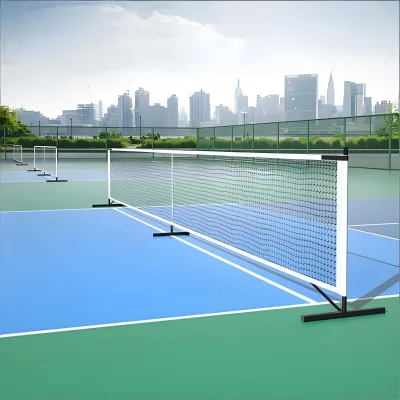
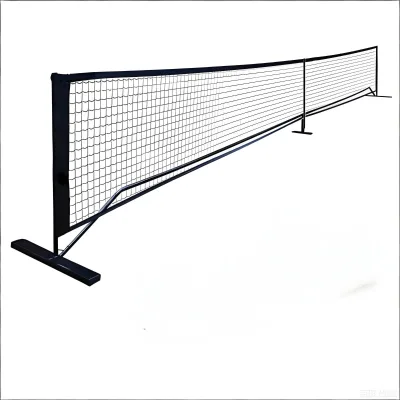


Pickleball Net Outdoor Black Pickleball Tennis Net 6.7m Portable Indoor and Outdoor
$22.70 - $24.10
MOQ: 20 pieces
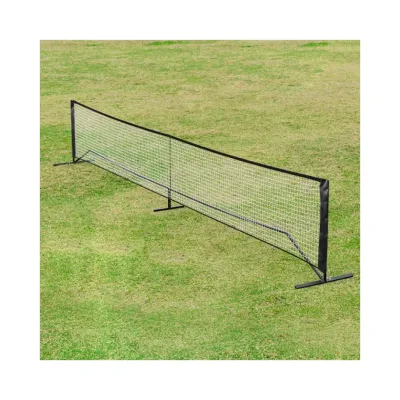
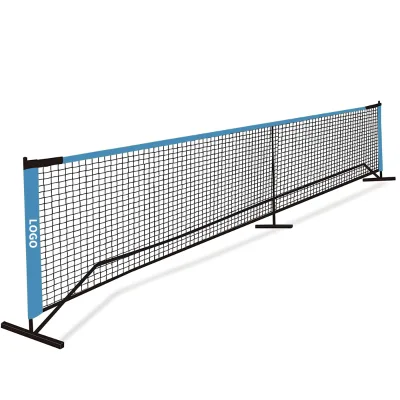
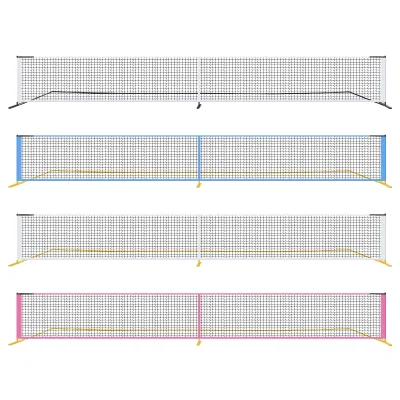
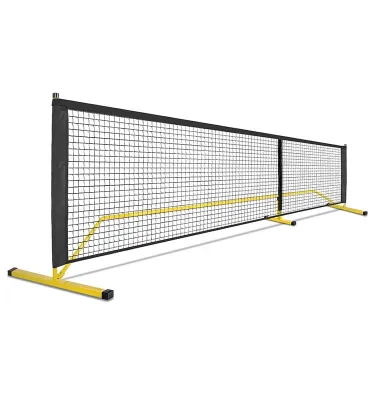

Quality Assurance Adjustable Tear-Resistant Regulation Pickleball Net for Sports Fields
$0.50 - $1.20
MOQ: 1 Square Meters

Factory Direct Anti-Aging Easy Installation Pickleball Net for Sports Hall
$0.50 - $1.20
MOQ: 1 Square Meters

High Tensile Tear-Resistant Safety Portable Outdoor Pickleball Net for Sports Training
$0.50 - $1.20
MOQ: 1 Square Meters
Comprehensive Sourcing Guide
Strategic Sourcing Guide for Waterproof Durable Pickleball Nets
Understanding Core Technical Specifications and Material Integrity
When sourcing a Waterproof Durable Pickleball Net, the primary objective is to identify equipment that maintains structural integrity under varying weather conditions while adhering to official court dimensions. The market presents a diverse array of configurations, and buyers must distinguish between temporary portable units and permanent installations. Based on available product data, a standard competitive net typically adheres to a width of 22 feet, which converts to approximately 6.7 meters. The height is a critical variable; while some units feature adjustable mechanisms to accommodate different playing styles or surface types, official standards often cite a height of 0.91 meters (3 feet) at the sidelines and 0.915 meters at the center.
Material selection is the cornerstone of durability and water resistance. The supplied data indicates a range of construction materials, including Polyethylene (PE), Polyester, and Polypropylene (PP) for the netting itself. These synthetic fibers are preferred for their resistance to moisture absorption, which prevents the net from becoming heavy or degrading when exposed to rain. For the frame and support structure, buyers should look for combinations of Iron Pipe and Fiberglass Poles. Iron provides the necessary rigidity for the main frame, while fiberglass offers a lightweight yet strong alternative that resists rust and corrosion, a common failure point in metal-only structures. Some listings also reference Oxford Cloth as a component, likely used for protective covers or specific structural reinforcements.
The construction of the netting must be tight enough to prevent the ball from passing through while remaining flexible enough to absorb the impact of play. The standard specification observed in the market is 6.7 meters by 0.91 meters, though slight variations such as 6.7m by 0.9m exist. When evaluating a "waterproof" claim, buyers should verify that the netting material is inherently hydrophobic or treated to repel water, ensuring that the net does not sag or lose tension after a rainstorm. The frame's connection points are equally vital; a durable net will feature reinforced stitching or welding at the corners to withstand the tension of the mesh and the force of the wind.
Compliance, Certification, and Dimensional Standards
In the B2B procurement of sports equipment, compliance with international standards is not merely a formality but a prerequisite for tournament eligibility. The core keyword "durable" implies that the product must withstand repeated use without deviating from regulatory dimensions. The supplied facts highlight specific standard dimensions, such as 6.7 * 0.91 m and 6.7 * 0.915 m. These figures align with the general requirements for pickleball courts, where the net must be taut and at the correct height to ensure fair play.
Buyers must verify that the product they source meets the specific dimensional tolerances required by the governing bodies of pickleball. While the data lists "Standard" as 6.7 * 0.91 m, it is crucial to understand that slight deviations can render a net non-compliant for official competitions. The width of 22 feet (6.7 meters) is non-negotiable for standard courts. Furthermore, the height must be adjustable or fixed at the precise 36 inches (0.9144 meters) at the center, though the data notes 0.915m as a standard, which is functionally equivalent for most commercial applications.
Regarding certifications, the supplied information does not explicitly list third-party testing bodies or specific certification marks (such as ISO or ASTM) for the nets. Therefore, procurement teams must treat the "Standard" attribute as a manufacturer's declaration of compliance rather than a verified certification. Buyers should request proof of testing, such as tension tests or dimensional verification reports, to ensure the net meets the 6.7m width and 0.91m height specifications consistently. The absence of explicit certification data in the product listings necessitates a rigorous due diligence process where the buyer validates the manufacturer's quality assurance protocols.
The origin of the product, often listed as China or specifically Jiangsu, is a relevant factor for supply chain logistics but does not inherently dictate compliance. However, manufacturers in these regions often cater to international markets and may be more accustomed to adhering to global dimensional standards. Buyers should ensure that the "Model Number" provided, such as TLPNET-01, BPN-1019, or PKN-1019, corresponds to a specific, standardized product line rather than a generic, unverified design.
Cost Drivers and Pricing Structure Analysis
The pricing for waterproof durable pickleball nets in the current market exhibits a significant variance, ranging from $0.25 to $16,812.55 USD. This wide range is not indicative of quality differences alone but reflects the diversity of product types, from individual replacement netting or small accessories to complete, heavy-duty portable court systems. When evaluating cost, buyers must avoid the trap of selecting the lowest price point, as this often correlates with inferior materials or lack of durability features.
Several key factors drive the cost of a high-quality net. First, the material composition is a primary driver. Nets constructed from high-grade PE, Polyester, and PP, combined with robust Iron Pipe and Fiberglass Poles, command a higher price than those using lower-grade plastics or thinner metals. The inclusion of features like adjustable heights and custom branding (OEM/ODM) also adds to the manufacturing cost. The data shows that some products include specific packaging like "1 Set 1 Pack" in a carton or "1set/Nylon Bag," which influences the final unit price due to the added material and labor for packaging.
Minimum Order Quantity (MOQ) is another critical cost driver. The observed MOQ range spans from 1 to 10,000 units. For buyers seeking to minimize initial capital expenditure, suppliers with lower MOQs (e.g., 200 PCS or even single units) are preferable, though the per-unit cost may be higher. Conversely, bulk orders of 10,000 units can significantly reduce the per-unit cost but require substantial upfront investment and storage capacity. The data indicates that some suppliers accept small orders, which is beneficial for startups or testing phases, while others require larger commitments.
Additional cost considerations include customization options. Products offering "Customized Logo" via Silk Screen Printing or "OEM" services typically incur a setup fee and a higher per-unit cost. The "Sample Time" of 3-7 days suggests that customization is a standard part of the process, and buyers should factor in the time and cost of sampling before committing to a large production run. The weight of the product, such as the 8.7kg specification, also impacts shipping costs, as heavier units require more expensive freight solutions.
Typical Applications and Target Audience Segmentation
The versatility of waterproof durable pickleball nets makes them suitable for a wide spectrum of applications, from professional tournaments to community recreational centers. The target audience data identifies four distinct segments: Youth, Professional Players, Children, and Adults. Each segment has specific requirements regarding net durability, portability, and adjustability.
For professional players and competition venues, the net must meet strict dimensional standards and offer high stability. The "Type: Pickleball Ball" and "Usage: for Competition" attributes suggest that some products are designed specifically for high-intensity play where the net must withstand constant ball impact and wind exposure. These nets often feature adjustable heights to accommodate different skill levels and court configurations. The "Target Audience" of professional players implies a need for premium materials like fiberglass poles and high-tension netting to ensure consistent performance.
In contrast, nets for youth and children may prioritize safety and ease of setup. The "Type: 6.7m Portable Pickleball Net" indicates a focus on mobility, allowing for quick assembly and disassembly in parks or school grounds. These units often come with carrying bags, such as "1 Set/Carry Bag" or "100 PCS Into One OPP Bag," facilitating transport. The "Usage: for Training" attribute highlights the importance of nets that can be used for repetitive drills without degrading quickly.
The "Color: White or Custom" and "Color: Black or as Your Request" options allow for branding and aesthetic customization, which is particularly relevant for corporate events, club memberships, and promotional activities. The "OEM: Yes" and "Custom: Available" attributes confirm that suppliers can tailor the net's appearance to match specific organizational branding, making these products ideal for marketing campaigns or league sponsorships.
Supplier Evaluation and Quality Control Protocols
Evaluating suppliers for waterproof durable pickleball nets requires a multi-faceted approach that goes beyond price and lead time. The supply chain data reveals that many products originate from China, with specific mentions of Jiangsu as a production hub. While this geographic concentration can offer logistical advantages, it also necessitates rigorous vetting to ensure consistent quality.
Buyers should prioritize suppliers who offer "Sample Time" of 3-7 days, as this indicates a responsive manufacturing process capable of fulfilling trial orders quickly. The availability of samples is crucial for verifying the "Waterproof" and "Durable" claims before placing a large order. Suppliers should be willing to provide physical samples that can be tested for water resistance, tensile strength, and dimensional accuracy.
Quality control protocols should include a verification of the "Material" composition. Buyers must ensure that the PE, Polyester, and PP materials used are of high grade and that the Iron Pipe and Fiberglass Poles are free from defects. The "Pack: 1 Set 1 Pack" and "prod_packing: Carton" attributes suggest that proper packaging is part of the quality assurance process, protecting the net during transit. Suppliers who use "Nylon Bag" or "Carry Bag" for individual sets demonstrate attention to detail in product presentation and protection.
The "Brand Name" data shows a mix of established names like TELOON and Anyball, alongside generic branding. While brand reputation is a factor, the specific model numbers (e.g., TLPNET-01, BPN-1019) provide a more reliable basis for comparison. Buyers should request detailed specifications for each model to ensure they match the required standards. Additionally, the "Logo: Silk Screen Printing" and "Logo: Customized Logo" options should be evaluated for print quality and durability, as these are common points of failure in branded products.
Long-Term Procurement and Maintenance Considerations
Sourcing a Waterproof Durable Pickleball Net is an investment that extends beyond the initial purchase. Long-term procurement strategies should focus on the lifecycle of the product, including maintenance, replacement parts, and scalability. The "Adjustable" height feature is a significant long-term asset, as it allows the net to adapt to different court surfaces and playing conditions, extending its usable life.
Maintenance requirements vary based on the materials used. Nets made from PE and Polyester generally require minimal maintenance, but regular cleaning to remove dirt and debris is essential to prevent degradation. The "Waterproof" attribute implies that the net can be left outdoors, but buyers should still consider the use of protective covers, especially in extreme weather conditions. The "Weight: 8.7kg" specification suggests that the net is substantial enough to remain stable in wind but light enough for manual handling, which is a balance that affects long-term usability.
Scalability is another consideration for organizations planning to expand their pickleball facilities. Suppliers with a broad range of models, such as the PKN-040, WPN-4032, and WR-0717-1, offer flexibility for different court sizes and configurations. The "MOQ: 200PCS" and "Small Orders: Accepted" policies indicate that suppliers can accommodate both small and large-scale expansions, making them suitable partners for growing organizations.
Finally, the "Standard: 6.7 * 0.91 m" and "Standard: 92x19x14cm" dimensions provide a baseline for compatibility with existing court infrastructure. Buyers should ensure that any new nets purchased are compatible with their current setup to avoid costly retrofits. The "OEM: Yes" and "Custom: Available" options allow for future customization as branding needs evolve, ensuring that the procurement strategy remains flexible and responsive to changing market demands.
Comparative Analysis of Product Attributes
To facilitate informed decision-making, the following table summarizes key attributes observed in the market, highlighting the variations in materials, dimensions, and packaging that buyers should consider.
| Attribute Category | Observed Variations | Procurement Implication |
|---|---|---|
| Material Composition | PE, Polyester, PP, Oxford Cloth, Iron Pipe, Fiberglass Pole | Select high-grade synthetics for water resistance; prioritize fiberglass for rust resistance. |
| Dimensions | 6.7m x 0.91m, 6.7m x 0.915m, 22ft Width | Verify exact dimensions against local court standards; 6.7m is the standard width. |
| Height Adjustment | Adjustable, Fixed | Adjustable nets offer versatility for different skill levels and court types. |
| Packaging | Carton, Nylon Bag, Carry Bag, OPP Bag | Ensure packaging protects the net during transit; carry bags aid portability. |
| Customization | Silk Screen Printing, Custom Logo, OEM | Essential for branding; verify print durability and setup costs. |
| MOQ | 1 to 10,000 PCS | Lower MOQs suit testing; higher MOQs reduce unit cost for bulk orders. |
| Origin | China, Jiangsu | Geographic concentration offers logistics benefits but requires quality vetting. |
This comparative analysis underscores the importance of aligning specific product attributes with organizational needs. By carefully evaluating these factors, buyers can secure a Waterproof Durable Pickleball Net that meets both immediate performance requirements and long-term strategic goals.
FAQs
What are the standard dimensions for a Waterproof Durable Pickleball Net?
The standard width is 22 feet or 6.7 meters, with a height of 0.91 meters at the sidelines. Some models feature adjustable heights to accommodate different playing styles or surface types while maintaining structural integrity.
Which materials ensure the net is waterproof and durable?
High-grade Polyethylene, Polyester, and Polypropylene are used for the netting to resist moisture absorption. The frame typically combines Iron Pipe for rigidity with Fiberglass Poles to prevent rust and corrosion during outdoor use.
Can I order small quantities of these nets for testing purposes?
Yes, many suppliers accept small orders starting from just one unit. However, specific models may have a Minimum Order Quantity of 200 pieces, so buyers should verify the MOQ before placing a trial order.
How long does it take to receive a sample for quality verification?
The sample time typically ranges from 3 to 7 days for production and delivery. This allows buyers to verify the waterproof claims and material quality before committing to a larger bulk purchase order.
Are customization options like logos available for bulk orders?
Customization is available for logos using Silk Screen Printing or other methods upon request. Buyers can also choose custom colors and packaging, though these options may require an OEM setup fee and specific lead times.
What packaging is used to protect the net during shipping?
Nets are commonly packed in cartons, nylon bags, or carry bags depending on the model. This packaging ensures the product remains protected during transit and facilitates easy setup at the destination location.