Source Waterproof Metallized Paper Beer Labels for Bottles, Gifts, and Decor
Find and compare 30 listings for Waterproof Metallized Paper Beer Labels suitable for bottled beverages, promotional gifts, and home decorations. These self-adhesive options feature UV-proof eco-friendly inks and die-cut designs for versatile industrial and retail applications.
Key considerations
Products List


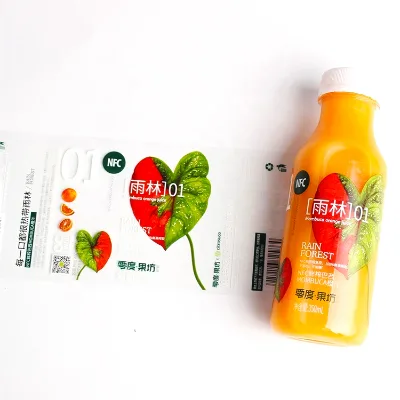
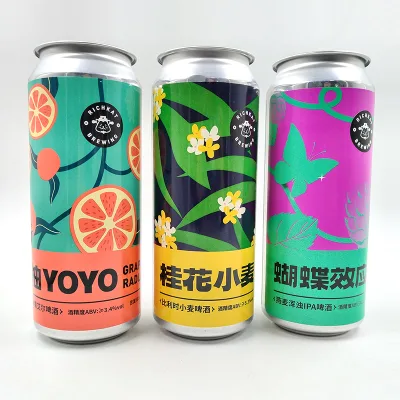


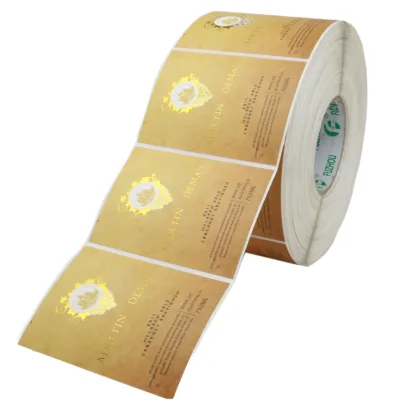


Comprehensive Sourcing Guide
Waterproof Metallized Paper Beer Labels Sourcing Guide
Procuring Waterproof Metallized Paper Beer Labels requires a nuanced understanding of how material science intersects with beverage industry demands. While the core keyword suggests a specific hybrid material, the available market data reveals a complex landscape where "Paper" and "PET" are both listed as primary materials for similar applications. Buyers must recognize that true metallized paper labels often rely on a paper substrate coated with a metallic finish and a protective waterproof layer, whereas other listings indicate pure PET or metal foil constructions. This distinction is critical because the performance characteristics, such as adhesion strength and resistance to condensation, vary significantly between these material classes.
The sourcing strategy must account for the diverse customization options observed in current listings, ranging from die-cut shapes to kiss-cut formats. Suppliers frequently offer these labels with UV-proof, eco-friendly inks and strong adhesive properties designed specifically for bottled beverages. However, the presence of "Metal Label" and "Metal Wine Label" specifications alongside paper-based entries indicates that buyers must explicitly define whether they require a paper substrate with a metallized appearance or a fully metallic construction. Clarifying this material intent early in the inquiry process prevents mismatches between the ordered product and the intended application environment.
Product Scope and Observed Listing Signals
The observed product scope for waterproof labels in this category spans a wide range of usage scenarios, including bottled beverages, personal decorations, and promotional gifts. Listings indicate that these items are available as self-adhesive stickers with features like barcode printing and anti-counterfeit capabilities, suggesting they serve both functional and marketing purposes. The "In-Mould Label" type and "Adhesive Sticker" classifications highlight that the product can be integrated directly into the manufacturing process or applied as a secondary layer, depending on the buyer's production line requirements.
Price and minimum order quantity (MOQ) signals in the market show a high degree of variability, with observed price ranges starting near zero and MOQs fluctuating between 100 pieces and one million units. This variance suggests that the market accommodates both small-batch prototyping and large-scale industrial deployment. Buyers should note that while some listings specify a "Single item" selling unit, others reference bulk packaging in cartons and wood pallets, indicating that logistics and packaging standards are key differentiators among suppliers. Understanding these commercial signals helps in aligning procurement volume with the appropriate supplier tier.
Technical Specifications to Verify
Verifying the technical specifications of waterproof metallized paper labels begins with confirming the substrate composition and the specific printing technology employed. The market data lists "Offset Printing," "Letterpress Printing," and "Transfer Printing" as available methods, each offering distinct advantages in color fidelity and production speed. Buyers must ensure that the chosen printing method is compatible with the metallized finish and the waterproof coating to prevent ink smudging or delamination when exposed to cold temperatures and moisture. Additionally, the "UV Proof Eco Friendly" ink specification is a vital technical attribute to confirm, as it ensures the label retains its visual integrity under various lighting conditions and environmental exposures.
Dimensional and adhesive performance are equally critical verification points, particularly given the "strong" adhesive and "custom" size specifications found in listings. The "Self Adhesive" attribute is consistently present, but the specific adhesive formulation must be tested for its ability to bond to glass or plastic bottles under condensation. Buyers should also verify the cutting method, as "Die Cut" and "Kiss Cut" options affect the ease of application and the final aesthetic of the label. Confirming that the label model matches the intended bottle curvature and that the "68-73g" weight range (or equivalent) is suitable for the specific beverage container is essential for operational success.
Compliance and Safety Documentation
Ensuring compliance for beer labels involves verifying that the materials and inks meet food-contact safety standards, even though specific certification names are not universally listed in the provided data. The mention of "Eco Friendly" ink suggests a potential alignment with environmental regulations, but buyers must request explicit documentation confirming that the label materials are safe for indirect food contact. This is particularly important for beverages that may be stored in cold environments where condensation can facilitate the migration of substances from the label to the product.
Documentation regarding the origin and manufacturing standards is another crucial compliance element. With "China" and "Guangdong, China" listed as common places of origin, buyers should verify that the supplier adheres to international quality management systems and specific export standards. The "customized" standard noted in the data implies that many suppliers operate on a bespoke basis, which necessitates a rigorous review of their internal quality control protocols. Buyers should ensure that the supplier can provide traceability for raw materials, such as the "Self Adhesive Label" raw material, to guarantee that no prohibited substances are used in the production of the metallized paper or PET components.
Cost Drivers and Commercial Terms
The cost of Waterproof Metallized Paper Beer Labels is driven primarily by the complexity of the customization and the volume of the order. The wide MOQ range, from 100 pieces to one million, indicates that unit costs will decrease significantly as order volume increases, but the initial setup costs for custom designs, die-cutting, and specialized printing may remain high. Buyers should anticipate that the "customized" nature of the product, including specific sizes and shapes, will incur additional tooling or setup fees compared to standard stock items.
Commercial terms regarding packaging and logistics also play a significant role in the total cost of ownership. Listings mention packaging in "Cartons and Wood Pallets" as well as "Box" or "Wooden Case" options, which directly impact shipping costs and storage requirements. The "in roll or in sheet" standard for product presentation affects how the labels are fed into labeling machines, potentially influencing the efficiency of the buyer's production line. Buyers must negotiate clear terms regarding lead times and the handling of custom orders to avoid delays that could disrupt their beverage production schedules.
Supplier Qualification and Quality Control
Qualifying a supplier for waterproof metallized paper labels requires a deep dive into their production capabilities and quality assurance processes. The presence of "Anti-Counterfeit" features in the product attributes suggests that some suppliers have advanced capabilities in security printing, which is a strong indicator of technical maturity. Buyers should verify that the supplier has the equipment to handle "Transfer Printing" and "Offset Printing" with the precision required for metallized finishes, as these processes demand tight tolerances to ensure the metallic layer remains intact and uniform.
Quality control checks should focus on the consistency of the waterproofing and the strength of the adhesive bond. Since the data highlights "Waterproof" as a key feature, buyers must request test results demonstrating the label's performance under simulated condensation and immersion conditions. The "strong" adhesive attribute is a claim that must be validated through real-world testing on the specific bottle materials the buyer uses. Additionally, verifying the supplier's ability to maintain consistency across large batches is essential, especially given the "customized" nature of the orders which can introduce variability if not strictly managed.
Long-Term Procurement Checks
Establishing a long-term procurement relationship for these labels involves regular audits of the supplier's ability to maintain material consistency and adhere to evolving environmental standards. As the market shifts towards more sustainable packaging, the "Eco Friendly" ink and "Paper" material attributes may become even more critical. Buyers should monitor the supplier's progress in sourcing sustainable raw materials and their ability to adapt to new regulations regarding food-contact materials and recycling.
Continuous performance monitoring is also necessary to ensure that the labels continue to meet the operational demands of the beverage production line. Buyers should track metrics such as label application rates, waste generation, and any instances of label failure due to moisture or temperature changes. The "Custom Order" acceptance capability of suppliers is a valuable asset for long-term partnerships, allowing for iterative improvements based on field feedback. By maintaining open communication and setting clear performance benchmarks, buyers can ensure a stable supply chain that supports their brand's reputation for quality and reliability.
FAQs
Can Waterproof Metallized Paper Beer Labels be customized?
Yes, customization is available for these labels. Buyers can request specific designs, sizes, and printing methods such as offset or letterpress. The material can be paper or PET, and features like die-cutting or self-adhesive backing are supported. This allows for tailored branding solutions for bottled beverages and other commercial uses.
What materials are used for these waterproof labels?
The primary materials include paper and PET. Paper options often feature waterproof properties and are suitable for offset printing. PET variants provide durability and are also waterproof. Some labels use self-adhesive backing with strong adhesive properties. The choice depends on whether the application requires a metallic finish or specific thermal resistance.
What printing types are supported for these labels?
Supported printing types include offset printing, letterpress printing, and transfer printing. UV proof eco-friendly inks are commonly used to ensure quality and safety. These methods allow for high-resolution graphics and text. The printing technique can be selected based on the desired finish, color accuracy, and production volume requirements for beer bottles or other beverages.
What is the typical MOQ for these labels?
The MOQ ranges from 100 pieces to 1,000,000 units. This wide range accommodates both small custom orders and large-scale industrial production. Buyers can select quantities based on their specific needs, with options for single items or bulk sheets. The flexibility in MOQ allows for efficient sourcing regardless of the order size or project scale.
Are these labels suitable for bottled beverages?
Yes, these labels are specifically designed for bottled beverages. They feature waterproof properties to withstand condensation and moisture. The adhesive is strong, ensuring the label stays attached during handling and storage. They are suitable for beer, wine, and other drinks, providing a durable and professional appearance for product branding and information display.
What packaging options are available for these labels?
Packaging options include cartons, wood pallets, boxes, and wooden cases. Labels may be supplied in rolls or sheets depending on the specification. The packaging is designed to protect the labels during shipping and storage. This ensures that the product arrives in good condition, ready for application on bottles or other surfaces without damage or deformation.