Source Waterproof Warm Anti-Slip Ankle Boots for Construction, Oilfield, and Mining
Compare 30 listings of Waterproof Warm Anti-Slip Ankle Boots designed for industrial safety. These options feature steel toe protection, puncture-resistant midsoles, and deep tread soles suitable for wet and muddy terrain in construction, oilfield, and mining environments.
Key considerations
Products List


Ankle Bootie Rainboots Safety Rain Shoes Waterproof Anti-Slip Water Boots
$1.40 - $1.60
MOQ: 1000 Pairs


Green Black Leather Boots with Rubber Anti Slip Sole and Wear-Resistant Hiking Boots
$12.00 - $20.00
MOQ: 500 Pairs


Outdoor Duty Coldproof Heated Boots Thick Wool Inner Anti-Slip Snow Boots
$50.00 - $54.00
MOQ: 5 Pairs

Anti-Slip Rubber Sole Boots Comfortable Boots Durable Boots Breathable Fabric Boots
$18.00 - $28.00
MOQ: 1000 Pieces

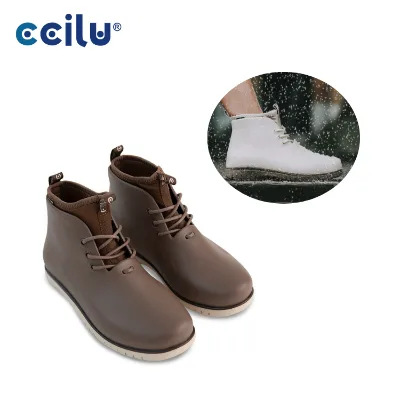


Warm and Cozy Hiking Non-Slip Cold-Resistant Boots with Excellent Grip Features
$5.70 - $6.30
MOQ: 1000 Pairs
Comprehensive Sourcing Guide
Sourcing Guide for Waterproof Warm Anti-Slip Ankle Boots
Understanding Technical Specifications and Material Composition
When sourcing waterproof warm anti-slip ankle boots for industrial or outdoor applications, buyers must first scrutinize the fundamental material composition and structural design. The core product category typically features an upper material constructed from genuine leather, which provides the necessary durability and breathability required for heavy-duty environments. In specific configurations, the lining material may also utilize genuine leather, though mesh variants are observed in certain listings to offer enhanced ventilation. For winter-specific models, a thick plush warm lining is a critical specification to ensure thermal retention in cold weather conditions.
The protective architecture of these boots is defined by a steel toe cap designed to resist anti-smash impacts, alongside a steel plate embedded in the midsole to provide anti-puncture protection. This dual-layer defense system is essential for industries involving falling objects or sharp debris. The outsole material is predominantly rubber, specifically formulated with a SRC slip-resistant rating to handle oil and water hazards. The tread feature often includes a deep tread pattern to maximize grip on wet and muddy terrain, while the boot height is generally categorized as a high cut or mid-calf shaft to offer ankle support and prevent debris entry.
| Component | Standard Observation | Functional Purpose |
|---|---|---|
| Upper Material | Genuine Leather | Durability and abrasion resistance |
| Lining | Thick Plush or Mesh | Thermal insulation or breathability |
| Toe Protection | Steel Toe Cap Anti-Smash | Impact protection for toes |
| Midsole | Steel Plate Anti-Penetration | Protection against sharp objects |
| Outsole | SRC Slip Resistant Rubber | Traction on wet/oily surfaces |
| Waterproofing | Full Upper Waterproof | Complete barrier against moisture |
Buyers should verify that the specific model they are evaluating matches these structural attributes. While some listings indicate a "High Cut Ankle Support" and others specify a "Mid-Calf Shaft," the functional intent remains consistent: to provide stability and protection. The lace system typically employs reinforced metal eyelets to ensure longevity under tension, and visibility is often enhanced through side reflective strips or white reflective markings.
Compliance and Safety Standard Verification
In the realm of industrial safety footwear, compliance with recognized safety standards is non-negotiable. The market data indicates that products in this category are often marketed as meeting the S3 or S1p safety grade, which corresponds to specific requirements for water resistance, puncture protection, and energy absorption. A critical certification to look for is the CE En ISO 20345 standard. This standard governs the safety requirements for protective footwear, ensuring that the steel toe cap can withstand a specific impact energy and that the sole can resist penetration by a nail.
Buyers must exercise caution when reviewing supplier claims regarding certifications. While CE En ISO 20345 is a documented standard in the product attributes, other certifications like OEKO-TEX may appear in background contexts but should not be assumed as a guaranteed feature of every listed product without explicit verification. The "Industrial Safety Footwear" classification is a broad descriptor that requires the buyer to demand specific test reports or certification documents from the supplier to confirm that the boots meet the claimed S3 or S1p criteria.
It is vital to distinguish between general safety claims and verified compliance. The presence of a "Safety Standard" attribute in a product listing does not automatically imply that the specific batch of goods has been tested and certified by an accredited body. Procurement teams should request the actual certification documentation for the specific model number, such as WSY-SWS-037 or WSY-SWS-052, to ensure the safety features like the steel toe and anti-puncture midsole have been validated against the relevant ISO standards.
Cost Drivers and Pricing Dynamics
The pricing for waterproof warm anti-slip ankle boots is influenced by a complex interplay of material costs, manufacturing complexity, and order volume. The observed price range in the market spans from approximately 1.4 to 70 USD, a significant variance that reflects differences in material quality, brand positioning, and order quantity. Lower price points often correlate with basic leather uppers and standard rubber soles, while higher price points may indicate premium genuine leather, specialized thermal linings, or enhanced anti-static properties.
Minimum Order Quantity (MOQ) is another primary cost driver, with observed ranges extending from 1 to 1000 units. Buyers purchasing small quantities may face higher per-unit costs but benefit from lower capital outlay and reduced inventory risk. Conversely, larger orders typically unlock volume discounts but require a higher upfront investment. The customization of logos and sizes is a value-added service that can influence the final cost. While customization is available, it often introduces additional setup fees or requires a higher MOQ threshold to be economically viable.
The "Hand Made" attribute observed in some product listings suggests a labor-intensive manufacturing process, which can drive up costs compared to fully automated production lines. Similarly, the use of genuine leather for both the upper and lining materials, as opposed to synthetic alternatives, significantly impacts the base price. Buyers must balance their budget constraints against the need for specific performance features, such as oil resistance or full upper waterproofing, which may command a premium.
Typical Applications and Working Environments
These boots are engineered for a diverse range of demanding environments, with primary applications in construction sites, oilfields, and mining operations. The "Wet & Muddy Terrain" working environment is a key use case, where the deep tread slip-resistant outsole and full upper waterproofing are essential for maintaining traction and keeping feet dry. The heavy-duty abrasion-resistant wear resistance ensures the boots can withstand the rigors of moving through rough terrain and handling heavy machinery.
In warehouse and machinery workshop settings, the anti-static and puncture-resistant features become critical. The steel toe cap protects against falling tools or materials, while the steel plate midsole guards against nails or sharp debris often found on construction floors. The oil-resistant and water-repellent special features make these boots suitable for environments where chemical spills or liquid hazards are present.
The "Winter Cold Weather Use" designation highlights the boots' suitability for seasonal work in colder climates. The thick plush warm lining and high cut design provide necessary insulation and protection against snow and ice. The anti-sprain ankle wrap function is particularly beneficial for workers who navigate uneven ground, reducing the risk of injury from twisting or rolling the ankle. Whether the application is in an oilfield or a general construction site, the boots are designed to provide comprehensive protection across multiple hazard categories.
Supplier Evaluation and Customization Capabilities
When evaluating potential suppliers, buyers should look for demonstrated capabilities in customization and production flexibility. The availability of logo and size customization is a significant indicator of a supplier's ability to tailor products to specific corporate or regional requirements. This feature allows companies to brand their safety footwear, which can be important for team identification and brand consistency.
The origin of the products is a known factor, with China identified as the production location for these items. Buyers should verify the supplier's capacity to maintain consistent quality across different batches, especially when dealing with customized orders. The "Hand Made" aspect suggests that human craftsmanship plays a role in the assembly, which can lead to variations in product consistency. Therefore, a robust quality control process is essential to ensure that every pair of boots meets the specified safety and comfort standards.
Suppliers should also be able to provide clear information regarding their production lead times and packing standards. The standard product packing is typically a box, which protects the boots during transit. However, for bulk orders, buyers may need to negotiate alternative packaging solutions to optimize shipping costs and minimize environmental impact. The ability to support various shoe sizes, ranging from 4.5 to 19 in US sizing, indicates a supplier's capacity to serve a wide demographic of workers.
Quality Control and Long-Term Procurement Considerations
Implementing a rigorous quality control (QC) protocol is essential for mitigating risks associated with safety footwear procurement. Buyers should verify that the steel toe cap and steel plate midsole are correctly positioned and securely bonded to the upper and outsole. The waterproof performance, described as "Full Upper Waterproof," must be tested to ensure there are no leaks at the seams or eyelets. The slip resistance of the SRC outsole should be validated through appropriate testing methods to confirm it meets the required friction coefficients.
Long-term procurement considerations involve assessing the durability and lifecycle of the boots. The "Sturdy Durable Structure" and "Heavy Duty Abrasion Resistant" attributes suggest a product designed for extended use, but actual performance depends on the specific working conditions. Buyers should establish a replacement schedule based on wear patterns, particularly in high-abrasion environments. The shock absorption provided by the midsole cushion design is another critical factor for worker comfort and injury prevention over long shifts.
Finally, buyers must consider the total cost of ownership, which includes not only the purchase price but also the cost of replacements, potential downtime due to footwear failure, and the impact on worker safety. By selecting boots that meet verified safety standards and are sourced from reputable suppliers with strong QC processes, organizations can ensure a safer working environment and reduce long-term costs associated with workplace injuries. The continuous evaluation of supplier performance and product quality is necessary to maintain high safety standards over time.
FAQs
What safety standards do these boots meet?
These boots meet the S3 and S1p safety grades and carry CE En ISO 20345 certification. This ensures the steel toe cap resists impact and the steel plate midsole prevents punctures in industrial environments.
Which materials are used for the upper and lining?
The upper is constructed from genuine leather for durability, while the lining varies between mesh for ventilation and thick plush for winter warmth. This combination ensures breathability or thermal retention depending on the specific model.
Can I customize the logo and size of the boots?
Yes, logo and size customization are supported for these waterproof warm anti-slip ankle boots. Buyers can request specific branding and sizing ranges from 4.5 to 19 US, though this may affect minimum order quantities.
How are the boots protected against punctures and impacts?
Protection is provided by a steel toe cap for anti-smash resistance and a steel plate in the midsole for anti-puncture defense. This dual-layer system safeguards against falling objects and sharp debris on construction sites.
What is the waterproof performance of the footwear?
The boots feature full upper waterproofing to keep feet dry in wet and muddy terrain. This design, combined with a SRC slip-resistant rubber outsole, ensures safety and comfort in hazardous working environments.
Which industries are these boots suitable for?
These boots are designed for oilfields, construction, and mining applications where heavy-duty protection is required. They are also suitable for warehouse and machinery workshop settings that demand anti-static and puncture-resistant features.