Source Waterproof Washed Leather Motorcycle Jacket for Racing, Cycling, and Daily Riding
Compare 30 listings of Waterproof Washed Leather Motorcycle Jacket options featuring breathable, windproof, and rip-stop fabrics. Buyers can review specifications from manufacturers in Taian, Shandong, and request custom OEM or ODM solutions for men's and unisex sizes.
Key considerations
Products List


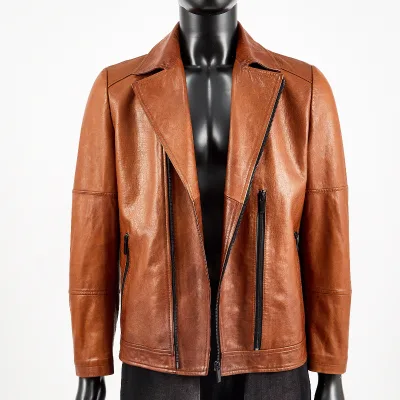
Crop Motorcycle Windbreaker Leather Jackets Moto Leather Jacket for Men
$13.50 - $29.50
MOQ: 100 piece


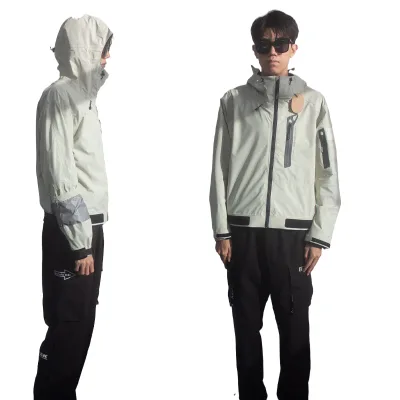
OEM Fabric Color Waterproof Rain Jackets Outdoor Motorcycle Hiking Waterproof Jacket
$32.64 - $34.17
MOQ: 100 pieces



Comprehensive Sourcing Guide
Strategic Sourcing Guide for Waterproof Washed Leather Motorcycle Jackets
Understanding Material Composition and Fabric Standards
When sourcing a Waterproof Washed Leather Motorcycle Jacket, the primary distinction lies in the material composition, which often diverges from traditional full-grain leather. The supplied product data indicates a significant prevalence of synthetic alternatives designed to mimic leather aesthetics while offering enhanced functional properties. Buyers must carefully distinguish between genuine leather, PU leather, and high-performance synthetic blends. The observed specifications reveal that many listed products utilize a composition of 100% Polyester or a blend of 100% Nylon and Polyester. For instance, specific model numbers such as BWS21-3019 and BWS20-W005 are associated with standards listing 100% Nylon/Polyester or 100% Polyester.
The term "washed" in the context of these jackets often refers to a finishing process applied to the fabric or synthetic leather to achieve a soft hand feel and a vintage aesthetic, rather than a treatment of animal hide. The product attributes explicitly list "PU Leather" and "Fabric: Leather Jacket" as distinct categories, suggesting that the market offers both genuine leather options and synthetic PU variants that are engineered for specific performance metrics. The material list further confirms the presence of Cotton, Rayon, and Spandex in various combinations, indicating that stretch and comfort are critical design factors.
Buyers should verify the exact material standard for each SKU. While some entries cite "100% Nylon" as a standard, others specify "100% polyester." This variance is critical for procurement because the water resistance, durability, and breathability profiles differ significantly between nylon and polyester. Nylon generally offers superior abrasion resistance and water repellency, whereas polyester provides excellent moisture-wicking capabilities and color retention. The "Soft shell" and "Woven" fabric types observed in the data suggest that these jackets may not be traditional leather but rather advanced textile constructions that offer a leather-like appearance with superior weather protection.
Technical Specifications and Performance Features
The technical requirements for a motorcycle jacket intended for racing and cycling applications are rigorous. The observed product attributes highlight a comprehensive suite of performance features that define a high-quality unit. Key features include "Waterproof," "Windproof," "Breathable," and "Rip-Stop." These attributes are not merely marketing terms but functional necessities for riders exposed to the elements. The "Quick-Drying" and "Moisture-Wicking" capabilities are particularly relevant for high-intensity activities like racing, where sweat management is as important as rain protection.
The closure mechanism is standardized across the observed inventory, with "Zipper" being the primary method of fastening. Specific brand requirements for zippers, such as "Ykk" or "Sbs," are noted as available upon customer request. This indicates that while generic zippers may be standard, premium buyers can specify high-end hardware for enhanced durability and smooth operation. The "Garment dyed" technique mentioned in the technical specifications suggests a dyeing process applied after the garment is constructed, which can result in a more uniform color and a softer texture compared to piece-dyed methods.
Size inclusivity is another critical technical specification. The data shows a size range extending from "Xs" to "Xxxl," alongside a "Free Size" option. This variability allows buyers to cater to diverse demographic needs, whether targeting a specific unisex market or a broader men's demographic. The "Body Shape" feature listed in the attributes implies that the cut of the jacket is designed to accommodate the aerodynamic posture required for motorcycle riding, ensuring that the jacket does not restrict movement while providing coverage.
Compliance, Certification, and Safety Verification
In the realm of motorcycle apparel, compliance and safety are paramount, yet the supplied product data does not explicitly list third-party safety certifications such as CE (Conformité Européenne) or specific abrasion resistance ratings like EN 17092. This absence necessitates a proactive approach from the buyer during the supplier evaluation phase. Buyers must verify if the "100% Nylon" or "100% Polyester" standards meet specific industry safety benchmarks for impact protection and abrasion resistance.
The "Standard" field in the data lists material composition (e.g., "100% Nylon") rather than safety certification codes. This distinction is vital; a material standard defines what the jacket is made of, whereas a safety standard defines how well it protects the wearer. Buyers should request documentation proving that the jacket meets relevant motorcycle safety standards for the target market. For instance, if the jacket is intended for racing, it may require specific armor integration points or reinforced stitching standards that are not immediately visible in the product description.
Furthermore, the "Customization" and "OEM/ODM" availability suggests that buyers have the opportunity to tailor the product to meet specific regulatory requirements. This includes the ability to specify zipper brands, add reflective elements for visibility, or integrate protective padding. The "Small Orders: Accepted" attribute indicates flexibility in the supply chain, but it does not imply a relaxation of safety standards. Buyers must ensure that even small batch orders adhere to the same safety protocols as bulk production runs.
Cost Drivers and Pricing Dynamics
The pricing landscape for waterproof washed leather motorcycle jackets is influenced by several factors, including material composition, customization levels, and order volume. The observed price range spans from $10.5 to $147 USD, a significant variance that reflects differences in quality, brand positioning, and feature sets. The lower end of the spectrum likely corresponds to basic PU leather or polyester constructions with standard features, while the higher end may represent premium materials, advanced waterproofing technologies, or extensive customization.
The Minimum Order Quantity (MOQ) is a critical cost driver, ranging from 2 to 1000 units. The data indicates that some suppliers accept small orders, which can be beneficial for testing the market or fulfilling niche requirements. However, other entries specify an MOQ of "100PCS of One Color," which is a common threshold for custom manufacturing to ensure production efficiency. Buyers must balance the desire for customization with the economic reality of MOQs.
Additional cost factors include the complexity of the design, such as the "Garment dyed" process, which can be more labor-intensive than standard dyeing. The inclusion of specific zipper brands like Ykk or Sbs may also add to the unit cost. Furthermore, the "Customization" options, such as custom colors or logos, often incur setup fees or higher per-unit costs. The "Supply Type" of OEM and ODM suggests that buyers can choose between purchasing off-the-shelf products or developing a unique product, with the latter typically commanding a higher price due to development costs.
Supplier Evaluation and Production Capabilities
Evaluating suppliers for motorcycle jackets requires a focus on their production capabilities, origin, and flexibility. The data indicates that the primary production origin is "Taian, Shandong, China," a region known for its textile and garment manufacturing infrastructure. This concentration of suppliers in a specific geographic area can facilitate logistics and communication but also requires buyers to conduct thorough due diligence to ensure quality consistency.
The "Supply Type" of OEM and ODM highlights the supplier's ability to manufacture products based on buyer specifications or their own designs. This flexibility is crucial for buyers seeking unique products. The "Customization: Available" attribute further supports the idea that suppliers are equipped to handle bespoke requests, including color, size, and branding. However, buyers should verify the supplier's capacity to handle the specific technical requirements of motorcycle gear, such as the integration of armor or the application of specialized waterproof coatings.
The "Packing" specifications, such as "1PC/Polybag, 8 PCS/CTN" or "10PCS/Carton," provide insight into the supplier's logistics readiness. Standardized packing ensures that products arrive in good condition and are easy to distribute. Buyers should confirm that the packing methods align with their own distribution requirements and that the "Customes' Requirements" option is viable for special packaging needs.
Quality Control and Long-Term Procurement Strategy
Ensuring consistent quality in waterproof washed leather motorcycle jackets requires a robust quality control (QC) strategy. Given the variation in materials from 100% Nylon to 100% Polyester, buyers must establish clear acceptance criteria for each material type. Key QC checkpoints should include verifying the integrity of the waterproof coating, the durability of the zipper, and the consistency of the "Garment dyed" finish. The "Rip-Stop" feature, if claimed, must be tested for tear resistance to ensure it meets the demands of motorcycle riding.
Long-term procurement considerations involve building a relationship with suppliers who can maintain quality over time. The "Small Orders: Accepted" feature allows for initial testing, but buyers should plan for scaling up production while maintaining quality standards. The "Customization" aspect offers an opportunity to refine the product based on feedback from initial batches. Buyers should also consider the "Season: Winter" attribute, ensuring that the jackets are suitable for the intended climate and that the materials provide adequate insulation and protection against cold and moisture.
The "Usage" of "Racing" and "Cycling" suggests that the jackets are designed for high-performance activities. Buyers should verify that the jackets meet the specific demands of these activities, such as aerodynamic fit and freedom of movement. The "Model Number" variations, such as JK001, BWSMJ-8024, and BWS21-3019, indicate a diverse product line. Buyers should select models that best align with their target market's needs and ensure that the supplier can consistently produce these specific models.
Comparative Analysis of Product Attributes
To facilitate decision-making, the following table summarizes the key attributes observed in the product data, highlighting the variations that buyers should consider during sourcing.
| Attribute Category | Observed Variations | Procurement Implication |
|---|---|---|
| Material | 100% Nylon, 100% Polyester, PU Leather, Cotton, Rayon, Spandex | Verify material suitability for intended use (e.g., Nylon for abrasion, Polyester for wicking). |
| Waterproofing | Waterproof, Windproof, Breathable, Quick-Drying | Confirm testing standards for waterproofing and breathability ratings. |
| Closure | Zipper (Ykk, Sbs available) | Specify zipper brand for durability; check for water-resistant zippers. |
| Size Range | Xs-Xxxl, Free Size | Ensure size chart aligns with target demographic; check for unisex vs. men's fit. |
| Customization | Available (Color, Logo, Packing) | Assess MOQ impact on customization; verify lead times for custom orders. |
| Origin | Taian, Shandong, China | Factor in logistics and potential tariffs; verify supplier reliability in region. |
| MOQ | 2 to 1000 PCS | Balance order volume with cash flow; negotiate MOQ for custom items. |
| Packing | 1PC/Polybag, 8-10 PCS/CTN | Confirm packing meets distribution needs; check for custom packaging options. |
This comparative analysis underscores the importance of detailed specification checks. The diversity in material and feature sets means that a "one-size-fits-all" approach to sourcing is ineffective. Buyers must align their specific requirements with the capabilities of the supplier, ensuring that the final product meets both functional and aesthetic expectations. By carefully evaluating these attributes, buyers can mitigate risks and secure a supply chain that delivers high-quality, reliable motorcycle jackets.
FAQs
What materials are used for waterproof washed leather motorcycle jackets?
These jackets are primarily made from 100% Polyester, 100% Nylon, or PU Leather blends. Some variations include Cotton, Rayon, and Spandex for stretch. Buyers must verify the specific material standard for each model to ensure the desired balance of abrasion resistance and moisture wicking.
Can I customize the color and zipper brand for these jackets?
Yes, customization is available for color and zipper brands like Ykk or Sbs. Suppliers accept custom requirements for packing and design details. This flexibility allows buyers to tailor the product to specific branding needs while maintaining the core waterproof and windproof features.
Which size ranges are available for these motorcycle jackets?
Available sizes range from Xs to Xxxl, with some options listed as Free Size. The cut is designed to accommodate body shapes for riding. Buyers should confirm the specific size chart for each model number to ensure proper fit for their target demographic.
How do I find suppliers with low minimum order quantities?
Some suppliers accept small orders with an MOQ as low as 2 units. Others require a minimum of 100 pieces per color. Buyers should check the specific MOQ for each supplier to align with their inventory strategy and budget constraints.
What features ensure these jackets are suitable for racing and cycling?
Key features include waterproof, windproof, breathable, and rip-stop capabilities. They also offer quick-drying and moisture-wicking properties for high-intensity activities. The garment dyed technique ensures a soft hand feel suitable for extended wear during racing or cycling.
Where are these jackets typically manufactured?
The primary production origin is Taian City, Shandong, China. This region has a strong textile infrastructure for garment manufacturing. Buyers should verify the specific origin for each order to ensure compliance with their logistics and sourcing preferences.
What is the typical price range for these jackets?
The observed price range spans from 10.5 to 147 USD. Pricing varies based on material composition, customization levels, and order volume. Buyers should expect higher costs for premium materials like 100% Nylon or extensive customization options.