Source Wifi Camera ESP32CAM Development Board for IoT, Security, and Prototyping
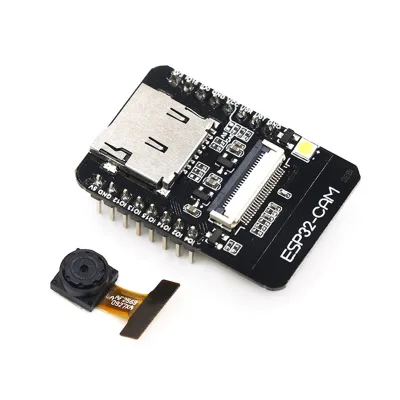
Find and compare 30 Wifi Camera ESP32CAM Development Board options for IoT projects, security monitoring, and rapid prototyping. These modules feature built-in WiFi, CMOS sensors, and compact designs suitable for various embedded applications.
Key considerations
Products List


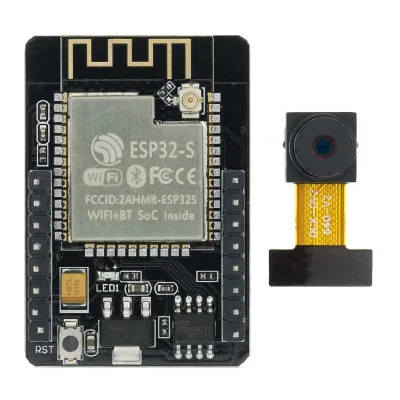
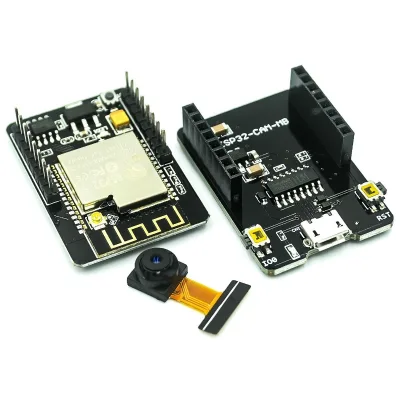
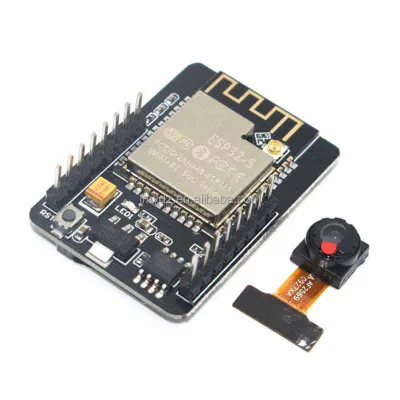
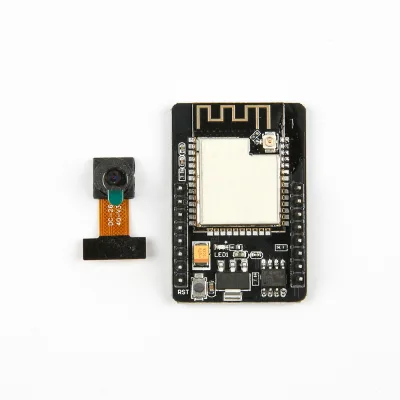
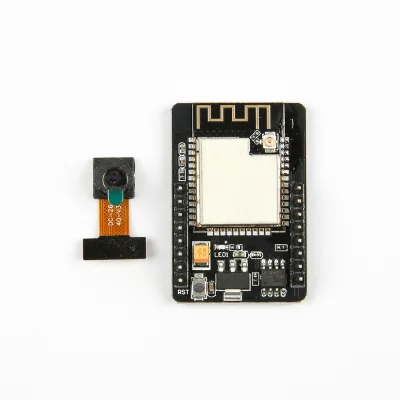
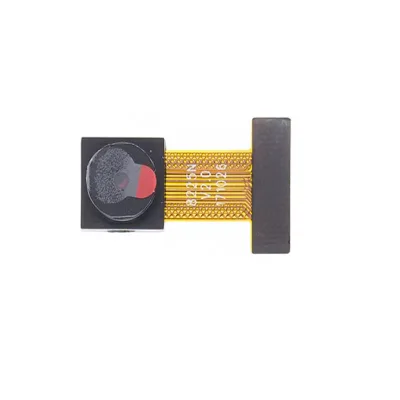
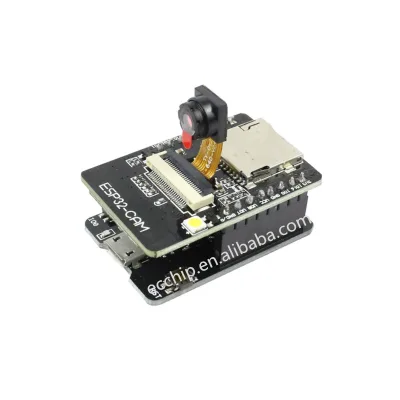
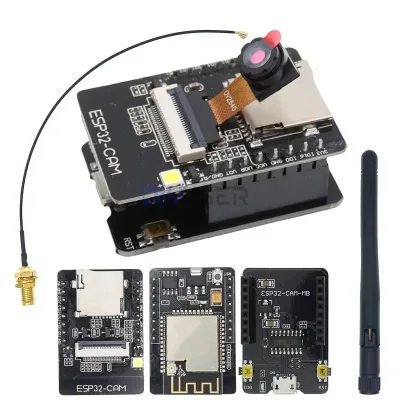
M5stack Esp32cam Configuration Ov2640 Camera Module WiFi Bluetooth Core Board
$2.57 - $2.75
MOQ: 10 Pieces


WiFi Control M5stack Esp32cam Development Board with Ov2640 Camera Module
$10.00 - $10.80
MOQ: 50 Pieces




Comprehensive Sourcing Guide
Wifi Camera ESP32CAM Development Board Sourcing Guide
Sourcing the right hardware for IoT and surveillance projects requires a clear understanding of the hybrid nature of modern development boards. The market currently lists products that blend the functionality of a standalone wireless camera module with the processing capabilities of a microcontroller development board. Buyers must distinguish between a simple camera sensor module and a complete system-on-module that includes memory, wireless connectivity, and power management. This guide focuses on the specific intersection of these technologies, where the ESP32-CAM architecture meets the physical requirements of a bullet-style CCTV camera.
Procurement decisions for this category are driven by the need for low-power, wireless video streaming in constrained environments. The observed product landscape indicates a strong preference for modules that support both WiFi and Bluetooth, allowing for flexible integration into existing home or industrial networks. Buyers should approach this sourcing task with the understanding that these devices are often marketed under multiple names, such as "development board," "CCTV camera," or "wireless module," depending on whether the seller emphasizes the computing aspect or the imaging aspect.
Product Scope and Observed Listing Signals
The current market listings for this category reveal a distinct product profile characterized by compact form factors and specific imaging capabilities. Observed data indicates a price range of $0.1 to $16 USD, with minimum order quantities (MOQs) varying significantly from 1 to 1000 units. This wide variance suggests that the market serves both individual developers seeking single units for prototyping and bulk buyers looking for cost-effective surveillance solutions. The presence of "Nightshot" functionality and "Infrared" technology is a consistent feature, indicating that these modules are designed for 24/7 operation in low-light conditions, a critical requirement for security applications.
Physical attributes observed in listings point to a standardized design, often described as a "Bullet Camera" style with a "Manual Focus Lens." The dimensions frequently cited are approximately 27x40.5x4.5 mm, which allows for discreet installation in various enclosures. The color is predominantly black, aiding in camouflage and professional aesthetics. Furthermore, the inclusion of "Waterproof / Weatherproof" features suggests that these modules are intended for outdoor or semi-outdoor deployment, provided they are housed in appropriate protective casings. Buyers should verify the specific IP rating if outdoor use is planned, as "weatherproof" can be a vague term in some listings.
Technical Specifications to Verify
The core of this product category is the ESP32-CAM module, which integrates a CMOS image sensor with the ESP32 microcontroller. Buyers must verify the image sensor specifications, as listings often cite a resolution of 1-2 million pixels with a horizontal resolution of 540 TVL. The sensor size is typically 1/3 inch, which is standard for this class of compact cameras. It is crucial to confirm whether the module supports color imaging or is limited to monochrome, as some listings mention "Color Camera" while others rely heavily on infrared night vision. The optical zoom is generally absent, meaning the field of view is fixed by the lens, which is usually manual focus.
Connectivity and memory are critical differentiators in this space. Most observed units support WiFi (802.11 b/g/n) and Bluetooth 4.2, enabling wireless data transmission and local control. However, buyers must carefully review the RAM and flash memory configurations. Some listings indicate 520KB of internal RAM with 32 Mbit SPI flash, while others mention additional PSRAM (e.g., 4MB), which significantly impacts the ability to buffer and process image data. The interface options, including UART, SPI, I2C, and PWM, allow for extensive customization and integration with other sensors or actuators. Verify the antenna type, as "onboard" or "built-in" antennas affect signal range and stability.
Compliance and Safety Documentation
Regulatory compliance is a non-negotiable aspect of importing electronic components, especially those with wireless transmission capabilities. Listings often claim certifications such as CE, FCC, CCC, RoHS, and EMI/EMC. Buyers must treat these claims as observations that require independent verification. The FCC certification is particularly important for devices sold or used in the United States, as it ensures the device does not cause harmful interference to other radio communications. Similarly, CE marking is required for the European market. Do not assume that a supplier's claim of certification is valid; request the actual test reports or certificate numbers from the supplier.
Safety standards also extend to the physical construction and power requirements of the module. The observed power input is typically 5V, which is standard for USB-powered devices. However, buyers should verify the current draw to ensure their power supply can handle the peak load, especially when the WiFi radio is active and the infrared LEDs are engaged. The "New" condition of the products is a standard expectation, but buyers should inspect the physical connectors and solder joints upon receipt to ensure there is no damage during shipping. The packaging, often described as "PE Bag + Export Carton" or "Carton Box," should provide adequate protection against static discharge and physical shock.
Cost Drivers and Commercial Terms
The price range of $0.1 to $16 USD is influenced by several factors, including the quantity ordered, the specific memory configuration, and the level of customization available. The "Customization: Available" attribute suggests that suppliers may offer tailored solutions for bulk orders, such as custom firmware, specific lens angles, or modified PCB layouts. For small quantities, the price per unit will likely be at the higher end of the spectrum due to the overhead of handling individual orders. As the order volume increases, economies of scale come into play, driving the unit cost down.
Minimum Order Quantities (MOQs) vary from 1 to 1000 units, reflecting the diverse target audience of this product category. Individual developers and small businesses may find MOQs of 1-10 units acceptable for prototyping, while larger enterprises may negotiate MOQs of 100 or more to secure better pricing. Lead times are not explicitly stated in the observed data but are typically influenced by the MOQ and the customization requirements. Buyers should clarify the production lead time and shipping method early in the negotiation process to avoid delays in their project timelines. Payment terms should also be discussed, with secure payment methods recommended for initial transactions.
Supplier Qualification and Quality Control
Given the low cost and high volume of these modules, supplier reliability is paramount. Buyers should prioritize suppliers with a proven track record in electronic components and IoT hardware. The origin of these products is primarily Shenzhen, China, a global hub for electronics manufacturing. While this region offers access to a wide range of suppliers and competitive pricing, it also requires diligent due diligence. Verify the supplier's business license and check for any negative feedback or disputes in previous transactions. A supplier with a long history on the platform is generally more reliable than a new entrant.
Quality control measures should be established before placing large orders. Request samples to test the actual performance of the WiFi signal strength, image quality, and night vision range. The "Effective Distance: 10-30m" claim for night vision should be validated in real-world conditions, as this can vary based on ambient light and obstacles. Additionally, check the consistency of the product packaging and labeling. The "prod_packing" details, such as "PE Bag + Export Carton," should be confirmed to ensure that the products are protected during transit. Establishing a clear quality agreement with the supplier, including acceptable defect rates and return policies, is essential for long-term success.
Long-Term Procurement Checks
Sourcing development boards and camera modules is not a one-time transaction but an ongoing process that requires continuous monitoring. As technology evolves, newer versions of the ESP32 chip or improved image sensors may become available. Buyers should stay informed about these advancements to ensure they are not purchasing obsolete technology. Regularly review the supplier's product catalog for updates and new features that could enhance your projects. Engaging with the supplier to discuss future needs can also help in securing priority access to new products.
Maintaining a diverse supplier base is a prudent strategy to mitigate supply chain risks. Relying on a single supplier can lead to disruptions if they face production issues or quality problems. Consider qualifying at least two or three suppliers for this category to ensure continuity of supply. Additionally, keep detailed records of all transactions, including product specifications, test results, and communication logs. This documentation will be invaluable if quality issues arise or if you need to switch suppliers. Finally, monitor the market for price fluctuations and new entrants to ensure you are always getting the best value for your procurement budget.
FAQs
What is the maximum pixel count for this camera module?
The maximum pixel count ranges from 1 to 2 million pixels. This specification applies to the digital nightshot camera module featuring an Esp32-Cam model with a CMOS image sensor and 1/3 inch sensor size.
Does this device support wireless connectivity options?
Yes, the device supports WiFi and Bluetooth connectivity. It includes WiFi 802.11 b/G/N/E/I support and Bluetooth 4.2 Br/EDR with BLE capabilities, making it suitable for wireless data transmission applications.
What certifications does the product hold for safety compliance?
The product holds CE, FCC, CCC, RoHS, EMI/EMC, and ISO9001 certifications. These standards ensure the device meets international safety and electromagnetic compatibility requirements for export and commercial use.
Can the product be customized for specific project needs?
Customization is available for this development board. Buyers can request specific configurations while the standard model includes a 32mbit SPI flash and 520kb RAM with onboard antenna support for flexible integration.
What is the effective distance for the infrared nightshot feature?
The effective distance for the infrared nightshot feature is between 10 to 30 meters. This capability allows the camera to capture clear images in low-light conditions using its built-in infrared technology.
How is the product packaged for international shipping?
The product is packed in a PE bag and an export carton. This packaging ensures the development board remains protected during transit while meeting standard export requirements for electronic components.