Source Women Maxi Dress for parties, daily wear, and summer events
Explore 30 listings of Women Maxi Dress options featuring varying lengths, materials like polyester and cotton, and styles from casual to sexy. Buyers can compare specifications such as sleeve types, waist fits, and customization availability to find suitable suppliers for their needs.
Key considerations
Products List


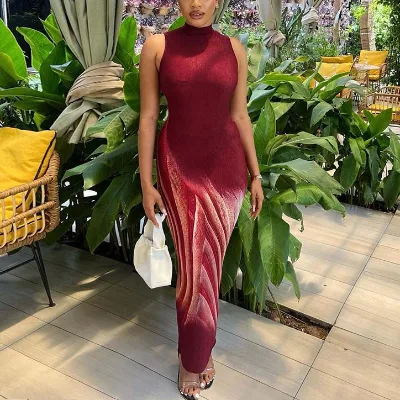
New Design Ladies Long Casual Dress Straight Maxi Long Dresses Women Dress
$9.90 - $10.00
MOQ: 100 Pieces


Elegant Blue Design Maxi Dresses Custom Logo Long Sleeve Women Casual Knitted Dress
$25.50 - $27.50
MOQ: 100 pieces


Comprehensive Sourcing Guide
Strategic Sourcing Guide for Women Maxi Dresses
Understanding Product Variability and Technical Specifications
When sourcing women's maxi dresses in a B2B context, the first critical step is recognizing the inherent variability in product definitions and technical attributes. The market for this category is not monolithic; it encompasses a wide spectrum of styles, materials, and construction methods. Based on available product data, a "maxi dress" in a procurement context may manifest as a garment with a specific length classification, such as "Midi" or "Short," alongside variations in sleeve length and collar style. Buyers must carefully distinguish between these attributes to ensure the final product aligns with their specific market requirements.
The material composition is a primary driver of product performance and cost. Observed data indicates that suppliers utilize a range of fabrics, including Polyester and Cotton. Polyester is frequently associated with attributes such as breathability and washability, making it suitable for Spring/Summer collections. Conversely, Cotton is often paired with specific patterns like letters or cartoons and may be found in styles described as "Casual" or "Sexy." The weaving method is another technical specification to verify; "Woven" fabrics are distinct from knits and offer different drape and structural integrity. Furthermore, the fabric type can vary significantly, with some listings specifying "Mesh" materials, which introduces unique considerations regarding transparency and layering.
Length and fit specifications are equally critical. While the core keyword implies a long garment, observed product models show a mix of lengths, including "Short," "Midi," and variations in waist types ranging from "Low-Waisted" to "High-Waisted." The sleeve configuration is another variable, with options spanning from "Sleeveless" to "Long Sleeve" and "Short Sleeve." The collar style also varies, with "V-Neck" and "V-Necked" styles being common, alongside other unspecified collar types. Buyers must explicitly define these parameters in their Request for Quotation (RFQ) to avoid receiving samples that do not match the intended silhouette. The presence of features like "Customized Logo" and "Customizable" packing suggests that these items are often produced under OEM (Original Equipment Manufacturer) arrangements, allowing for significant brand customization.
Compliance, Certification, and Safety Standards
In the global apparel trade, compliance is not merely a regulatory hurdle but a fundamental component of brand reputation and market access. When sourcing women's maxi dresses, particularly those originating from major manufacturing hubs, buyers must establish a robust framework for verifying safety and quality standards. While specific certification statuses cannot be assumed for all listed products, the procurement process must include rigorous checks for chemical restrictions, flammability, and fiber content accuracy.
The origin of the product plays a significant role in the compliance landscape. Data indicates that many items in this category originate from China. Sourcing from this region requires a heightened focus on supply chain transparency and adherence to international safety standards. Buyers should verify that the manufacturing facilities comply with relevant labor laws and environmental regulations. Additionally, the "prod_standard" field in product data sometimes references weight specifications, such as "0.3kg" or "customized," which serves as a proxy for material density and quality consistency. However, weight alone is not a safety standard. Buyers must demand third-party laboratory test reports for substances like azo dyes, formaldehyde, and heavy metals, ensuring the garments meet the safety requirements of the destination market, whether it be the European Union, the United States, or other regions.
For products marketed as "Breathable" or "Washable," buyers should verify the durability of these claims through standardized testing. The "Single Gross Weight" of items, observed in some listings as "0.700 Kg," provides a baseline for logistics planning but does not guarantee fabric quality. It is essential to confirm that the "Woven" or "Mesh" construction methods used do not compromise the garment's structural integrity or safety. Furthermore, the "Customized" nature of many standards implies that the supplier may be producing to a specific buyer's technical sheet rather than a universal industry standard. In such cases, the buyer becomes the de facto standard-setter, and the contract must explicitly define the acceptable tolerance levels for color fastness, shrinkage, and seam strength.
Cost Drivers and Pricing Dynamics
The pricing of women's maxi dresses is influenced by a complex interplay of material costs, customization levels, and order volume. The observed price range in the market spans from $0.50 to $46.45 USD, a variance that reflects differences in fabric quality, design complexity, and production scale. Understanding these cost drivers is essential for budgeting and negotiating effectively.
Material selection is a primary determinant of cost. Polyester and cotton, while both common, have different price points depending on the grade and finish. The inclusion of specialized features, such as "Mesh" fabric or complex "V-Neck" constructions, can increase the unit cost. Additionally, the "Customized Logo" and "Customizable" packing options add layers of complexity to the production process, often resulting in higher per-unit costs compared to standard off-the-shelf items. The "OEM" capability of suppliers allows for brand-specific modifications, which inherently commands a premium over generic production.
Order volume is another critical factor. The Minimum Order Quantity (MOQ) observed in the market ranges from 0 to 5,000 units, with specific listings showing MOQs of 1,000 and 5,000. Higher MOQs generally correlate with lower unit prices due to economies of scale. However, the wide range of MOQs suggests that some suppliers cater to small-batch or trial orders, while others require significant volume commitments. Buyers must balance their inventory needs with their cash flow constraints. A lower MOQ might be necessary for testing new designs, but it will likely come with a higher price per unit. Conversely, committing to a larger order can secure a more competitive price but increases the risk of inventory obsolescence if the product does not sell as expected.
Other cost drivers include the "Season" of the product. Items designated for "Spring/Summer" or "Summer" may have different material and construction costs compared to year-round staples. The "Style," whether "Loose," "Casual," or "Sexy," also impacts the cost, as more complex silhouettes or specific fits may require more fabric or intricate sewing techniques. Finally, the "prod_packing" method, ranging from standard "OPP Bag" to fully "Customizable" packaging, adds to the overall landed cost. Buyers should request a detailed breakdown of costs, separating the base garment price from customization, packaging, and logistics fees to ensure transparency.
Typical Applications and Market Segmentation
The versatility of the women's maxi dress allows it to serve a diverse range of applications and market segments. Understanding these use cases is vital for aligning product specifications with target consumer needs. The observed product attributes suggest that these garments are suitable for various occasions, from "Daily" wear to "Party" events.
For "Daily" occasions, the focus is often on comfort and durability. Products described as "Casual," "Loose," and made from "Cotton" or "Polyester" with "Breathable" and "Washable" features are ideal for this segment. The "Short Sleeve" or "Sleeveless" options provide versatility for warmer weather, while the "High-Waisted" or "Low-Waisted" designs cater to different body types and fashion preferences. These items are typically targeted at "Youth" or "Adults" seeking practical, everyday wear.
In contrast, "Party" occasions demand a more elevated aesthetic. Styles labeled as "Sexy," featuring "Mesh" fabric, "V-Neck" collars, or "Letters" and "Cartoon" patterns, are designed to make a statement. The "Customized Logo" and "Customizable" packing options are particularly relevant here, as brands often seek unique designs to differentiate their party wear collections. The "Short" or "Midi" length variations in this context might be used to create a more dramatic or avant-garde look, depending on the brand's vision.
The "Season" attribute further refines the application. "Spring/Summer" and "Summer" specific items are optimized for heat and humidity, utilizing lightweight fabrics and open designs. These products are essential for retailers targeting seasonal sales peaks. The "Age Group" of "Adults" and "Youth" indicates that the market spans multiple demographics, requiring a broad range of sizes and styles. Buyers must ensure that their sourcing strategy covers the specific age groups and occasions relevant to their brand positioning.
Supplier Evaluation and Selection Criteria
Selecting the right supplier is a critical decision that impacts the success of the entire procurement cycle. When evaluating potential partners for women's maxi dresses, buyers should look beyond the basic product listing and assess the supplier's capabilities, reliability, and alignment with brand values.
First, verify the supplier's ability to handle customization. The presence of "Customized Logo," "Customizable" packing, and "OEM" capabilities in the product data indicates that the supplier is equipped to handle bespoke orders. Buyers should inquire about the supplier's design team, their capacity for pattern making, and their experience with specific fabric types like "Mesh" or "Woven" materials. The ability to produce "Customized" standards is a strong indicator of flexibility and technical competence.
Second, assess the supplier's production capacity and lead time management. While specific lead times are not provided in the data, the range of MOQs suggests varying levels of production scale. A supplier with a high MOQ capacity may be better suited for large-scale orders, while one with a lower MOQ might be ideal for smaller, agile brands. Buyers should request a production schedule and ask about their ability to meet tight deadlines, especially for seasonal items like "Spring/Summer" collections.
Third, evaluate the supplier's quality control processes. The "Single Gross Weight" and "prod_standard" fields provide some insight into the supplier's attention to detail, but buyers should request a comprehensive quality assurance plan. This should include in-line inspections, pre-shipment inspections, and a clear protocol for handling defects. The supplier's experience with "Woven" and "Mesh" fabrics is particularly important, as these materials can be prone to specific issues like snagging or stretching.
Finally, consider the supplier's location and logistics capabilities. With many products originating from "China," buyers should be aware of the potential logistical challenges and costs associated with international shipping. A supplier with strong logistics partnerships can help streamline the supply chain and reduce lead times.
Quality Control and Long-Term Procurement Considerations
Ensuring consistent quality is paramount in the long-term success of a women's maxi dress line. Quality control should be integrated into every stage of the procurement process, from the initial sampling phase to the final delivery. Buyers must establish clear quality benchmarks based on the specific attributes of the product, such as fabric type, stitching quality, and color fastness.
For "Woven" and "Mesh" fabrics, specific quality checks are necessary to ensure the material meets the required standards. Buyers should verify the fabric's weight, density, and stretch properties. The "Breathable" and "Washable" claims must be validated through testing to ensure they hold up over time. Additionally, the "Customized Logo" and "Customizable" packing must be inspected for accuracy and durability.
Long-term procurement considerations involve building a sustainable relationship with the supplier. This includes establishing clear communication channels, setting expectations for quality and delivery, and creating a feedback loop for continuous improvement. Buyers should also consider the environmental impact of their sourcing decisions, particularly regarding the "Polyester" and "Cotton" materials used. Exploring sustainable fabric options and ethical manufacturing practices can enhance the brand's reputation and appeal to conscious consumers.
In conclusion, sourcing women's maxi dresses requires a strategic approach that balances technical specifications, compliance, cost, and supplier capabilities. By carefully evaluating these factors and maintaining a focus on quality and long-term partnership, buyers can successfully navigate the complexities of the global apparel market and deliver high-quality products to their customers.
| Attribute Category | Key Variables to Verify | Potential Impact on Procurement |
|---|---|---|
| Material & Fabric | Polyester, Cotton, Mesh, Woven | Affects cost, comfort, durability, and care instructions. |
| Design & Style | Sleeve Length, Collar, Waist Type, Pattern | Determines target demographic, occasion suitability, and trend alignment. |
| Customization | Logo, Packing, OEM, Standard | Influences branding, lead time, and unit cost. |
| Compliance & Safety | Chemical restrictions, Flammability, Fiber Content | Critical for market access, brand reputation, and legal compliance. |
| Logistics & Volume | MOQ, Origin, Gross Weight | Impacts cash flow, inventory management, and shipping costs. |
FAQs
Can I customize the logo on these dresses?
Yes, customized logo options are available for these garments. Buyers can request specific branding designs to be applied to the apparel, which is supported by the OEM capabilities listed in the product specifications.
What materials are used for these maxi dresses?
The dresses are primarily made from Polyester and Cotton materials. Polyester is noted for being breathable and washable, while Cotton options often feature specific patterns like letters or cartoons depending on the style.
Which sleeve lengths are available for these styles?
Available sleeve lengths include Short Sleeve, Long Sleeve, and Sleeveless options. The specific configuration depends on the selected model, such as the S197 or Casual Dress-020D, allowing for varied seasonal wear.
What is the minimum order quantity for these items?
The minimum order quantity ranges from 100 to 5000 units depending on the specific supplier and product model. Some listings show an MOQ of 10000, while others accept orders as low as 500 units.
How are these dresses packed for shipment?
Packing options include standard OPP bags or fully customizable packaging solutions. This flexibility allows buyers to choose between cost-effective standard packing or branded packaging that aligns with their specific retail requirements.
What are the typical waist types for these dresses?
The dresses feature various waist types including Low-Waisted and High-Waisted designs. These fit options cater to different body types and fashion preferences, ensuring a suitable silhouette for diverse customer demographics.
Can I source these dresses from China?
Yes, the products originate from China, which is a major manufacturing hub for this category. Buyers should verify compliance standards and logistics capabilities when sourcing from this specific geographic location for international orders.